


Regular Whole Home Generator Maintenance: A Practical Service Guide
We recommend a manual-based regular whole home generator maintenance plan rather than a calendar copied from another generator. Your model, fuel type, and operating hours affect its service needs.
Start with a practical schedule, keep homeowner checks simple, and recognize when the system needs professional attention.
Key Takeaways
- Follow your generator’s manual because service requirements and exercise settings vary by model.
- Keep engine service, battery testing, and transfer-switch operation on the maintenance plan.
- Limit homeowner checks to safe observations without touching wiring or opening electrical panels.
- Record operating hours, service dates, and alerts so a technician has useful information when problems arise.
Whole Home Generator Maintenance: What Routine Service Covers
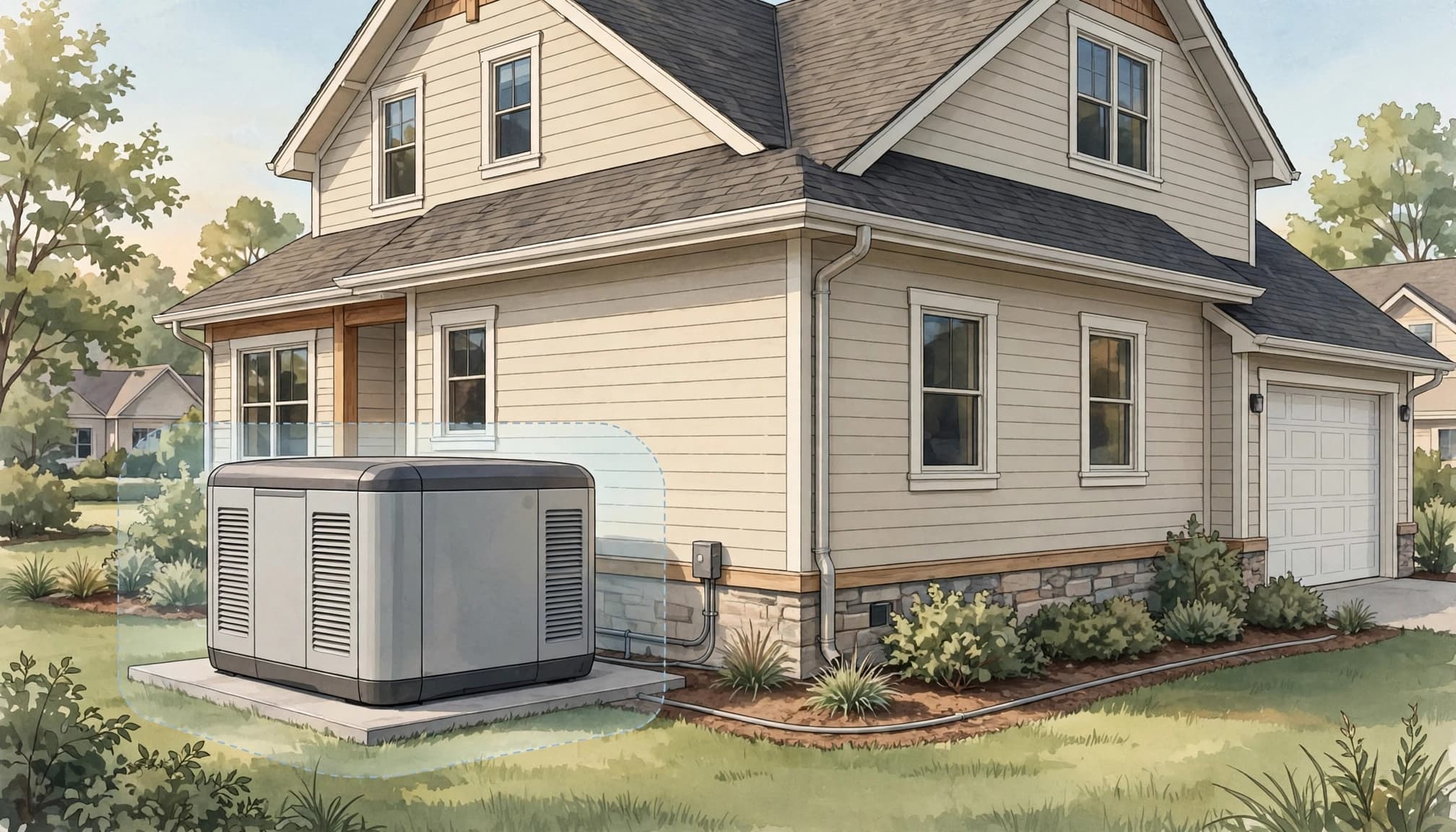
Routine service keeps the engine, electrical components, and fuel supply ready to work together. We recommend treating the generator and transfer switch as one backup-power system rather than maintaining only the engine.
Engine, battery, and fuel system checks
Common service items include engine oil, oil filters, air filters, spark plugs, and battery condition. Fuel-system requirements also depend on the generator’s design and fuel type.
For example, the Generac standby generator owner’s manual separates maintenance into Schedule A and Schedule B. Schedule A includes oil, oil-filter, and battery checks. Schedule B adds other items, including air-filter checks.
Those categories belong to that manual. They aren’t a universal schedule for every standby generator.
Transfer switch and system testing
The transfer switch moves your home’s electrical supply between utility and generator power. A running engine alone doesn’t demonstrate that the house will receive electricity.
We recommend asking about transfer switch testing during service, including connection inspections and an appropriate test under load.
Set a Maintenance Schedule That Fits Your Generator
Separate your plan into routine observations, manufacturer-directed service, and attention to operating hours after extended use. Each addresses a different maintenance need.
Use the exercise cycle and service reminders
Many standby generators have automatic exercise cycles, but their timing and settings differ. Use the instructions for your model rather than assuming a neighbor’s settings apply.
We recommend recording the exercise settings alongside service dates and hour-meter readings. Also, note any controller reminders without clearing them before you understand what they mean.
An exercise cycle runs the equipment, but it doesn’t replace scheduled oil changes, battery checks, or other required service.
Adjust checks for weather and heavy use
An extended weather-related outage can add operating hours much faster than normal exercise cycles. Afterward, record the hour-meter reading and compare it with the manual’s service requirements.
Calendar reminders alone won’t capture that added runtime. Where the manufacturer specifies both elapsed time and operating hours, build both into your plan.
Heavy use deserves attention, but it doesn’t create a replacement schedule. Keep the manufacturer’s stated intervals as the basis for service.
Homeowner Checks to Do Safely Between Service Visits
We recommend keeping homeowner checks visual and noninvasive. Standby equipment can start automatically, so avoid reaching inside the enclosure or working around hot or moving parts.
Look for clear airflow and warning alerts
Observe the area around the enclosure and keep the clearance required by your manual. Don’t store household items against the unit or across ventilation openings.
You can also look for visible enclosure damage and read an accessible control-panel display. Photograph any message so you can report its exact wording.
Leave electrical panels closed. Don’t touch wiring or fuel connections, even when the generator appears idle.
Keep a simple log and report changes
A useful log can be a notebook or a note on your phone. Include the date, operating hours, displayed messages, and whether the home received backup power.
After a service visit, save the invoice and record which maintenance items the technician completed. This separates completed work from work that’s still due.
We favor exact observations over guesses about the cause. A photograph of a controller message gives a technician more useful information than a general description that something seemed wrong.
Know When to Call a Generator Service Professional
Whole home generator maintenance needs professional attention when electrical testing, internal inspection, or fault diagnosis goes beyond safe observation.
Warning signs that need expert attention
A persistent warning light or controller fault deserves professional attention. So does a generator that runs during an outage without supplying power to the house.
The problem may involve the generator output, transfer equipment, or another electrical component. We recommend professional diagnosis rather than opening equipment to investigate.
Don’t repeatedly restart a unit that displays a fault. Record the message and what happened, then leave testing and repairs to a qualified technician.
What to ask before booking maintenance
Ask whether the visit follows your model’s maintenance requirements and which inspections it includes. Also, ask how the technician evaluates the battery and tests transfer-switch operation.
For a local option, SWFL Generator lists generator maintenance service options with annual and twice-yearly visits. Listed tasks vary by option and include oil and filter changes, battery testing, inspections, and start-up.
We recommend matching the planned work to your generator’s requirements. Keep the completed service record with your manual so the next visit starts with a clear maintenance history.
Keep Backup Power Ready With a Clear Plan
Dependable backup power starts with a model-specific schedule, safe visual checks, and professional service when the system needs attention. Exercise cycles help, but they don’t complete the maintenance plan.
We recommend reviewing your generator’s service requirements and recording its latest operating hours. If an alert or power-transfer problem remains unresolved, arrange professional help rather than waiting for another outage.