


Yes, a generator for electric dryer use can run it, but it needs enough running wattage, surge wattage, and output at 240 volts.
A dryer can be one of the largest electrical loads in your home. During a Southwest Florida power outage, its demand may compete with air conditioning, refrigeration, pool equipment, and other essential loads using your backup power. The right sizing process starts with the dryer’s nameplate, then accounts for the rest of the home.
A solar-powered dryer is supplied by solar panels and a battery system. Solar panels do not directly power a normal drying cycle without stored energy.
Key Takeaways
- A standby generator can run an electric dryer when it provides sufficient running wattage, surge wattage, and 240-volt split-phase output.
- Most full-size electric dryers use about 5,000 to 7,200 watts while operating, but the dryer’s nameplate and the home’s complete load determine the required generator size.
- Never connect a generator through a dryer outlet. Use a professionally installed transfer switch or code-compliant interlock kit to prevent dangerous backfeeding.
- A solar generator needs a compatible 240-volt inverter, sufficient battery storage, adequate surge capacity, and enough solar input to recharge between cycles.
- A professional load calculation helps determine whether a 14-, 18-, 22-, or 26-kilowatt system can run the dryer alongside other essential appliances.
Can a Standby Generator Run an Electric Dryer?
Yes, a standby generator for electric dryer use can operate the appliance during a power outage when properly rated and connected.
Most full-size electric dryers use a circuit rated for 240 volts and protected at 30 amps. The heating element commonly accounts for about 4,500 to 5,600 watts, making up most of the running wattage. Motor startup can briefly increase the surge wattage, while the controls add to the total. Some compact electric dryer models use less power, but the manufacturer’s specifications determine the actual load.
A carefully managed 14-kilowatt setup may handle an electric dryer when its running wattage and surge wattage are sufficient. A solar-powered dryer supplied by solar panels requires different equipment than an automatic standby setup. However, that doesn’t mean it can run the dryer while every air conditioner, water heater, pool pump, and appliance operates simultaneously. Larger homes may need an 18-, 22-, or 26-kilowatt system, depending on the electrical load calculation.
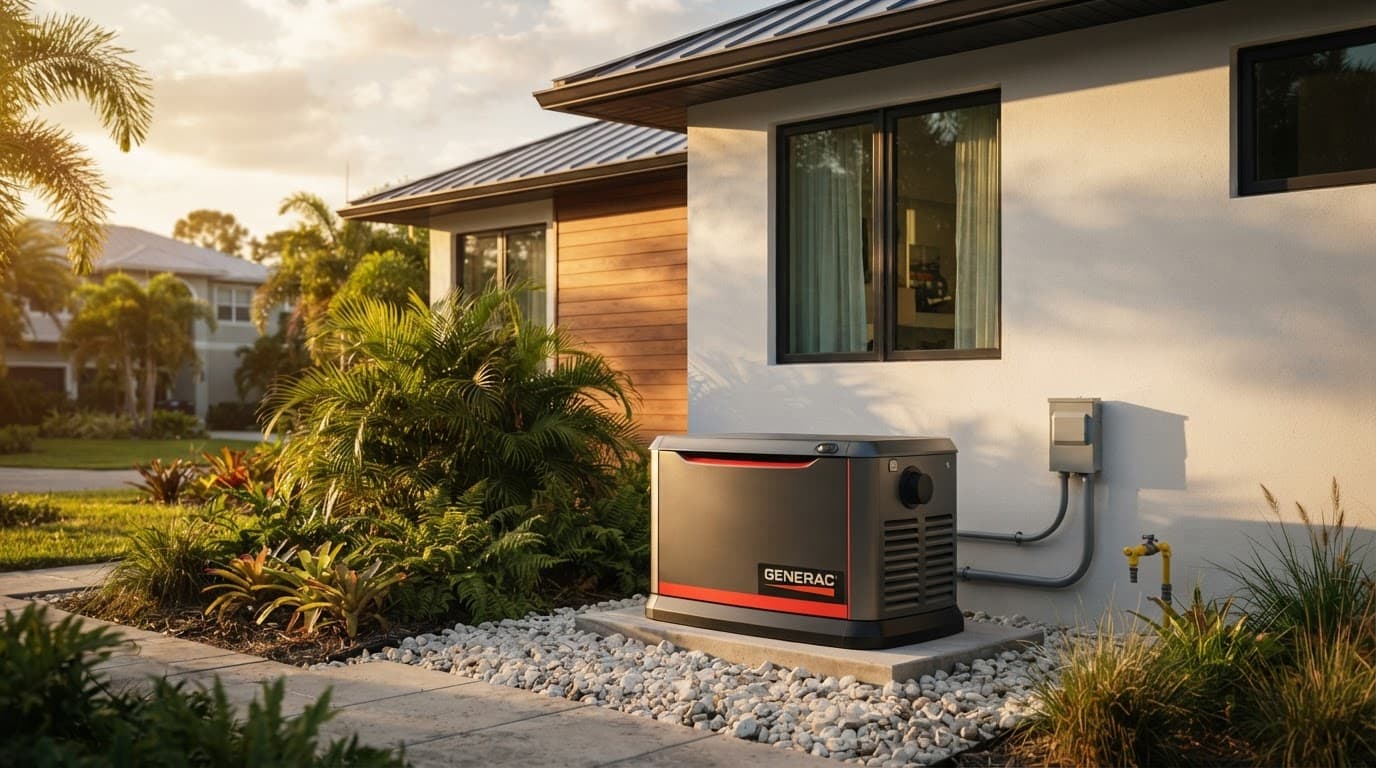
A professionally installed unit connects to selected circuits or the entire electrical panel. This approved installation doesn’t involve plugging into a dryer outlet. Our emergency generator installation process accounts for the generator, transfer switch, fuel supply, clearances, and local permitting requirements.
Sizing an Electric Dryer Load for a Generator
Start by checking the electric dryer’s data plate or owner’s manual. Look for voltage, amperage, running wattage, and any starting wattage listed by the manufacturer. The electrical formula is simple:
Volts x amps = watts
A dryer rated for 240 volts and drawing 24 amps uses up to 5,760 watts under that condition. A dryer on a 30-amp circuit may have a higher maximum demand, even though the heating element cycles on and off during normal operation.
Energy consumption is measured over time, often in kilowatt hours. Generator capacity, however, is based on instantaneous load rather than total energy use.
Use the dryer’s listed running wattage as the baseline when reviewing these typical demands:
| Dryer demand | Typical planning range |
|---|---|
| Heating element | 4,500 to 5,600 watts |
| Full-size dryer while operating | About 5,000 to 7,200 watts |
| Motor startup or load changes | Varies by model |
The difference between operating demand and surge wattage matters. Operating demand is the electricity needed after the appliance is running. Surge wattage is the temporary increase when a motor starts or the electrical load changes.
To size a generator for electric dryer service, use this process:
- Record the dryer’s operating load and surge wattage.
- Add the running wattage of other appliances you want during an outage.
- Add the highest starting load, such as a central air conditioner or well pump.
- Include a 15% to 20% safety buffer.
For example, an electric dryer with 6,000 watts of running wattage may need a generator rated for at least 7,200 watts before other household loads are added. The required surge wattage may be higher when its motor starts. Plan for that temporary demand when selecting the generator.
The generator must also provide split-phase power at 240 volts. A unit that produces only 120 volts cannot properly supply a standard full-size dryer.
For solar applications, a solar generator must match the dryer’s inverter output and startup demand. A solar-powered dryer needs an inverter rated for its continuous load. Size solar panels for the inverter’s input limit and expected daytime production. Usable stored energy depends on battery capacity and inverter losses. Solar panels should also provide enough input to recharge the system between cycles. Additional solar panels can shorten recharge time. Cloudy weather can reduce production, so a solar-powered dryer may need more stored energy. A solar-powered dryer may also require supplemental power during extended cloudy conditions. Solar panels may still fall short during several consecutive cloudy days.
Champion Power Equipment’s generator sizing guidance also separates running and surge wattage when planning generator capacity. That distinction prevents homeowners from choosing a unit that looks large enough on paper but trips when several appliances start together.
Never Backfeed Through a Dryer Outlet
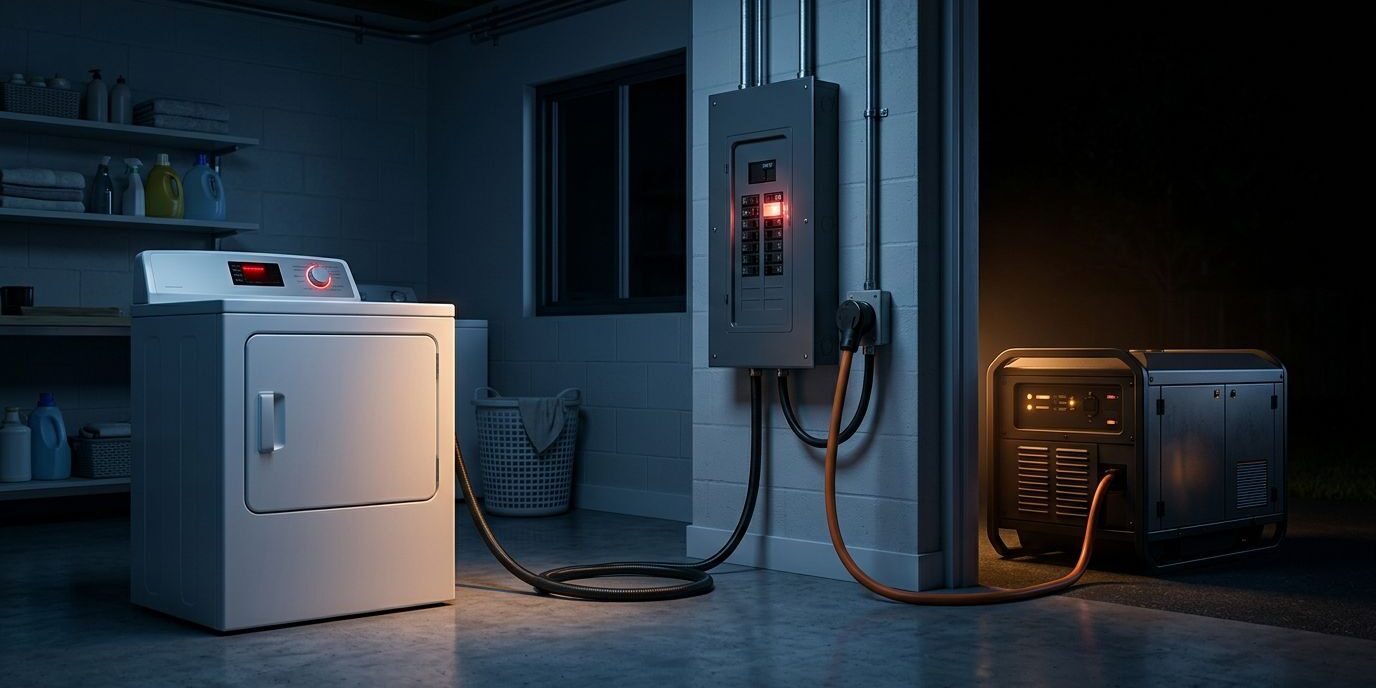
A dryer outlet, normally used for an electric dryer, is not a safe connection point for a portable generator. Plugging a generator into that receptacle can backfeed electricity through the home’s wiring and into utility lines.
This practice, called backfeeding, can electrocute utility workers, damage appliances, start fires, and expose the home to an unapproved connection. A suicide cord with two male ends can connect a generator to a dryer outlet and create a severe shock hazard.
A dryer receptacle does not isolate your home from the utility grid. Only an approved transfer switch can provide that separation.
The safe option is a professionally installed transfer switch or code-compliant interlock kit. A licensed electrician verifies the panel, generator output, grounding, circuit size, and required disconnects. The installation must also meet local permit and inspection requirements.
Systems that include solar panels and batteries still require proper isolation and approved wiring. Solar equipment does not make a receptacle connection safe.
Always operate a portable unit outdoors, away from doors, windows, and ventilation openings. Carbon monoxide can enter a home even when the unit is several feet away. Never connect a portable unit to the dryer outlet, range outlet, or any other household receptacle.
Standby, Portable, or Solar Generator Options
When choosing a generator for electric dryer use, compare automatic convenience, output, fuel, and installation needs. A standby generator is the most convenient choice for automatic backup power. It starts when utility power fails and transfers power to the home through permanent wiring. Natural gas can provide continuous fuel, but the gas meter must support the generator and other appliances. Propane stores fuel on site, though tank capacity limits runtime, while a diesel generator can provide long-duration output. For a property that is off grid, a diesel generator also brings fuel, ventilation, and maintenance considerations.
A portable generator can run an electric dryer only with enough output and a proper 240-volt split-phase connection. Compare the unit’s running wattage and surge wattage with the dryer’s heating and motor loads. A unit can have adequate running wattage yet fail when the heating load or motor starts because surge wattage is higher. An inverter generator may be efficient for lighter loads, but it still needs sufficient output and a proper 240-volt split-phase connection. Use an approved connection, never a dryer outlet, and operate the portable generator outdoors. Manual starting, load monitoring, and refueling make it less convenient during extended use.
Solar-powered dryer limitations
A solar generator is a battery power station with an inverter, not a fuel-burning machine. For a solar-powered dryer, the inverter must support 240-volt split-phase output and exceed the dryer’s continuous demand. It also needs sufficient surge headroom for the motor and heating circuit.
A solar-powered dryer also needs substantial stored energy for one cycle. A full-size electric dryer can consume enough energy to challenge a small system. The power station’s battery capacity must cover that cycle with a safety margin. An off grid setup requires far more storage than a typical small battery system. Do not assume a compact unit can run a full-size dryer remotely.
Solar panels provide the charging input, but the power station must accept enough wattage. An array of solar panels must be sized to replenish the battery after each cycle, and weather affects the recharge rate. Solar panels may need many hours to restore stored energy after a cycle. Solar-powered dryer comparison: Battery systems are quieter than fuel equipment but usually support shorter, smaller loads. Clouds reduce solar panels’ production when a solar-powered dryer is most needed. Solar panels also cannot replace stored energy during operation, because panel output changes with weather and time of day.
For a solar generator, check continuous output, surge rating, split-phase capability, usable storage, solar input, and recharge time. Overall, a solar-powered dryer is practical only with a large, compatible battery system and adequate solar recharging. Choose standby equipment for convenience, portable equipment for flexibility, and battery systems only after confirming the electric dryer’s complete load.
What Does It Cost to Run the Dryer?
Grid electricity is usually the easiest cost to estimate. If an electric dryer uses 5 kilowatt hours during a cycle at an electricity rate of $0.16 per kilowatt hour, that energy consumption costs about $0.80. The dryer may use less because the heating element cycles off during part of the load.
Diesel generator costs depend on fuel burn rate at the actual load, not the appliance’s circuit rating alone. Use the manufacturer’s gallons-per-hour figure at the expected running wattage, then multiply it by the local diesel price. Startup surge wattage can affect generator performance, but it may not dominate the total cycle cost.
Solar generator costs differ from fuel costs. A solar-powered dryer has no direct fuel charge, but a battery-based power station still needs enough battery capacity for the load. Solar panels provide the recharge input, while cloudy weather can extend recharge time.
| Power source | Basic calculation |
|---|---|
| Utility power | Kilowatt hours used x electricity rate |
| Diesel generator | Gallons per hour x diesel price |
| Solar generator | No fuel cost, but stored energy and recharge time apply |
Entergy’s generator load reminder reinforces the need to size backup power around the expected electrical demand. A solar-powered dryer can have low operating costs, but solar panels may need significant time to restore stored energy after cloudy weather. Fuel costs can rise quickly when an electric dryer operates alongside air conditioning or other high-load equipment, especially with a diesel generator.
Frequently Asked Questions
Can a standby generator run a full-size electric dryer?
Yes, a properly sized standby generator can run a full-size electric dryer during a power outage. It must provide enough running and surge wattage along with 240-volt split-phase power.
How many watts does an electric dryer need?
Most full-size electric dryers use approximately 5,000 to 7,200 watts while operating, with the heating element accounting for much of the demand. Check the dryer’s data plate or owner’s manual for the most accurate load information.
Can I plug a portable generator into the dryer outlet?
No, plugging a generator into a dryer outlet can backfeed electricity into utility lines and create a serious shock, fire, and equipment hazard. Use an approved transfer switch or code-compliant interlock kit installed by a qualified professional.
Can a solar generator power an electric dryer?
A solar generator can power an electric dryer only when its inverter supports 240-volt split-phase output and has enough continuous and surge capacity. The battery must also store sufficient energy for the cycle, while the solar panels must provide enough input to recharge it.
What size generator is needed to run a dryer and other appliances?
The required size depends on the dryer’s load, other running appliances, and the highest starting load, such as an air conditioner or well pump. A professional home load calculation, including a 15% to 20% safety buffer, provides the most reliable sizing recommendation.
Conclusion
During a power outage, a standby generator can run an electric dryer with adequate running wattage, surge wattage, and 240-volt split-phase output. Confirm the home’s electrical capacity and obtain a professional home load calculation before purchase.
A solar generator may support a solar-powered dryer, but its solar panels and battery system must still meet the dryer’s inverter and storage demands.
Never backfeed through a dryer outlet or use a receptacle as a generator connection. A transfer switch provides a safe, permanent generator connection.
For safe, automatic backup power in Fort Myers, Naples, Cape Coral, Lehigh Acres, Bonita Springs, and nearby communities, Get a Free Consultation before choosing a generator for electric dryer use.