


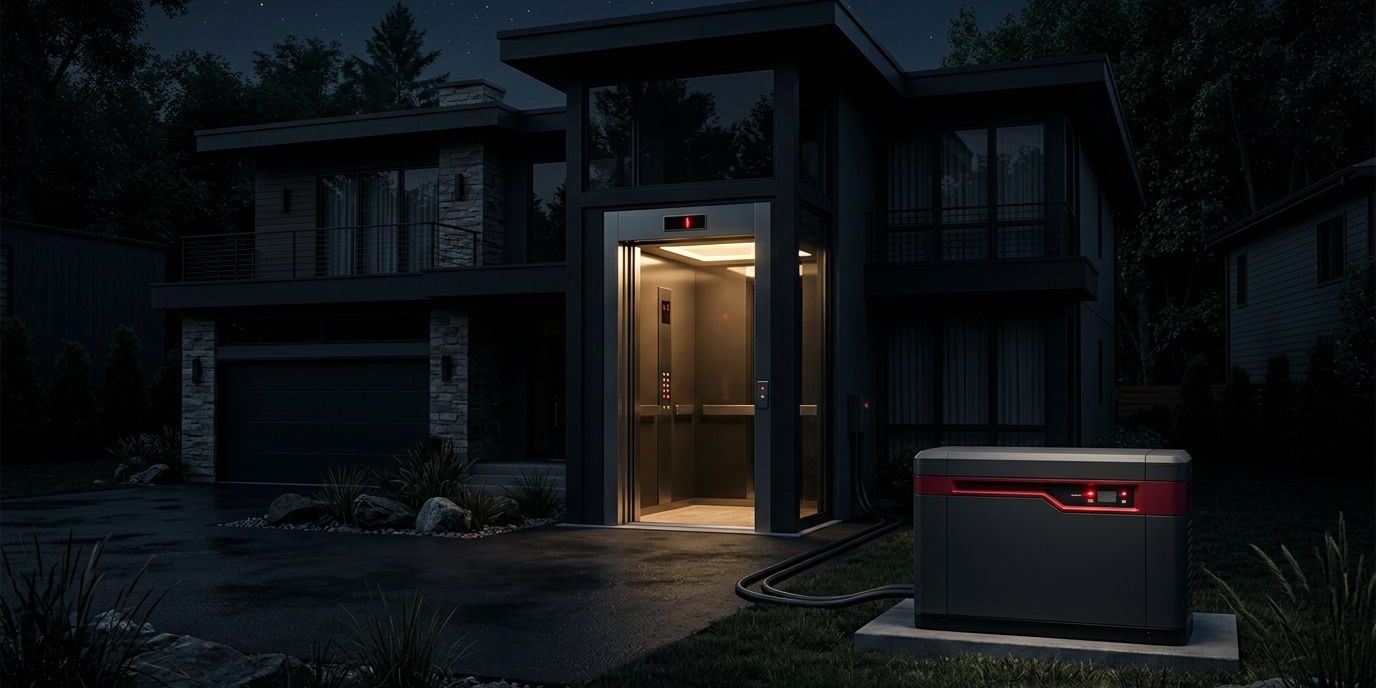
Yes, a whole-home generator or standby generator can provide backup power for home elevators during a power outage.
A backup generator that powers your air conditioner and refrigerator may still fail when the elevator motor starts. Household generator sizing must consider the elevator’s weight capacity and drive system. We recommend planning with an elevator contractor and licensed electrician before installation.
Key Takeaways
- A whole-home or standby generator can run a home elevator when it has enough capacity for the elevator’s starting demand, normal load, and other connected household loads.
- Elevator drive type, weight capacity, motor, controller, and voltage requirements all affect generator sizing and compatibility.
- Battery backup or automatic emergency descent may be enough to move passengers to a landing, open the doors, and provide safe exit without running the elevator for full service.
- A licensed electrician and elevator contractor should coordinate the transfer switch, electrical panel, emergency controls, testing, permits, and final installation.
- Portable generators are generally a poor fit and should never be connected through an improvised cord or by backfeeding the home electrical panel.
Can a home elevator generator run the elevator?
A standby generator, such as a whole-home generator, can supply electricity to a residential elevator through an automatic transfer switch when a power outage occurs. If it feeds the correct electrical panel, a backup generator may keep the elevator operating, provided it can handle the elevator’s demand and the backup power connection is properly coordinated.
That doesn’t mean every elevator should run normally on generator power. Some systems need only enough backup power for an emergency descent to reach a landing safely, open the doors, and allow passenger exit.
Drive type changes the answer
A hydraulic elevator often uses a larger motor and may create a significant starting surge. A backup generator might run it after startup, but the initial motor demand can cause voltage drops, faults, or nuisance shutdowns.
Traction and machine-room-less home elevators may be easier to support, but they still require a review of the motor, drive system, controller, and transfer arrangement. Vacuum elevators are different again. PVE elevators use a blower and controls that differ from a motor-driven system. Their pneumatic operation may include gravity-assisted descent, so check those features against the specific model documentation.
The elevator’s weight capacity also matters because the motor must move the cab and its rated load. House elevators still require model-specific sizing, so we never recommend choosing generator capacity from elevator type alone.
Generator sizing must include startup demand
A backup generator needs enough capacity for the elevator’s normal running load and its starting or inrush load. These aren’t the same number.
A licensed electrician should review the motor nameplate, voltage, phase, full-load amps, controller specifications, and any soft-start equipment. The calculation must also account for air conditioning, pool equipment, refrigeration, pumps, and other loads operating at the same time. The sizing review should confirm that backup power can support these combined demands. Have a licensed electrician coordinate the connection and verify the transfer equipment.
A backup generator can have enough running capacity for an elevator and still fail when the elevator motor starts, leaving backup power unavailable.
What happens when power fails?
When utility power drops during a power outage, a residential elevator may stop between floors unless it has an approved emergency operation system. An approved emergency descent system may move passengers to safety instead of providing full elevator service. If it activates, a backup generator may not be needed for passenger rescue, though a backup generator may still support full operation. The need for backup power depends on the manufacturer, elevator equipment, and home’s electrical design.
The applicable safety requirements also matter, and local requirements may affect backup power planning. ASME A17.1/CSA B44 is the relevant ASME safety code in the United States and Canada. See ANSI’s overview of ASME A17.1 for current information about the safety code and emergency communication updates.
Emergency descent may be enough
Many elevator systems include battery backup or automatic emergency lowering. During a power outage, the system moves the cab to a landing, levels it, and opens the doors. This emergency descent can be safer and more practical than running the entire elevator from a generator for hours.
Some pneumatic vacuum elevators, also called PVE elevators, use gravity-assisted descent to lower the cab during a power failure. Other systems use batteries, stored energy, or a manufacturer-approved rescue device. Never assume your elevator has this feature. Confirm the response in the installation manual and test it with the elevator contractor.
A battery backup may also be added to an existing installation, depending on the elevator model and available space. The contractor must confirm compatibility before any equipment is ordered.
Emergency lighting is a separate backup load
Emergency lighting helps passengers see the controls and exit safely, but it doesn’t automatically keep the elevator moving. Lighting, communication equipment, door operation, and cab movement may use separate circuits or backup power systems. Together, these safety features determine whether the elevator can rescue passengers or provide full service.
Some emergency lighting designs reference up to 90 minutes of illumination, but the actual duration depends on the installed battery, elevator model, code requirements, and local approval. Elevator backup power requirements provide additional information about these systems and private residence elevators.
Ask how long the emergency lighting will operate, whether the emergency phone remains active, and what happens if the battery is weak. These details matter to homeowners who rely on home elevators for accessibility and to age in place. Before a power outage, ask whether a standby generator provides whole-home coverage or only selected loads, and how much backup power is available. Have the elevator contractor and a licensed electrician coordinate testing. Verify the manufacturer’s emergency descent procedure, including gravity-assisted descent where applicable.
How should the backup power be connected?
Home elevators aren’t something you plug into a nearby outlet. Their backup power requires proper electrical integration, approved disconnects, and a transfer method that prevents utility backfeed. A licensed electrician should connect the backup generator as part of the elevator installation.
Transfer switch and panel planning
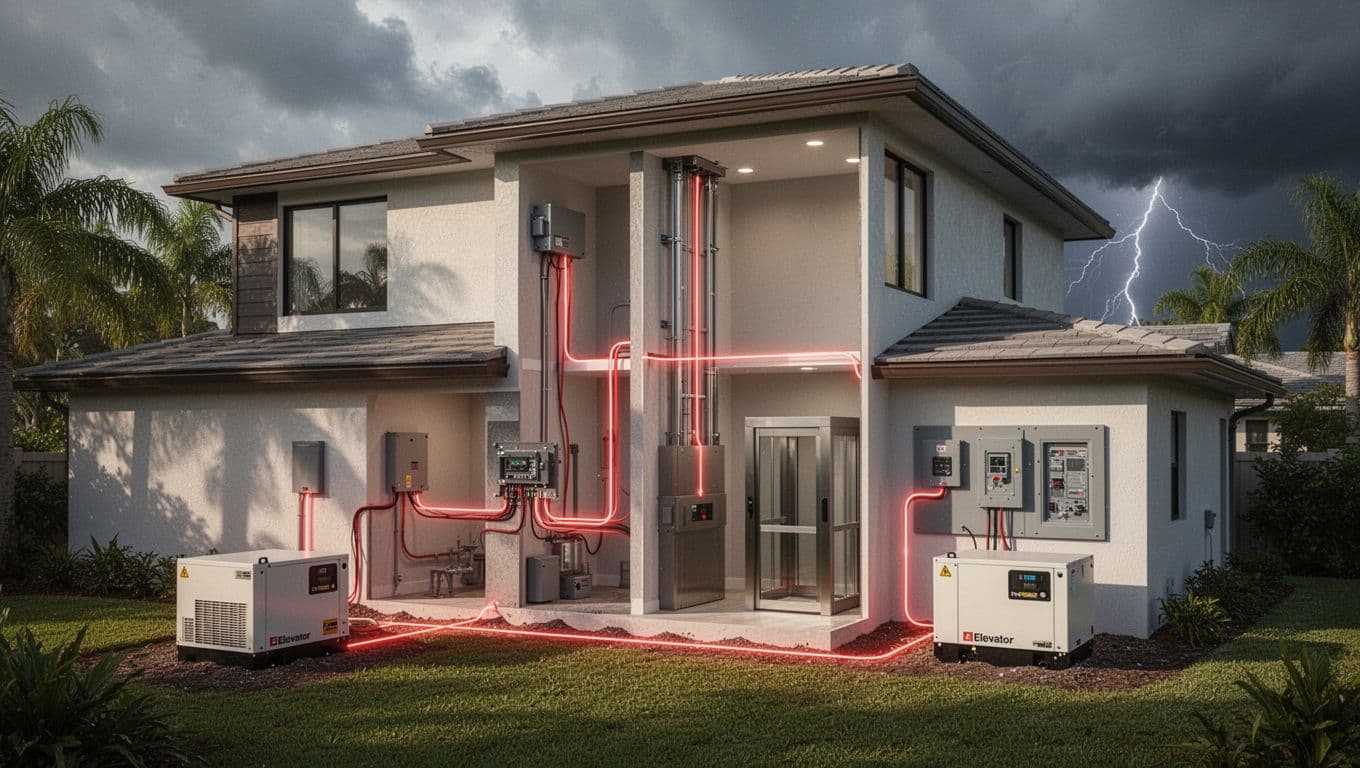
The automatic transfer switch detects utility failure and moves the home’s selected circuits to generator power. The elevator may connect through the main electrical panel, a dedicated standby panel, or another arrangement approved for the equipment. The backup generator must also handle the elevator’s startup demand and ongoing backup power needs.
Our automatic transfer switch guide explains why the switch is more than a basic electrical accessory. Its rating, location, wiring, grounding, and communication with the generator all affect system performance.
The licensed electrician and elevator contractor should verify the following before approving backup power:
- The elevator’s weight capacity, dedicated circuit, and disconnect requirements.
- The backup generator’s capacity during elevator startup.
- For pve elevators, controller compatibility with generator voltage and frequency.
- Whether the drive system can return energy to the electrical system.
- Whether machine-room ventilation, cooling, or emergency lighting needs generator support.
- During a power outage, whether the connected system supports emergency descent if full elevator operation isn’t approved.
- The correct classification under applicable emergency, standby, or optional standby rules.
Professional installation is essential. The electrician and elevator contractor should test it under load, including emergency lighting and approved controls. Homeowners shouldn’t modify elevator wiring, transfer equipment, or control panels themselves.
Portable generator is usually a poor fit
Can a portable generator run a home elevator? It may be technically possible in a manufacturer-approved design, but it isn’t a safe do-it-yourself solution.
Never connect one through an improvised cord or backfeed a home panel. A backup generator used for this purpose must remain outdoors, away from doors, windows, and vents, because carbon monoxide can enter the home. It also needs a properly rated transfer switch and enough capacity for the elevator’s starting demand.
For most Southwest Florida homeowners, a permanently installed standby generator offers better automatic operation and load management. A portable generator shouldn’t be connected to an elevator without written approval from the elevator manufacturer and a licensed electrician. A tested backup generator can keep approved elevator functions and other essential backup power loads available.
When does whole-home backup power make sense?
A whole-home system makes sense when home elevators support your daily accessibility plan. They can help you move safely between floors, reach a bedroom, and age in place. For many families, house elevators also support staying home as mobility needs change.
Storm frequency is another factor. In Fort Myers, Naples, Cape Coral, Bonita Springs, and nearby communities, a power outage can affect air conditioning, medical equipment, refrigeration, and elevators at once. A properly sized backup generator can protect more than one essential circuit, providing backup power during storm-related outages.
For a new custom home elevator, contact an authorized dealer first. Request the model’s weight capacity, emergency descent details, blower requirements, and generator recommendations when reviewing PVE elevators. Confirm these requirements for PVE elevators, then have a licensed electrician coordinate the backup power design, backup generator, transfer switch, fuel supply, permits, and final testing. During elevator installation, compare elevator cost with the whole-home generator and transfer equipment costs before selecting a permanently installed standby generator.
For an existing elevator, gather the model number, motor data, controller information, electrical panel details, current wiring, and weight capacity. A licensed electrician can assess the total elevator cost and determine the best solution, such as backup power from a backup generator or battery backup, emergency lighting, gravity-assisted descent, or a dedicated elevator interface. Review safety features, including communication options, and use whole-home generator maintenance to keep a standby generator ready.
If you want a licensed electrician to review the generator, transfer equipment, and elevator load together, Get a Free Consultation with a qualified Southwest Florida team.
Frequently Asked Questions
Can a whole-home generator run a home elevator?
Yes, a whole-home or standby generator can run a residential elevator if it is correctly connected and sized for the elevator’s running and startup demands. The elevator contractor and licensed electrician must also confirm that the controller, transfer equipment, and electrical system are compatible.
How large should a generator be for a home elevator?
There is no single generator size that works for every home elevator. Sizing must consider the elevator’s motor nameplate, voltage, phase, full-load amps, starting surge, weight capacity, drive system, and other loads such as air conditioning, pumps, and refrigeration.
Does a home elevator need a generator for emergency rescue?
Not always. Many elevators use battery backup, automatic emergency lowering, stored energy, or gravity-assisted descent to move the cab to a landing, open the doors, and allow passengers to exit safely.
Can a portable generator power a home elevator?
A portable generator may be possible only in a manufacturer-approved design, but it is not a safe do-it-yourself solution. Never use an improvised cord or backfeed the home panel; a licensed electrician must provide the correct transfer equipment and verify generator capacity.
Who should connect an elevator to backup power?
A licensed electrician should coordinate the generator, transfer switch, panels, disconnects, grounding, and wiring with the elevator contractor. The complete system should be tested under load, including emergency lighting, communication equipment, emergency descent, and any approved full-service operation.
Conclusion
A residential elevator can run on a backup generator or standby generator, but reliable operation depends on coordinated design. Weight capacity, motor starting demand, and controller compatibility all matter.
After a power outage, the safest plan may be full elevator operation or a battery backup system for emergency descent and landing only. A licensed electrician and elevator contractor can plan the right backup power solution before an outage leaves your household between floors.