


Most homeowners shop for a backup generator first and barely think about the electrical components that keep the power flowing. I understand why. The generator is the big box outside, which is the part you can see, hear, and compare by brand.
However, if you want your home to regain power without any manual effort, the automatic transfer switch is the essential piece that makes that happen. Once you understand the role of this device, the way your entire power system functions during an emergency starts to make a lot more sense.
Key Takeaways
- The Traffic Cop: An automatic transfer switch serves as the essential brain of your backup system, constantly monitoring the grid and signaling your generator to start the moment power fails.
- Crucial Safety: By physically disconnecting your home from the utility line before connecting to the generator, the switch prevents dangerous backfeeding that could threaten utility workers.
- Seamless Transition: Unlike manual portable setups, an automatic switch handles the entire transfer process in seconds, providing a reliable power handoff without requiring you to go outside.
- System Design Matters: Not all switches are identical; they must be properly matched to your home’s electrical service size and can be configured for either whole-house coverage or specific essential circuits.
- Maintenance is Key: Because the switch is integrated into your main electrical system, professional installation and ongoing routine maintenance are vital to ensure the system is ready when an actual emergency occurs.
What the automatic transfer switch actually does
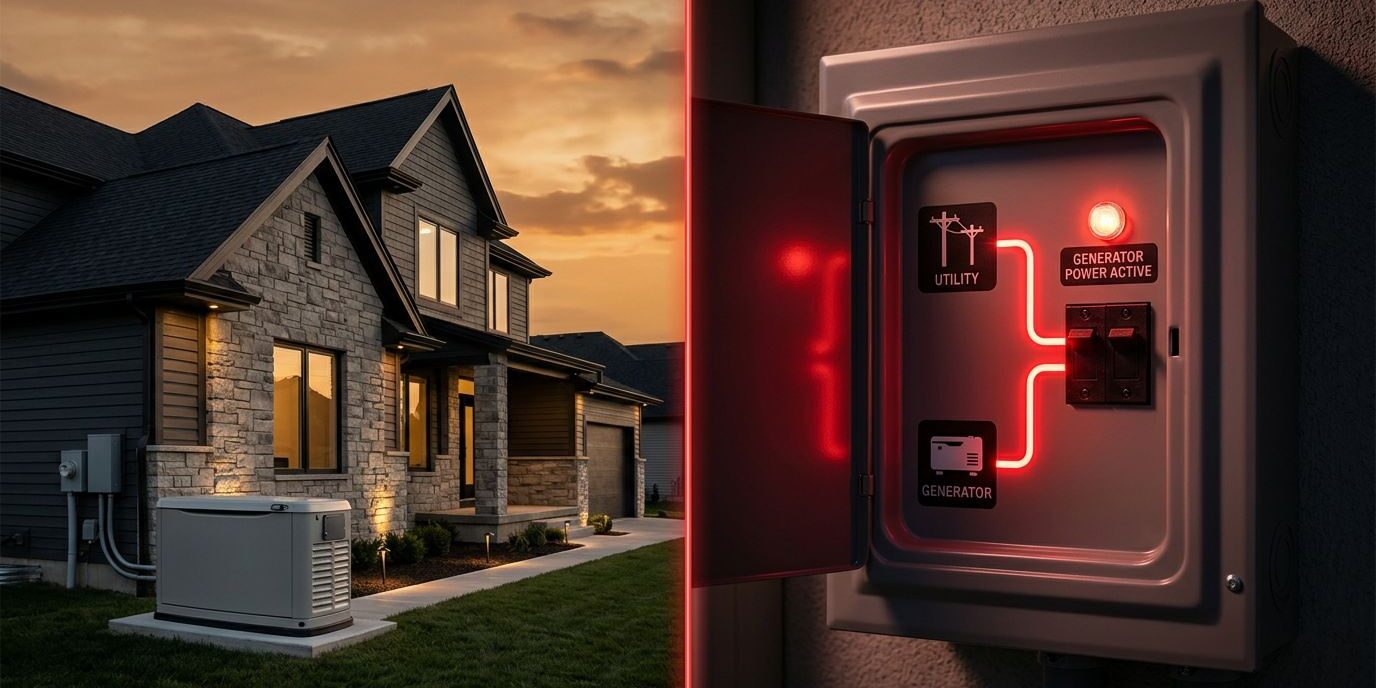
When I explain a whole-house generator, I usually start with one simple idea: the automatic transfer switch is the traffic cop of your electrical system. It constantly monitors utility power, communicates with the generator, and decides exactly which power source feeds your home.
That sounds small. It is not.
An automatic transfer switch monitors the incoming utility power line around the clock. When the grid drops out, or when voltage levels fall outside of a safe range, the switch instantly commands the generator to start. Once the generator reaches the correct voltage and frequency, the switch moves your home from the grid to your emergency power supply.
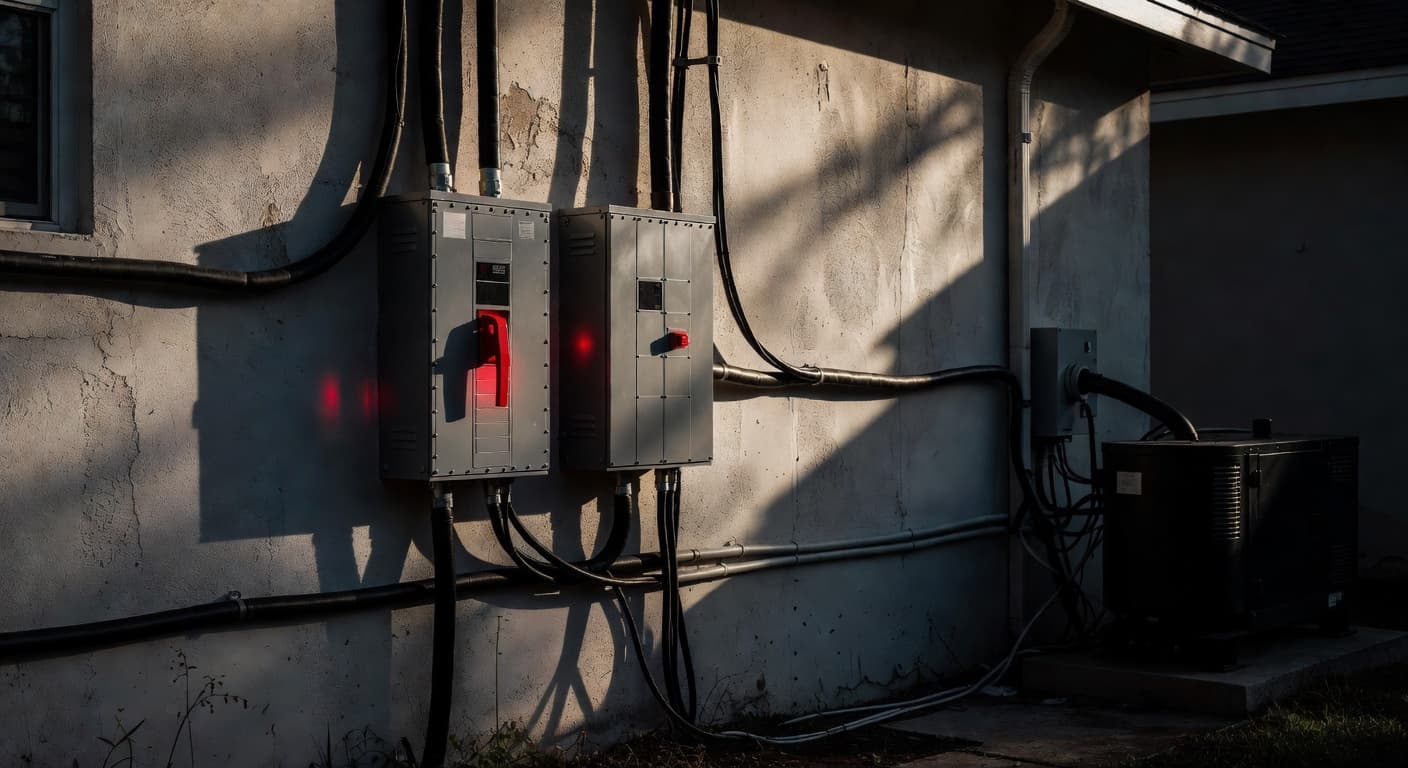
The most important part of this process is what it prevents. The switch ensures that utility power and generator power never feed the house at the same time. This physical separation prevents backfeeding, a dangerous condition that can damage your equipment and pose a lethal threat to utility line crews working to restore service.
I also like to clear up a common mix-up. The switch does not create power; the generator does that. The switch simply manages where the power originates and controls when the transfer occurs. While you might see complex switchgear used in large industrial settings, this unit is specifically engineered for safe, reliable residential use.
An automatic transfer switch doesn’t make power, it makes backup power safe and usable.
In many homes, the switch is mounted near the main load center or the utility meter. Some systems are designed to manage the entire home load, while others connect to a sub-panel. In those configurations, specific circuit breakers determine which essential items receive power during an outage.
That difference matters. If you expect the whole house to run, but the system is configured only for a smaller emergency panel, you will be disappointed the first time the lights go out.
What happens during an outage, step by step
Many people picture backup power like a movie scene where the lights go out, a machine roars to life, and everything turns back on instantly. Real life during a power outage is actually much more organized than that.
Here is the basic sequence most systems follow:
- Utility power fails or drops below the set threshold of the automatic transfer switch.
- The automatic transfer switch detects the loss of service and triggers an automatic generator startup to signal the unit to begin operation.
- The generator starts and reaches a stable speed, voltage, and frequency.
- The switch disconnects the home from the utility power line and proceeds to transfer load to the generator.
- When the grid returns and remains stable for a predetermined period, the switch moves the house back to utility power and shuts the generator down after a short cool-down cycle. For a complete look at that return sequence, see what happens when power returns after an outage.
This process usually takes seconds, not minutes. Most residential systems utilize an open transition, which means you will see a brief blink in the lights as the power shifts. That is completely normal, as the switch must wait for the generator to stabilize before it connects your home.
I tell homeowners to think of it like changing lanes on a busy road. You do not jerk the wheel and hope for the best; you check, wait for the right moment, and then move cleanly. A high-quality automatic transfer switch performs the same task with your electricity.
This is why a whole-house system feels so different from a portable unit. With a portable model, you must roll the machine out, start it by hand, connect heavy cords, and manually monitor your fuel. With a standby generator and an automatic switch, the system handles the entire handoff for you.
That reliability matters more in Southwest Florida than many people realize. Storm outages rarely happen at a convenient hour, and nobody wants to drag cords across a wet driveway in heavy wind or worry about whether the food in the fridge will still be cold by morning.
Picking the right switch and system layout
Not every automatic transfer switch is the same, and bigger is not always better. The right choice depends on your electrical service, your generator size, and whether you want full home coverage or only key circuits.
Most homes have 100-amp or 200-amp service, while larger properties may require 320-amp or 400-amp setups. Your automatic transfer switch must be service entrance rated to properly handle the connection from utility power. While three phase systems are common in industrial applications, the vast majority of homes utilize single-phase power. We must also ensure the enclosure is NEMA 3R rated to withstand our coastal weather.
I also look at the power distribution plan. Do you want both air conditioners running? What about the range, water heater, pool equipment, or EV charger? If the generator cannot support everything at once, the system uses load shedding to cycle large appliances so the generator stays within its limits. For those looking to avoid a momentary flicker, a closed transition switch is a high-end alternative that synchronizes the power before the shift. Furthermore, every quality unit includes a manual override as a vital safety feature for maintenance.
That is where a lot of homeowners get tripped up. They assume a whole-house generator means every single item can run at full blast. Sometimes it does, but often a smarter design manages the load to prioritize essential circuit breakers.
Here is the quick comparison I usually give:
| Setup | How power transfers | What it usually powers | What you deal with |
|---|---|---|---|
| Whole-house system with automatic transfer switch | The switch senses the outage and handles the transfer load automatically | Most or all of the home, depending on design | Little beyond routine service |
| Portable generator with manual connection | You start it and connect it yourself | A few essentials or selected circuits | Fueling, setup, more noise, more hands-on work |
The takeaway is simple. Portable generators can cover a fridge, lights, and a few must-have items. Whole-house systems are built for a different job. They are quieter, they are usually fed by natural gas or propane instead of frequent gasoline refills, and they can support much more of daily life during a long outage.
I prefer to look at the whole system, not only the generator badge. Whether you are comparing Generac, Briggs and Stratton, or another major brand, the switch still has to match the home service and the way you live. If you are weighing options, it helps to see what whole house generator installation and repair looks like when one team handles the full setup.
Why installation and maintenance matter in Southwest Florida
This is the part people often underestimate. The automatic transfer switch is not a plug and play accessory. It is tied into the main electrical service, and in many homes the job also touches fuel supply, pad location, permits, startup, and inspection. Because this process involves complex power distribution within your home, it is essential to hire a licensed electrician who understands the local codes and requirements.
Around Southwest Florida, that can mean coordination with an electrician, a gas utility, or a propane provider. I have seen homeowners breathe easier once that puzzle is handled by people who do it every day, because the moving parts add up fast. It is also wise to consider adding integrated surge protection to your setup, as this helps shield both the switch and your sensitive home electronics from sudden voltage spikes.
It is important to manage expectations regarding the transition. While an uninterruptible power supply provides instantaneous power, an automatic transfer switch involves a brief delay of several seconds while the generator ramps up. Once you understand this cycle, it provides peace of mind during an outage.
A clean install matters, but follow up matters just as much. I hear the same thing over and over from local homeowners after a storm: they remember whether the system started, and they remember whether someone answered the phone when help was needed. That says a lot. Some of the strongest local feedback comes from simple, practical outcomes. A tech shows up and fixes a problem another company could not pin down. An install comes in clean and on schedule. A generator runs through a major storm exactly like it should. Weekly exercise cycles show up in a phone app, so the owner knows the system is testing itself instead of sitting silent for months.
That last point is worth hanging onto. Remote monitoring can give you alerts, exercise history, and a quick look at system status. The switchgear still does the transfer, but the app helps you catch a dead battery, service reminder, or fault code before the next outage exposes it.
After installation, routine generator maintenance plans are what keep the system ready. Oil, filters, battery condition, electrical connections, and transfer testing all matter. A standby generator that never gets checked is like a life jacket left in the sun for years. It might still be there when you need it, but that is not the time to find out.
If you want someone to look at your panel, fuel source, and biggest loads before storm season, Get a Free Consultation.
Frequently Asked Questions
Will the power stay on instantly when the grid goes down?
There is usually a short delay of several seconds while the generator starts and stabilizes its voltage. During this time, you will experience a brief flicker or a moment without power before the automatic transfer switch successfully shifts your home to generator power.
Can I install an automatic transfer switch myself?
No, this is not a DIY project. The switch must be hardwired directly into your home’s main electrical service, which requires a licensed electrician to ensure compliance with local safety codes and proper system integration.
What is load shedding and do I need it?
Load shedding is a smart feature that manages which appliances receive power if your total electrical demand exceeds your generator’s capacity. It prevents the generator from stalling by automatically cycling large, high-energy appliances off or on as needed.
Does the transfer switch also charge my generator’s battery?
While the transfer switch itself acts as the communication link, most modern standby systems include a built-in battery charger that keeps the generator ready. Regular maintenance checks are still recommended to ensure the battery remains in healthy condition for reliable startup cycles.
Conclusion
The generator often receives the spotlight, but the automatic transfer switch is the essential component that makes backup power feel truly seamless. It senses a power loss, safely separates your home from the utility grid, and redirects electricity exactly where it needs to go without any manual effort.
When this switch is properly sized, installed correctly, and consistently maintained, your system performs exactly as intended. The lights may flicker briefly, but the generator takes over immediately, allowing you to stay safely inside instead of struggling with extension cords during a storm. This level of reliability and convenience is the primary goal of investing in a high-quality whole-house backup generator.