


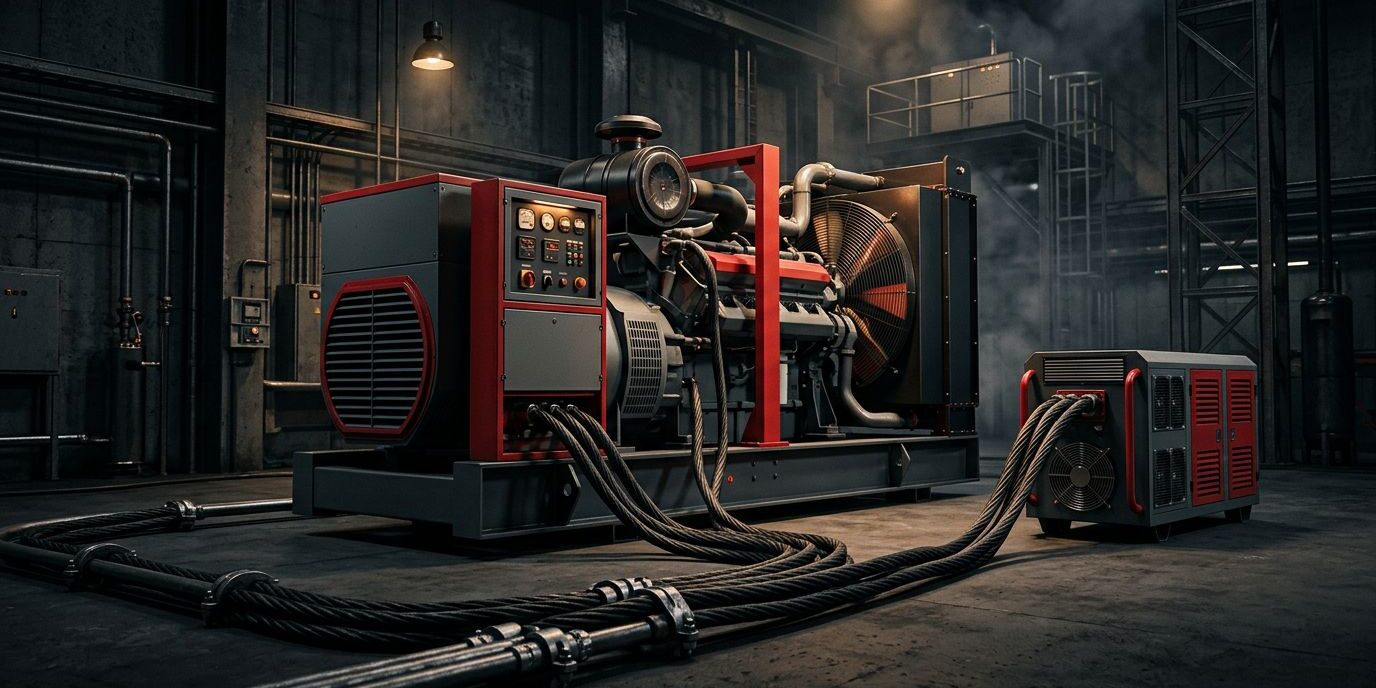
A backup generator may start normally and still fail when your home or facility needs full emergency power. A professional generator load test applies controlled electrical demand to confirm the engine, alternator, controls, fuel supply, and transfer equipment work together.
We use load testing to uncover problems before a hurricane, utility failure, or equipment outage exposes them. The process is controlled and documented, making it more thorough than running a generator for a few minutes during a routine inspection.
Key Takeaways
- A generator load test applies controlled electrical demand to verify that the engine, alternator, controls, fuel system, cooling system, and transfer equipment work together.
- Technicians inspect the generator, connect a properly rated load bank, and increase demand in stages while recording voltage, frequency, temperature, pressure, alarms, and other performance readings.
- Resistive, reactive, and combination load banks test different conditions, so the equipment and test level should match the generator, application, manufacturer instructions, and local requirements.
- If the generator overheats, loses voltage, or develops another fault, the load should be removed and the cause diagnosed before the unit is returned to service.
- Routine load testing, transfer testing, insulation testing, maintenance, and accurate service records help reduce the risk of failure during an outage.
Why Professional Generator Load Testing Matters
A weekly exercise cycle confirms that the generator can start and run. It doesn’t prove the unit can carry the electrical demand connected to it. That difference matters when air conditioning systems, refrigerators, pumps, security equipment, and other circuits start at the same time.
A load bank provides a measured electrical demand without relying on the building’s actual equipment. Technicians can increase that demand gradually and watch how the generator responds at different capacity levels.
The test can reveal:
- Voltage that drops when the load increases
- Frequency instability caused by engine or governor problems
- Weak batteries, fuel restrictions, or poor fuel pressure
- Cooling problems that only appear under demand
- Alternator, wiring, or control issues
- Automatic transfer switch problems
- Wet stacking caused by extended light-load operation
Wet stacking can affect diesel generators when they operate for extended periods at very light loads. Incomplete combustion may allow unburned fuel and carbon deposits to collect in the exhaust system. A properly planned load test helps the engine reach a useful operating temperature and load level.
A generator that starts is not necessarily a generator that can carry your home during an outage.
For Southwest Florida homeowners, humidity, salt air, insects, rodents, and storm debris add more reasons to schedule professional testing and routine service. Our generator maintenance services include inspections that help identify these conditions before they affect performance.
What Happens During a Professional Load Test?
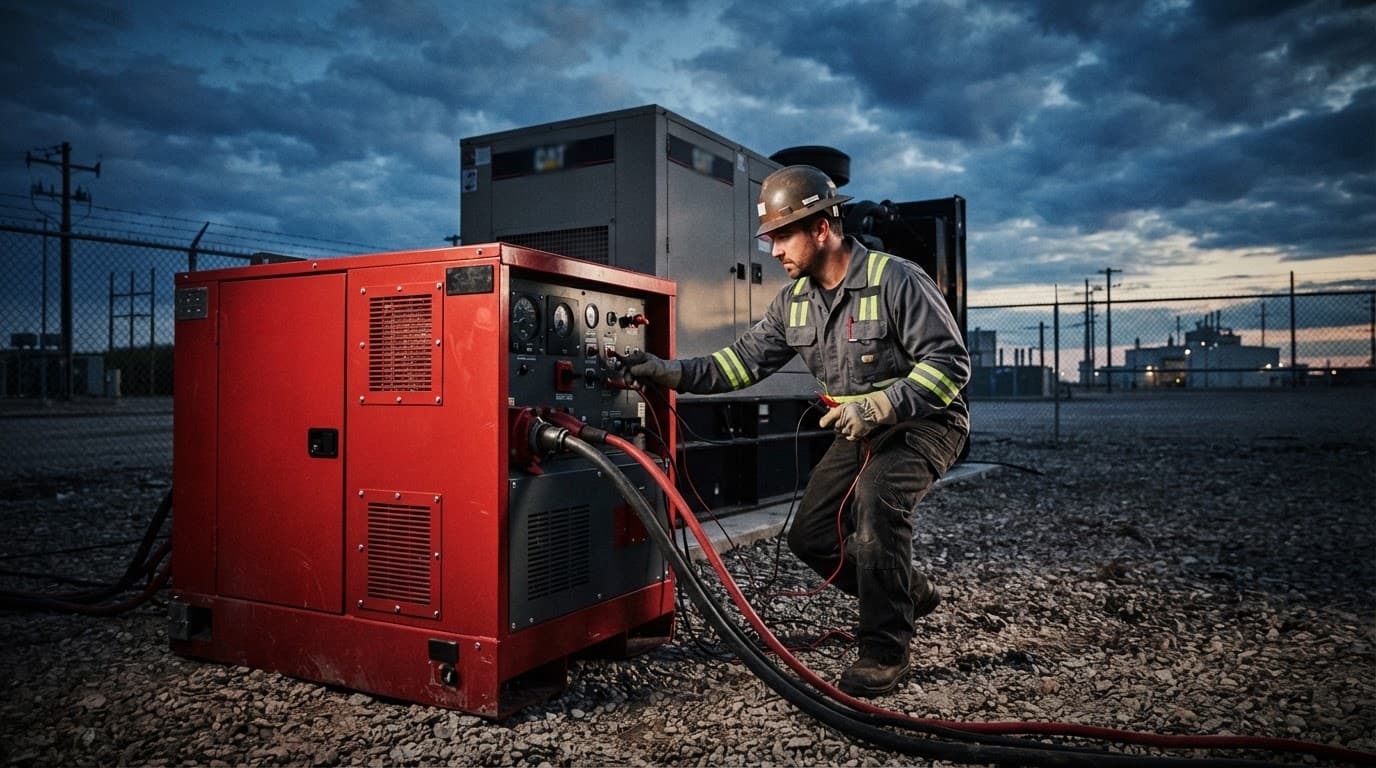
A professional load test follows a defined sequence. The exact procedure depends on the generator’s size, fuel type, application, manufacturer instructions, and local requirements.
1. The technician reviews the generator and site
Before connecting test equipment, the technician confirms the generator’s rated capacity, nameplate rating, voltage, phase, frequency, fuel type, and available connection points. The test plan must match the equipment, not simply the building’s actual connected load. Applying the wrong load or connecting equipment incorrectly can damage the generator or create an electrical hazard.
The technician also reviews the building’s electrical setup, generator clearances, ventilation, exhaust direction, and access around the unit. For a home standby generator, the test area must remain clear of people, pets, combustible materials, and unnecessary equipment.
2. Pre-test inspections are completed
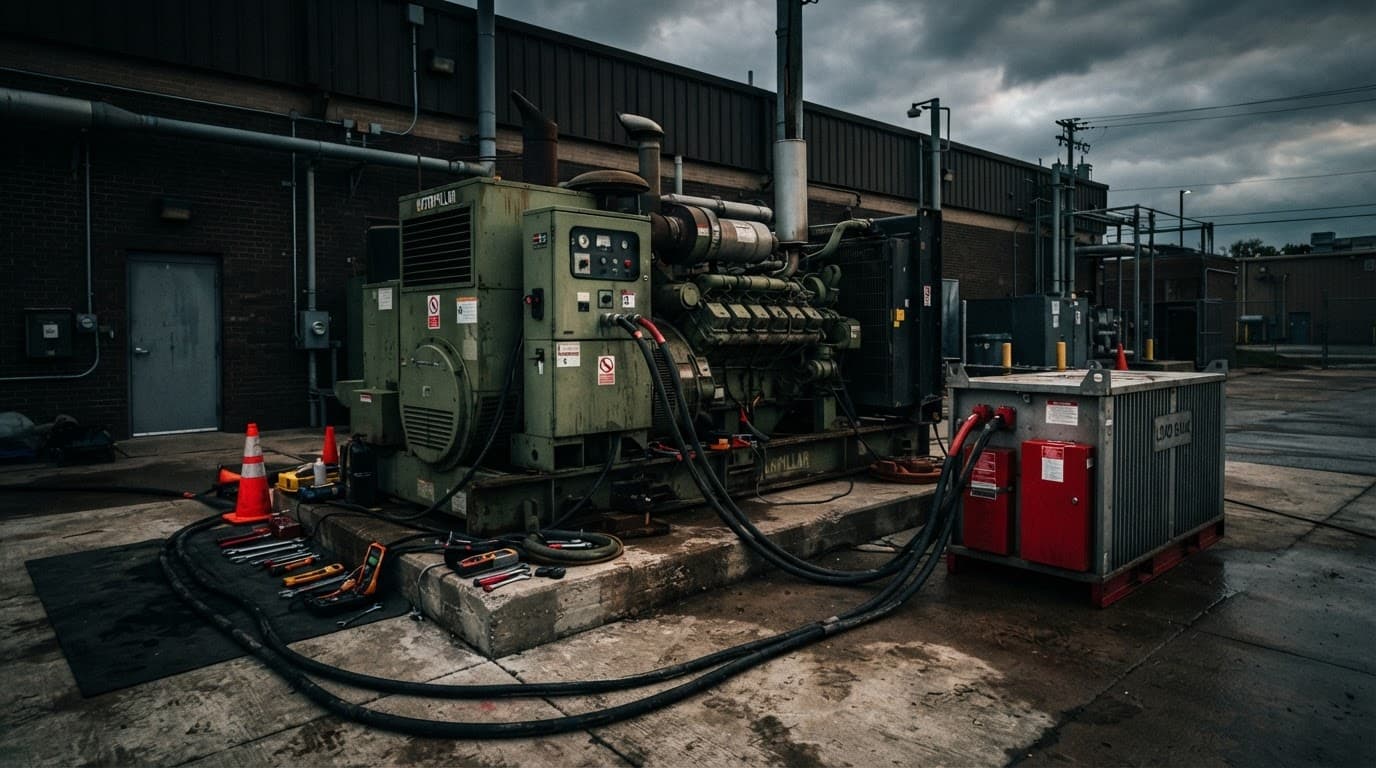
The generator is checked before it runs under load. This normally includes:
- Engine oil level and visible leaks
- Coolant level, hoses, radiator, and airflow
- Fuel supply, fuel pressure, and shutoff valves
- Battery condition, terminals, and charger operation
- Belts, filters, wiring, grounding, and connections
- Exhaust system components and carbon monoxide safety
- Control panel status, alarms, and emergency stop function
A technician also looks for corrosion, nesting material, insect debris, and blocked openings. These issues are common in Florida and can affect cooling, wiring, and airflow.
The generator should be in the correct operating mode before testing. If the system is not in automatic mode, it may run locally but fail to start during an outage.
3. The load bank is connected
Load bank testing uses separate equipment that converts the generator’s output into heat. It supplies a controlled demand without relying on the building’s equipment.
The load bank must be placed where heat can discharge safely, with enough clearance around the fans and exhaust openings. The technician connects it using properly rated cables and verifies the connection before starting the generator.
A professional doesn’t guess at capacity. The cable size, connection method, protective devices, and load bank rating must match the generator and the test plan.
4. Load is applied in stages
The generator first starts with little or no load. Once oil pressure, voltage, and frequency stabilize, the technician applies demand through controlled load steps. Common stages include 25%, 50%, 75%, and 100% of rated capacity, when the generator and test plan allow it.
The technician pauses at each stage to record readings and watch for abnormal behavior. A generator that performs well at 25% may show a problem at 75%, especially when the cooling system, fuel supply, or voltage regulation is weak.
A residential generator may not need to reach 100% during every service visit. The test should follow the manufacturer’s requirements and the actual size and design of the system.
Resistive and Reactive Load Banks Test Different Conditions
Not every load bank simulates the same kind of electrical demand. The correct equipment depends on what the generator needs to prove.
Resistive load banks imitate loads such as heating elements, incandescent lighting, and other equipment that consumes power at close to unity power factor. They help verify the generator’s basic kilowatt output.
Reactive load banks imitate inductive equipment, including motors, transformers, pumps, and compressors. These loads place additional demands on the generator’s alternator and voltage regulation. Testing at a power factor such as 0.8 provides a more realistic picture for commercial facilities with large motors.
Combination load banks apply both resistive and reactive demand. They are often used to reproduce the total electrical load found in a larger building.
A whole-home generator typically supports appliances, air conditioning, pool equipment, and pumps. A residential technician may test the generator itself, then verify the transfer switch and selected building loads separately.
What Technicians Monitor During the Test
A professional load test is not complete when the unit reaches a target percentage. Readings during the test matter just as much as the final load level.
Technicians monitor output voltage and frequency because unstable readings can damage sensitive electronics or point to an engine control problem. They also check amperage, kilowatts, kilovolt-amperes, power factor, oil pressure, coolant temperature, exhaust temperature, and fuel performance. They compare the coolant reading with the generator’s normal operating temperature.
Changes in sound, vibration, smoke, or exhaust behavior also deserve attention. A sudden rise in the reading may indicate a blocked radiator, low coolant, a worn belt, a faulty thermostat, or excessive load. A frequency drop may point to insufficient fuel delivery, engine maintenance needs, or a governor problem.
The control panel is monitored for active and stored alarms. Technicians record the readings at each load stage so future service visits can compare performance over time.
What Happens If the Generator Overheats or Fails?
The technician should reduce or remove the load and follow the generator’s safe shutdown procedure. Nobody should open a hot radiator cap or work around moving belts and fans. Hot coolant and engine components can cause serious injuries.
After the generator reaches a safe temperature, the technician checks airflow, radiator cleanliness, coolant level, hoses, belts, thermostat operation, exhaust system clearance, and the load-bank setup. A blocked cabinet opening or debris around the radiator may be enough to cause overheating, but the cause must be confirmed before the unit returns to service.
Common test symptoms can point toward different problems:
- An overcrank condition may involve the battery, fuel supply, fuel valve, or starting controls.
- Low oil pressure may indicate low oil, a leak, a sensor problem, or an internal lubrication issue.
- Undervoltage can involve the alternator, voltage regulator, wiring, or excessive demand.
- Underspeed may point to fuel restrictions, governor problems, or engine maintenance needs.
- A high-temperature alarm requires a cooling and airflow inspection before another load attempt.
The generator shouldn’t be repeatedly restarted after a failed test. Repeated attempts can turn a small issue into starter, battery, or engine damage. A qualified technician should diagnose the cause and document the findings.
If you need a professional evaluation after a failed test, Get a Free Consultation before the next outage puts your household at risk.
How Insulation Testing and Transfer Testing Complete the Process
Load testing checks how the generator produces power under demand. It doesn’t fully evaluate the condition of the alternator’s insulation. That is why insulation testing can be a useful part of a complete service program.
With the equipment isolated and de-energized, a qualified technician can perform insulation testing with an insulation resistance tester, measuring resistance in megohms. The polarization index compares insulation resistance readings taken at different times. The polarization index is often calculated by dividing the 10-minute reading by the 1-minute reading. Low or declining polarization index results can point to moisture, contamination, aging, or damage inside the windings.
Insulation testing results should be interpreted in context, since there is no single pass value for every generator. The correct limits depend on the manufacturer, equipment design, temperature, and test procedure, and technicians should document the polarization index for future comparison.
Transfer switches should also be tested. During a controlled outage simulation, the generator should receive the start signal and reach stable output before the automatic transfer switch transfers the approved loads. When utility power returns, the switch should retransfer correctly and allow the generator to cool down before shutdown.
How Often Should a Generator Receive a Load Test?
NFPA 110 requirements depend on system classification, adopted edition, authority having jurisdiction, and manufacturer instructions. The common benchmark for emergency power systems is a monthly test lasting at least 30 minutes, with the generator carrying at least 30% of its rated capacity.
That doesn’t mean every generator requires a full load test every month. If the building load doesn’t reach the required level, load bank testing can provide the needed demand. Test planning should confirm the generator’s nameplate rating and the load required for the installation. Many facilities also schedule an extended annual load-bank test, often using a 1.5-hour procedure, but the exact requirement should be confirmed for the local installation.
For facility managers at healthcare facilities and data centers, documented testing can help reduce unplanned downtime and support compliance.
The NFPA 110 testing requirements summary provides useful background, but it doesn’t replace the requirements of your local inspector, manufacturer, or electrical professional.
After testing, keep the service report with the generator records. The report should include load levels, voltage and frequency readings, temperatures, alarms, transfer results, defects, repairs, recommendations, and, where applicable, insulation-test results and the polarization index. These records support preventive maintenance, warranty questions, and insurance discussions if storm damage or a power event affects the system.
Frequently Asked Questions
What does a generator load test prove?
A generator load test shows whether the unit can carry electrical demand, not just start and run. It helps identify problems with voltage regulation, frequency, fuel delivery, cooling, the alternator, controls, and transfer equipment.
How is a load bank used during the test?
A load bank connects to the generator and creates a controlled electrical demand without relying on the building’s equipment. Technicians typically apply the demand in stages, such as 25%, 50%, 75%, and 100% when appropriate.
How often should a generator receive a load test?
Testing frequency depends on the generator’s application, manufacturer instructions, local requirements, and the adopted NFPA 110 edition. Monthly emergency-power testing is a common benchmark, while facilities may also schedule extended annual load-bank testing.
What should happen if the generator fails during the test?
The technician should reduce or remove the load and follow the generator’s safe shutdown procedure. The cause should be diagnosed and documented before another load attempt, since repeated restarts can cause additional starter, battery, or engine damage.
A Professional Test Protects More Than the Generator
A professional generator load test checks the complete power system under controlled demand. It verifies that the generator and transfer equipment can respond reliably when needed. A complete service program can also include insulation testing, along with load and transfer testing.
Routine maintenance, accurate records, and appropriately scheduled testing help facility managers and homeowners plan service. They reduce the chance of discovering a failure during a hurricane outage. The goal is simple: when utility power fails, your generator should do more than start. It should carry the electrical demand safely and reliably.