

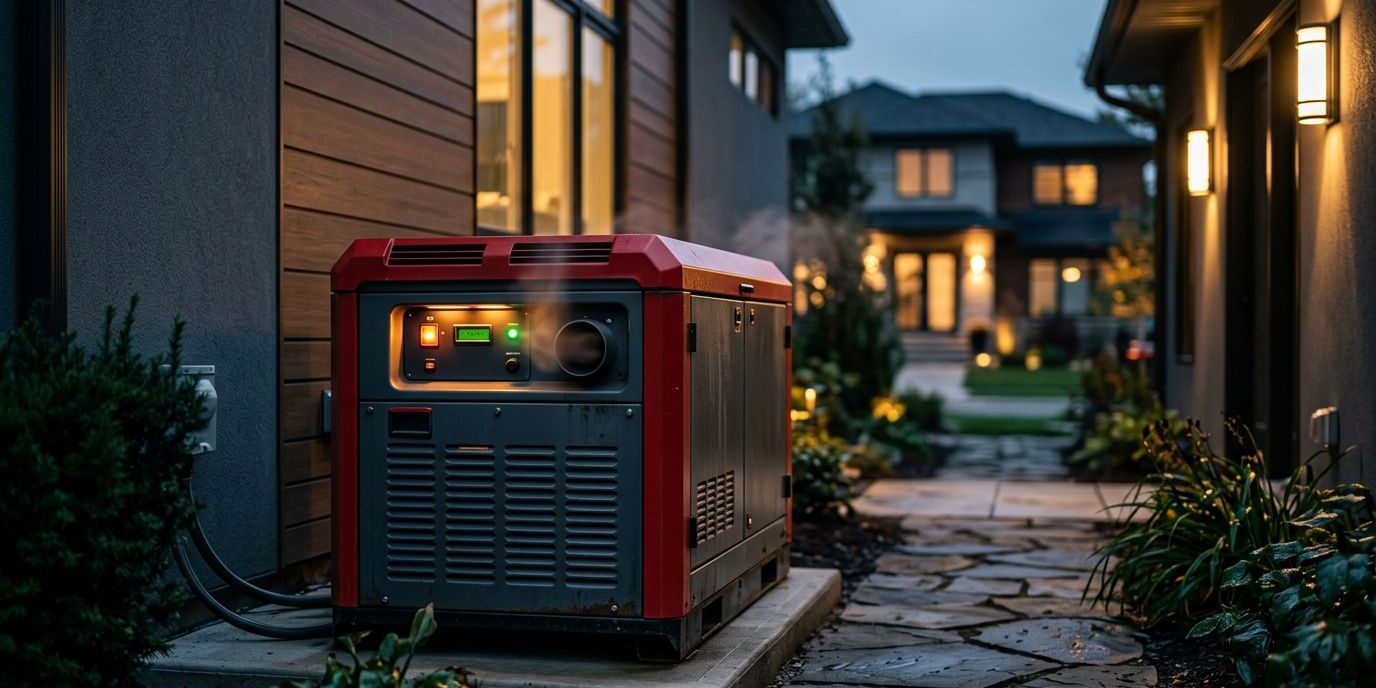
When a backup generator starts while service appears normal, the question behind “generator runs utility power” is understandable. The cause may be a scheduled test, a brief sensing event, or a control issue.
A scheduled generator exercise is often normal and doesn’t necessarily mean a power outage occurred. Repeated starts or failure to stop, however, can point to a problem that needs professional attention.
Key Takeaways
- A generator that starts on the same day and time each week may be completing a normal scheduled exercise cycle without transferring the home’s electrical load.
- Random starts can result from brief voltage sags, phase problems, loose sensing connections, incorrect transfer switch settings, or remote commands.
- If the engine runs but the home has no backup power, the problem may involve the output breaker, transfer switch, voltage regulator, alternator, wiring, or control system.
- Homeowners should record start times, run duration, alarms, and power status, but leave electrical testing and repairs to a qualified technician.
- Regular maintenance, transfer switch testing, load testing, and clear service records help keep a generator ready for Southwest Florida outages.
Why Does “generator runs utility power” Happen?
A standby generator can start even when your lights, appliances, and internet appear to work normally. In many cases, it’s responding to a programmed test instead of an actual interruption.
A scheduled generator exercise is often normal
Most automatic standby generators run an exercise cycle on a regular schedule. Depending on the model, that schedule may be weekly, biweekly, or monthly. Some current Generac home standby systems run for approximately five minutes during an exercise cycle, although the exact duration depends on the model and controller settings.
During a normal generator exercise, the engine starts and runs without transferring the home’s electrical loads. The utility continues supplying the house, so your lights usually remain on normal service.
If your generator starts on the same day and time each week, runs briefly, and shuts down without an alarm, the exercise timer is the first thing we’d check. The schedule may be programmed at the control panel or through a connected monitoring application.
The transfer switch watches voltage
Your automatic transfer switch doesn’t judge utility service by whether the lights are on. It monitors electrical conditions, including voltage and, on some systems, frequency and phase.
Brief voltage sags may be enough to send a start signal. Other possible causes include:
- A missing phase in a three-phase service
- A phase imbalance
- Power quality problems caused by nearby equipment
- A loose utility-sensing connection
- Sensor issues involving the sensing circuit or control board
The disturbance may last only a moment, making the power quality issue easy to miss. The controller can still record it and begin a start sequence. If utility voltage returns before the unit moves the load, the generator may run briefly and then shut down.
An incorrect transfer switch configuration can also cause unnecessary startup sequences. The automatic transfer switch may have a wrong sensing setting or loose control wiring. Any of these issues can make the controller interpret normal utility service as an outage.
Remote commands and load management can start the unit
Commercial buildings may use a building management system, remote monitoring platform, peak shaving controls, or load management equipment. These systems can request generator operation even when the utility is available.
A facility manager should review the building control system’s event log after an unexpected commercial start. Contact technical support if the source remains unclear. The log can distinguish a schedule, a sensing event, a demand-response command, or a manual start. It may also identify a power quality event.
An incorrect transfer switch configuration can also cause unnecessary startup sequences. A wrong sensing setting, loose control wiring, or sensor issues can make the controller interpret normal utility service as an outage.
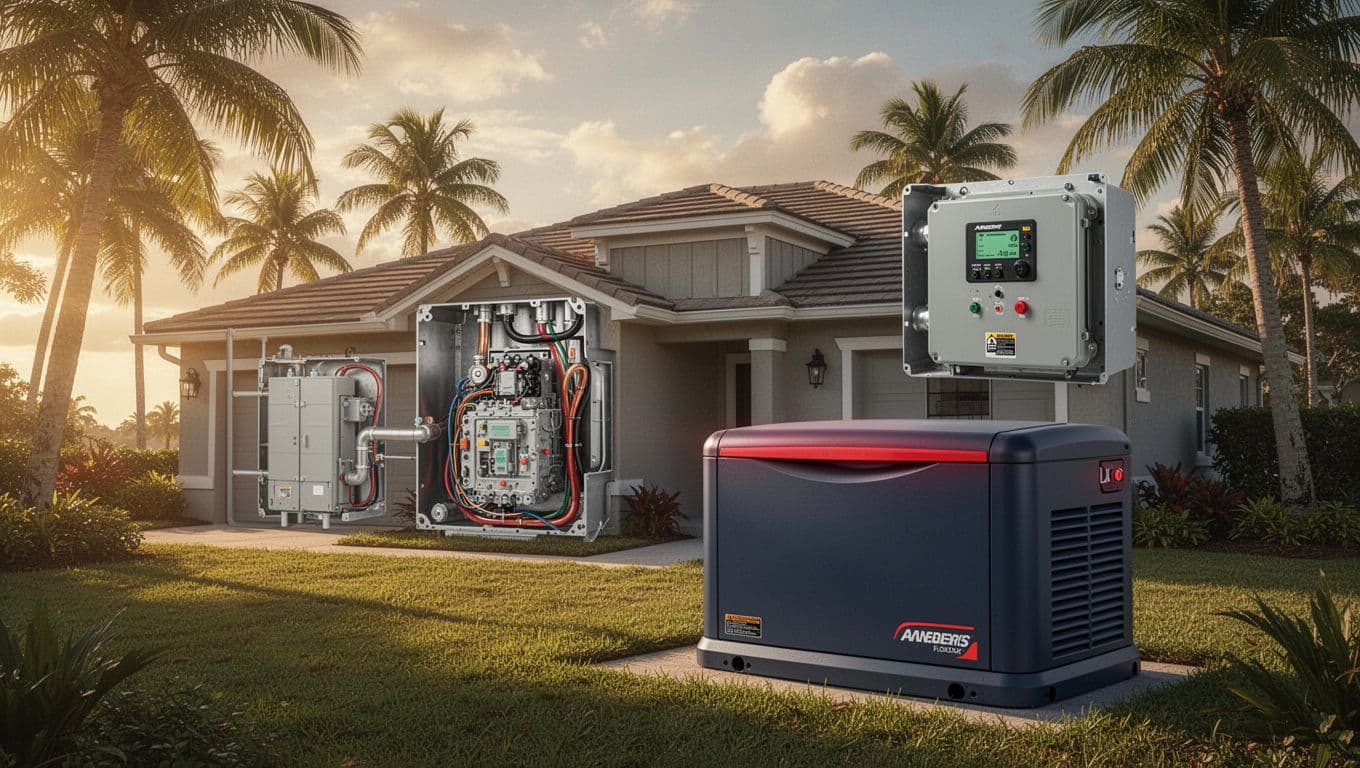
A generator that starts on a consistent schedule is often completing its exercise. A generator that starts randomly, transfers unexpectedly, or shows an alarm needs professional testing.
How the Automatic Transfer Switch Controls Backup Power
An automatic transfer switch is the control point between utility power, the generator, and the home’s electrical panel. It senses the utility, sends the start command, and decides when the home can receive generator power.
The transfer switch senses voltage and power quality, while load management prioritizes selected circuits instead of the whole home. When voltage falls below the programmed limit for a set period, it sends the start command. The generator then reaches stable engine speed and power output. After that, the switch confirms power output before transferring the approved electrical load to the generator source.
When the utility returns, the transfer switch confirms that service is stable. It returns the load to the utility and allows the generator to cool down before shutting off.
A current Generac manual uses a threshold below 65 percent of nominal voltage for five consecutive seconds before standby transfer. That setting is model-specific, and the control panel may use different thresholds, so it shouldn’t be treated as universal across generator brands.
A generator may run without transferring the home’s load during generator exercise. It may also start during a short voltage event that ends before the transfer process is complete. You can review more about this equipment in our standby generator transfer switch guide.
The switch must keep the two power sources isolated. If the utility and generator connect at the same time, the electrical system can be damaged, and dangerous current can travel into utility lines.
When the Generator Runs but the House Has No Power
The phrase “generator runs utility power” can describe an unexpected start. Homeowners also use it when a backup generator’s engine runs while the home remains on normal service without backup electricity. These are separate problems.
A running engine proves that the generator can start and operate mechanically. It doesn’t prove that the alternator is producing usable power output or supplying the connected electrical load.
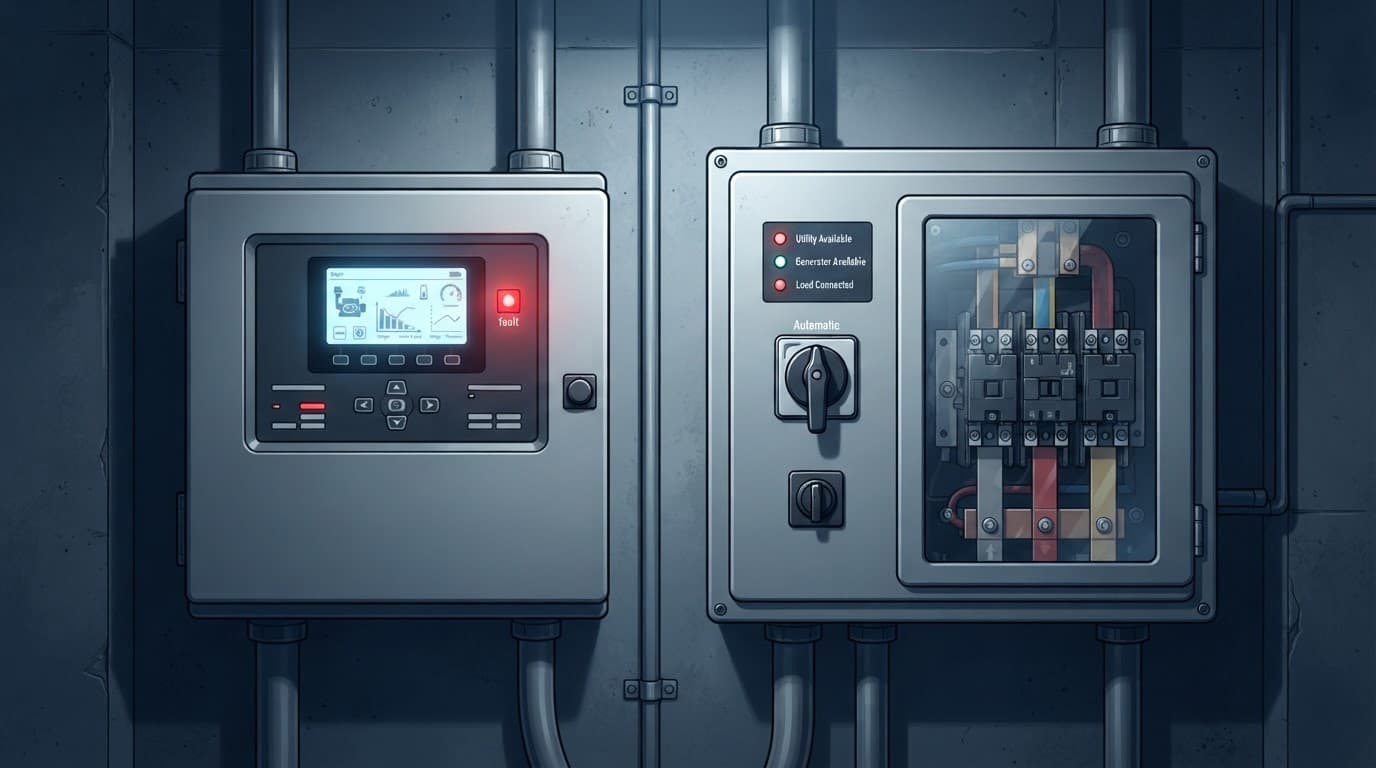
The generator output breaker may be open
A tripped or open circuit breaker can stop generator power from reaching the home’s circuits. The control panel may show that the engine is running while the home remains on service or has no power at all.
You may be able to see the breaker’s position without removing a cover. Don’t repeatedly reset a breaker that trips again. A repeated trip usually points to an overload, short circuit, damaged wiring, or an internal generator problem.
The transfer switch may not be moving the load
The generator can produce proper voltage while the automatic transfer switch fails to move the home’s circuits. Possible causes include a failed actuator, control wiring problem, incorrect configuration, damaged contacts, or a utility-sensing fault.
This is especially important if the generator starts during a real service interruption but the electrical panel never receives backup power. The generator and transfer switch must be tested separately.
The voltage regulator or alternator may have failed
The voltage regulator, often called an AVR, controls the generator’s electrical output. If the voltage regulator fails, the engine may run normally while power output becomes low, unstable, or absent.
A loss of residual magnetism can create a similar symptom. The alternator needs a small magnetic field to begin building electrical output. If that field is lost, the engine can run without the alternator generating power.
Other possible faults include a blown fuse, damaged alternator windings, poor connection, wiring failure, failed control panel, or corroded terminal. Low oil pressure protection can also stop a unit or prevent continued operation, and safety sensors should never be bypassed.
These problems require electrical testing and a model-specific diagnostic evaluation. A service technician should verify the power output and test for residual magnetism before attempting repairs.
The generator cabinet contains energized components even when the engine is off, so this isn’t a safe DIY diagnosis.
Safe Troubleshooting Steps for Homeowners and Facilities
We recommend starting with observations, not repairs. A few details can help a licensed technician identify the problem faster.
- Record when the generator starts. Note the start time, run duration, shutdown behavior, and any alarm on the control panel. A consistent schedule often points to exercise mode.
- Check the home’s power status. Determine whether utility power serves the whole home, selected loads, or neither. If only certain circuits are off, note the electrical load and whether load management or a branch circuit breaker is involved.
- Look for visible warning signs. From a safe distance, check for water intrusion, storm debris, fuel odor, smoke, unusual sounds, damaged conduit, nests, or chewed wiring. Don’t open the enclosure.
- Review monitoring or building logs. A home application with remote monitoring may identify the exact start command. A commercial event log with remote monitoring may show why the generator started outside its normal exercise schedule.
- Call a qualified technician when symptoms repeat. This includes random starts or failed transfers during a power outage. Schedule service if it produces no power output, trips a breaker, or shows an alarm.
Never plug a portable generator into a wall outlet or connect it to home wiring without approved equipment, including a listed transfer switch or a listed, panel-compatible, properly installed interlock kit. Entergy’s generator safety guidance warns against backfeeding, which can send electricity into utility lines.
Backfeeding can seriously injure or kill utility workers repairing downed lines and damage the electrical system when service returns out of phase. Proper isolation is explained in this municipal transfer switch safety guidance.
If you smell gas, see standing water near electrical equipment, or notice fire or smoke, stay away. Call the electric company or emergency services for emergency repair. Don’t use an interlock kit as a reason to bypass safety controls or manually force the equipment.
Preventing Generator Problems in Southwest Florida
Southwest Florida conditions create extra demands for generator maintenance. Heat, humidity, salt air, insects, rodents, heavy rain, and storm debris can affect batteries, terminals, sensors, wiring, and control components.
A proper service visit should include oil and filter service, battery testing, cable inspection, air intake review, corrosion checks, fuel-system inspection, and a test of the exercise cycle. A service technician should test the transfer switch under load and confirm that the transfer switch returns the load correctly. A controlled load test should verify stable power output across the intended electrical load. Selected-load settings should be reviewed for load management, along with power quality checks for surge, lightning, or abnormal voltage conditions.
Keep installation records, permits, service invoices, repair notes, and remote monitoring records together. Remote monitoring can store run/start history, alerts, and event history. If the engine runs but produces no power, a service technician should check residual magnetism and document the finding. The service record should document the residual magnetism test result, helping us identify recurring problems and support warranty questions. Storm, smoke, flooding, or electrical hazards may require emergency repair rather than routine service.
Homeowners insurance usually isn’t a maintenance contract. Normal wear, an old battery, missed oil changes, rodent-chewed wiring, corrosion from poor care, and internal mechanical failure may not be covered. Storm, lightning, fire, or certain surge damage may be handled differently under your policy, deductible, and endorsements.
Our whole-home generator maintenance services help keep the generator system ready before hurricane season and extended outages. If the system is starting unexpectedly or failing to power your home, Get a Free Consultation for professional guidance.
Frequently Asked Questions
Why does my generator run when utility power is on?
A generator may be running its scheduled exercise cycle, which usually starts the engine without transferring the home’s electrical load. It may also be responding to a brief voltage event, a sensing problem, or a command from a monitoring or building management system.
Is it normal for a standby generator to run without powering the house?
Yes, during a normal exercise cycle the generator can run while the utility continues supplying the home. If it starts during an actual outage but never transfers the load, the transfer switch, output breaker, wiring, or generator power output needs professional testing.
What should I check when my generator starts unexpectedly?
Record when it starts, how long it runs, whether it shuts down normally, and whether the control panel shows an alarm. You can also review remote monitoring or building event logs, but don’t open the enclosure or test energized components yourself.
Why does my generator engine run but produce no power?
An open output breaker, failed transfer switch, voltage regulator, alternator fault, wiring problem, or loss of residual magnetism can allow the engine to run without usable electrical output. A qualified technician should verify generator voltage and test the transfer equipment safely.
Can I stop an unexpected generator start by bypassing a safety control?
No. Safety controls, transfer switches, and interlock equipment should never be bypassed or manually forced, because the utility and generator must remain isolated. Contact a qualified technician, especially if the unit shows an alarm, trips a breaker, or starts repeatedly.
Conclusion
A generator that starts while utility power is on may be completing a normal exercise cycle, responding to a short sensing problem, or following a command shown in remote monitoring records. When the engine runs during a power outage but the home receives no power, confirm the transfer switch, breakers, wiring, and power output with a qualified professional.
Don’t bypass safety equipment or test energized components yourself. In Southwest Florida, regular care, professional testing, and clear service records give your backup system the best chance of working when the next outage arrives.