


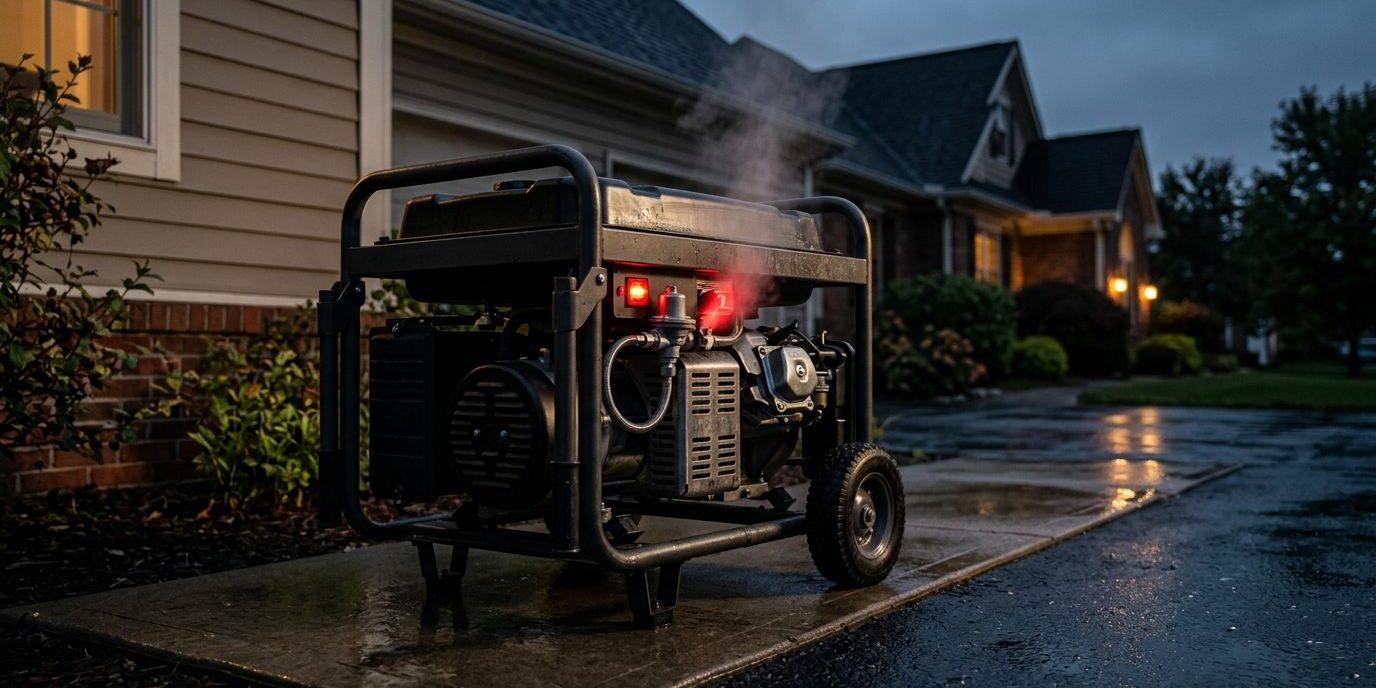
A generator gas smell is never something to ignore, especially when your home generator is running near your home. The odor may come from a fuel leak, an overfilled tank, a faulty carburetor, or a gas pressure problem that needs professional attention.
A brief fuel odor during refueling or startup can happen, but it should clear quickly. A strong, repeated, or lingering smell is different. We recommend treating it as a safety issue first and a repair issue second.
Key Takeaways
- A strong, repeated, or lingering generator gas smell may indicate a fuel leak, overfilled tank, faulty carburetor, incorrect gas pressure, or an ignition problem.
- Move people and pets away, avoid sparks and electrical equipment, and call 911, the utility, or the propane supplier from a safe location if the odor is strong, spreading, or accompanied by hissing.
- Don’t restart the generator or attempt to tighten gas fittings, pressure-test lines, or repair the fuel system yourself. Have a certified technician inspect the generator after the area has been declared safe.
- Routine maintenance, including fuel-system, regulator, air-filter, ignition, corrosion, and exercise-cycle checks, can help prevent fuel problems before the next outage.
Fuel Odor Requires Immediate Safety Steps
Fuel leaks can release flammable vapors that may reach ignition sources, creating serious safety concerns. A running generator also produces carbon monoxide, which has no smell and can become dangerous if exhaust enters the home through a window, door, vent, or garage.
If you smell natural gas, propane, or gasoline near the unit, take these steps:
- Keep people and pets away from the generator. Move everyone to fresh air if the odor is strong or spreading toward the home.
- Don’t operate switches, lights, phones, vehicles, or other electrical equipment near the odor. A small spark can ignite accumulated fuel vapor.
- Don’t start the generator again. If it is already running, shut down the generator only if the control is in a safe location away from the odor and you can do so without approaching a suspected leak.
- Close the fuel valve only if it is safely accessible. Don’t walk toward a strong odor, climb around the generator, or reach inside the enclosure to find a valve.
- Call 911 if the odor is strong, you hear hissing, anyone feels sick, or you believe there is an active leak. Contact the utility or propane supplier from a safe location. Their emergency instructions will depend on the fuel system and location.
- Don’t re-enter the area until the utility, fire department, or qualified technician says it is safe.
PSE&G’s gas leak guidance also advises leaving the area and calling the utility or 911 from a safe location instead of trying to investigate the leak yourself.
A generator can be silent and still unsafe. The absence of smoke or visible liquid does not rule out a fuel leak.
Once the area is safe, take photos from a distance if damage is visible. Keep receipts for reasonable temporary measures, and ask the technician to document the cause. Those records may help with a warranty or insurance question, especially when a storm, lightning event, surge, or flood happened near the time of the failure.
Common Causes of Fuel Odors Around a Home Generator
The source of the odor depends on whether you have a portable gasoline generator or a permanently installed standby generator using natural gas or propane. In both cases, the fuel system, air supply, and ignition system must work together.
Worn Fuel Lines, Fittings, and Valves
Rubber fuel lines can become hard, cracked, or brittle with age. Loose clamps, damaged gaskets, leaking shutoff valves, and worn connections can also release fuel around the generator.
Southwest Florida conditions add more stress. Heat, humidity, heavy rain, insects, and salt air can speed up corrosion and deterioration around outdoor equipment. Fuel leaks may not create a puddle because the fuel can evaporate while leaving a noticeable odor.
Standby generators may also have a leaking demand regulator, gas connector, or fitting between the supply line and the engine. Don’t tighten gas fittings or attempt pressure testing yourself. The correct repair may require pressure testing and code-compliant replacement parts.
An Overfilled Tank or Loose Gas Cap
Portable generators commonly smell like gasoline after refueling. Spilled fuel can run onto the engine, muffler, or other hot surfaces. An overfilled tank can also allow fuel to expand and escape through the cap or vent.
A loose, damaged, or poorly sealed gas cap may create an odor even when the engine is operating normally. Let the unit cool completely before checking for spilled fuel, and never wipe fuel from hot components.
A propane tank is normally filled to no more than 80 percent because liquid propane expands as temperatures rise. A fuel odor near the tank, regulator, or connection still requires prompt inspection.
A Faulty Carburetor or Rich Fuel Mixture
A carburetor controls how fuel mixes with air. If the float, needle valve, choke, or another internal component sticks, the engine may receive too much fuel. A clogged air filter can create a similar problem by restricting the air needed for combustion.
Common signs include:
- Hard starting or repeated failed starts
- Rough running, stalling, or poor response under load
- Dark exhaust or a strong odor from the muffler
- Wet or fouled spark plugs
- Fuel collecting around the carburetor
A rich mixture can send unburned fuel into the exhaust system. Nearby engine components become hot during operation, so continuing to run the generator increases the fire risk.
Incorrect Gas Pressure or Ignition Failure
Natural gas and propane standby generators need the correct fuel pressure at the engine. A restricted supply line, undersized gas supply line, failing regulator, or incorrect LP pressure can cause poor combustion and unstable operation.
A failed spark plug, ignition coil, control component, or cylinder can also leave fuel only partly burned. In some older engines, cracked exhaust bellows or related components may release exhaust and fuel odor inside the enclosure.
These problems are not solved by resetting the breaker. A technician may need to verify pressure with a calibrated gauge, inspect the demand regulator, test ignition, inspect the intake filter, and check the engine’s response under load.
What the Odor and Generator Behavior Can Tell You
The smell itself can offer useful clues, but it can’t replace a professional inspection. Never remove covers or test fuel fittings while the generator is hot or running.
| What you notice | Possible concern | Safe next step |
|---|---|---|
| Odor only during refueling | Spilled gasoline or a loose cap | Stop refueling, move away, and let the unit cool before inspection |
| Strong odor near a fuel tank or gas line | Leaking fitting, valve, regulator, or connector | Leave the area and call the fuel supplier or 911 |
| Smell at the exhaust with black smoke | Rich mixture, clogged air filter, or carburetor problem | Shut down safely and arrange a technician visit |
| Hissing sound near the enclosure | Pressurized gas leak | Evacuate the area and avoid all ignition sources |
| Odor with stalling or failed starts | Fuel delivery or ignition failure | Don’t keep trying to start the unit |
| Odor that returns during every exercise cycle | Ongoing fuel or combustion problem | Turn the system off if safely possible and schedule service |
A faint smell that lasts only a few seconds after a portable generator starts or is refueled may come from residual fuel. A standby generator shouldn’t produce a continuous fuel odor during normal operation. If the smell returns, grows stronger, or appears when the unit isn’t running, treat it as a leak until a qualified professional proves otherwise.
When to Call the Utility and When to Call a Technician
Call the local gas company or propane supplier when you suspect an active fuel leak. Call the fire department or 911 for a strong odor, hissing, visible line damage, or fuel odor inside the home. Emergency services address immediate hazards, while the utility or supplier can determine whether the problem is on its side of the meter or within the property’s fuel system.
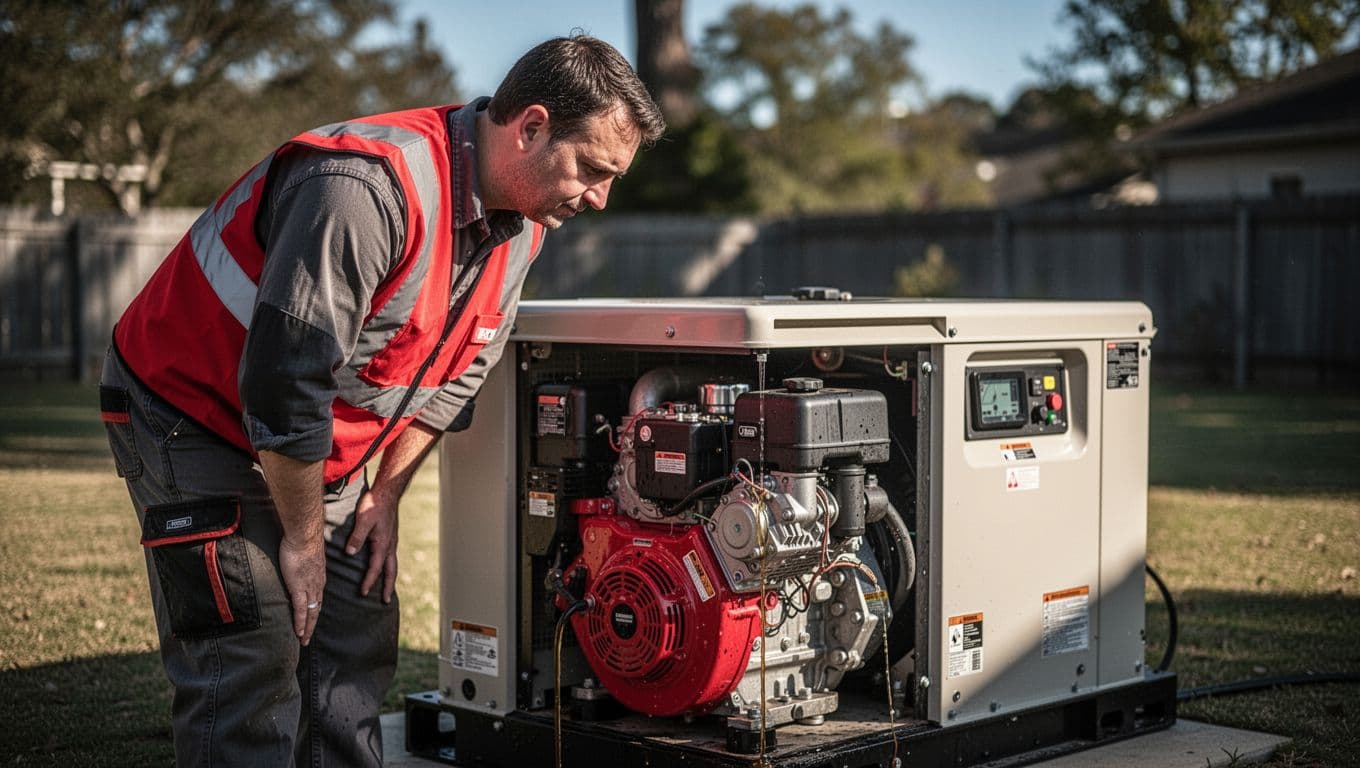
Call a certified technician only after the area has been made safe, if the problem appears to involve the home generator. This includes fuel leaks, carburetor trouble, poor engine performance, repeated failed starts, a damaged regulator, or an odor that comes from the exhaust.
A technician should identify the cause before replacing parts. The inspection may include gas pressure testing, leak detection on fuel lines, carburetor and filtration checks, ignition testing, exhaust inspection, and a controlled load test. This approach avoids replacing a battery for corroded wiring or changing a demand regulator when the gas supply is undersized.
Our emergency generator repair services can inspect fuel-related, mechanical, electrical, and transfer-switch problems in a whole-house generator for homes and businesses throughout Southwest Florida. If the generator is still under warranty, keep the service diagnosis and invoices with your installation records.
Homeowners insurance usually doesn’t cover a generator that stops working from age, normal wear, missed maintenance, or an internal mechanical failure without a covered event. Wind, lightning, fire, or certain surge losses may be treated differently. The cause of damage is often more important than the fact that the generator failed during a power outage.
Preventing Fuel Problems Before the Next Outage
Routine maintenance helps keep a home generator ready before hurricane season or an extended outage. A complete service visit should include fuel-system connection and regulator inspection, air filter service, oil and filter checks, battery testing, spark-plug service when required, corrosion checks, and an automatic exercise-cycle test.
Keep the generator enclosure clear of stored items, leaves, mulch, standing water, and nesting material. Rodents can chew sensor wires, battery cables, and control wiring even when the cabinet looks clean from the outside. Don’t seal ventilation openings with household foam, tape, or mesh because that can restrict airflow or interfere with service access.
Ask a professional whether a gas leak detector suits your fuel type and installation. It supplements utility response and professional inspection, but never replaces scheduled maintenance.
We recommend keeping installation paperwork, permits, tank information, service invoices, and repair records together. A clear service history helps technicians find recurring problems and separate storm damage from a pre-existing maintenance issue.
For ongoing protection, our whole-house generator maintenance services can help keep the system ready for the next power outage. If you are planning a new standby system or need a professional evaluation, you can Get a Free Consultation for your Southwest Florida property.
Frequently Asked Questions
Is it normal for a generator to smell like gas?
A brief fuel odor during refueling or startup may come from spilled or residual fuel and should clear quickly. A continuous, strong, or recurring smell is not normal and should be treated as a possible leak or combustion problem.
What should I do if I smell gas near my generator?
Move people and pets away, avoid switches, phones, vehicles, and other ignition sources near the odor, and don’t restart the generator. From a safe location, call 911 for a strong odor or suspected active leak, or contact the local gas company or propane supplier.
Can I check or repair the generator gas leak myself?
Don’t remove covers, tighten gas fittings, pressure-test lines, or inspect hot components while the generator is running. After the area is safe, have a certified technician locate the cause and complete any required fuel-system or engine repairs.
Why does my generator smell like gas and run poorly?
A faulty carburetor, clogged air filter, incorrect gas pressure, ignition failure, or restricted fuel supply can cause incomplete combustion and a strong odor. Stalling, hard starting, black smoke, or repeated failed starts are reasons to stop using the generator and schedule professional service.
A Fuel Odor Is a Reason to Stop and Check
A brief odor after refueling may have a simple explanation, but a lingering generator gas smell is not normal. Fuel lines, fittings, carburetors, filters, regulators, and ignition components can create dangerous conditions when they fail.
Shut down the system only when safe; move away, avoid sparks, and contact the proper utility or emergency service. Have a certified technician diagnose the generator before it runs again. Reliable backup power from a whole-house generator depends on a fuel system that is safe, inspected, and properly maintained.