


Whole Home Generator Troubleshooting: Safe Checks First
A power outage is stressful enough. When your standby unit won’t start, runs without powering the house, shuts down, or shows a warning light, the problem can feel urgent.
Whole home generator troubleshooting starts with a few safe observations, not an attempt to repair internal equipment. Because these systems combine fuel, batteries, electricity, and transfer equipment, safety has to come first. You can often rule out simple issues before calling for professional help.
Key Takeaways
- Check AUTO mode, confirm the utility outage, and record any displayed fault code.
- A weak battery, low oil, fuel interruption, or engaged emergency stop can prevent starting.
- A running generator without house power may point to a breaker or transfer-switch issue.
- Stop immediately for fuel odors, smoke, sparks, severe knocking, or leaking fluid.
- Regular maintenance reduces surprise failures during storm season.
Whole home generator troubleshooting: start with the safest checks
First, confirm the generator control is set to AUTO. Then verify that utility power is actually out, rather than assuming a problem exists with the generator. Check the display for an error code or status message.
We often begin whole home generator troubleshooting with visible, low-risk issues. Use your owner’s manual to identify panel lights and approved reset steps. Don’t remove panels, touch wiring, bypass safety controls, or work on fuel lines.
The generator will not start or keeps shutting down
A weak starting battery, low oil level, engaged emergency stop button, tripped breaker, empty propane tank, or interrupted natural gas supply can stop a unit from starting. Cold weather, an aging battery, and missed maintenance can add to the problem.
Low-oil shutdown protects the engine, so it isn’t a defect. Check the oil only as your manufacturer’s instructions allow, and use the specified oil type and refill process. If the unit repeatedly fails after those basic checks, stop resetting it.
The generator runs but the house has no power
This symptom often involves the generator output breaker, automatic transfer switch, or home’s electrical panel. You can safely look for a visibly tripped exterior breaker or a transfer-switch status light, but don’t open either piece of equipment.
A generator can run normally while the transfer switch fails to move power from the utility source to the generator. Generac’s standby generator owner’s manual warns against manually transferring under load. A licensed electrician or generator technician should test or repair transfer equipment.
Warning lights, fault codes, and unusual sounds
Record the fault code before resetting the unit. Depending on the brand, codes may refer to overspeed, overload, high temperature, low frequency, low oil pressure, or a battery charger fault.
Stop the generator if you smell fuel, see smoke or sparks, hear severe knocking, or notice leaking fluid. If a code returns after a manufacturer-approved reset, contact a qualified provider such as SWFL Generator rather than continuing to run the unit.
Fix the cause, not just the symptom
Regular service prevents many outage-day failures. The right schedule depends on the generator brand, operating hours, fuel type, and local conditions.
Keep routine service on schedule
Oil and filter changes, battery testing, terminal inspections, fuel-supply checks, and exercise-cycle testing all matter. Clear leaves, mulch, and debris from air intakes and exhaust areas.
Fresh engine oil may need changing at least yearly, even when the generator has not run much. For Southwest Florida homeowners, heat, humidity, storms, insects, and salt air make regular inspections especially important. A whole home generator maintenance plan can help keep those checks consistent.
When a professional should handle the repair
Stop DIY troubleshooting when you find exposed wiring, gas odors, fuel leaks, repeated failed starts, overheating, storm damage, transfer-switch trouble, or shutdowns under load. Natural gas, propane, high-voltage wiring, and transfer equipment can cause fire, shock, carbon monoxide poisoning, or costly damage.
Ask for a written diagnosis, repair estimate, and testing plan. For problems beyond a safe visual check, use generator repair services from an experienced technician.
How to prevent another generator failure during an outage
Before storm season, clear the area around the unit and confirm your fuel supply. Test the battery, review the exercise schedule, replace overdue filters, and learn the control panel’s normal status indicators.
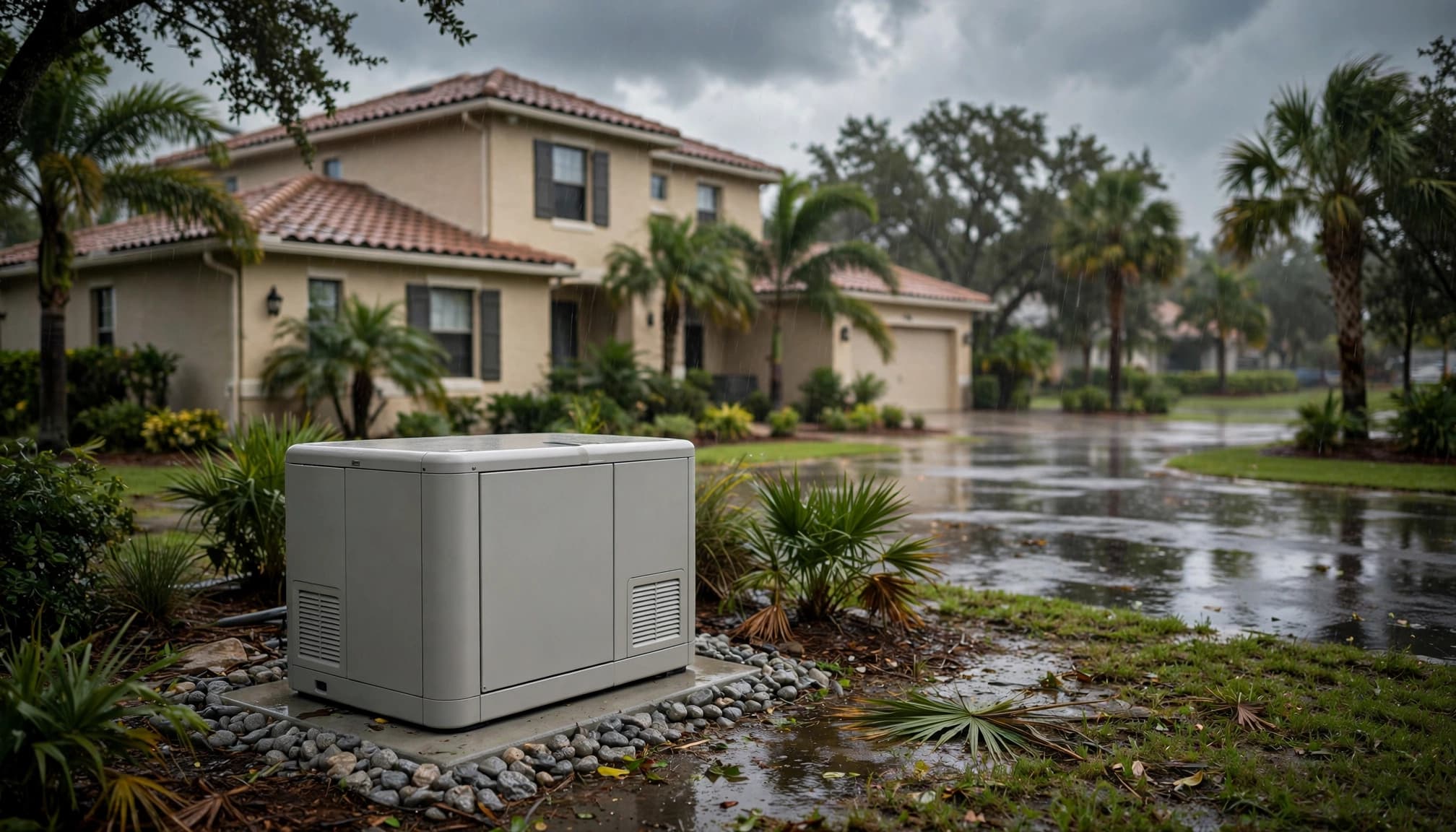
Keep the manual, service records, and technician contact details somewhere easy to find. Stationary generators must operate outdoors with proper clearance from doors, windows, and vents because exhaust contains carbon monoxide. The CPSC report on stationary-generator carbon monoxide hazards explains why placement and exhaust safety deserve close attention.
A generator that exercises successfully without load can still reveal a problem only when it must power the home.
Frequently Asked Questions
Can a standby generator recharge its own battery?
Most standby systems include a battery charger, but a charger fault, loose connection, or aging battery can still leave the battery too weak to start. Check the control panel for battery-related messages and have the battery tested if starting becomes unreliable.
How often should a standby generator run its exercise cycle?
Follow the schedule programmed by the manufacturer or service provider. Exercise cycles help identify some issues early, although they do not replace a full inspection or load-related testing.
Can I use an extension cord with a whole-home generator?
A permanently installed whole-home generator normally powers selected circuits through a transfer switch and electrical panel. Don’t connect cords or attempt alternate power arrangements unless a qualified electrician designed the system for that use.
Should I turn off appliances before generator power returns?
Sensitive electronics and large appliances can benefit from being turned off during unusual power events. However, follow your generator and transfer-switch instructions, and don’t manually operate transfer equipment under load.
What should I save after a generator service visit?
Keep the technician’s diagnosis, invoice, maintenance notes, fault-code records, and any parts information. Those records help identify recurring problems and show what work has already been completed.
Keep Safety Ahead of Speed
You can check basic settings, visible breakers, fuel availability, battery condition, and fault messages without taking unnecessary risks. Wiring, gas connections, transfer switches, and internal components need trained hands.
Regular maintenance gives your generator a better chance of starting when the grid fails. When the cause is unclear or a problem returns, contact a qualified local provider such as SWFL Generator for a professional diagnosis.