

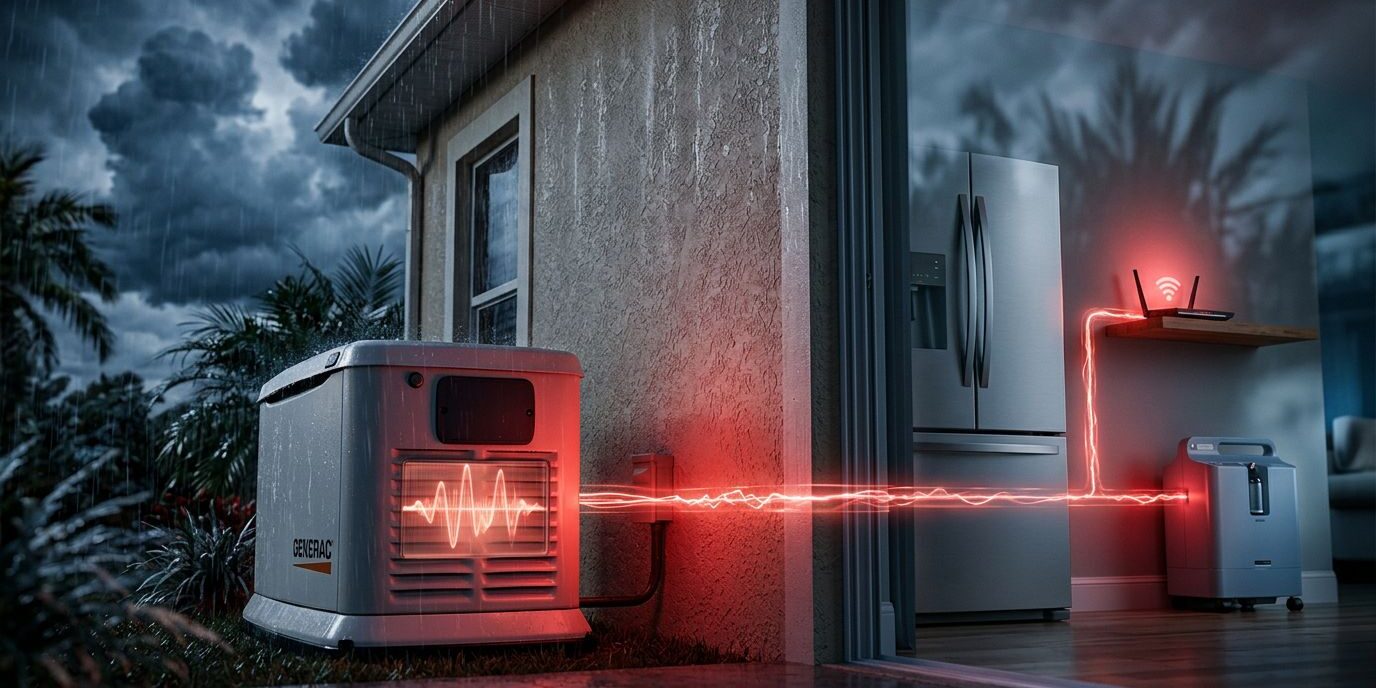
An outage can expose a weakness you never notice while utility power is available. A generator may start successfully, yet its output can remain unstable. Refrigerators, air conditioners, routers, medical devices, and other sensitive electrical equipment may still react poorly.
That is why generator frequency matters: North American homes use 60 Hz alternating current. A properly installed standby system should maintain that output frequency while keeping voltage and waveform quality within design limits. Small, steady deviations don’t automatically damage electronics; poor regulation, distortion, brownouts, and abrupt switching can still disrupt residential power systems. We will break down what to look for before storm season.
Why Generator Frequency Matters in a Southwest Florida Home
Frequency describes how often alternating current completes a cycle. It’s measured in hertz, with one hertz equal to one cycle per second. A 60 Hz generator completes 60 cycles each second.
Voltage is a separate measurement. It describes electrical pressure, while frequency describes the timing of the alternating current. Your home’s electronics need both measurements to stay within their operating range.
Terminology note: A search for a “frequency generator” may refer to an online “tone generator”, not a residential generator.
A bench signal generator creates controlled sound frequencies across a stated frequency range. It can produce a sine wave, square wave, triangle wave, or sawtooth wave for audio frequency sweeps, audio equipment frequency response checks, or hearing tests.
An arbitrary waveform generator is a specialized signal generator that creates custom test signals and applies frequency modulation. The Web Audio API may produce an online tone in a browser. None of these tools measures or powers 120/240-volt household AC.
North America Uses 60 Hz
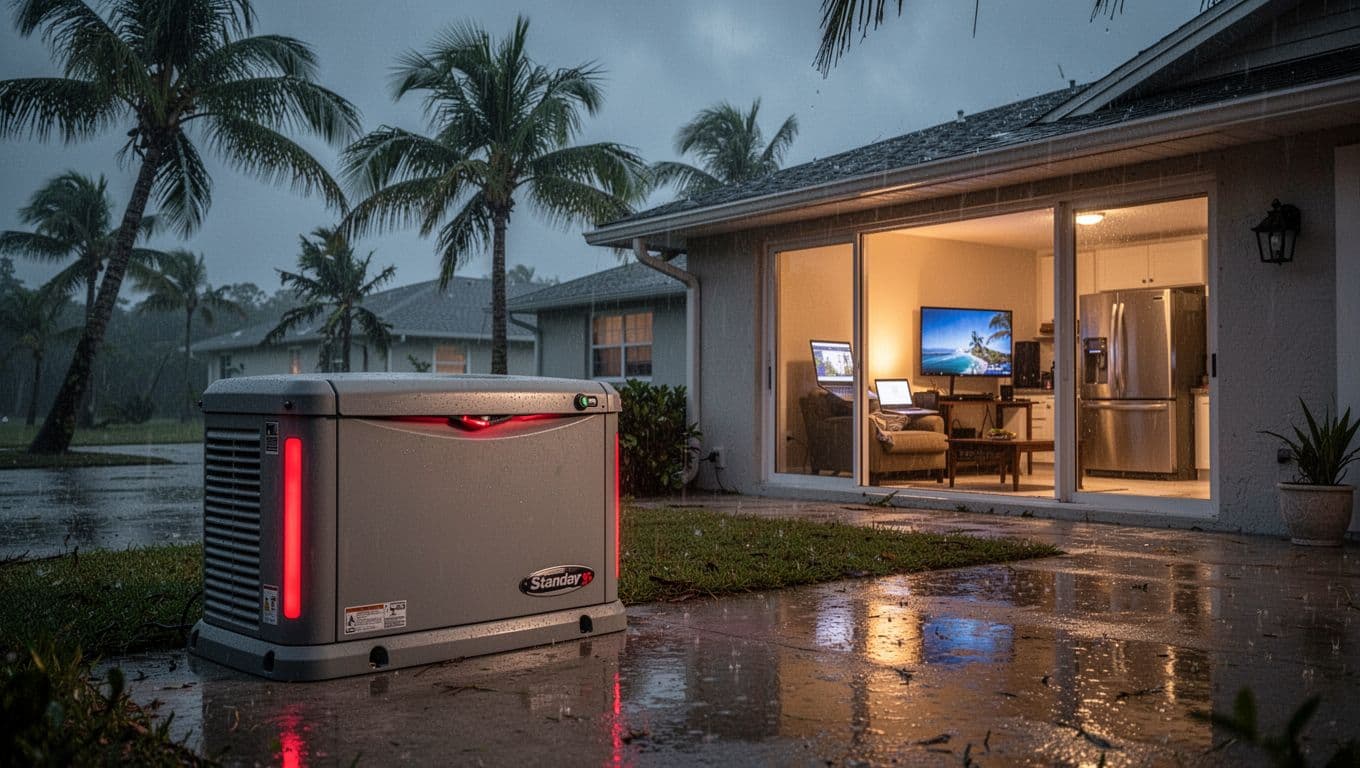
The United States and Canada use 60 Hz utility power. A residential standby generator installed in Fort Myers, Naples, Cape Coral, or nearby communities should be rated and configured for the same frequency.
Many countries in Europe, Asia, and Africa use 50 Hz instead. That difference matters because motors, clocks, transformers, and some appliances are designed around the frequency supplied by the local grid. A 50 Hz appliance connected to 60 Hz power may not operate as intended, and the reverse is also true.
Engine Speed Controls Frequency
In a conventional synchronous generator, the alternator’s frequency is tied to engine speed and its magnetic poles. The standard formula is:
Frequency = (RPM x number of poles) / 120
A two-pole generator producing 60 Hz power runs at 3,600 RPM, or 3,600 revolutions per minute. A four-pole generator producing the same frequency needs 1,800 RPM because the number of poles differs. For 50 Hz power, comparable speeds are 3,000 RPM and 1,500 RPM.
The motor speed and pole relationship helps explain why a governor or control problem can affect frequency stability. If RPM rises and falls, the electrical output can shift with it.
How Generator Frequency Affects Electronics
Not every device responds to frequency changes in the same way. The effect depends on the device, its acceptable frequency range, the amount of variation, how long it lasts, and whether voltage and waveform quality remain stable.
When generator frequency becomes unstable, voltage and waveform problems can compound the effect.
Motors and Clocks Respond First
Some older electric clocks use the AC frequency as their timing reference. If the generator runs above or below its target, those clocks can gain or lose time.
Motors can respond in a different way. Air conditioner compressors, refrigerator motors, pool pumps, well pumps, and fan motors are designed to operate at a particular frequency. Poor frequency control can cause them to run at the wrong speed, draw abnormal current, or produce additional heat.
That doesn’t mean a minor momentary change will ruin a motor. However, repeated frequency swings combined with low voltage or frequent starts can place extra strain on equipment.
Modern Electronics Need Clean Power
Laptops, televisions, internet equipment, battery chargers, smart-home controls, and many medical devices usually convert incoming AC into DC through an electronic power supply. Many can tolerate modest frequency variation, especially when voltage remains stable.
Normal standby output should be close to a sine wave. A pronounced square wave, triangle wave, or sawtooth wave is an abnormal wave shape and signals a waveform-quality problem, not a normal household setting.
Test equipment is different. A signal generator or arbitrary waveform generator may intentionally create those patterns for testing. Frequency modulation in a test signal isn’t the same as speed drift in a standby unit.
For audio equipment, behavior at an audio frequency is a signal-path concern separate from the home’s 60 Hz supply.
The larger concern is often the overall quality of the power. Brownouts, voltage spikes, waveform distortion, and rapid transitions may cause electronics to shut down, restart, or alarm. A UPS may switch to battery mode repeatedly when it detects unstable generator output.
A generator can show the correct voltage while its output frequency or waveform is wrong. Voltage, frequency, and waveform quality all need to be checked under load.
The IEEE’s guidance on powering and grounding electronic equipment covers the broader power-quality issues that affect electrical equipment. Frequency is one part of the picture, not the only measurement that matters.
Choosing a Generator for Sensitive Home Electronics
A dependable backup system starts with the right generator design and a correct load calculation for residential power systems. A unit that runs a few lights won’t necessarily handle an air conditioner, refrigerator, medical device, and internet equipment at the same time.
Conventional and Inverter Output
Most fixed standby generators use an engine-driven alternator with a governor that controls engine speed. When the system is properly installed and maintained, the governor keeps the engine close to the speed needed for 60 Hz output.
A variable speed generator uses a different process. The engine drives an alternator, and the electrical output is converted to DC. An inverter then creates controlled AC for the home, keeping the output frequency close to its target.
This design is common in smaller portable units and some specialized standby systems. It can reduce fuel use at lighter loads, but the inverter and controls must be correctly designed for connected equipment.
A conventional standby generator isn’t automatically unsuitable for electronics. Quality components, accurate controls, proper installation, and routine testing all matter. Compare the generator’s rated 60 Hz output and allowable tolerance in its specified frequency range with connected equipment requirements.
Size for Starting Loads, Not Just Running Watts
Air conditioners and pumps often need extra power for a brief period when their motors start. That demand can pull down voltage and frequency if the generator is too small or several large loads start together. Proper sizing helps protect connected devices from those dips.
We review both running demand and starting demand when planning whole-home backup. A generator must have enough capacity for the home’s expected loads, including:
- Central air conditioning and heat pump compressors
- Refrigerators, freezers, and well pumps
- Pool pumps and water heaters
- Medical equipment and communications devices
- Computers, networking equipment, and battery chargers
The goal isn’t to run every appliance without limits. The goal is to keep essential circuits powered without forcing the generator to operate at its limit every time an air conditioner starts.
How to Keep Generator Frequency Stable During an Outage
Stable generator frequency starts with a generator installed for the property and maintained for local conditions. Southwest Florida heat, humidity, salt air, long outages, and heavy cooling demand all deserve attention.
Maintenance Protects Engine Speed
Frequency drift often points to an engine speed or control issue. Fuel pressure, air delivery, ignition, the governor, and alternator controls affect how well the generator holds its target.
A dirty air filter can restrict the engine. Poor fuel delivery can cause surging or stalling. Worn spark plugs, weak connections, corrosion, and control faults can also affect operation. These problems may appear during a weekly exercise cycle or only under substantial load.
Routine service gives a technician the opportunity to inspect these parts before a hurricane creates a long outage. We recommend keeping service invoices, installation records, inspection notes, and repair reports together. A complete history helps with future troubleshooting, warranty questions, and insurance documentation.
Professional generator load testing can record voltage and output frequency during actual electrical demand. A proper test should verify that readings remain within the manufacturer’s frequency range. It may also review temperatures, alarms, transfer operation, fuel supply, and the generator’s response as loads are applied.
Manage Sudden Electrical Demand
Even a correctly sized generator can face a sharp demand increase when multiple motors start close together. Load management can reduce that strain.
A load-shed module may temporarily pause a water heater or pool pump while an air conditioner starts. After the generator has enough available capacity, the lower-priority circuit can return to operation. Our automatic load management guidance explains how these modules help prevent overloads and keep priority circuits powered.
This approach is useful when a homeowner wants broad backup coverage without purchasing a generator sized for every appliance running at full demand simultaneously.
Protect Electronics From More Than Frequency
Stable frequency won’t protect a control board from a lightning surge. A generator also needs properly installed transfer equipment, grounding, surge protection, and safe connections.
Add Whole-Home Surge Protection
Lightning, utility switching, and storm-related electrical events can create short voltage surges. These events can damage electrical equipment, including generator controls, routers, televisions, appliances, and a sensitive power supply, even when the frequency reading is correct.
A properly installed whole-home surge protection device at the main panel can help divert excess surge energy away from household wiring and connected equipment. It doesn’t replace generator maintenance, and it doesn’t correct an unstable frequency. It is one part of a complete electrical protection plan.
Surge protection is especially useful in Southwest Florida, where thunderstorms and hurricane-related grid disturbances can affect homes well beyond the immediate path of a storm.
Check the Transfer Equipment
An automatic transfer switch moves the home between utility power and generator power. It separates the two sources and helps prevent the generator from sending electricity back onto utility lines.
The transfer switch must match the generator, electrical service, voltage, phase, and installation design. Poor wiring connections or incorrect settings can cause nuisance trips, interruptions, or abnormal behavior when power changes sources. Our automatic transfer switch guide covers the equipment and maintenance points homeowners should understand.
Warning Signs of Unstable Generator Output
You don’t need to open the generator cabinet to notice that something may be wrong. Watch for:
- Lights that flicker repeatedly while the generator is running
- Clocks that gain or lose time during an outage
- UPS systems that switch to battery or sound alarms
- Air conditioners, pumps, or refrigerators that struggle to start
- A generator whose engine speed repeatedly rises and falls
- Fault messages, breaker trips, or electronics that restart without warning
Turn off nonessential equipment if you can do so safely, but don’t remove electrical covers, adjust the governor, or take measurements on live equipment yourself. A qualified technician can measure generator frequency and voltage with the generator unloaded and under demand. They may use appropriately rated professional equipment, such as voltage and frequency meters, an oscilloscope, or a power-quality analyzer. This testing can distinguish a distorted wave shape from a frequency-control problem and identify issues with fuel pressure, controls, wiring, or transfer equipment.
If the problem follows a hurricane, keep photos of visible damage and save all service records. When there is no obvious storm damage, a diagnosis can help separate a frequency-control issue from a surge, flood, mechanical failure, corrosion, or missed maintenance. Warranty and insurance decisions depend on the cause, policy terms, and manufacturer requirements, so keep the technician’s findings with your records.
Reliable Power Starts With Proper Planning
Generator frequency matters because reliable backup power requires more than a unit that starts and produces electricity. A dependable backup system needs stable 60 Hz output, proper sizing for home loads, quality waveform performance, and safe source transfers.
For homeowners in Fort Myers, Naples, Cape Coral, Lehigh Acres, and surrounding communities, professional installation and maintenance of home power systems provide practical protection before the next extended outage. We can review your home’s loads, sensitive electronics, transfer equipment, and surge protection needs. When you want a qualified evaluation, Get a Free Consultation before storm preparations become urgent.
Frequently Asked Questions
What frequency should a home generator produce?
A generator serving a North American home should produce approximately 60 Hz alternating current. The output should remain within the manufacturer’s specified frequency range while voltage and waveform quality stay stable.
Can small frequency changes damage sensitive electronics?
Small, brief frequency changes don’t automatically damage electronics, especially when voltage remains stable. Larger or repeated variations, brownouts, waveform distortion, and abrupt transfers can cause devices to shut down, restart, alarm, or operate improperly.
How can I tell if my generator frequency is unstable?
Warning signs include flickering lights, clocks gaining or losing time, UPS systems switching to battery, motors struggling to start, and engine speed rising and falling. A qualified technician can measure frequency and voltage with the generator unloaded and under electrical demand.
How do I keep generator frequency stable during an outage?
Routine maintenance, correct generator sizing, and load management help the engine maintain the speed needed for stable 60 Hz output. Professional load testing can also identify problems with fuel delivery, the governor, controls, wiring, or transfer equipment before an extended outage.
Conclusion
A properly regulated 60 Hz generator provides stable output for the motors, clocks, power supplies, and electronics that keep your home operating during an outage. Minor frequency variations aren’t automatically destructive, but unstable engine speed, voltage problems, distortion, and poor transfers can cause avoidable failures.
The strongest protection combines correct sizing, routine maintenance, load testing, and load management. It also includes surge protection, transfer-equipment checks, and professional diagnosis when something seems unusual. Reliable backup power is built into the system before the lights go out.