


During a Southwest Florida power outage, a backup generator may stop when its circuit breaker detects excessive current. A GFCI receptacle may respond instead to electrical leakage.
We treat repeated shutdowns as a warning, not a nuisance to reset. The pattern usually points toward the cause, and the safest troubleshooting process starts by identifying what trips and when it happens.
Key Takeaways
- A standard circuit breaker usually trips because of an overload, startup surge, short circuit, or wiring problem. A GFCI receptacle usually trips because of electrical leakage, moisture, damaged insulation, or a neutral and ground bonding issue.
- The timing and conditions of the trip provide important clues. Immediate trips, no-load trips, and trips after storms should be treated differently from trips that occur after several appliances or motors start.
- Begin with safe shutdown, load isolation, and a visual inspection of dry, disconnected cords and equipment. Reset the breaker only once, and reconnect known-good loads one at a time.
- Never bypass GFCI protection, connect a generator to a household receptacle, or remove a neutral bond without reviewing the complete transfer equipment and electrical wiring installation.
- Call a qualified generator technician or licensed electrician for repeated no-load trips, water or heat damage, transfer switch and interlock questions, unstable generator output, or any work involving live equipment or panel wiring.
Generator Breaker Tripping: Read the Trip First
A circuit breaker and a GFCI receptacle protect against different problems. Knowing which device shuts off helps you avoid replacing parts that work correctly.
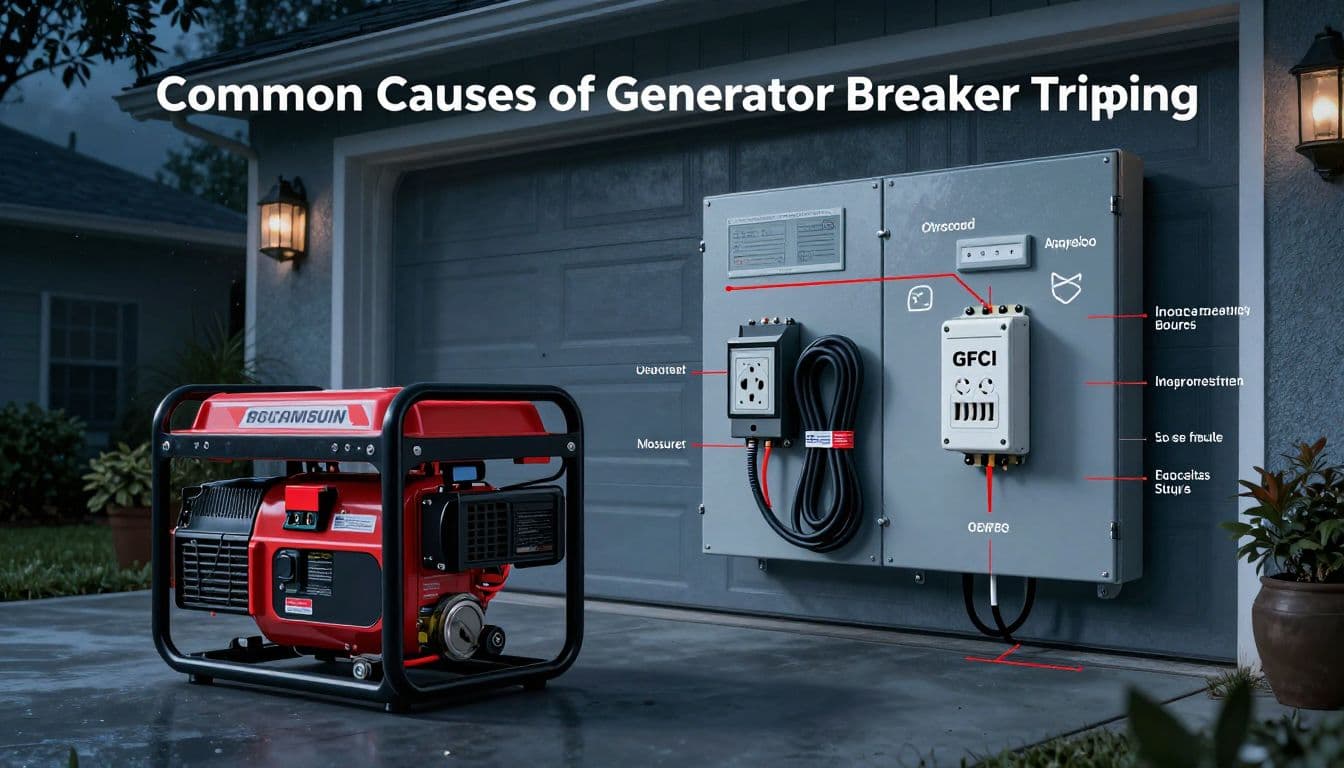
Standard Breaker or GFCI Receptacle?
A standard generator circuit breaker provides overcurrent protection for a portable generator. An overload, internal fault, or severe wiring problem can make it trip, protecting the generator, cord, and connected equipment.
This device looks for an imbalance between the current leaving on one conductor and the current returning on another. Even a small amount of electricity escaping through moisture, damaged insulation, or a grounding path can create a ground fault and trip it.
The difference matters. A standard breaker often points toward load or amperage problems. A GFCI trip usually points toward leakage, moisture, damaged equipment, or an incorrect neutral and ground arrangement.
The Timing Gives You a Clue
A breaker that trips immediately when the generator starts or a cord is plugged in may indicate a short circuit, wet receptacle, damaged cord, or neutral bond problem.
A breaker that trips after several appliances start is more likely responding to an overload. Air conditioners, refrigerators, freezers, well pumps, and pool pumps all require extra starting current. Several motors starting together can push the electrical load beyond the generator’s available output, even when their normal running demand appears manageable.
Common Causes of a Generator Circuit Breaker Trip
Most generator breaker problems fall into a few repeatable categories. The circuit breaker responds when the connected electrical load exceeds the generator or circuit rating. We recommend checking simple external causes first, then stopping before you open the generator or home electrical panel.
Electrical Overload and Startup Surge
Every generator has a maximum output, and every circuit, outlet, and cord has its own rating. Connecting too much equipment can exceed available capacity, even when the generator sounds normal.
Motor-driven equipment creates the biggest challenge. A central air conditioner may draw much more current while the compressor starts than it uses after reaching normal operation. A refrigerator, freezer, pump, or air handler can create the same temporary surge.
Turn off unnecessary equipment before resetting it. If the generator runs with essential equipment only, reconnect equipment one item at a time. If one appliance repeatedly causes a trip, leave it disconnected and have the electrical load calculation checked. This may indicate an appliance failure, but one trip doesn’t prove the appliance is defective.
Do not solve an overload by repeatedly resetting the breaker. The correct fix may involve load management, a larger generator, or a properly sized transfer system.
Short Circuits, Wet Cords, and GFCI Trips
A short circuit occurs when a hot conductor contacts neutral or another conductor. A ground fault can also cause an immediate trip. A damaged extension cord, crushed cable, bent plug, or defective appliance can create either fault.
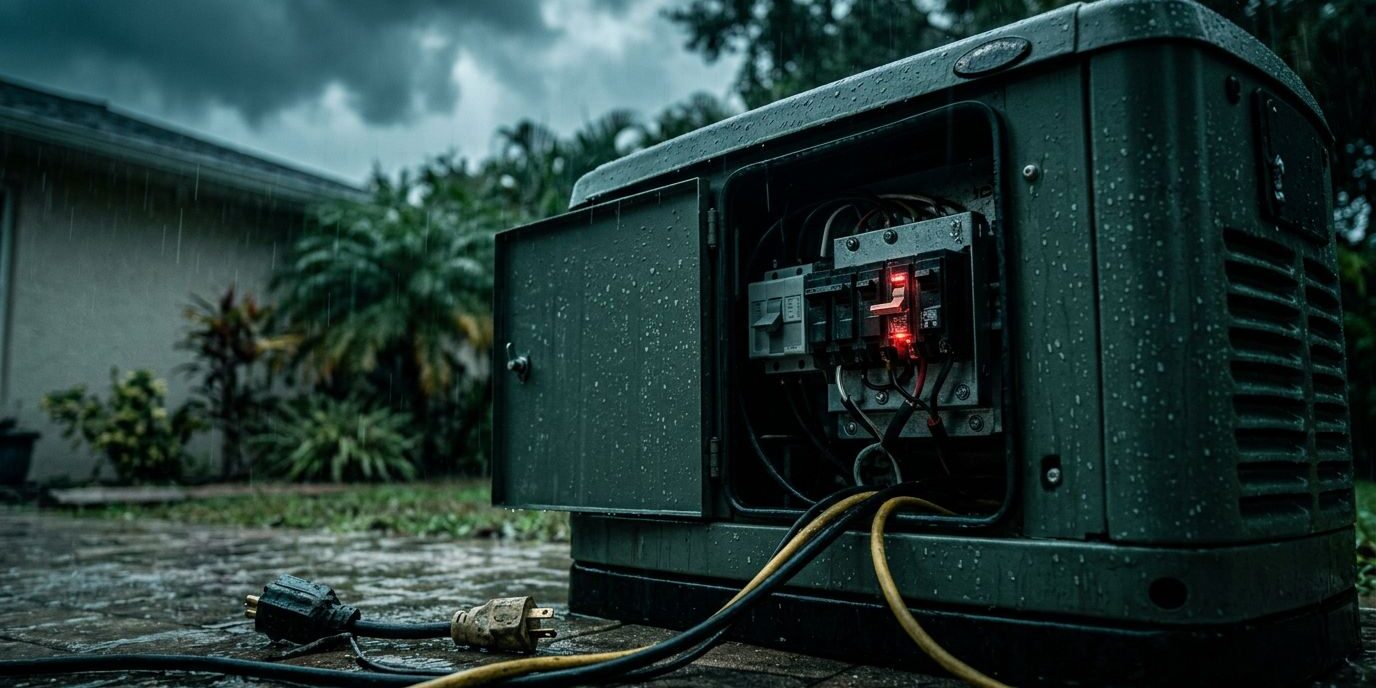
Moisture is another common cause, especially in Southwest Florida. Rain, humidity, damp storage areas, and storm-driven water can reach generator outlets, plugs, tools, and cords. Moisture or damaged wire insulation can cause electrical leakage and trip a GFCI receptacle. An underground cable with damaged insulation can also trip randomly after rain, even if it worked normally during dry weather.
Inspect cords for cuts, fraying, exposed conductors, bent blades, and water inside the plug. Replace a damaged extension cord instead of taping it for continued use. Never bypass a GFCI receptacle or use a generator receptacle with visible water or corrosion.
Loose Connections and Florida Weather Damage
A loose connection can make the circuit breaker trip by creating heat and abnormal current flow. It may cause intermittent trips, a voltage drop, a warm plug, discoloration around an outlet, or a burning smell.
Loose Terminals Create Heat
Generator inlet connections, receptacles, and breaker terminals must be tight and correctly torqued. A loose terminal increases resistance at the connection. That resistance creates heat and can lead to nuisance tripping or damaged equipment.
Loose plugs can cause similar trouble. If moving a cord changes the generator’s behavior, stop using that cord and inspect the receptacle. Don’t remove the generator cover or electrical panel cover unless you are qualified to work around the equipment.
A professional inspection should check every loose connection at the inlet, receptacle, breaker, and transfer switch, along with the electrical wiring and load connections. It should also check for heat damage and corrosion instead of only resetting the breaker.
Humidity, Salt Air, and Storm Moisture
Coastal air can accelerate corrosion around terminals and connectors in Naples, Bonita Springs, Cape Coral, Fort Myers, and nearby communities. Insects and rodents may damage wire insulation, while heavy rain can enter through cracked seals, blocked drainage, or poorly protected connections. Corrosion, moisture, and damaged insulation can create intermittent behavior, including at a wet GFCI receptacle.
A breaker that trips only after a storm deserves careful inspection. Heat, arcing, or water exposure can create a serious safety hazard. Water may remain inside a receptacle or cable even after the outside appears dry. If the generator has been exposed to flooding or standing water, keep away from it and arrange professional service.
Neutral Bonding, Transfer Equipment, and Interlock Connections
Connecting a portable generator to a home panel requires more than installing a circuit breaker. The generator, panel, grounding conductors, neutral, and connection equipment must work together as one approved system.
Never connect a generator to a household receptacle. That practice can energize household wiring in unsafe ways and create a serious safety hazard for utility workers. The ESFI generator safety guidance recommends using properly installed transfer equipment when connecting a generator to building wiring.
Why a GFCI receptacle Can Trip After Panel Connection?
A portable generator may have a factory neutral bond between its neutral and frame. The home’s service equipment also has a neutral-to-ground connection. Depending on the transfer equipment or interlock kit design, those connections can create an unintended parallel path.
Some current may return through the frame ground instead of only through the intended neutral conductor. The GFCI receptacle detects this electrical leakage and trips on a ground fault, even when connected appliances appear to work correctly.
This is one reason a generator may run properly with appliances connected by cords but trip when connected to a backfeed panel. The issue may not be a defective GFCI receptacle. It may be a bonding conflict within the complete electrical wiring installation.
Don’t Remove a Bond Without a Wiring Review
The correct neutral arrangement depends on the generator, transfer switch, panel design, and whether the system switches the neutral. Some installations use switched-neutral transfer equipment, while others require a different approved configuration.
For a 120/240-volt generator connection, a tandem breaker isn’t a substitute for a listed dual pole breaker and a listed interlock kit. The circuit breaker and interlock must match the panel and generator ratings.
We don’t recommend removing a neutral bond based on a general internet instruction. A qualified electrician should identify the system design, follow the manufacturer requirements, and confirm the complete electrical wiring installation meets applicable electrical rules. Never defeat GFCI protection as a routine fix.
Our automatic transfer switch guide for Southwest Florida covers why transfer equipment needs professional installation and inspection.
Safe Troubleshooting Steps
Electrical troubleshooting should stop before work involving live equipment, a live transfer switch, panel wiring, or uncertain bonding. The OSHA portable generator safety guidance also stresses proper placement, grounding, and safe connection practices.
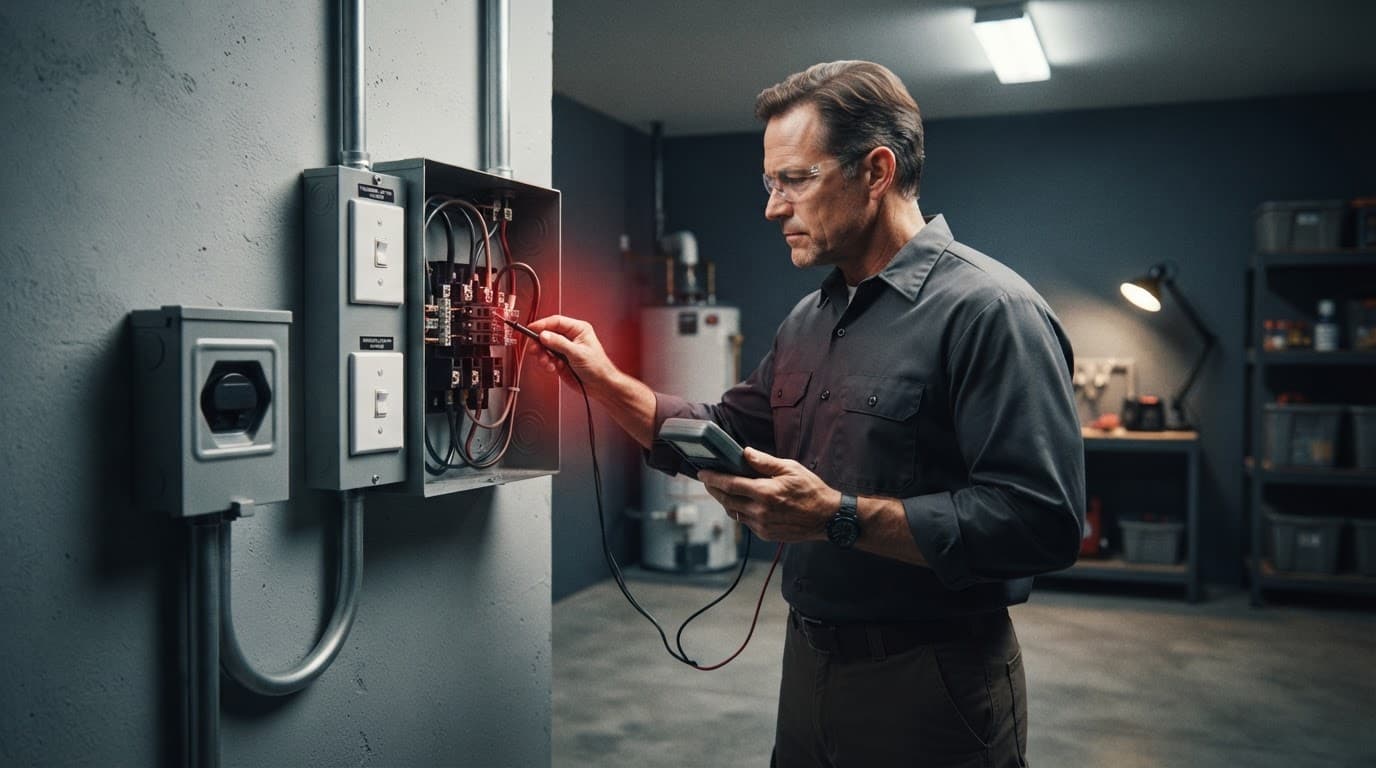
Start With Shutdown and Isolation
Follow these basic steps only when the equipment is dry and there are no signs of fire, fuel leakage, or water damage:
- Turn off connected loads and shut down the generator according to the owner’s manual. Let hot components cool before inspecting cords or plugs.
- Disconnect every extension cord and appliance. Reset the circuit breaker once, then observe whether it trips with no load. If a GFCI receptacle trips with no load, stop and arrange professional evaluation.
- If the generator runs, reconnect one known-good electrical load at a time. Stop when a specific cord or appliance causes the trip.
- Remove any damaged, wet, overheated, or corroded equipment from service.
Operate a portable generator outdoors, away from doors, windows, vents, garages, lanais, and enclosed areas. The NFPA generator safety tips also address carbon monoxide, which has no smell and can enter a home through openings.
Use a Multimeter Only on De-Energized Equipment
A digital multimeter can help identify an obvious fault in an unplugged extension cord. With the generator off and the cord disconnected at both ends, a qualified person can use multimeter testing to check conductor continuity and each conductor against the grounding pin.
Unexpected continuity between a current-carrying conductor and ground indicates a possible cord fault. However, a normal resistance reading doesn’t prove insulation integrity under load or in wet conditions. Professional insulation testing may be needed.
Never perform resistance or continuity tests on an energized generator outlet or panel. Don’t place meter probes into unknown terminals, and don’t remove covers to test wiring unless you’re trained and authorized to do that work.
When Professional Generator Service Is Needed
Call a qualified generator technician or licensed electrician when a circuit breaker trips with no connected loads. Professional help is warranted when the transfer switch connection causes a trip, a portable generator shows instability, or a GFCI receptacle repeatedly trips with appliances disconnected.
Professional service is also needed for:
- Burning odors, melted plugs, hot terminals, smoke, or visible arcing.
- Water inside the generator, transfer switch, panel, or receptacle.
- Damaged underground wiring or storm-exposed equipment.
- A GFCI receptacle that continues to trip, or a particular appliance that repeatedly causes trips and may require separate diagnosis for an appliance failure.
- An interlock kit, backfeed breaker, or neutral bonding question.
- Generator stalling, unstable output, failed starts, fuel odor, or hissing near a gas connection.
If you smell natural gas or propane, don’t tighten fittings or attempt pressure testing. Move away from the area and contact the gas utility, propane supplier, fire department, or 911 when the odor is strong or spreading.
When the generator runs but the home has no power, our generator power troubleshooting service can help identify whether the problem involves the circuit breaker, switching equipment, wiring, or generator output. A controlled generator load test can also verify voltage, frequency, connected demand, electrical load, and transfer operation.
For homeowners who need an inspection or repair for a whole house generator or other equipment in Fort Myers, Naples, Cape Coral, Lehigh Acres, Bonita Springs, or nearby communities, Get a Free Consultation with our licensed and insured team.
Frequently Asked Questions
Why does my generator breaker trip immediately?
An immediate trip may indicate a short circuit, wet receptacle, damaged cord, defective appliance, or a neutral bonding problem. Disconnect all loads, inspect the equipment only when it is dry and de-energized, and arrange professional service if the breaker still trips with no load.
Why does the generator breaker trip after several appliances start?
Several appliances may exceed the generator’s available output when their motors create startup surges. Air conditioners, refrigerators, freezers, pumps, and air handlers can draw much more current during startup than during normal operation.
What should I do if a generator GFCI receptacle keeps tripping?
Disconnect all appliances and cords, then reset the GFCI once only if the equipment is dry and shows no damage. If it trips with no load, after rain, or when connected to a transfer system, stop using the generator and have a qualified professional inspect for leakage, moisture, wiring damage, or bonding conflicts.
Can I remove the generator’s neutral bond to stop the trip?
Do not remove a neutral bond based on a general instruction. The correct arrangement depends on the generator, transfer switch, panel design, and whether the system switches the neutral, so a qualified electrician should review the complete installation.
When should I call a professional for a tripping generator breaker?
Professional service is needed for repeated no-load trips, burning odors, melted plugs, hot terminals, smoke, arcing, water exposure, damaged underground wiring, or questions involving a transfer switch, interlock, or neutral bond. Call promptly as well if the generator stalls, produces unstable output, smells of fuel, or shows signs of gas-related trouble.
Conclusion
A circuit breaker on a generator usually trips for a reason. Common causes include excessive electrical load, startup surge, electrical faults, wet or damaged cords, damaged terminals, corrosion, and neutral bonding conflicts.
Start with safe load isolation and a visual inspection. No-load trips or problems involving electrical wiring in a home panel or transfer system require professional diagnosis, so stop resetting it. Heat, water, smoke, or fuel damage requires the same caution to protect your equipment, home, and those who depend on reliable backup power.