


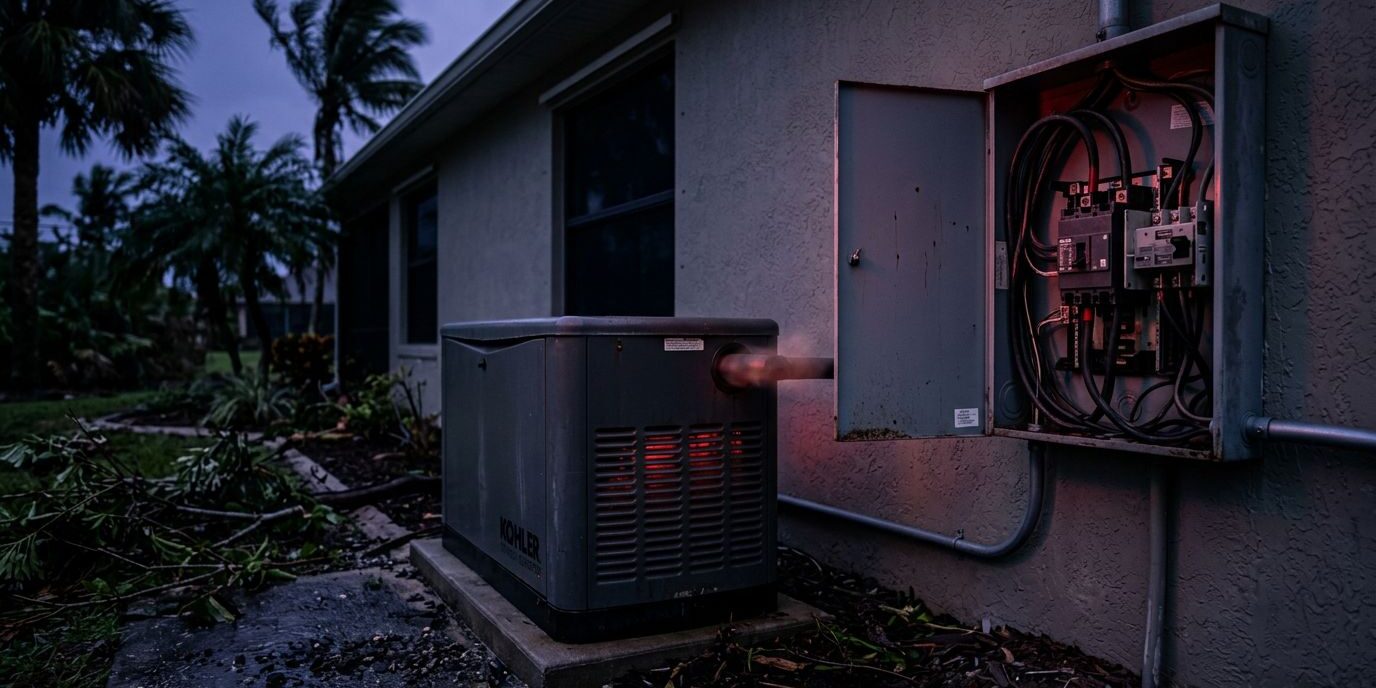
A backup generator can start, sound normal, and still leave your home without electricity. When you search for generator runs no power, the problem usually isn’t the engine itself. The engine is only one part of the system, and the power output, breaker, transfer switch, and wiring must all work together.
In Southwest Florida, heat, humidity, salt air, corrosion, insects, and storm debris can create failures that aren’t visible from outside the enclosure. We recommend checking a few safe items first, then calling a qualified technician before opening electrical compartments or testing live voltage.
Key Takeaways
- A generator running smoothly does not guarantee your home is receiving electricity, as the alternator, breaker, and transfer switch must all function correctly.
- Common causes of no power output include a tripped circuit breaker, automatic voltage regulator (AVR) failure, damaged alternator windings, or lost residual magnetism.
- The automatic transfer switch may be at fault if it fails to safely move your home from utility power to generator power after the engine starts.
- Environmental factors in Southwest Florida such as high humidity, salt air, corrosion, and pests can damage internal electrical connections without showing exterior signs.
- Safe troubleshooting is limited to checking exterior panels, fuel levels, and warning lights; internal electrical diagnostics should always be left to a qualified technician.
Generator Runs No Power: Start With the Basic Difference
The first question is simple: Is the generator producing no electricity, or is the home failing to receive it?
A standby generator may be running correctly while a tripped circuit breaker, failed transfer switch, or wiring problem keeps power from reaching your electrical panel. These are separate problems, and identifying the difference saves time during troubleshooting.
Look at the generator control panel and exterior circuit breaker without removing covers. Check whether the unit shows an active alarm, warning light, or fault code. If the generator breaker is visibly tripped, you may be able to reset it once according to the manufacturer’s instructions. Don’t keep resetting a breaker that trips again.
Next, check whether utility power is also off. During a storm, the generator may start because the transfer switch detects a utility failure. If the switch doesn’t complete the changeover, the engine can run while the home remains dark.
A running engine does not prove that your house is receiving generator power. The alternator and transfer system still need to complete their jobs.
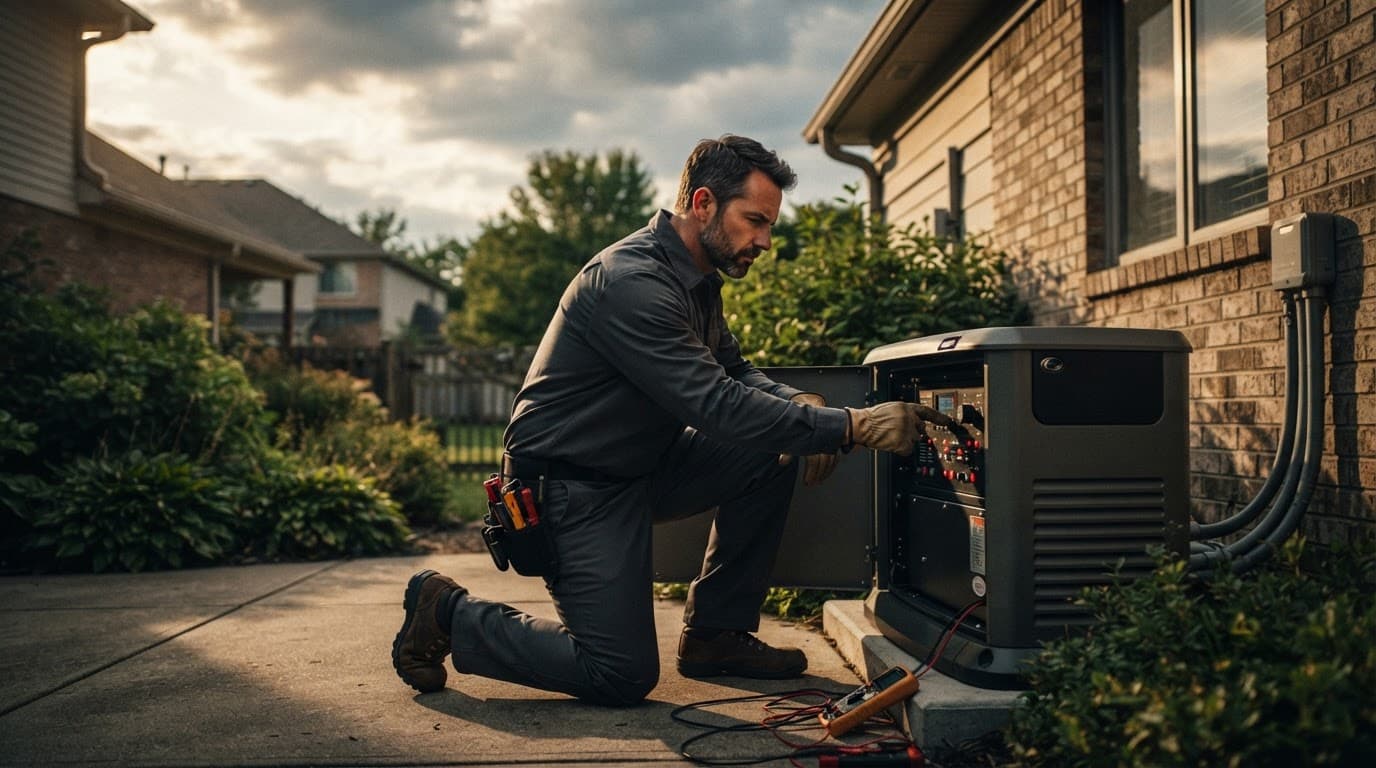
A technician normally tests voltage at several points, including the generator output terminals, breaker, transfer switch, and home electrical panel. That testing shows where power stops moving through the system.
Common Electrical Reasons a Standby Generator Has No Output
The generator’s alternator creates electricity as the engine turns. Several electrical components control and distribute that power output. A failure in one component can leave the engine running without usable voltage.
The circuit breaker is one of the easiest causes to overlook. A short circuit, overload, wiring fault, or internal electrical problem can trip the breaker and interrupt power. The breaker may also fail internally, even when the handle appears to be in the correct position.
The automatic voltage regulator, often called the AVR, controls voltage from the alternator. An avr failure can cause low voltage, unstable voltage, or no measurable voltage output. The alternator may also have damaged alternator windings, worn carbon brushes, a failed capacitor, or a problem with the rotor or stator.
Some generators also lose the residual magnetism needed to begin producing voltage. This can happen after long periods without use or after certain electrical failures. Restoring power requires field flashing and troubleshooting the excitation circuit, which involves model-specific testing and should not be attempted casually.
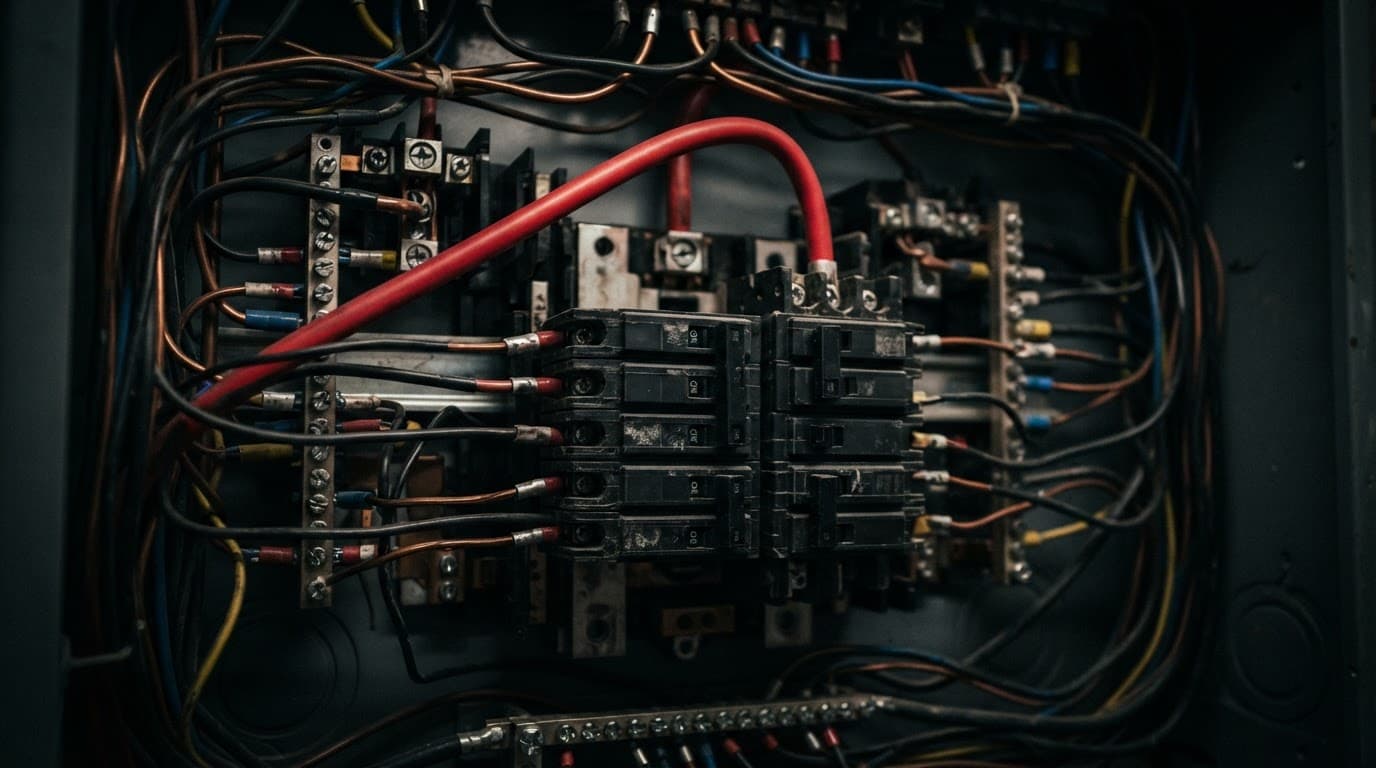
Corroded terminals and loose connections are common concerns in coastal Florida. Moisture can affect battery cables, grounding points, control wires, and alternator connections. Rodents may also chew insulation or disturb wiring inside the cabinet. A generator can look clean outside while hiding a damaged connection inside.
A useful generator output troubleshooting video shows why a normal engine sound doesn’t confirm that the electrical section is working. The testing process matters more than guessing from the noise.
The Transfer Switch May Be the Real Problem
The automatic transfer switch moves your home from utility power to generator power. It monitors incoming utility voltage, sends the start signal, and safely connects the electrical current from the generator to your home’s circuits when conditions are correct.
If the generator starts but the transfer switch doesn’t move, your home may remain without power. The switch could have a control issue, a failed motor, damaged contacts, incorrect wiring, or a problem with its sensing circuit that prevents proper voltage output.
There is also a delay built into many systems. The generator usually runs for a short period before the transfer switch moves, allowing the engine to stabilize. During a normal outage, waiting briefly is expected. However, if the generator continues running and the home stays off, the delay is no longer the explanation.
Listen for the transfer switch to engage, but don’t remove its cover. Transfer equipment can contain dangerous voltage from both the utility and generator. Even when the generator seems to be malfunctioning, the utility side may still be energized.
The same issue can happen in reverse when utility power returns or after a major power surge. A faulty transfer switch may fail to reconnect the home, leave the generator running too long, or transfer repeatedly when utility power is unstable. Keep the system in automatic mode unless a qualified technician tells you otherwise.
Fuel, Engine Speed, and Load Problems Still Matter
A generator that runs smoothly is less likely to have a basic fuel problem, but engine performance still affects power production. The alternator must turn at the correct speed to produce the proper frequency and voltage.
Low fuel pressure can cause an engine to run poorly under load. Natural gas systems may have an undersized meter, restricted line, damaged regulator, or another appliance using too much gas at the same time. Propane systems can experience low tank levels or supply restrictions, while heavy-duty commercial units and some residential diesel generators rely on clean fuel injectors and filters to maintain performance.
A weak engine may sound normal while operating without a load. Once the transfer switch connects the home, the electrical load forces the engine to work harder. If it bogs down, hunts, stalls, or produces unstable output, the issue may involve fuel delivery, air intake, ignition, or engine control. A malfunctioning oil sensor can also shut the engine down or restrict performance when it senses pressure fluctuations under heavy demand.
Dirty air filters can restrict airflow and reduce engine performance. A worn spark plug also affects combustion when the engine starts or when the load changes. Manufacturer schedules vary, but many service programs check or replace air filters around 100 to 150 hours and spark plugs around 200 to 300 hours. Oil service is often required every 100 to 200 hours or annually when the unit has little runtime.
These intervals are general maintenance guidance, not a replacement for your owner’s manual. Heavy storm use can move the next service date closer. After an extended outage, we recommend having the oil, filters, battery, and electrical output inspected.
What You Can Safely Check Before Calling
A few exterior checks can provide useful information without exposing you to live electrical parts. Before checking anything, stay clear of downed lines, standing water, smoke, fuel odors, and damaged equipment.
You can safely:
- Confirm that the control panel is set to automatic operation.
- Look for an active fault code or warning indicator.
- Check the fuel supply, such as the propane level or visible natural gas service issue.
- Inspect the outside of the enclosure for storm damage, water entry, nests, leaves, or blocked air openings.
- Check whether the exterior generator circuit breaker appears tripped, then follow the manufacturer’s reset instructions once.
- Confirm whether the main circuit breaker panel in the home has a tripped breaker.
- Inspect a portable generator for proper fuel levels and check any built in oil sensor alerts if the unit is failing to start.
Don’t spray insecticide or cleaner inside the enclosure. Don’t place rodent poison inside the unit, and don’t seal vents or wiring openings with household foam. Those actions can damage components, restrict airflow, or create a fire risk.
Never remove the generator control panel or transfer switch cover unless you are qualified to work around energized equipment. Do not use a multimeter or metal tool to test terminals, and don’t assume the generator is safe because it isn’t powering the house.
Southwest Florida Conditions Can Cause Output Failures
Southwest Florida weather is hard on outdoor equipment, making preventative maintenance essential for keeping both diesel generators and any backup portable generator ready for action. High humidity can accelerate corrosion around terminals and connectors. Salt air can increase metal corrosion near coastal communities, including Naples, Bonita Springs, Cape Coral, and Fort Myers.
Heavy rain creates another concern. Water may enter through damaged seals, blocked drains, or an enclosure that doesn’t sit properly above surrounding runoff. Flooding and standing water can damage electrical components and create serious shock hazards.
Pests cause problems too. Mice and squirrels can chew battery cables, sensor wires, and control wiring. Ants and other insects may gather around warm electrical components. Nesting material can restrict airflow and trap moisture near the alternator or control board.
Regular service helps identify these problems before hurricane season. Our generator maintenance plans can include oil and filter service, battery testing, startup checks, spark plug service, and a broader inspection of the unit.
When Professional Generator Repair Is Necessary
Call for a professional engineer when the generator repeatedly trips its breaker, displays a fault code, produces no measurable power, or fails to transfer the home. The same applies when you notice smoke, burning odors, fuel leaks, unusual sounds, damaged wiring, or water inside the enclosure.
A technician can test the system in the right order. That usually includes checking engine speed, output voltage, frequency, breaker condition, AVR operation, alternator components, transfer switch function, wiring continuity, electrical current, grounding, and load response using a multimeter.
This approach is safer than replacing parts based on a guess. A new battery won’t fix an avr failure. A breaker reset won’t repair corroded wiring. Replacing a transfer switch won’t solve an undersized gas supply.
Our generator repair services support homeowners and businesses throughout Southwest Florida. Certified technicians can identify whether the issue is mechanical, electrical, fuel-related, or connected to the transfer equipment.
A one-time repair restores operation, but it doesn’t replace regular maintenance. Keep service invoices, inspection notes, installation records, and repair documentation together. These records help technicians understand the unit’s history and can support warranty questions when needed.
Preventing a No-Power Failure During the Next Outage
The best time to test a standby generator is before a storm threatens the area. Weekly exercise cycles help confirm that the unit starts, but a short exercise doesn’t test every part of the system under a full household load.
Scheduled preventative maintenance should include battery condition, charging voltage, oil level, filters, spark plugs, wiring, terminals, fuel supply, exhaust clearance, and transfer operation. Technicians should also inspect internal components like residual magnetism, field flashing, and carbon brushes, while looking for corrosion, pests, water entry, and debris around the intake and enclosure.
We also recommend paying attention to changes. A new rattle, longer startup, repeated fault code, rough engine sound, or delayed transfer deserves attention before the next outage. Small warnings are easier and less expensive to address than a complete power failure during a hurricane.
If the system is old, heavily used, or no longer matches your home’s electrical needs, a load review may be appropriate. Added pool equipment, air conditioning systems, electric vehicle chargers, or home renovations can change the electrical load placed on your backup generator, sometimes requiring a consultation with a professional engineer.
For homeowners planning a new system or evaluating an existing one, Get a Free Consultation to discuss testing, repair, maintenance, or generator replacement options.
Frequently Asked Questions
Why is my generator running but my house has no power?
An engine running normally only proves the mechanical part of the system is working. Power can still fail to reach your home due to a tripped circuit breaker, a faulty automatic transfer switch, damaged alternator components, or wiring issues.
Can I safely reset a tripped generator circuit breaker?
You can check the exterior breaker and attempt to reset it once according to the manufacturer’s instructions. However, you should never repeatedly reset a breaker that trips again, as this indicates a serious underlying electrical short or overload.
What is an AVR and how does it cause power failure?
AVR stands for automatic voltage regulator, which is the component responsible for controlling the voltage coming from the alternator. If the AVR fails, the generator may produce unstable voltage, low voltage, or no measurable power output at all.
How do Southwest Florida weather conditions affect generator output?
High humidity, heavy rain, and coastal salt air accelerate metal corrosion around terminals and electrical connections. Additionally, moisture and pests can infiltrate the enclosure, damaging internal wiring and control boards while the generator looks fine on the outside.
Conclusion
When a generator runs but the house has no power, the engine may not be the problem. A tripped breaker, failed automatic voltage regulator, damaged alternator, transfer switch issue, wiring fault, corrosion, or fuel limitation can stop electricity from reaching your home.
Start with safe exterior checks, but don’t open energized panels or repeatedly reset a tripping breaker. Professional testing identifies where the power stops, evaluating voltage output, residual magnetism, a faulty capacitor, and damaged alternator windings to restore your backup system without replacing parts unnecessarily. A generator that sounds ready is not enough. It must produce stable electricity, transfer it correctly, and remain maintained before the next Southwest Florida outage.