


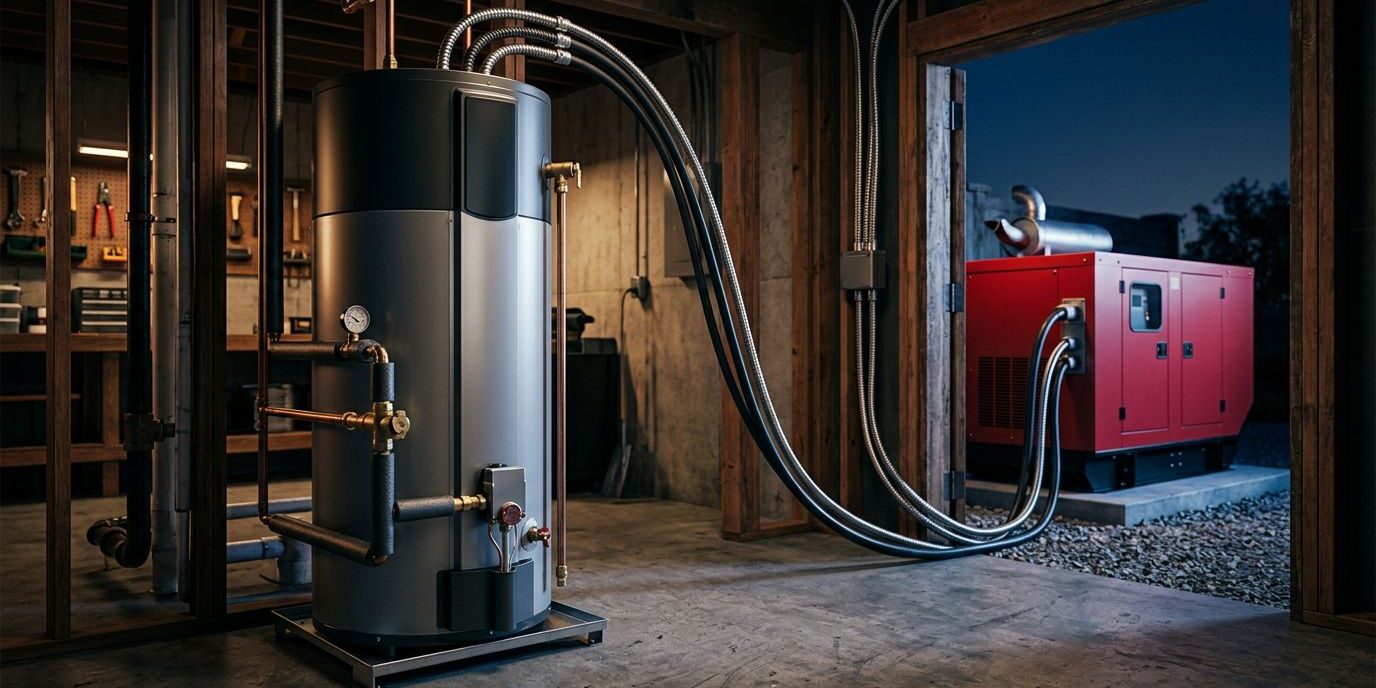
Yes, a standby generator can run an electric water heater during a power outage, but the generator must have enough capacity for the heater and the rest of your home. A typical electric tank water heater can use several thousand watts, so it may take a large share of your available backup power.
The right answer depends on the heater’s voltage, wattage, generator size, and the other appliances operating during an outage. We look at those details, including the specific power requirements of your equipment, before recommending a system, because reliable backup power starts with an accurate load calculation.
Key Takeaways
- A standard electric water heater often requires about 4,000 to 5,500 running watts.
- The backup generator must support the water heater along with air conditioning, refrigeration, lighting, pumps, and other essential power requirements.
- Load management can temporarily disconnect the water heater while larger appliances start.
- A gas water heater usually places a much smaller electrical demand on the backup system, but it adds demand to the home natural gas supply.
- Professional installation, correct wiring, and routine maintenance help protect your emergency power system and your home.
Understanding Standby Generator Water Heater Requirements
Electric water heaters are usually high-demand appliances. Most standard tank models operate on a 240-volt circuit and use two heating elements to warm the water. Depending on the unit, the electrical requirements commonly fall between 4,000 and 5,500 watts.
For comparison, some published sizing guidance places standard electric water heaters around 4,500 to 5,500 watts. You can review these electric water heater wattage estimates when checking generator sizing and the rating label on your own unit.
The water heater doesn’t always consume its full rated wattage. The elements cycle on and off as the tank temperature changes. However, a home backup system must account for both running watts and startup surges, especially during a power outage when multiple devices attempt to draw power simultaneously.
Unlike a smaller portable generator or a solar generator that might struggle with heavy continuous loads, a whole-house unit provides better capacity. Even so, if the heater turns on while the air conditioner, refrigerator, well pump, or pool equipment is running, the combined demand can exceed the system limits.
This is why a standby generator water heater setup requires more than matching one appliance to one generator. We need to consider the total electrical load of the entire home.
A 14-kilowatt generator, for example, may power many essential circuits, but it may not comfortably support a 4,500-watt water heater plus a large central air conditioner and other major appliances at the same time. A 22-kilowatt or larger system may provide more flexibility, but the correct size still depends on the home’s actual load.
An electric water heater may be manageable on a properly sized generator, but it should never be added to the system based on wattage alone.
How Generator Size Affects Water Heater Performance
Proper generator sizing and understanding your power requirements are essential when designing a system for your home. The calculation includes appliances that may run continuously, appliances that cycle, and equipment with a high starting demand.
Common loads include:
- Whole house air conditioning
- Electric water heater
- Tankless water heater
- Refrigerator and freezer
- Pool pump
- Well pump or lift station
- Sump pump
- Electric range or oven
- Garage door openers
- Lighting and receptacles
- Medical equipment
- Internet and security systems
Southwest Florida homes often have heavier cooling loads than homes in other parts of the country. During a summer power outage, your air conditioner may be one of the largest electrical loads in the home. If you rely on backup power for your electric water heater as well, the generator needs enough reserve capacity to carry both systems safely.
A professional load calculation helps identify which appliances can operate together. It also shows whether the electrical service, transfer switch, and generator are suitable for the planned backup circuits. General generator sizing information from Home Depot’s generator guide can provide a useful starting point, but it doesn’t replace a site-specific assessment.
The age and design of your water heater also matter. A newer high-efficiency unit may have different operating characteristics than an older tank. A tankless water heater can create an even larger demand because it heats water as it flows, requiring high surge watts that make a portable generator insufficient for the task. Some whole-home electric tankless models require several dedicated 240-volt circuits, meaning you need a robust backup generator to handle the load.
We also check the generator’s transfer switch rating and the home’s panel configuration. The generator may have enough rated output, but the transfer equipment must safely handle the selected circuits.
Using Load Management to Control High-Demand Appliances
Load management and load shedding can make it easier to operate an electric water heater with a standby generator. A load management system monitors the generator’s available capacity and disconnects selected appliances when demand becomes too high.
For example, the system may temporarily prevent the water heater from running while the air conditioner starts. Once the air conditioner reaches normal operating conditions, the water heater can be allowed to operate again. Using smart load shedding in this way prevents overload on a whole house backup generator without requiring every major appliance to run at the same time.
This approach allows some homeowners to use a smaller generator while keeping more circuits connected, protecting the unit during a power outage.
Load management may be useful for homes with:
- A large central air conditioner
- An electric water heater
- Pool equipment
- Multiple refrigeration appliances
- An electric range or dryer
- A tankless water heater or solar generator with limited reserve capacity
The system must be designed for the home’s actual equipment. A water heater shouldn’t be connected through a transfer switch or to a generator panel without confirming its breaker size, voltage, wire sizing, and expected load. The controls also need to be installed correctly so the water heater cannot receive power outside the intended operating conditions.
We normally recommend deciding which appliances are essential before installation. Some homeowners prefer hot water during an outage, while others prioritize air conditioning, refrigeration, medical equipment, and water pumps. There isn’t one correct combination for every property.
Electric Versus Gas Water Heater Backup Power
A gas water heater usually requires much less electricity than an electric water heater or an electric tank model. The gas burner provides the heating energy, while electricity powers the ignition, controls, and sometimes the blower, meaning that a gas water heater has a lower electrical demand that is often easier for a standby generator to support.
However, a gas water heater still affects the fuel side of the installation. If the standby generator uses natural gas, the generator and water heater share the home’s gas service, which can impact overall energy consumption. A gas range, pool heater, furnace, or other appliance may also be connected to the same meter.
The combined gas demand must be checked before installation. If the total demand exceeds the capacity of the existing meter or service line, the utility may require a meter exchange or service upgrade. This issue is separate from the generator’s electrical wattage.
Propane systems require a different type of planning. A propane tank provides a limited amount of fuel, and long outages can increase overall fuel consumption. A generator running under heavy electrical load uses more fuel than one carrying only lights and refrigeration. The generator size, water heater type, tank size, and expected outage duration should all be considered together.
This is one reason professional installation for whole house backup power matters in Fort Myers, Naples, Cape Coral, Bonita Springs, Lehigh Acres, and surrounding areas. We need to review both sides of the system, electrical capacity and fuel supply, before the equipment is installed.
Installation and Safety Details Matter
A standby generator and electric water heater involve high-voltage electrical equipment. The generator should be connected through an approved automatic transfer switch to supply reliable emergency power and continuous power safely, rather than using an extension cord or improvised connection.
The transfer switch prevents generator power from feeding back into utility lines. It also allows the generator to start automatically when the power fails and transfer selected circuits safely.
Generator placement is another important issue. Outdoor units must have proper clearance from doors, windows, vents, and other openings. They should never operate inside a garage, shed, lanai, or other enclosed area because of carbon monoxide exposure, especially when running continuously during a power outage.
Southwest Florida conditions also affect the installation. Heat, humidity, heavy rain, salt air, flooding, and insects can damage a backup generator over time. The pad location, drainage, elevation, wiring, fuel connections, and enclosure all need attention.
We recommend using a licensed professional for the installation. Proper generator sizing and placement help protect the equipment, support manufacturer warranty requirements, and reduce the risk of electrical or fuel-related problems.
Homeowners who need help comparing options can review our generator installation and maintenance services or Get a Free Consultation before selecting a system.
Maintenance Keeps the Water Heater Backup Ready
A backup generator can be sized correctly and still fail during an outage if it hasn’t received proper care. The battery, oil, filters, wiring, fuel system, and transfer switch all affect startup and performance, which is vital when you need dependable backup power.
Routine service should include a battery test, cable inspection, oil and filter service, air filter review, and inspection for leaks, corrosion, nests, and damaged insulation. Southwest Florida’s heat and salt air can speed up corrosion, while rodents and insects may damage wires inside the enclosure, threatening your continuous power when a power outage strikes.
The weekly exercise cycle also matters. It allows the generator to start and run before an emergency, although a short exercise cycle doesn’t replace a full service visit or load test.
After a long outage or heavy storm use, the service interval may arrive sooner than expected. Keep invoices, inspection notes, installation records, and repair documentation in one location so technicians can easily service your electric water heater system and other major loads.
We recommend scheduling whole home generator maintenance on a regular basis rather than waiting for an outage to reveal a weak battery or worn component. A one-time repair can restore operation, but it doesn’t replace consistent preventative care for a reliable whole house system.
Frequently Asked Questions
Can a standard standby generator run an electric water heater?
Yes, a standby generator can run an electric water heater, provided the generator has enough capacity. Because standard electric tank water heaters typically require 4,000 to 5,500 watts, your system must be large enough to handle this heavy electrical load alongside your home’s other essentials.
How does load management help with water heater backup power?
Load management systems monitor your generator’s available capacity and temporarily disconnect high-demand appliances, like the water heater, when larger loads start. This prevents the system from overloading and allows you to safely use a smaller generator without sacrificing comfort.
Do gas water heaters require as much generator power as electric models?
No, gas water heaters place a much smaller electrical demand on your backup system because electricity is only needed for ignition, controls, and blowers. However, you must ensure that your home’s gas supply can handle the combined demand of both the generator and the water heater.
Can a Standby Generator Run an Electric Water Heater?
Yes, but the generator must be sized for the standby generator water heater operation, taking the heavy electrical load of an electric water heater and its overall power requirements into account. A standard electric tank heater may require 4,000 to 5,500 watts, which can be a significant portion of a residential standby generator’s output.
The best solution may involve a larger generator, load shedding, or a decision to leave the water heater disconnected during an outage. Some homeowners even consider a portable generator or a tankless water heater as an alternative, while the right choice still depends on your home’s cooling system, pool equipment, water pumps, panel capacity, fuel source, and backup priorities.
For Southwest Florida homeowners, reliable power is about more than starting the generator. It means having a properly designed system that can handle real conditions when a power outage strikes and you need dependable emergency power. A correct load calculation is the first step toward keeping both essential comfort and critical appliances running safely.