


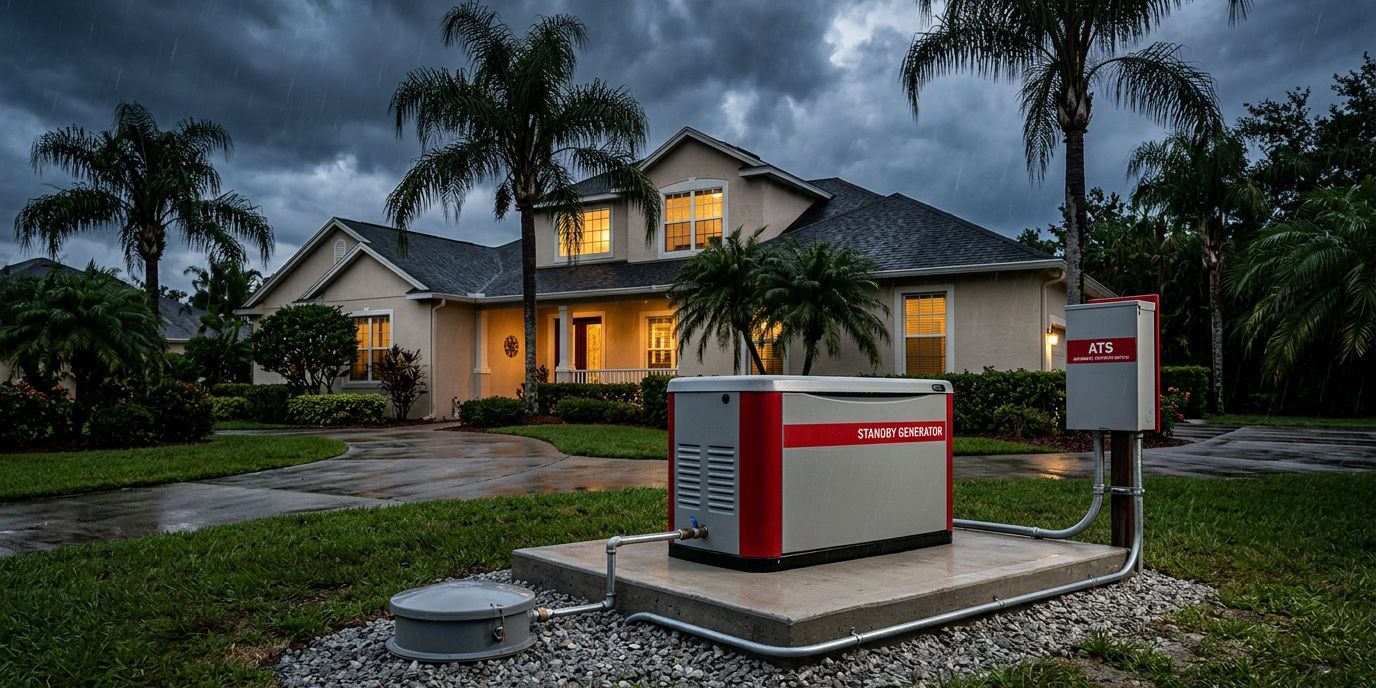
An existing generator can be a real advantage in a Southwest Florida home, but it must start during power outages. Buying a home with an existing Florida standby generator may save new installation costs and planning. It can also offer more convenience and capacity than portable generators.
Its age, maintenance records, fuel supply, permits, placement, and transfer switch all affect its actual value. We recommend treating the generator like an additional mechanical and electrical system, not a feature to accept without inspection.
Key Takeaways
- Inspect an existing Florida standby generator before assigning it value, including the engine, automatic transfer switch, fuel system, electrical output, and supported loads.
- Verify installation permits, Florida Building Code compliance, wind protection, placement, exhaust clearances, and flood-zone requirements with the local jurisdiction.
- Confirm that the natural gas meter or propane tank can support the generator and the home’s other appliances during an extended outage.
- Review maintenance, repair, fuel, warranty, insurance, and monitoring records, and budget for future service, repairs, battery replacement, or system upgrades.
- Treat the generator as a mechanical and electrical system rather than a guaranteed feature until a qualified technician tests it under operating and load conditions.
What an existing Florida standby generator should prove
A permanent standby unit connects to the home’s electrical system through an automatic transfer switch. When utility power drops, automatic activation starts the generator and transfers the home’s circuits to backup power, usually within seconds.
That setup differs from portable generators, which require manual placement, connection, refueling, and supervision. Home standby generators can power major household loads, including air conditioning, refrigeration, security equipment, internet service, well pumps, and selected pool equipment, depending on their size and installation.
Before closing, find out what the system actually supports. Residential equipment differs from a commercial standby generator and industrial generators in capacity, controls, and application. The phrase “whole home generator” doesn’t always mean every circuit operates at the same time. Some systems use load management to prioritize air conditioning or other high-demand equipment.
| Ask about | What to verify |
|---|---|
| Generator type | Standby combustion generator or home battery backup |
| Coverage | Whole-home service or selected essential circuits |
| Activation | Automatic transfer switch operation |
| Fuel | Natural gas, propane, or another approved source, and how the fuel supply is maintained |
| Condition | Age, runtime, warnings, repairs, and service records |
A home battery stores electricity in cells. A generator produces electricity by burning fuel, so it needs engine service, ventilation, and safe exhaust clearance. That difference matters during a long outage.
Inspect the generator before treating it as a selling point
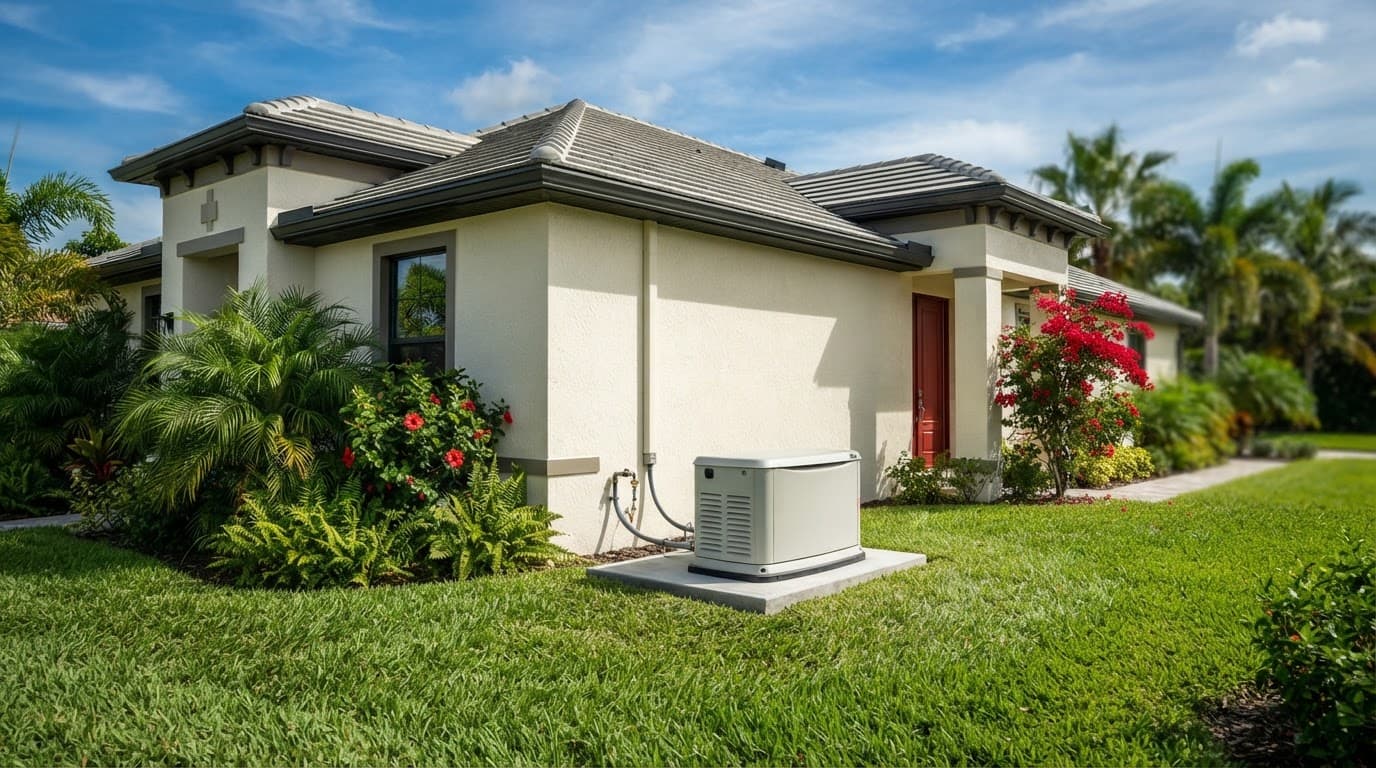
The first inspection should happen before you assign value to the equipment. Ask for the model number, serial number, installation date, operating hours, warranty information, and original installer. If it’s a Generac home standby generator, request its manufacturer service records.
A qualified technician should inspect the generator under operating conditions. A visual check can identify obvious rust, damaged panels, standing water, or pest activity, but it won’t confirm that the engine can carry the home’s electrical load.
The inspection should include:
- Starting the unit and checking its automatic exercise cycle.
- Testing the automatic transfer switch and backup circuits.
- Checking output voltage and frequency.
- Inspecting oil, filters, spark plugs, battery condition, and cables.
- Reviewing fuel pressure, regulators, and visible gas or propane connections.
- Looking for corrosion, water entry, nesting, chewed wiring, and blocked airflow.
- Recommending load bank testing when appropriate for the unit and inspection scope.
Southwest Florida’s heat, humidity, heavy rain, and salt air can affect outdoor equipment faster than a dry inland climate. A cabinet may look clean while terminals, fasteners, battery connections, or wiring underneath show corrosion.
Confirm the transfer switch and electrical load
The transfer switch is one of the most important parts of the installation. A working generator cannot protect the home if the switch fails to transfer power, has damaged wiring, or was never sized for the system.
Ask whether the electrical panel has changed since installation. New air conditioners, pool heaters, water heaters, electric ranges, solar equipment, and electric vehicle chargers can change the home’s total demand.
Ratings and sizing assumptions for industrial generators don’t necessarily apply to a residential installation. A 32-amp Level 2 electric vehicle charger uses about 7.7 kilowatts at 240 volts. If the charger operates while air conditioning, refrigeration, and pool equipment are running, the generator may need load management or a new sizing review.
The whole house generator installation process should document the work completed for the standby generator installation and expected electrical loads. For a turnkey installation, verify the generator, transfer equipment, fuel connections, clearances, permits, and Florida Building Code compliance. If the seller cannot explain what was installed, arrange an independent review before relying on the system.
Confirm fuel supply, load, and placement
Fuel planning becomes more important when storm damage can delay deliveries or utility repairs. The best option, natural gas or propane, depends on the property and the generator’s rated demand.
| Fuel source | What buyers should check |
|---|---|
| Natural gas | Meter capacity, gas pressure, service reliability, and total demand from all appliances |
| Propane | Tank size, current level, delivery records, regulator condition, and refill access |
| Stored fuel | Tank age, registration requirements for fuel storage tanks, containment, and inspection records |
Natural gas may provide a continuous supply, but the existing meter must support the combined demand from the generator, air conditioning, water heater, range, pool heater, and other gas appliances. A larger generator doesn’t always require a meter exchange. Only a load calculation can confirm that.
Propane provides stored fuel on the property, but the tank has a finite capacity. Propane tanks are generally filled to no more than 80 percent, leaving room for expansion. A tank labeled 500 gallons provides about 400 gallons of usable fuel. Runtime depends on generator size, electrical load, outdoor temperature, and how many air conditioners operate.
Don’t judge readiness by the tank label alone. Review the generator’s fuel consumption at expected loads and ask how the property handled previous extended outages.
Placement requires the same attention. Follow Florida Building Code clearance rules around doors, windows, vents, and other openings. Proper exhaust clearance helps reduce the risk of carbon monoxide poisoning. The pad should remain stable, drain properly, and account for the property’s flood zone and elevation requirements. In coastal areas, check salt exposure and corrosion resistance in cabinet materials, fasteners, battery connections, and anchoring, along with drainage around the base.
Check permits, wind protection, and local approvals
Do you need a special permit for a standby generator in Florida? In most cases, residential installation involves local electrical, gas, mechanical, or building approvals under the Florida Building Code. The exact requirements depend on the city or county, fuel source, property location, and installation design.
Ask the seller for permit numbers, including any electrical permit, final inspection records, and equipment documentation. Request utility correspondence and fuel supply details for the meter, tank, regulator, or delivery system. If those records are missing, contact the local building department before closing. A unit that operates today may still have an unresolved permit or installation issue.
Florida properties also need protection against strong wind. An exposed generator, pad, stand, or enclosure may need anchoring and structural design based on the applicable Florida Building Code and ASCE 7 requirements. The code edition adopted by the local jurisdiction controls the details.
Florida emergency-generator code materials include inspection under load conditions, not only a visual review. The Florida Building Code emergency generator reference is useful background, but buyers should confirm current requirements with the local authority.
Fuel storage tanks can create another layer of review. Florida Department of Environmental Protection rules may apply when a stationary aboveground tank exceeds 550 gallons or an underground tank exceeds 110 gallons. Regulated systems can involve registration, placards, secondary containment, overfill protection, and release detection.
A standard residential generator doesn’t automatically require a Pollutant System Specialty Contractor. However, larger fuel systems, industrial generators, or regulated pollution-control work may trigger different permitting, environmental, or contractor requirements. Ask the installer and permitting office who must be involved before accepting the existing setup.
Plan for Southwest Florida maintenance
A standby generator can sit unused for months and still need regular preventative maintenance for battery health, oil and filters, exercise cycles, and corrosion checks. During hurricane season, heat, humidity, salt air, insects, rodents, and heavy runtime all affect reliability.
A professional annual service should normally include oil and filter service, battery testing, cable inspection, air intake review, spark plug service when required, corrosion checks, and an automatic exercise-cycle test. Follow the manufacturer’s schedule if it calls for more frequent service.
Heavy runtime after a hurricane may shorten the next service interval. If the generator ran for several days, ask whether the oil was changed afterward and whether the technician checked for overheating, vibration, abnormal exhaust, or fuel system problems.
Never spray insecticide, rodent repellent, or other chemicals inside the generator cabinet. These products can damage electrical components, create fumes, or place flammable material near hot engine parts. Have a technician inspect internal pest damage.
Documented maintenance plans, including a whole house generator maintenance plan, give the next owner a clearer service history and reduce the chance of discovering a weak battery or warning code during an outage.
Review records, insurance, and future ownership costs
The seller should provide installation invoices, permits, service records, repair documentation, warranty information, fuel tank records, manufacturer registration details, and remote monitoring access information, if available. Keep those documents together after closing.
Records help establish whether the generator received routine care and preventative maintenance. They also help a technician identify recurring problems and may support a warranty or insurance question.
Homeowners insurance usually isn’t a maintenance contract. Normal wear, an old battery, missed oil changes, corrosion caused by poor care, and mechanical failure without a covered event may not be covered. Wind debris, lightning, fire, or certain surge losses may be treated differently, depending on the policy, deductible, exclusions, and endorsements.
Ask your insurance agent whether the generator, transfer switch, propane tank, and related wiring are included under the dwelling or other coverage. Verify any service contract’s transfer terms, costs, and covered repairs separately. Whole-home surge protection may also be worth reviewing, especially when the system protects sensitive electronics and major appliances.
The long-term cost includes more than fuel. Budget for annual service, batteries, filters, repairs, monitoring, tank maintenance, gas work, and possible electrical upgrades. If the generator is older or has incomplete records, request a repair estimate and replacement quote before negotiations are complete. Compare those figures with residential equipment costs, not industrial generators. For a property in Fort Myers, Naples, Cape Coral, Lehigh Acres, or nearby communities, Get a Free Consultation can help you understand the condition and requirements of an existing system.
Questions to ask before closing
Before closing, resolve these questions as part of hurricane preparedness, so the generator’s condition and capabilities are clear.
- What is the generator’s model, age, runtime, and warranty status?
- Which circuits does it power, and has the transfer switch passed a recent test?
- Was the installation permitted and signed off by the local jurisdiction?
- Does the home’s natural gas or propane setup support the generator’s full demand?
- When was the last annual service, and how long did the unit run during the last storm?
- Have air conditioning, pool equipment, or an electric vehicle charger been added?
- Are there warning codes, insurance claims, repairs, corrosion, or pest issues?
- Do HOA rules or neighborhood restrictions affect the equipment or exercise schedule?
Frequently Asked Questions
Should I have an existing standby generator inspected before buying a home?
Yes. A qualified technician should test the generator, automatic transfer switch, fuel system, electrical output, and supported loads under operating conditions. A visual home inspection alone may not reveal capacity or transfer problems.
What records should the seller provide for the generator?
Ask for the model and serial numbers, installation date, permits, final inspections, service and repair records, warranty details, fuel tank documentation, and monitoring information. These records help confirm maintenance history and identify unresolved ownership costs.
Can the existing fuel supply support the generator during a long outage?
The answer depends on the generator’s fuel demand and the home’s other gas appliances. Verify natural gas meter capacity or propane tank size, refill access, regulator condition, and expected runtime before relying on the system.
Does a Florida standby generator require permits?
Residential installations commonly involve local electrical, gas, mechanical, or building approvals, depending on the property and system design. Contact the city or county building department to confirm permits, final inspections, wind protection, and current Florida Building Code requirements.
What maintenance does a standby generator need in Southwest Florida?
Routine service typically includes oil and filter changes, battery testing, cable and corrosion checks, air intake inspection, spark plug service when required, and an automatic exercise-cycle test. Heat, humidity, salt air, pests, and heavy hurricane runtime may require more frequent attention.
A generator should add confidence, not uncertainty
An existing standby generator can protect comfort, refrigeration, security, and essential equipment when Southwest Florida loses utility service. It delivers backup power for daily needs and emergency power for critical systems. That value depends on correct sizing, safe placement, reliable fuel, proper permits, and complete ownership records.
We recommend making the generator inspection part of the home inspection process, with a qualified technician testing the engine, automatic transfer switch, fuel system, and supported loads. When records document preventative maintenance and the system performs under load, the generator can be a strong part of the purchase. When the history is unclear, treat it as an unanswered repair and ownership cost until the facts are verified.