


When power returns after an outage, your standby generator does not shut down instantly. The process begins once your local utility company restores service following a power outage, at which point the automatic transfer switch verifies that the incoming grid power is stable before moving your home back to utility service.
This process protects your appliances, generator, and electrical system from unstable voltage. In Southwest Florida, where storms can cause repeated interruptions, understanding the return sequence helps us recognize normal operation and spot a problem early.
Key Takeaways
- The automatic transfer switch waits for stable voltage during the power restoration phase before reconnecting your home to the utility grid.
- Your generator usually runs for a short cooling period after the electrical load transfers.
- A generator that keeps running, cycles repeatedly, or leaves the home without power needs professional attention.
- Storm debris, weak batteries, fuel problems, and transfer switch faults can affect the return process.
- Regular maintenance helps the generator and transfer switch work correctly during the next outage.
How the Automatic Transfer Switch Handles Returning Power
The automatic transfer switch serves as the essential control point between the electrical grid, your backup generator, and your home. During an outage, it detects the loss of utility voltage and signals the generator to start. Once the generator reaches the correct output, the switch moves the home’s electrical load to backup power.
When utility service returns, the equipment works in reverse. The transfer switch carefully monitors the incoming power from the transmission lines and distribution lines before reconnecting your electrical panel. This monitoring is crucial because the switch will not transfer the home back during the first brief flicker or a lingering brownout, as unstable power or low-voltage situations can damage sensitive electronics or cause the generator to cycle on and off repeatedly.
After the utility voltage remains steady for the programmed period, the switch moves the home’s load back to the grid. The generator is then left running without the household load for a short cooldown cycle. This gives the engine time to reduce temperature gradually instead of stopping immediately after carrying a heavy electrical demand.
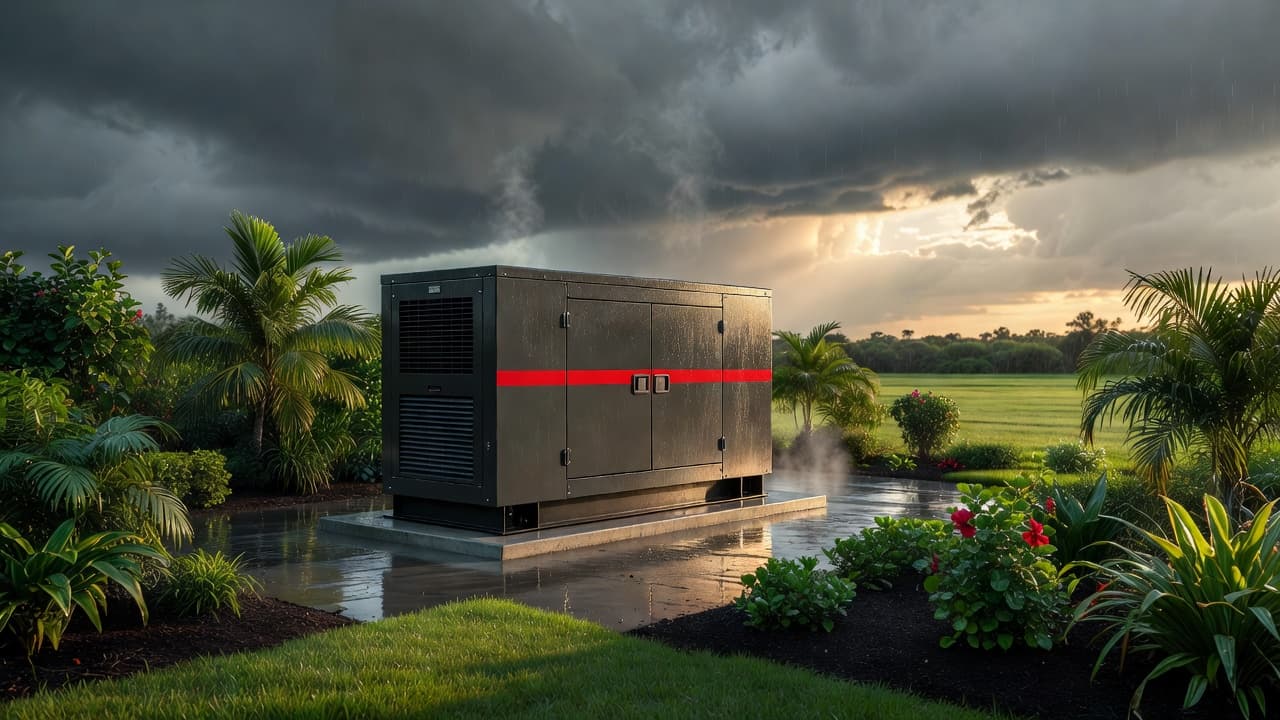
The exact timing depends on the generator brand, model, control settings, and the condition of the utility service. A normal sequence may look like this:
- The transfer switch senses that utility voltage has returned.
- The control system waits for stable power.
- The switch reconnects the home to the utility.
- The generator runs unloaded during its cooldown period.
- The engine stops and returns to standby mode.
We shouldn’t confuse the cooldown period with a fault. A generator that runs briefly after the home returns to utility power is usually following its normal operating sequence. For a closer look at how this equipment transfers electrical loads, see this automatic transfer switch discussion, while remembering that bypassing a transfer switch is not a safe repair method.
Why the Generator Runs After the Lights Come Back On
Many homeowners notice that the lights return, but the generator keeps running. This often causes concern during a blackout, especially when the storm is still active and the equipment is operating outside.
The generator needs a cooldown period because the engine and alternator may be warm after carrying the home’s air conditioning, refrigeration, pumps, and other loads. Stopping immediately can leave heat concentrated in the engine. A short unloaded run allows temperatures to come down under controlled conditions.
The transfer switch also needs time to complete the changeover. The generator should not carry the household load while the utility is reconnecting. Keeping those power sources separated is a basic electrical safety requirement. It prevents generator power from feeding back into utility lines and protects utility workers repairing damaged service.
You may also hear the generator start again if utility power returns briefly and fails a second time. Severe weather often leads to downed power lines, which can complicate the restoration process and result in unstable service or a recurring power failure before repairs are complete. The generator may respond to each event according to its programmed settings.
We recommend leaving the system in automatic mode unless a qualified technician gives you different instructions. Turning the control switch off during an unstable restoration can leave your home without backup power if the utility fails again.
A problem is more likely when the generator continues running long after the utility has been stable, the home remains without power, or the unit repeatedly starts and stops. Warning lights, error codes, unusual sounds, fuel odors, smoke, or visible leaks also require attention. The generator may be responding to a transfer switch issue, low battery voltage, fuel pressure trouble, or another fault.
What to Check After Utility Power Is Restored
Once the generator has stopped, we recommend a brief visual inspection. You don’t need to open the cabinet or touch electrical components. A walk around the outside can reveal conditions that need service before the next outage.
Look for standing water near the pad, storm debris around the enclosure, damaged conduit, fallen branches, fuel odors, oil spots, and unusual exhaust residue. You should also scan for signs of equipment failure and inspect the nearby utility transformer for any obvious damage. Southwest Florida humidity, heavy rain, salt air, and windblown debris can create problems that aren’t obvious from inside the home.
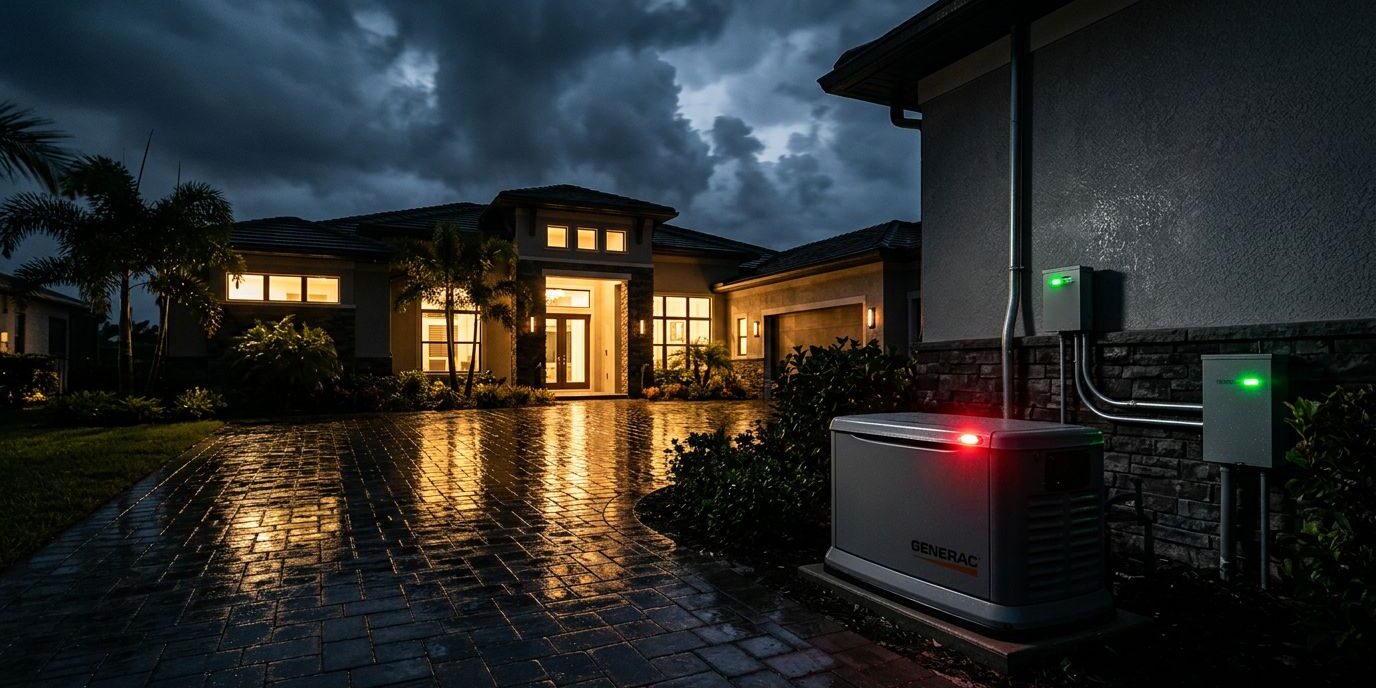
Check the generator’s control panel for warning lights or stored fault messages. A green status light usually indicates normal standby operation, but the owner’s manual should guide you on the exact meaning for your model. Yellow or red indicators shouldn’t be ignored, even if utility power is working again.
We also recommend checking essential appliances in a sensible order. Confirm that the refrigerator, freezer, air conditioning system, sump or well equipment, medical devices, and internet equipment are operating normally. Some electronics may reset when the transfer occurs, while others may need to be restarted manually.
Don’t place a tarp, storage bin, lawn equipment, or landscaping material against the enclosure. The generator needs clear airflow, access for service, and open exhaust areas. Never spray insecticide, rodent repellent, or household chemicals inside the cabinet. Rodents and insects can damage wiring, but blocking approved air openings can create a separate safety problem.
If your home has a whole-home surge protection device, it can help reduce damage from electrical surges caused by storm restoration. However, surge protection doesn’t correct an unstable utility connection or a faulty transfer switch. If equipment behaves strangely after power restoration is complete, check your main circuit breaker to see if it tripped. If issues persist, disconnecting sensitive devices and scheduling a professional inspection is safer than repeatedly resetting breakers.
Our professional backup generator services include installation, maintenance, monitoring, and repair for homes and businesses throughout Southwest Florida. Regular service gives us an opportunity to inspect the transfer equipment before a major outage exposes a hidden problem.
When the Generator Does Not Transfer Back Correctly
A failed return to utility power can appear in several ways. The generator may keep running while the utility is restored. Your lights may remain off even though neighbors have power. The system may transfer, lose power, and transfer again. Each symptom points to a different possible cause.
The automatic transfer switch may not be receiving a clean utility signal. A damaged control wire, failed sensing component, mechanical obstruction, or internal electrical fault can prevent the switch from completing the changeover. The generator itself may also stay active because its controller still detects a problem with the grid.
These technical issues can sometimes be triggered by wider utility events, such as a grid overload, a cascading failure across the local network, or a rolling blackout implemented by your provider. When these disturbances occur, the transfer switch may hesitate to reconnect to avoid damage to your home appliances.
Other possible causes include:
- Utility service has returned to part of the neighborhood but remains unstable at your home.
- The generator battery is weak and cannot complete a start or stop sequence.
- A breaker, disconnect, or utility-side component is damaged.
- Floodwater, insects, or rodents have affected wiring or control connections.
- The transfer switch has been manually bypassed or left in an incorrect position.
We should never bypass the transfer switch, open energized equipment, or attempt to force the generator off. Generator systems connect directly to the home electrical service, and the equipment can contain dangerous voltage even when the engine is not running.
If the house is still without power, first check whether the neighborhood utility service has fully returned. It is helpful to see if line crews are active at a nearby substation, as this often indicates that repairs are still in progress. Check the generator display without removing any covers. Write down the warning code, note what the generator is doing, and contact a qualified technician.
Our certified generator repair technicians can inspect the generator, transfer switch, battery, fuel supply, wiring, and control system. A repair visit is safer and more useful when we have the exact error message and a clear description of what happened after utility service returned.
Maintenance Keeps the Return Sequence Reliable
The return sequence depends on more than the generator engine. The battery, transfer switch, control wiring, fuel supply, oil, air filter, and electrical connections all need to work together. Even residential homeowners require the same level of consistent reliability as critical facilities to ensure their power systems function correctly when utility lines go down. A generator can look clean outside and still have a weak battery or a corroded connection inside the enclosure.
Routine maintenance helps identify those problems before the next hurricane or extended outage. Oil service is generally needed at least annually, with more frequent service after heavy runtime. Air filters often need cleaning or replacement around 100 to 150 operating hours, depending on conditions. Spark plugs may require replacement around 200 to 300 hours, although the manufacturer schedule should control.
Battery testing deserves special attention. A standby generator may exercise every week, but a weekly test does not prove the battery can start the engine under difficult conditions. Heat, humidity, corrosion, and age can reduce battery performance in Southwest Florida.
We also inspect the transfer switch and related connections during scheduled service. The equipment must recognize utility power, separate the two sources, move the home load, and return the system to standby mode. A fault in any part of that sequence can leave the generator running or the home without power.
Keep service invoices, installation documents, inspection records, and error-code notes in one location. Those records help us identify patterns and support warranty questions when a component fails. They also show whether required maintenance has been completed.
If your generator has been running more often than usual, has missed an exercise cycle, or displayed a warning after an outage, check your utility company app. These apps are helpful for reporting outages and providing an estimated time of restoration, which allows you to see how your generator performance aligns with official utility timelines. If you notice any inconsistencies, Get a Free Consultation before the next storm creates a larger problem.
Frequently Asked Questions
Why does my generator keep running after the power comes back on?
Your generator typically runs for a short “cooldown” period after the transfer switch reconnects your home to the grid. This allows the engine and alternator to cool down gradually, which prevents heat-related damage and ensures the system returns to standby mode safely.
Is it normal for my generator to start and stop multiple times during a storm?
Yes, this often happens if utility power is unstable or flickering. The automatic transfer switch is programmed to wait for a steady, consistent voltage before reconnecting your home to the grid to protect your sensitive electronics from power surges.
What should I do if my home still has no power even after the utility grid is restored?
First, check your generator’s display panel for any warning lights or error codes without opening the cabinet. If the generator is displaying an error or if your home remains without power for an extended period, you should contact a certified technician to inspect the transfer switch and electrical system.
Should I turn off the generator manually when the power returns?
No, you should keep your system in automatic mode at all times. Manually turning off the control switch can leave your home without backup protection if the utility grid suffers another failure shortly after the initial restoration.
Conclusion
When utility power returns after an outage, the automatic transfer switch monitors for stable voltage before reconnecting the home to the grid and allowing the generator to enter its cool-down phase. This brief delay is a standard part of the process, ensuring your equipment remains protected and ready for the next event, much like a professional black start capability for your residential system.
A generator that continues to run, cycles repeatedly, or fails to restore power correctly requires professional attention. By prioritizing regular maintenance, keeping detailed service records, and ensuring your automatic transfer switch is functioning optimally, you can keep your system prepared for the next emergency instead of discovering a hidden issue when the weather takes a turn for the worse.