


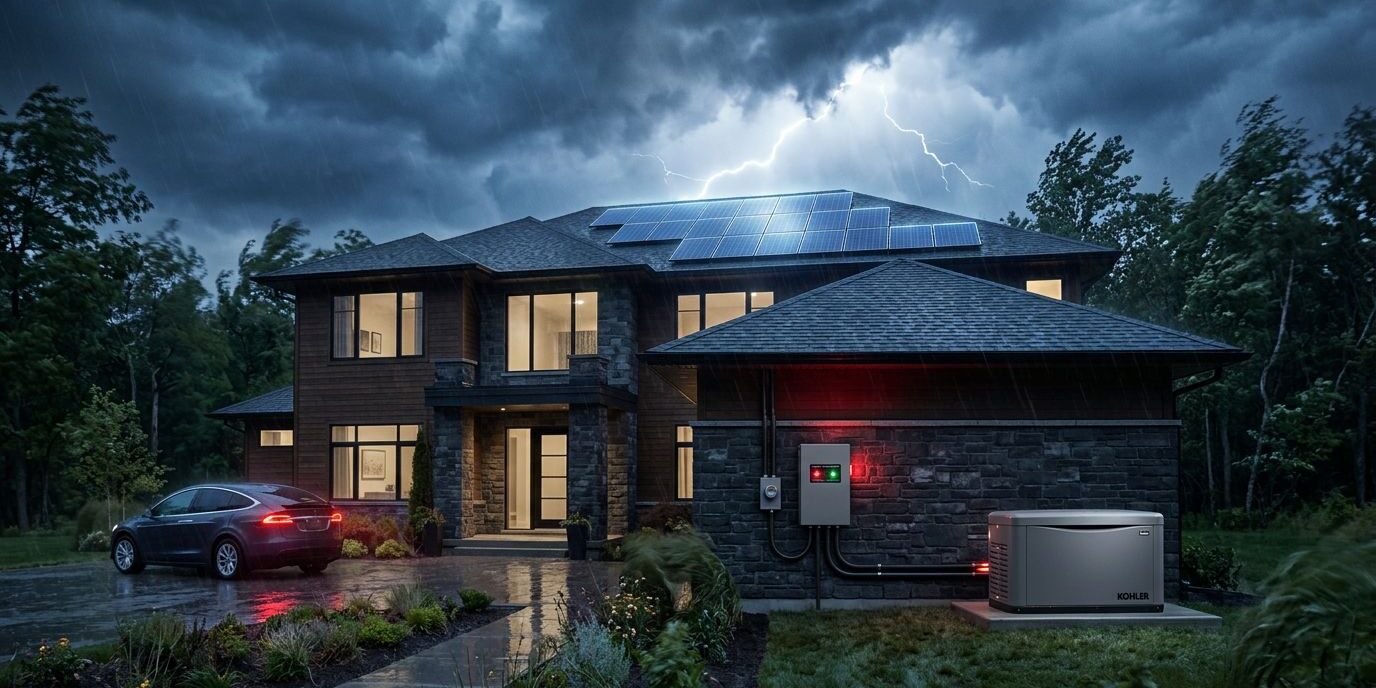
Rooftop solar panels can lower your electric bill, but they don’t automatically provide backup power during a grid outage. A solar panels whole-house generator system can work effectively on the same property, although the components must be connected in the correct order to function safely.
The main issue is electrical isolation. Standard grid-tied solar panels shut down when utility power fails, while the generator starts and supplies selected household circuits or the entire electrical panel. We need the transfer equipment, wiring, and controls designed for both systems before a power outage caused by hurricane season arrives.
Key Takeaways
- Standard grid-tied solar panels usually shut off during a power outage for safety reasons.
- A whole-house generator cannot safely operate in parallel with an unmanaged solar inverter.
- An automatic transfer switch is necessary to keep utility power, solar power, and generator power safely separated.
- Adding battery storage can provide critical energy during a grid failure when the system is designed as a managed backup system.
- Professional electrical planning matters because generator placement, fuel supply, permits, and utility rules all affect the installation.
Solar Panels and a Generator Do Different Jobs
Solar panels produce electricity when sunlight reaches the photovoltaic cells. These solar panels capture clean energy, which is then converted by an inverter into the type of electricity your home can use. In a standard grid-tied solar system, extra power production is sent back to the utility grid.
A standby generator works differently. It uses natural gas or propane to run an engine, which turns an alternator and produces electricity. When the utility supply fails, an automatic transfer switch detects the outage and manages the home electrical load by moving it to the generator.
That difference creates the main problem. Solar panels depend on the electrical grid for a stable voltage and frequency reference. A generator creates its own electrical source, but it is not built to absorb uncontrolled power from a solar system.
We often compare this to two people trying to steer the same vehicle without communicating. Each system may work properly on its own, but the combined operation requires a controller that knows which source is active and how much power the home needs.
A home with solar panels can also have a standby generator, but the solar system may shut down while the generator runs. This is normal for many existing installations. It does not mean the solar panels are damaged or that the generator is incompatible with the home.
For a helpful explanation of the basic compatibility issue, we recommend this solar and generator compatibility guide.
Why Grid-Tied Solar Shuts Off During an Outage
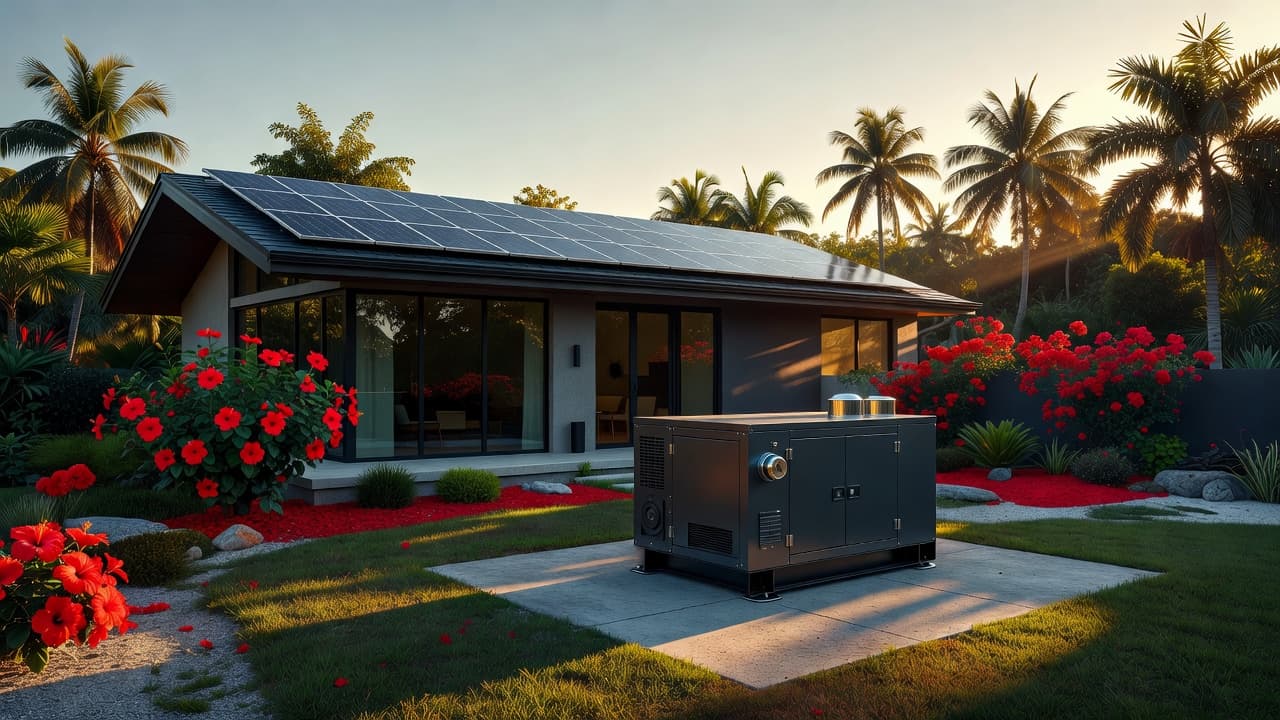
When the utility grid goes down, a standard grid-tied solar system detects the missing electrical reference and disconnects the array. This safety mechanism is known as anti-islanding protection.
The shutdown protects utility workers. Without it, solar equipment could continue sending electricity onto lines that workers believe are de-energized. This same protection also prevents the system from creating an unstable electrical condition inside the home.
The generator starts after the transfer switch disconnects the home from the utility. If the solar inverter stayed connected to the generator, it could safely attempt to backfeed power into the generator, which can be dangerous because generators are not built to accept that electricity. This is fundamentally different from a standalone solar generator, which is designed to handle those specific energy inputs. When the home’s demand is low, that excess energy has nowhere reliable to go.
The result can include:
- Unstable voltage or frequency
- Generator shutdowns
- Damage to the inverter or generator
- Damage to sensitive household electronics
- Fire and shock hazards
This is why we do not recommend connecting a generator to a solar-powered home with a makeshift cable, outlet connection, or improvised breaker arrangement. A backfeed cable can place dangerous voltage on wiring that was not designed for that use. Our goal is to ensure you maintain reliable backup power whenever you experience a power outage.
In many existing systems, the generator powers the home after the transfer switch changes sources, while the grid-tied solar system remains disconnected. The panels may still produce energy from sunlight on the roof, but the equipment will not send that power to the home during the emergency.
That can feel frustrating when the sun is shining after a storm. However, the shutdown is a safety feature, not a failure. The system needs approved equipment before solar production can continue during a grid outage.
How Transfer Switches Keep Power Sources Separated
The automatic transfer switch is one of the most important parts of a generator and solar installation. It controls how electricity reaches the home and prevents two incompatible sources from operating together.
With a conventional standby setup, the switch monitors utility power. During an outage, it disconnects the utility source and connects the generator. When utility power returns and remains stable, the switch moves the home back to the grid.
Solar placement and system design determine how the panels interact with that process. In some installations, the solar equipment is located on the utility side of the generator transfer switch. In others, a separate disconnect or approved control device is required. The exact layout depends on the existing electrical service, inverter design, generator model, local code, and the authority having jurisdiction.
We need to review the complete system rather than look only at the generator size. That review includes the main service panel, solar inverter, battery equipment, transfer switch, meter, grounding, breakers, and available load capacity.
The goal is simple: the generator must never receive uncontrolled power from the solar inverter. While achieving true off-grid capability is a goal for some homeowners, managing installation costs effectively requires a strategic plan that aligns with your specific energy needs. A properly designed installation may use mechanical switching, an approved microgrid interconnect device, or manufacturer specific controls. These components physically or electronically manage the sources according to the system design. Standard grid-tied equipment should not be treated like an off-grid system.
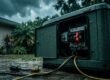
Southwest Florida homeowners also need to consider permits and inspections. An installation can be electrically functional and still fail review if the equipment location, disconnects, wiring, or clearances do not meet local requirements. The generator itself must remain outdoors, with exhaust directed away from doors, windows, vents, and other openings. Manufacturer instructions and local rules may require the unit to sit at least 20 feet from a home or opening.
We recommend using professional generator installation and repair services when an existing solar system is part of the project. The electrician, generator installer, solar contractor, utility, and inspector should all work from the same plan.
Battery Storage Changes the Setup
Solar panels alone usually cannot power a grid-tied home after an outage. However, solar panels paired with robust battery storage can operate differently. Modern systems frequently utilize lithium iron phosphate technology, often referred to as LFP batteries, for their longevity and safety.
The battery provides a place to store extra solar production and supply electricity when the panels aren’t producing enough. A managed system can disconnect the home from the utility grid, keep the solar array operating, and control how power flows between the panels, battery, generator, and household loads.
That doesn’t mean every battery can work with every generator. The inverter, battery, transfer equipment, generator controller, and electrical service must be compatible. Some systems can start a generator when the battery reaches a certain charge level. Others use the generator as a source of backup power for heavy loads or long periods of bad weather.
We also need to consider generator capacity. Air conditioning, refrigeration, pool equipment, well pumps, medical equipment, and electric vehicle chargers can place a large demand on the system. Solar production changes during clouds and storms, so it cannot be counted as a constant source for every load.
Some homeowners are interested in a system that uses solar during the day, battery storage at night, and a generator during extended outages. Choosing a setup with expandable capacity can help you reach greater energy independence while maximizing the use of clean, renewable energy. That arrangement can reduce fuel use, but only when the equipment is designed to coordinate safely. A standard rooftop solar installation usually needs upgrades before it can provide that function.
Homeowners comparing battery controllers often find real-world system questions in solar and generator controller discussions, but online advice cannot replace a site-specific electrical review.
Planning a Solar and Generator System in Southwest Florida
Storm preparation starts with deciding what the home must keep running. We do not size a system by square footage alone; instead, we review actual electrical loads to determine whether your whole-home backup should power the entire electrical panel or just selected essential circuits. Unlike a portable power station or a smaller solar generator designed for limited device charging, a whole-home backup system provides the robust capacity needed for extended outages.
The fuel supply matters too. Natural gas supports long runtimes when utility service is available, but the gas meter and service line must handle the generator plus every other gas appliance. To integrate solar effectively, your system requires a capable charge controller, and for large appliances like HVAC units, you must ensure the inverter supports 240V output and proper split phase configuration.
Propane provides fuel storage on the property, but tank size affects runtime. After a major storm, flooding, debris, and damaged roads can delay deliveries. A smaller tank may work for a short outage but fall short during a multi-day event.
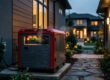
Generator placement also requires careful planning in Southwest Florida. We look at flood zones, drainage, salt air, landscaping, property setbacks, exhaust clearance, and access for future maintenance. A concrete pad alone does not solve a poor location.
Solar equipment deserves similar attention. Inverters and batteries need approved clearances, ventilation, weather protection, and service access. A modern solar generator with expandable capacity can assist during off-grid scenarios, providing reliable AC output for your home. Coastal humidity and salt air can accelerate corrosion of these AC output components, while leaves, insects, and rodents can affect outdoor electrical equipment.
Maintenance keeps the complete backup system ready. The generator needs oil and filter service, battery testing, exercise-cycle checks, and inspection of fuel and electrical connections. Solar panels, inverters, disconnects, and batteries also need their own service requirements.
If the generator starts but does not carry the home correctly, or if a solar inverter shows repeated fault messages, we should not keep resetting the system. A technician needs to inspect the transfer operation, source isolation, wiring, and equipment communication. For persistent problems, certified generator repair services can help identify whether the issue is mechanical, electrical, or related to the integrated system.
Homeowners who are considering this setup can Get a Free Consultation before purchasing equipment. We can review the existing solar system, generator location, fuel source, electrical service, and backup goals together.
Frequently Asked Questions
Why does my solar system turn off when the utility power goes out?
Standard grid-tied solar systems feature anti-islanding protection, which automatically shuts down the array during an outage. This safety mechanism prevents electricity from feeding back into the grid, which would create a significant hazard for utility workers repairing the lines.
Can I connect a generator directly to my home while the solar panels are running?
No, you should never attempt to connect a generator while your solar system is active without an approved transfer switch. Without proper controls, the two power sources are incompatible and can cause damage to your inverter, the generator, and your household electronics.
What do I need to make solar and a generator work together during a power outage?
To integrate these systems, you typically need an automatic transfer switch and potentially a battery storage system with a managed energy controller. These components act as a bridge, ensuring that power sources remain isolated and that your solar energy is safely stored or utilized without overloading your generator.
Is a home backup system the same as a portable solar generator?
While both provide backup power, a whole-home system is integrated into your electrical panel to power large appliances and systems like air conditioning. A portable solar generator is generally designed for smaller tasks and lacks the permanent infrastructure needed to manage complex grid-tied solar and home circuits.
Conclusion
Rooftop solar panels and a whole-house generator can share the same home, but a standard grid-tied solar system usually shuts down when the grid fails. The generator then supplies power through a transfer switch while the solar inverter remains isolated.
Battery storage and approved control equipment can allow your solar panels, batteries, and a generator to work as one managed whole-home backup system. By integrating these components, you can essentially create a hybrid solar generator system that provides reliable electricity when you need it most. Without that specialized equipment, connecting these sources together creates serious risks for the generator, home wiring, utility workers, and household electronics.
The safest plan is to review the complete electrical system before installation. Reliable backup power depends on careful coordination rather than simply adding another source of electricity. As you explore these renewable energy options, keep in mind that a comprehensive setup may even qualify for a federal tax credit, helping you offset the costs of building a more resilient home.