


Florida does not play fair with engines. Between the intense heat, constant humidity, and long runs during a power outage, environmental factors wear down generator oil much faster than most homeowners expect.
When people ask me about a whole house generator oil change in Southwest Florida, I give a simple answer: once a year is the minimum. If the unit ran hard during a storm or provided backup power for an extended duration, I move that timeline up. That is where the real maintenance schedule starts.
Key Takeaways
- Annual Maintenance is Essential: Treat an oil change as a minimum once-a-year requirement, even if the generator has barely run.
- Adjust for Usage: Heavy usage during storms or extended outages requires a full oil and filter change as soon as utility power is restored, regardless of the calendar.
- Environmental Impact: Florida’s extreme heat and humidity degrade engine oil faster than in cooler climates, making consistent maintenance critical for system reliability.
- Listen to Your Machine: Do not wait for a scheduled date if you notice hard starts, unusual engine noise, or if the unit’s monitoring system alerts you to dirty oil or low levels.
- Go Beyond the Drain: A proper service includes a new oil filter, battery testing, and a comprehensive inspection to ensure the entire system is prepared for the next power failure.
My rule of thumb for generator oil changes in Florida
If a standby generator mostly sits, performs its weekly self-test, and never carries the house for long, I still treat oil service as an annual job. Time matters just as much as run hours.
If the generator powers the home through summer outages or a hurricane, I do not wait for the next yearly visit. Fresh oil goes in sooner. Old oil after a hard run is like asking your truck to tow a boat with sludge in the crankcase; it might do it once, but I would not bet on it a second time.
Here is the quick version of the oil change interval I use:
| Generator use | When I schedule the oil change |
|---|---|
| Only weekly exercise cycles, no major outages | Once a year |
| A few short outages during summer | Earlier than the annual visit |
| Multi-day outage after a storm or hurricane | Soon after utility power returns |
| Low-oil warning, dirty oil, rough running, or hard starts | Right away |
That table is not a substitute for the owner’s manual. Brand and model still matter significantly. Generac, Briggs & Stratton, Kohler, and Cummins all have their own service requirements, oil specifications, and filters. Still, for most homes in this part of Florida, annual service plus post-storm service is the safest way to approach maintenance.
Why Florida shortens the oil’s life
Florida heat works engine oil much harder than in cooler climates. Humidity creates its own set of challenges, as well. A generator may sit idle for weeks, run a brief exercise cycle, and then suddenly be forced to operate for hours or days when the grid drops. This inconsistent usage pattern is particularly rough on engine oil.
Moisture can accumulate inside an engine during those short, infrequent runs. Meanwhile, high ambient temperatures thin the oil much faster during long operation periods. This is especially true for air cooled engines, which are highly sensitive to extreme heat and rely on consistent airflow to manage internal temperatures. Near the coast, salty air adds another layer of environmental stress to the machine as a whole. While fresh oil cannot fix every mechanical issue, it gives your engine a better chance of handling heavy loads reliably.
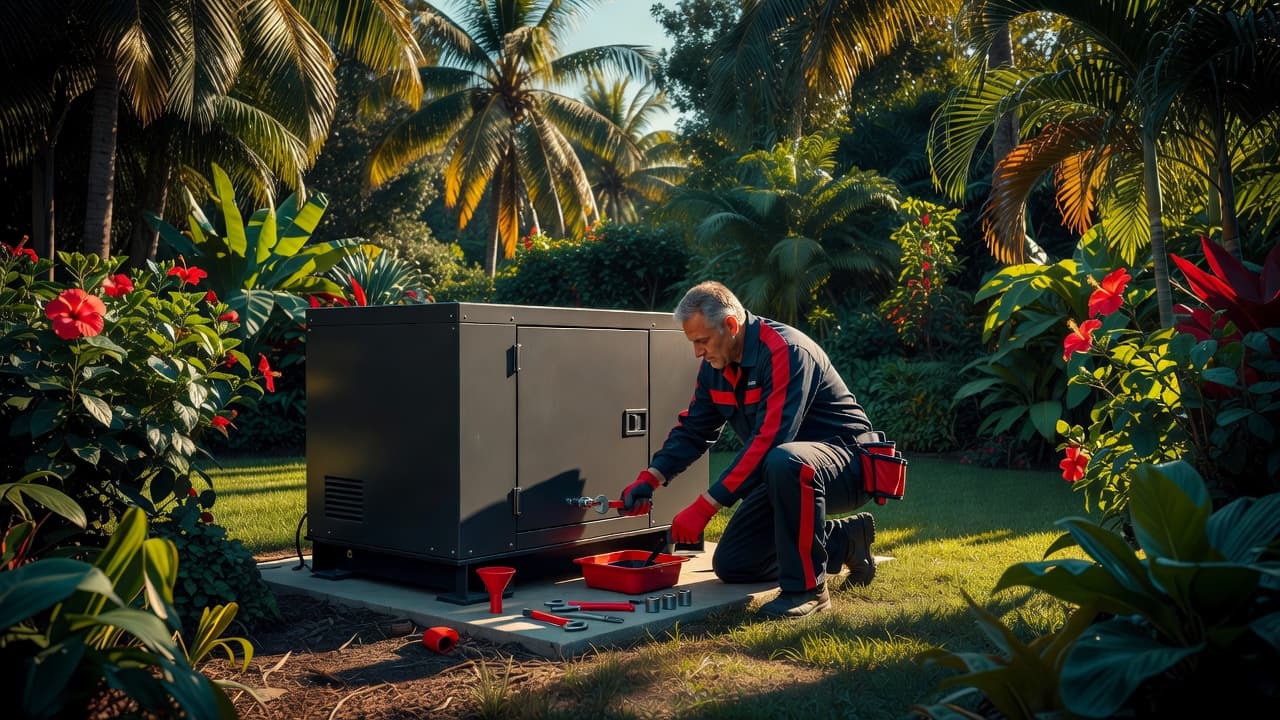
These environmental factors matter even more in Southwest Florida because outage season is rarely random. Severe storms, heavy rain, and summer grid strain often pile up during the same stretch of months. A generator may look perfectly fine on the outside while being long overdue for care on the inside.
This is why I prefer professional generator maintenance services over a set it and forget it mindset. A quality service visit typically includes an oil and filter change, battery testing, start-up checks, and a broader system inspection. Regular oil changes are just one component of overall reliability, and adhering to a consistent maintenance schedule ensures your system is truly ready for the next power outage.
Signs I don’t wait for the calendar
Sometimes the clock says one thing and the generator says another. When that happens, I listen to the machine.
I move up the oil change if the engine sounds louder than normal, starts harder during its exercise cycle, smells hot, or throws a maintenance alert. Inspecting your oil level with the dipstick is a great way to spot dark, thin, or dirty oil before a major issue arises. You should also consider an early change if the unit just finished a long outage run, even if the scheduled service date is still months away.
If a standby generator ran through a tropical system for days, I treat fresh oil as one of the first jobs after power comes back.
This is where proactive monitoring helps. Many standby systems now send run status updates, alerts, and maintenance reminders to a phone or web dashboard. I like that because it takes some of the guesswork out. You can check the control panel or switch the unit to manual mode for a physical inspection after the skies clear. If the unit logged a lot of hours while you were focused on the storm, the system might trigger a low oil level warning or a general alert. Even if you aren’t in auto mode, the app can tell the story of how hard your generator worked.
If you want a better sense of timing, a regular generator maintenance schedule helps connect the dots between yearly service and heavy use service. That matters in Florida, where one bad week can age a generator more than a quiet season ever will.
What a proper oil change should include
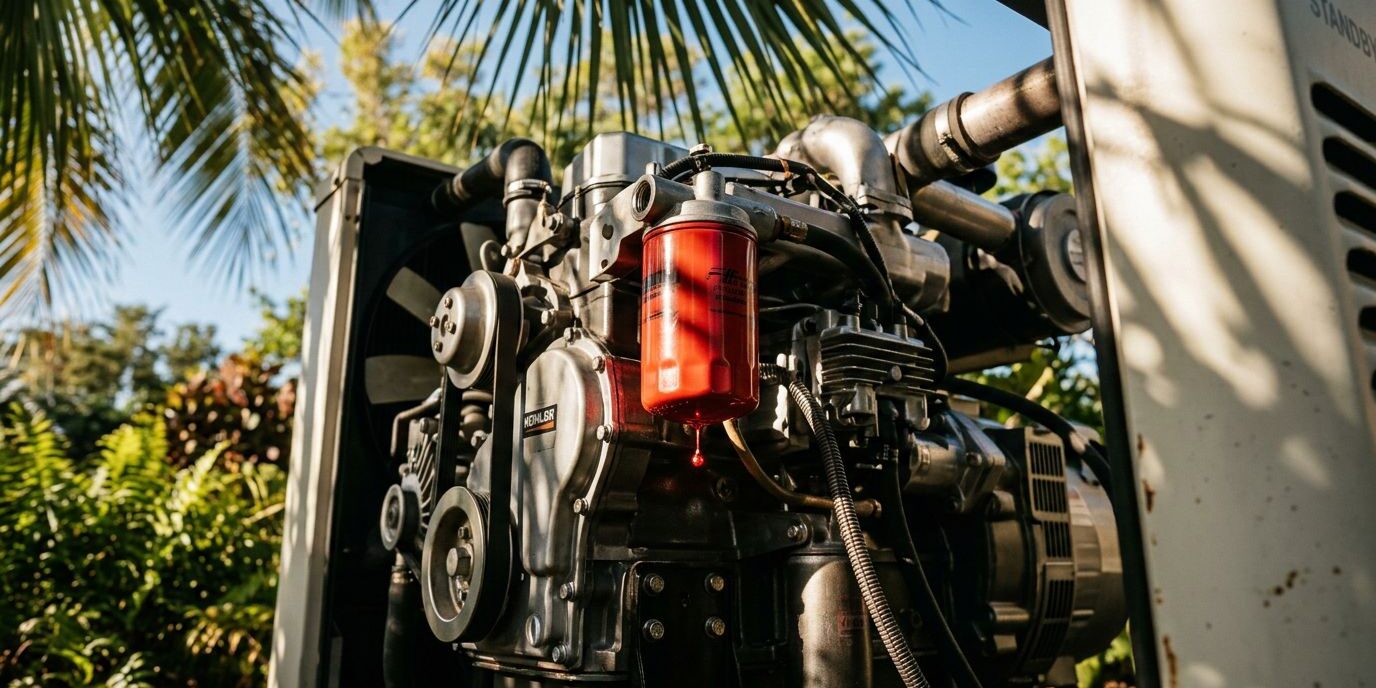
A professional oil change service is more than simply draining old oil and pouring in new oil. To ensure peak performance, I always recommend a thorough process that begins by using an oil drain hose to cleanly remove all contaminants from the engine. After flushing the system, it is vital to use high-quality synthetic motor oil. Depending on your specific engine requirements, this might include 5W-30 oil or 10W30 oil.
A complete service must also include a brand new oil filter to ensure the new fluid stays clean, followed by a thorough inspection of the unit. I always check the new oil filter for proper seating to prevent leaks, test the battery, and perform a quick evaluation of the air filter, the spark plug, and the overall fuel system. I also verify that the transfer switch is functioning correctly, as it is the critical link that manages your home power supply during an outage. If any component is starting to drift, I want to catch it before the next emergency occurs.
That broader inspection is a big deal. Many homeowners only think about their generator when the lights go out. I understand that is normal, but the units that perform reliably during a hurricane are not the ones that were ignored for two years. They are the ones that received routine service, fresh oil, and a professional technician looking them over before the storm season arrives.
If you are not sure whether your unit is overdue for service, Get a Free Consultation. Guessing is easy, but recovering from a preventable breakdown during a storm is not.
Frequently Asked Questions
Why does Florida weather force more frequent oil changes?
The combination of extreme heat and high humidity accelerates oil breakdown and moisture accumulation within the engine. When generators sit idle between runs or operate during sweltering summer temperatures, the oil quality degrades much faster than it would in a temperate, dry climate.
Can I just check the oil level instead of changing it?
While checking the dipstick is a great way to monitor for major leaks or sludge, it does not replace an actual oil change. Old oil loses its lubricating properties and collects contaminants over time, which can lead to engine wear even if the oil level appears to be full.
Does running my generator weekly for testing really count as use?
Yes, regular exercise cycles are important, but they can contribute to moisture buildup if the engine does not reach full operating temperature. While these cycles keep the internal components lubricated, they are still factored into the annual service interval because of the cumulative effect of the engine starting and stopping.
Should I change the oil immediately after a hurricane?
Absolutely. If your generator has powered your home for a long duration during a storm, the oil has been subjected to significant stress and thermal load. Changing it immediately after utility power returns ensures your system is fresh and ready for the next event, rather than running on potentially compromised lubrication.
Final thoughts
For Florida homeowners, I treat a whole house generator oil change as a yearly minimum, not a once in a while chore. Long outage runs, summer heat, humidity, and storm season can push that service date forward fast.
The simplest takeaway is this: change the oil at least yearly, and sooner after heavy use. Fresh oil costs a lot less than engine trouble, and when the next outage hits, that is the kind of math I like to ensure my standby generator is ready for.