



A reliable backup power system can fail without making a sound. That is the reality many homeowners do not realize until a sudden power outage leaves them in the dark.
Here in Southwest Florida, storms are not the only challenge. Heat, humidity, salt air, and long stretches away from home can all chip away at generator reliability. Remote generator monitoring gives you a way to spot trouble before a storm arrives and your equipment is put to the test.
I recommend it for one simple reason, as it turns your backup power from a guess into a system you can check at any time.
Key Takeaways
- Proactive Reliability: Remote monitoring transforms your backup power from an occasional guess into a verifiable system, allowing you to identify and fix faults before an actual power outage occurs.
- Essential for SWFL: Given our region’s specific challenges like salt air, high humidity, and frequent travel, remote alerts act as a digital safety net, particularly for seasonal residents or empty homes.
- Informed Maintenance: Rather than relying on guesswork, technicians can use stored diagnostic data and fault codes to arrive with the correct parts and tools, reducing repair time and labor costs.
- Not a Replacement for Service: While monitoring provides real-time status updates, it does not replace physical maintenance such as oil changes or mechanical inspections, which remain vital for system health.
Why remote monitoring matters more in Southwest Florida
I see the appeal of a standby generator in this part of Florida every year. One storm track shifts, one transformer blows, one summer outage drags on, and suddenly losing utility power feels like a major emergency, making backup power feel less like a luxury and more like a necessity.
But owning the generator is only half the story. The bigger question is, how do you know it is actually ready to perform?
That question becomes even more critical in Fort Myers, Naples, Cape Coral, Bonita Springs, and Lehigh Acres. Some homes sit empty for part of the year. Some owners travel often. Others live near the coast, where salt air keeps working even when nobody is home. A generator may still run its weekly exercise cycle, but if that exercise fails and nobody sees the warning, you risk silent generator failures that cause the safety net to tear.
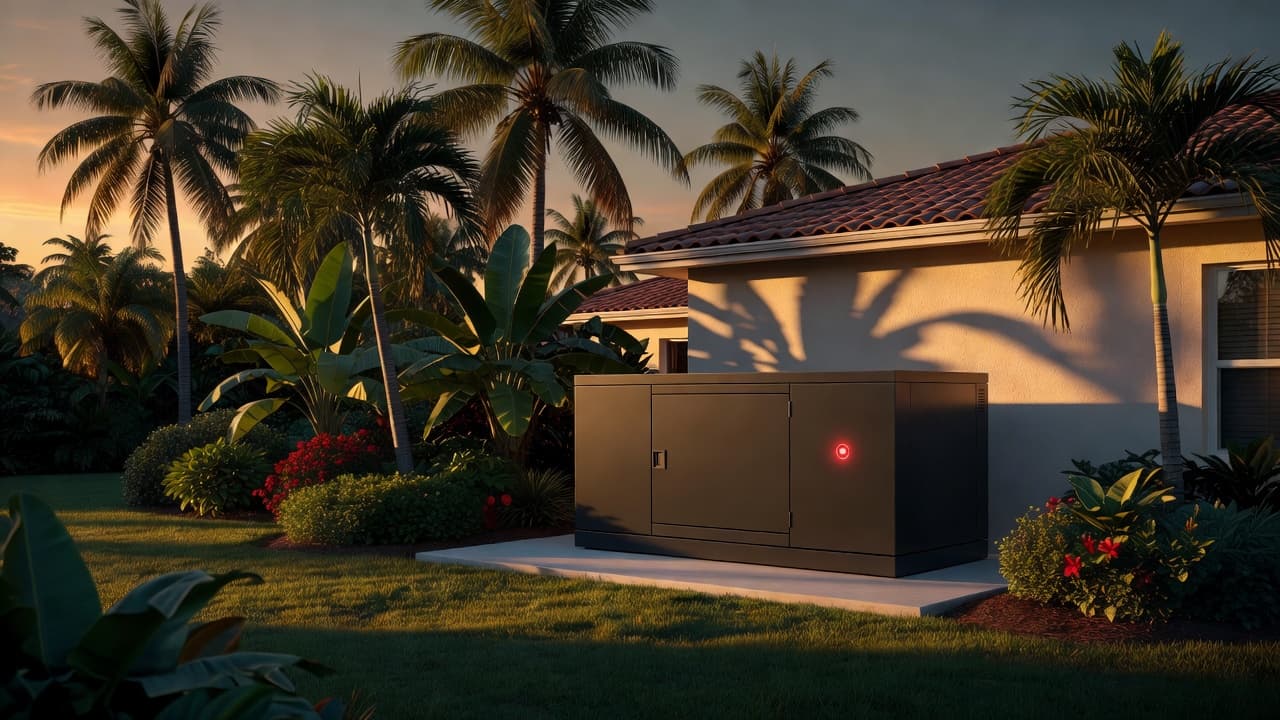
A standby unit helps most when its condition is known before the storm arrives.
That is where monitoring earns its keep. Instead of walking outside and checking the unit yourself, you get status updates through a wireless app and web dashboard. If the system throws a fault, skips an exercise cycle, or needs attention, you can get text and email notifications.
I have heard versions of the same story from local homeowners after major storms. The relief did not come only from having a generator. It came from knowing ahead of time that the machine had been testing properly week after week. One missed alert can save a lot of worry.
A portable unit cannot do that. It waits for you to roll it out, fuel it, start it, and hope it behaves. A standby unit with monitoring acts more like a smoke alarm for your backup power. It tells you when something needs your attention, before the emergency.
What a monitored standby generator can tell you
A good monitoring setup does not bury you in noise. Instead, it leverages a cloud-based platform to provide real-time data, giving you a clear, actionable list of things that matter.
Most systems can report the generator run status, battery voltage, and total engine hours. Depending on the sophistication of the equipment, they may also flag maintenance intervals, startup failures, or critical engine metrics. The goal is not gadget overload; it is early warning.
Here is the practical view of what these systems track:
| What it watches | What you see | Why it matters |
|---|---|---|
| Weekly exercise cycle | Generator run status: Passed, missed, or failed | You confirm the unit is ready for a power outage |
| Battery voltage | Charging state or voltage drop | Low voltage is the most common reason a generator fails to start |
| Fault codes | Diagnostic alarm or error notice | You can address issues before they become a total failure |
| Run hours | Total usage and service reminders | Tracking maintenance intervals becomes automated and accurate |
| Tank levels | Fuel percentage remaining | You avoid unexpected fuel outages during extended grid failures |
| Engine vitals | Coolant temperature or oil pressure | You catch overheating or lubrication issues before they cause damage |
That table may look simple, but the value is immense. If your generator sends a clean weekly exercise notice, you sleep better. If it sends a failure alert, you call for service before the next storm warning arrives.
If the generator fails its self-test and nobody knows, you do not have backup power. You only have a false sense of security.
I also like the way monitoring shortens the diagnostic process. When a service company can review alarms, exercise history, and recent run events, the repair visit starts with solid clues instead of guesswork. That often means quicker answers and lower labor costs.
Many homeowners do not need a deep technical dashboard. They want the basics. Did it test successfully? Is there an engine error? Does it need service? That is the sweet spot for peace of mind.
If you want a closer look at how generator remote monitoring systems work, it is worth comparing the alert options and the kind of historical status data they keep for your specific unit.
The app helps, but it doesn’t replace maintenance
This is the part I never gloss over. Monitoring is smart, but it does not change oil, clean corrosion, or tighten a loose connection. Whether you rely on factory-installed tech or choose aftermarket monitoring for a generator that lacks built-in connectivity, the physical needs of your machine remain the same.
A whole-house generator still needs hands-on service. In Southwest Florida, that is not a minor detail. Heat stresses batteries, humidity attacks electrical components, and coastal air can speed up corrosion. Storm season also puts more pressure on every part of the system, from the engine to the automatic transfer switch.
A solid maintenance visit usually covers the basics you want handled before trouble starts. That includes oil and filter service, battery testing, startup checks, spark plugs, air filter checks, and a broader inspection of the unit’s condition. Some service plans go further with a 42-point inspection and monitoring support built in.
What I like about remote monitoring is how well it pairs with routine service. When the app alerts you that a weekly exercise failed, a technician can use remote diagnostics to troubleshoot the system and identify the root cause before even arriving on-site. They can review stored fault codes, verify startup behavior, and confirm the automatic transfer switch is ready to respond during an outage. One piece spots the problem, and the other fixes it.
That balance matters more than people think. I have seen homeowners assume that because the app is quiet, the generator must be perfect. Silence is helpful, but it is not a substitute for trained eyes.
If you are weighing ongoing care against a one-off visit, this breakdown of whole house generator maintenance vs one-time service makes the decision easier.
Which homeowners get the most value from generator monitoring
Some homes benefit from monitoring more than others, but a few groups rise to the top fast.
Seasonal residents are high on the list. If you spend part of the year outside Florida, remote alerts let you keep tabs on the generator without being on site. Whether your system relies on cellular connectivity or a stable ethernet connection, these tools ensure you stay informed even from thousands of miles away. That is a big deal when a summer storm spins up and your house is empty.
Frequent travelers fit the same pattern. So do owners of second homes and vacation properties. If no one is around to notice a warning light, the phone alert becomes your digital lookout.
Families with medical needs also have more at stake. Refrigerated medication, mobility equipment, oxygen support, and other essentials raise the cost of failure. Whether you are running a standard residential unit, a robust diesel engine, or even a smaller industrial generator for a large estate, a monitored system cannot remove every risk. However, it does shorten the time between something going wrong and someone responding.
Then there are the everyday cases that still matter. A fridge full of food, a home office, security systems, garage doors, and internet equipment all rely on steady power. You do not need a dramatic reason to want more certainty.
I also think full-time residents benefit more than they expect. Even if you are home all year, you are not standing beside the generator every week. The alert comes to you, which is easier and keeps the unit from fading into the background until the next named storm.
What I would ask before adding monitoring to my generator
If I were shopping for a monitored standby system in Southwest Florida, I would keep my questions direct and practical.
First, I would ask whether my current generator supports monitoring or if I need to install additional hardware. Many newer units come ready for this, but not every setup is the same. I would also ask if the system supports remote start and stop functionality, which can be an incredibly convenient feature when you are away from home.
Next, I would ask who receives the alerts. Do they go only to me, or can my service provider see them too? This distinction matters. A notification is useful, but a notification paired with a responsive service team is much better.
I would also ask what happens after an alert is triggered. Does the system offer performance tracking so I can see historical data on my unit’s health? Furthermore, for those who need records for insurance or HOA requirements, is there an option for compliance reporting?
Beyond these features, I would look into the support structure. Is there local assistance available? Are the technicians certified, licensed, and insured in Florida? Do they work on major brands commonly installed here, including Generac and Briggs & Stratton? These are not throwaway details. They dictate how quickly your issues get resolved.
Finally, I would get clear on the service side. Is there an active maintenance plan, and is remote monitoring included? I would also want to know if emergency support is available after hours if the unit throws a fault just before a storm hits.
This is where local reputation matters. Homeowners consistently mention the same priorities when they leave good reviews: fast response times, honest advice, clean work, and a generator that performs when the pressure is on. That is the kind of service I want tied to any monitoring system.
If you want someone to look at your setup and talk through your options, Get a Free Consultation. It is a sensible first step before storm season gets busy.
Frequently Asked Questions
Does remote monitoring work if my generator is an older model?
Many older units can be retrofitted with aftermarket monitoring hardware, though compatibility depends on your specific generator’s make and model. You should consult with a local professional to see if your current system supports connectivity or if an upgrade to a newer unit is necessary.
Can my service provider see the alerts along with me?
Yes, many systems allow you to link your generator’s data directly to your preferred service company. This is highly recommended because it allows technicians to monitor the system’s health and respond to fault codes or maintenance needs without you having to manually forward every alert.
Will monitoring alert me to every possible issue?
While monitoring tracks critical data like battery voltage, engine hours, and startup success, it cannot detect every potential physical problem. It serves as an early warning system that catches common failures, but regular hands-on professional maintenance is still required to ensure all mechanical components remain in good working order.
Is an internet connection required for these systems to work?
Most monitoring systems rely on either a steady Wi-Fi connection, a hardwired ethernet cable, or a dedicated cellular signal. The specific method depends on the technology used by your monitor, but a reliable connection is necessary to ensure that diagnostic data is transmitted to your phone or computer in real-time.
Final thoughts
A standby generator is designed to remove uncertainty, and remote generator monitoring brings you even closer to that promise.
For Southwest Florida homeowners, the primary value is simple: you gain peace of mind by knowing exactly what is happening with your power system sooner. You will know sooner that the weekly test passed, sooner that a battery is weak, sooner that professional service is required, and sooner that your backup plan remains reliable. By adopting remote generator monitoring, you effectively shift from a reactive mindset to a proactive approach, ensuring your home stays protected regardless of the weather conditions in our region.