


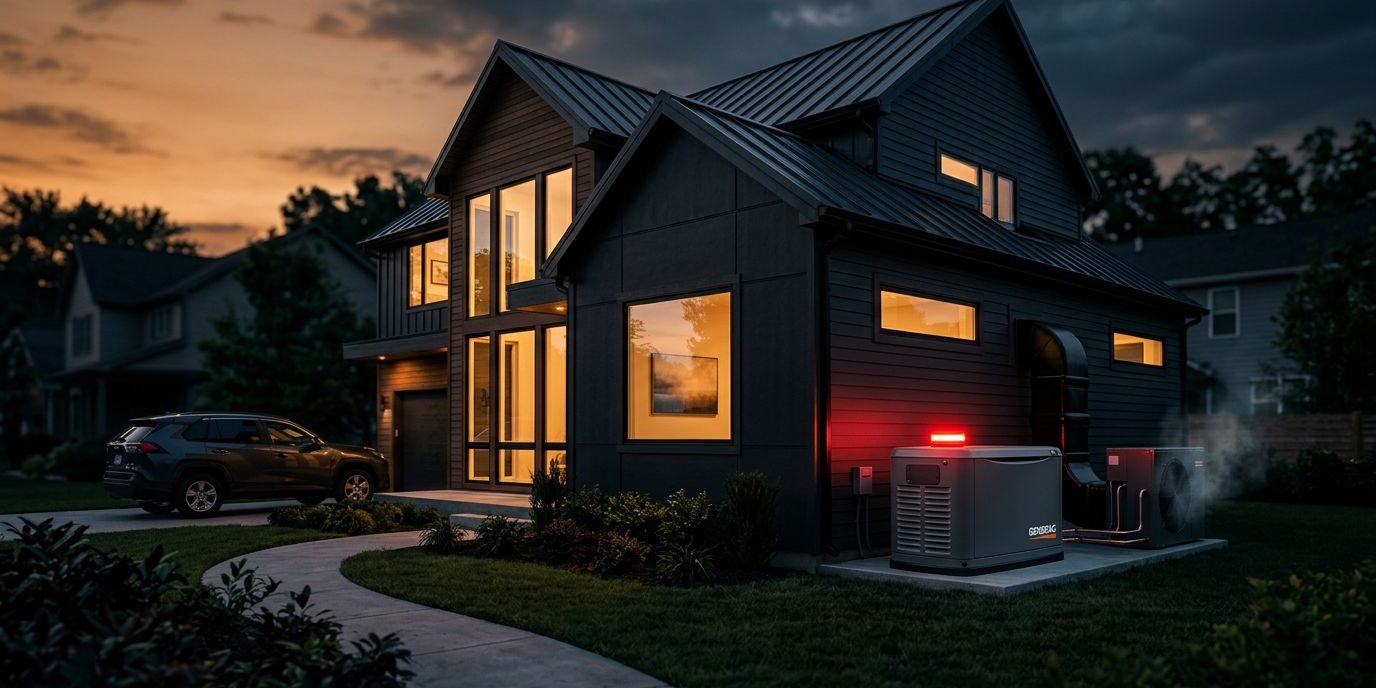
Florida heat does not wait for the power company to fix the grid. When a sudden power outage strikes in August, the first question I hear from homeowners is simple: will the house stay cool?
My answer is usually yes, a whole house generator can power your central air conditioning system, but only if the electrical setup is sized the right way. Your AC unit is often the largest power load in the house, and that reality changes everything when planning your backup energy strategy.
Key Takeaways
- AC is the primary load: Central air conditioning is typically the largest power consumer in a home, and its high startup surge is the deciding factor in whether your generator will successfully provide cooling.
- Professional sizing is critical: You cannot rely on guesswork; a professional load calculation must account for the HVAC tonnage, other electric appliances, and the home’s total electrical demand to ensure the generator can handle the load without failing.
- Standby vs. Portable: While portable generators struggle with the high power demands and constant refueling required for AC, permanent standby systems provide the reliable, automated power necessary for the Florida climate.
- Maintenance is mandatory: A generator requires regular professional maintenance, including oil changes and battery checks, to ensure the system remains reliable enough to handle the harsh environmental conditions of a major outage.
Yes, but central air is the load that decides the job
When people ask me about a whole house generator and central air conditioning, I don’t start with the generator. I start with the air conditioner.
A central AC system uses a lot more power than a refrigerator, lights, or a garage door opener. The running wattage for many systems falls in the 3,000 to 5,000 watt range, according to this central AC watt range. That number can climb higher depending on the system tonnage, the age of the unit, and the overall efficiency, often requiring several kilowatts of consistent power to operate properly.
Then comes the part homeowners don’t always see: startup. The compressor can pull a much heavier burst of power known as starting wattage when it kicks on. A generator might handle the steady running load just fine, but it could stumble when the AC tries to initiate that heavy surge.
If the generator can’t handle the compressor at startup, the house may have power, but the cooling still won’t come on.
That matters more in Florida than it does in a mild climate. Here, air conditioning isn’t a once-in-a-while luxury. It’s the system that keeps bedrooms livable, pulls humidity out of the air, and protects the house from that sticky, shut-in feeling after a storm.
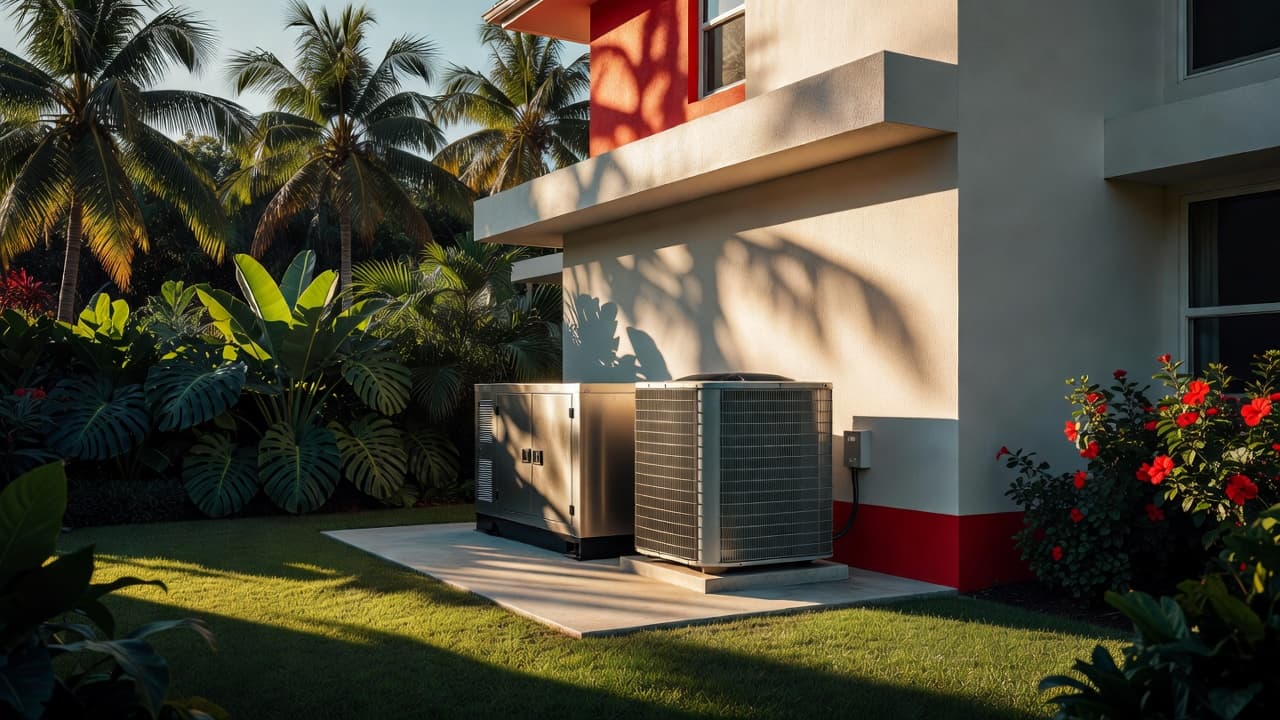
So yes, a generator can run central air. I just wouldn’t assume every standby generator can run every AC system. The right answer depends on the load calculation, not the sales sticker.
What decides if your generator can handle the AC
Running watts are only half the story
I look at four things first: the size of your HVAC system, the starting demand, the fuel source, and what else the homeowner wants to keep running during the outage. A professional load calculation is the most critical step in determining the right size for your needs.
A smaller home with one efficient unit and many gas appliances is a very different job than a large house with electric water heating, a pool pump, and two condensers outside. Both can have backup power, but they will not use the same setup. A soft-start device can help some air conditioners by reducing the startup jolt. It is useful, but it is not a shortcut for proper sizing.
The rest of the house still counts
The generator does not only see the AC. It evaluates your entire electrical system. That includes home appliances and essential items such as:
- Air handler
- Refrigerator and freezer
- Lights and receptacles
- Well pump, if you have one
- Electric water heater
- Range, oven, dryer, and pool equipment
This quick table shows how I think about common Florida situations:
| Home setup | Can central air run on generator power? | What usually matters most |
|---|---|---|
| One HVAC system, gas water heater and stove, essential circuits | Often yes | Generator size and AC startup load |
| One larger AC system, more electric appliances | Often yes, with planning | Load management and selective priorities |
| Two AC systems or a large luxury home | Usually possible, but not always full-home cooling at once | Higher kilowatts, zoning, or load shedding |
The phrase whole house generator central air trips people up. Some homeowners think it means every single circuit runs with zero compromise. Sometimes it does. Sometimes a smarter setup gives priority to the main AC, fridge, lighting, and a few other must-haves while delaying heavier loads for a moment.
That is where whole home standby generator systems make more sense than guessing with a box-store solution. The equipment can be matched to the house instead of forcing the house to live with the wrong equipment.
Why Florida homes need a different answer
Florida is not gentle on cooling equipment, and a power outage here does not happen on a crisp 68-degree fall afternoon. These events tend to arrive during intense storms, summer peaks, and muggy nights when indoor comfort degrades rapidly.
That is why I do not compare Southwest Florida to other regions. Our HVAC system units run longer, work harder, and carry more of the comfort load. Florida home cooling guidance puts it plainly: air conditioning is one of the biggest energy users in the home, a fact most homeowners already recognize from their monthly utility bills.
When addressing your total energy needs, a portable generator often fails to bridge the gap. While a portable generator might keep a fridge running or power a few lights, central air is where these units usually hit a wall. They often require constant refueling, create significant noise, and deliver lower-quality power than a permanent standby generator. This can be damaging to sensitive electronics, smart thermostats, and other equipment that requires steady voltage.
I have found that relying on a portable generator for your cooling needs usually fails after the first day. Gas cans pile up, extension cords create hazards, and the constant noise wears people down. Conversely, a standby generator is a much cleaner fit for this climate. It starts automatically, connects through an automatic transfer switch, and usually runs on natural gas or propane. These fuel sources are far more reliable for long outages than the exhausting process of babysitting a fuel can every few hours.
The installation details that make or break the result
The best generator in the world will not fix a bad installation. I see that mistake too often.
Sizing has to be based on your specific home, the exact cooling system, and the habits of your household. Do you keep one thermostat low all day? Do you have a second system for the master suite? Is the water heater electric? Those answers matter when selecting a reliable brand like Generac to handle your energy needs.
Permits matter too. In Florida, whole-house generator projects often involve electrical permits, gas permits, and local placement rules. Some homes also run into setback or zoning issues, depending on where the unit sits. Skipping that step can create inspection trouble, insurance problems, or a mess when it is time to sell.
I also do not recommend DIY generator installs. A standby unit ties into your home electrical system, the fuel supply, and the transfer equipment. If any piece is wrong, the system may not carry the AC during a power outage when you need it most.
That is why I think of professional installation and maintenance as one decision, not two separate ones. A proper setup includes load planning, pad placement, fuel line sizing, transfer switch configuration, and rigorous testing to ensure your backup power is ready.
If you want a straight answer for your own house, not a guess based on someone else’s floor plan, Get a Free Consultation and size the system around your real loads.
Keeping the AC running year after year
A generator that ran fine three years ago is not automatically ready today. Florida heat and humidity are hard on engines, batteries, and oil.
That is why I tell homeowners to think past installation day. Standby units require routine maintenance on a strict schedule, and heavy storm use can move that service date up. Annual maintenance is the bare minimum for most homes here. After a long power outage, I like to have the system checked again once utility power is back.
Good maintenance usually includes oil and filter service, battery testing, spark plug or air filter replacement when needed, and a full operational check. Weekly exercise cycles help too, because they catch small issues before a storm arrives.
I also recommend remote monitoring for homes that sit empty part of the year. If the generator throws a fault, the owner does not have to find out by walking into a hot house days later.
One more thing often gets overlooked: surge protection. Power coming back after a blackout is not always stable, and managing the surge wattage is critical to preventing damage. A whole home surge device adds another layer of protection for the AC, the air handler board, and the rest of the home’s sensitive electronics.
The point is simple. If the plan is to keep central air running during a Florida power outage, the job does not end with the install. Reliability comes from proper sizing, fuel planning, and routine maintenance working together.
Frequently Asked Questions
Can any whole house generator run a central AC unit?
Not necessarily. While many whole house generators can handle the load, it depends entirely on the specific wattage requirements of your AC unit and the total electrical demand of your home. If the generator is not sized properly to account for the AC’s heavy startup surge, the system will not be able to power your cooling.
What is a soft-start device and do I need one?
A soft-start device is a component that helps reduce the high surge of electricity required when an AC compressor first turns on. While it can be very useful in managing electrical stress, it is not a replacement for proper generator sizing based on a professional load calculation.
Why is a standby generator better than a portable one for running AC?
Portable generators usually lack the power capacity to run large HVAC systems and require constant, labor-intensive refueling during an outage. A standby generator runs on a permanent fuel source like natural gas or propane, starts automatically, and is engineered to handle the heavy, consistent load required for home cooling.
How often does a standby generator need maintenance in Florida?
In Florida’s humid environment, you should perform professional maintenance at least once a year. If you have run the unit heavily during a long power outage, it is also wise to have it inspected and serviced shortly after the utility power is restored to ensure it remains ready for the next event.
Conclusion
A whole house generator can successfully run central air conditioning in Florida, but the right solution depends on the specific technical details of your property. The AC electrical load, the heavy startup demand, your home’s total power requirements, and your fuel setup must all be carefully aligned by a professional.
I would not gamble on guesswork when the temperature is climbing during a summer power outage. A properly sized standby system provides reliable cooling rather than just basic electricity, and in Southwest Florida, that is the difference people feel first. Careful planning is essential to ensure your whole house generator central air system performs exactly when you need it most.