


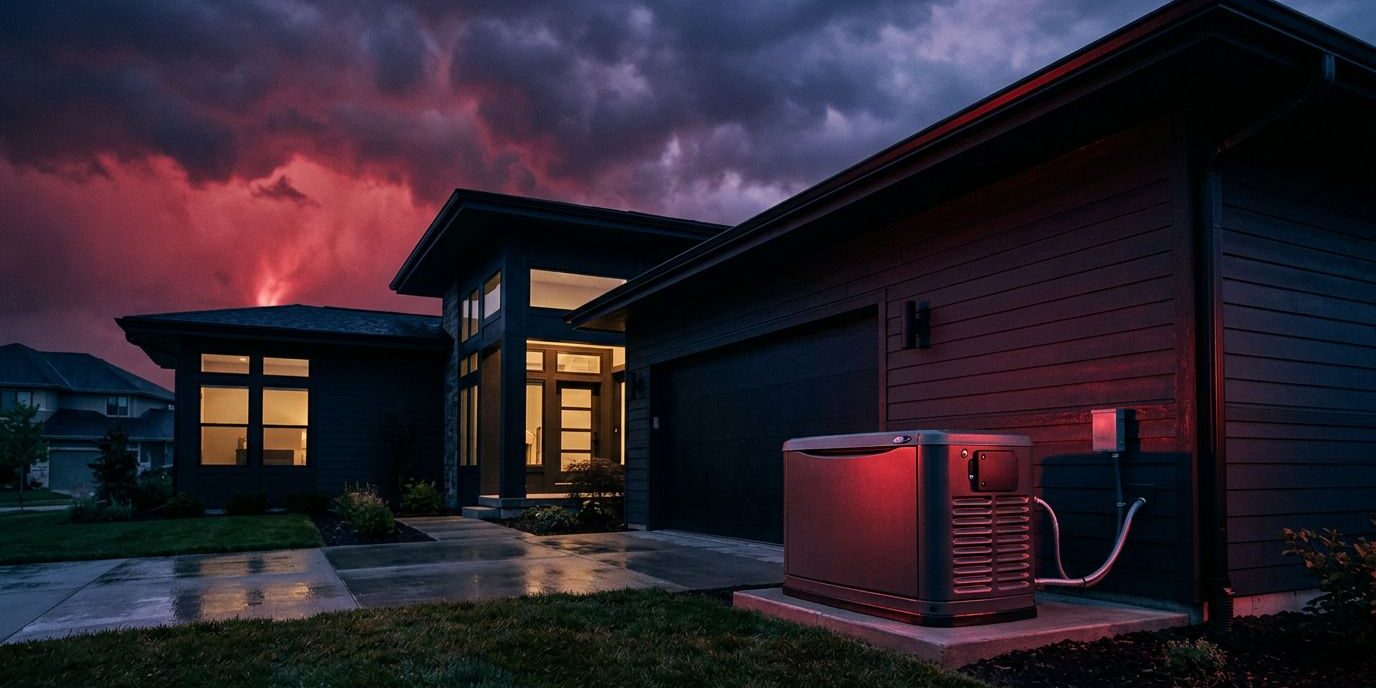
When people ask me about a standby generator, they often start with the wrong question. They ask how fast it starts. Fair enough, but when a power outage pushes into day two, the real question is how long the unit can stay running.
In Southwest Florida, that question is not theoretical. Heat, storms, spoiled food, medical equipment, and air conditioning turn a loss of electricity into a real problem fast. When I talk about whole house generator runtime, I keep it simple: the fuel source, the electrical load, and the maintenance history decide more than the badge on the front.
Key Takeaways
- No Universal Runtime: There is no single “magic number” for generator runtime, as it depends entirely on your specific fuel source, electrical load, and system maintenance.
- Fuel Source Dynamics: Natural gas offers the most convenience due to continuous utility supply, whereas propane systems require careful planning regarding tank capacity and refill accessibility.
- Load Management Matters: Heavily taxing your system with multiple air conditioners and high-draw appliances will drain fuel faster; prioritizing essential circuits can significantly extend your total runtime.
- Maintenance is Critical: A standby generator is only as reliable as its service history; regular oil changes, filter checks, and exercise cycles are vital to preventing shutdowns during long-term outages.
A whole house generator doesn’t have one magic runtime number
I wish there were a clean, one-line answer. There isn’t.
A standby generator can run for many hours, and in the right setup, for days. But runtime is never a single fixed number because homes do not use power the same way, and backup systems do not all drink fuel at the same rate. A small home keeping the fridge, lights, and one AC zone alive is a different animal from a big house trying to run two air conditioners, pool equipment, and an electric oven.
The first thing I tell homeowners is this: do not confuse continuous runtime with unlimited operation. Those are not the same thing. Some standby generator units are built to rack up thousands of hours across their service life. For a broader benchmark, Petro’s overview of generator runtime points out that standby systems can reach into the thousands of operating hours under the right conditions. While most units easily clear 500 hours of runtime before needing major service, this is a far cry from the short bursts most people picture, as your total generator lifespan depends heavily on how well you manage your backup power needs.
The engine matters, but the fuel supply usually decides whether a standby system runs overnight or keeps going for several days.
Here is the quick version:
| Fuel type | What usually limits runtime | What I tell homeowners |
|---|---|---|
| Natural gas | Utility gas availability, engine service intervals, load size | It can run for days if gas service stays on |
| Propane | Propane tank size, refill access, load size | Tank planning matters as much as generator size |
| Diesel | On-site fuel storage and refueling | Less common for homes, more hands-on during long outages |
The big takeaway is simple. If you want a real answer on runtime, I have to look at the whole setup, not only the generator.
Fuel source usually decides the clock
If I had to pick one factor that shapes whole house generator runtime more than any other, it would be the fuel source.
Natural gas is the easiest to live with during an outage because there is no tank on site to monitor every hour. As long as the utility service stays available and the system is working properly, a natural gas standby generator can keep running far longer than most people expect. That is why natural gas feels almost invisible when it works. You stop thinking about fuel and start thinking about comfort.
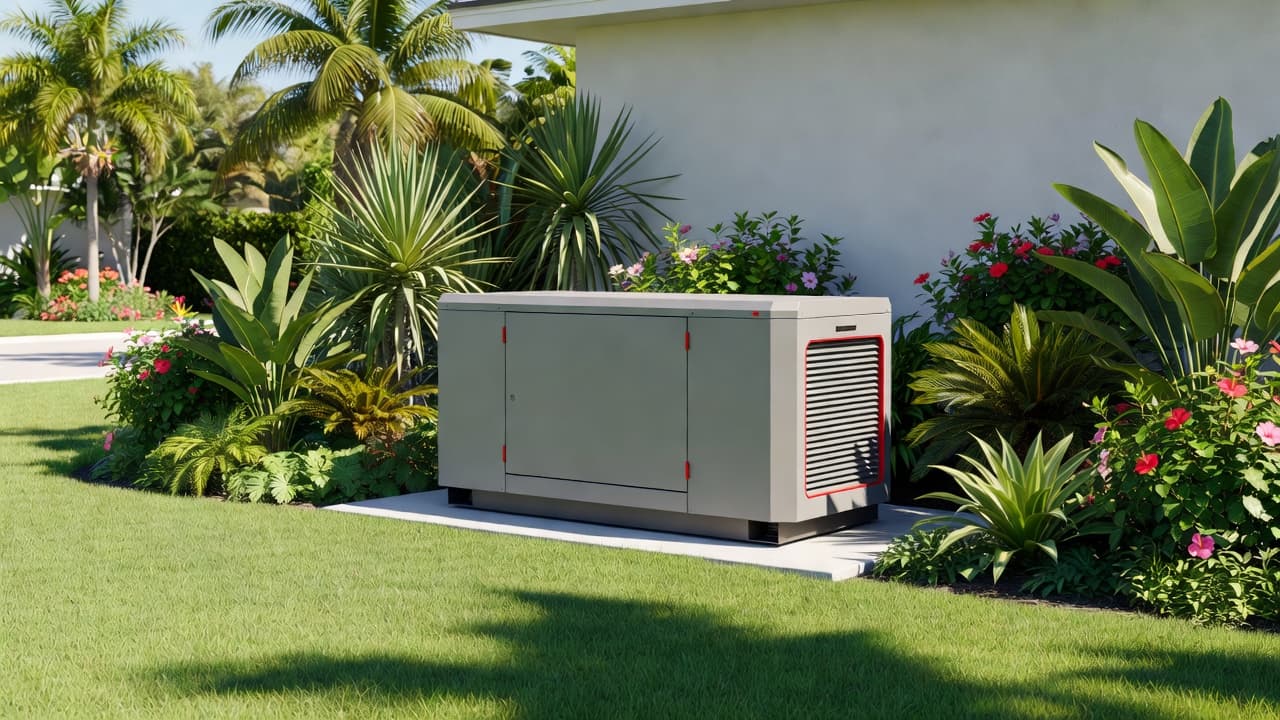
Propane is different. It can still provide long outage protection, and a properly sized propane tank can carry a home through a serious storm event. However, runtime remains a math problem. The tank capacity matters, the house load matters, and the weather matters. If you are burning through fuel to run large cooling loads around the clock, the tank empties faster than many homeowners expect.
That is one reason I do not like vague promises. Saying a generator can run for days is true in some homes and misleading in others. A modest house with careful load management may stretch supply much farther than a larger home trying to power every comfort item at once.
This is also where standby units pull away from mobile alternatives. A portable generator is noisy, requires constant refueling, and often delivers lower quality power to sensitive electronics. A whole house system is built for longer, steadier backup power. While a portable generator requires you to babysit the machine in the yard at midnight, a whole house system is much closer to having your home operate normally.
The load inside your house changes the answer fast
The second part of the runtime question is how much power you ask for. Your total electrical load determines how hard your system has to work at any given moment.
Air conditioning is usually the heavyweight in Southwest Florida. If a standard air-cooled generator is carrying a central AC system, especially more than one, fuel consumption climbs significantly. Add a water heater, clothes dryer, oven, pool pump, and EV charger, and the runtime picture changes again. The generator may still handle the load, but it will not sip fuel while doing it.
That is why sizing matters so much. I never look at runtime without looking at what the house needs during an outage. Some homeowners want true whole-home backup. Others only want essential appliances, like the fridge, lights, internet, medical gear, a few outlets, and one cooling system. Both are valid. They just produce different runtime expectations.
A good install starts with honest priorities. If you are still weighing whole house generator installation in Southwest Florida, I would not guess on fuel use or assume the biggest unit is always the smartest buy. A generator that is matched to the house is easier to live with during a real outage.
I also like reminding people that runtime is not only about surviving. It is about staying comfortable without wasting fuel. If your setup can keep the bedrooms cool, the fridge cold, the lights on, and the router alive, that may be a better storm plan than trying to power every last circuit in the panel.
If you want help sorting that out before storm season, it is smart to Get a Free Consultation.
Long outages expose maintenance problems fast
A standby generator can only run as well as it has been cared for.
I have seen homeowners go years with almost no trouble from a properly maintained unit. I have also seen the opposite. The generator starts hard, throws a warning, burns more fuel than usual, or shuts down under load because the service schedule was ignored. During a long-term power failure, your maintenance schedule is the only thing standing between you and a total system shutdown. Outages are rough that way; they do not create every problem, but they are excellent at exposing the ones already there through regular maintenance.
The basics matter. Engine oil has to be changed, and it is vital to keep up with manufacturer recommended oil change intervals. Filters need attention, batteries age out, and spark plugs do not last forever. If the generator has run heavily during storm season, the next service date can come sooner than the calendar suggests. Fresh engine oil is cheap compared with the cost of major repairs in the middle of a hot, dark week.
I also put a lot of value on regular exercise cycles and remote alerts. Many newer standby systems, such as the Generac Guardian Series, test themselves weekly and can send app notifications to your phone or email. That kind of simple monitoring provides early warnings before the weather turns. When you commit to regular maintenance, you ensure these systems work exactly as intended when the power goes out.
There are a few signs I never ignore: odd noises, leaks, heavy exhaust smoke, warning lights, and sudden fuel appetite. Those are the machine’s way of telling you not to roll the dice. Homeowners looking for local Fort Myers backup generator services usually call after one of those issues shows up, and usually at the worst possible time.
I have also seen local reviews after Hurricane Ian from homeowners whose systems carried their homes for days. That is the difference consistent care makes. When the generator has been exercised, serviced, and watched, the runtime story tends to be a lot better.
What I tell Southwest Florida homeowners before storm season
I keep this part pretty direct. Don’t wait until a storm is on the map.
Whole house generator runtime starts long before the outage. It starts with where the unit sits, how the fuel is supplied, whether permits were handled, and whether the installation follows local spacing and code rules. When you are planning for a residential backup generator, remember that electrical permits, gas permits, the quality of your transfer switch, and placement rules are not glamorous, but they affect how well the system works when you need it most.
I also think homeowners should plan around real storm conditions, not perfect ones. Debris can block airflow. Flooding can create access problems. Propane refill timing may not go your way after a major event. Utility gas is usually simpler, but it still depends on service staying available. Good planning is boring right up until the moment it saves you.
If I were buying for my own house, I would care about three things more than marketing claims. I would want the right size, the right fuel setup, and a service plan that does not disappear after installation. Focusing on these details is the best way to ensure your whole house generator runtime is sufficient for your family needs, keeping your unit acting like a quiet workhorse instead of an expensive decoration beside the house.
That is also why some homeowners end up spending less than they feared when the load is planned properly. Bigger is not always better. Smarter is better.
Frequently Asked Questions
Does a whole house generator run indefinitely?
No, a standby generator is not designed for unlimited, non-stop operation without service. While it can power a home for days during an emergency, its performance is limited by fuel availability and the manufacturer’s recommended service intervals for engine oil and maintenance.
Why does my air conditioner affect how much fuel my generator uses?
Air conditioning is typically the largest electrical load in a Southwest Florida home. Running high-draw appliances forces the generator engine to work harder, which directly increases fuel consumption rates compared to lighter electrical loads.
How can I monitor my generator’s status during an outage?
Many modern standby units feature self-testing cycles and mobile app integration that sends alerts directly to your phone. These systems provide early warnings about potential issues, ensuring you are aware of your generator’s health before and during a storm event.
Should I always buy the largest generator available for more runtime?
Not necessarily. Bigger units are not always better; a generator that is properly sized for your specific home’s needs is more efficient and easier to maintain. Over-sizing can lead to unnecessary fuel consumption and higher installation costs without providing a meaningful benefit for your actual energy requirements.
Final thoughts
The best answer I can give is this: whole house generator runtime can be quite extensive during an outage, but the total duration is never a one-number promise. Fuel supply, home load, and maintenance decide exactly how long the comfort lasts.
If you experience a power outage lasting for several hours, most standby generator systems will handle the demand easily. If the emergency stretches into days, the homes that perform the best are the ones that had the right setup in place long before the storm arrived.