


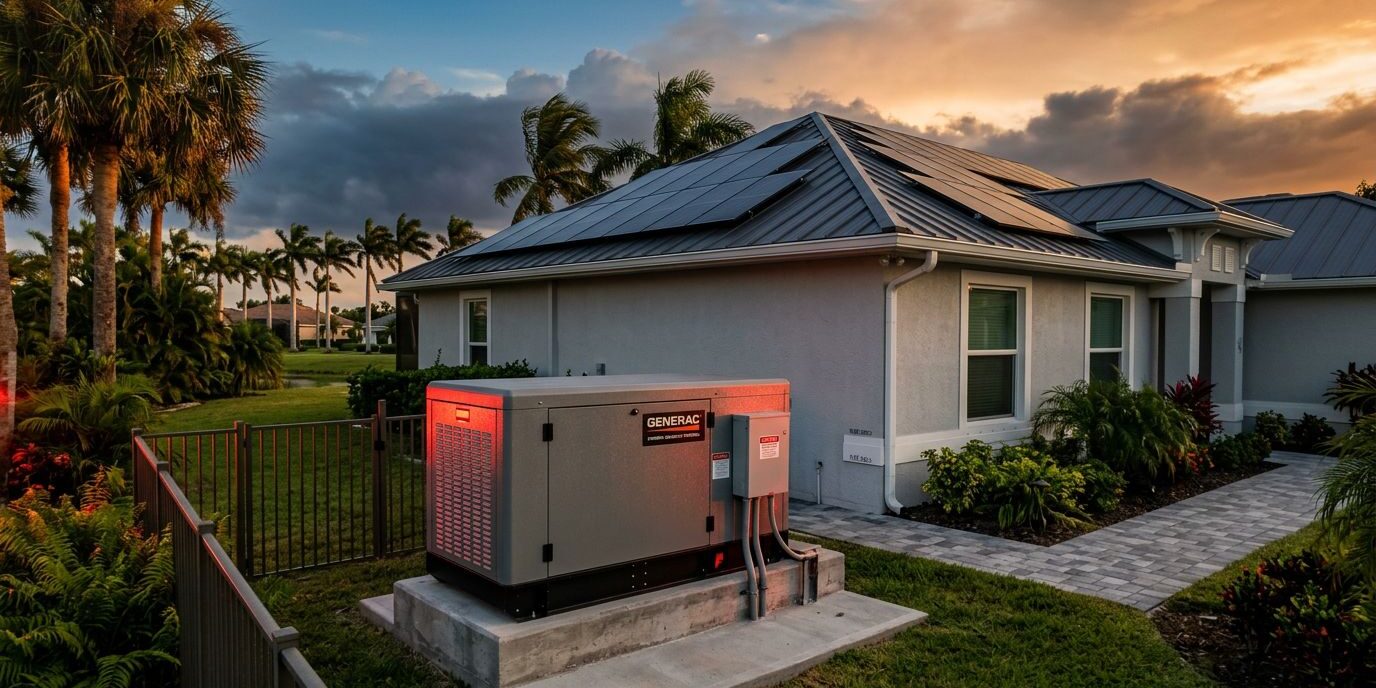
A standby generator can feel like a lifeboat when a busy hurricane season hits Southwest Florida. If the permit work gets skipped or the inspection stalls, that lifeboat turns into a problem fast.
When I hear people ask about generator permits florida, they are usually trying to answer one plain question: what has to happen before the unit can power the house legally? That is the part I want to make simple.
Key Takeaways
- Permits are mandatory for safety: Permanent standby generators require electrical and fuel permits to ensure compliance with the Florida Building Code and safety standards like NFPA 110.
- Planning happens before installation: You must submit detailed site plans, equipment specifications, and load calculations to your local building department for approval before any physical work begins.
- Placement is critical: Factors like exhaust clearances, setbacks, and flood elevation requirements frequently cause inspection failures if not verified against manufacturer and local code standards during the planning phase.
- Coordination is key to success: A professional installer should manage the entire process, including electrical, fuel, and building permits, to avoid the project-stalling errors that occur when different trades are not synchronized.
Why a whole-house generator needs permits in Florida
I start here because a permanent standby generator is not the same thing as a portable unit from the hardware store. A portable generator sits outside and powers a few items, but a permanent installation is a more complex undertaking. A whole-house system ties directly into the home electrical panel and uses an automatic transfer switch to prevent backfeeding the grid, which ensures utility workers remain safe during an outage. Because these units often connect to natural gas or propane, that permanent connection is exactly why the permit rules kick in.
In most Florida jurisdictions, the project requires an electrical permit. If the unit runs on natural gas or propane, you will typically need a separate gas permit for the piping installation. Some jobs also trigger a permit for the concrete pad or related building work, and onsite propane storage can introduce another layer of review.
The city or county wants to verify the installation before anyone flips the switch. Reviewers check the placement, electrical wiring, grounding, disconnects, and fuel supply information to confirm the unit will handle local conditions safely. In Southwest Florida, this means accounting for flood exposure, coastal weather, and specific wind load requirements. The Leon County generator requirements PDF is a good example of how Florida departments align generator reviews with the current Florida Building Code, which dictates how residential equipment must be anchored to withstand hurricane-force winds.
I also see confusion about timing. Homeowners sometimes ask if the permit can be handled after the generator shows up. It cannot. The county wants to see the plan first, then the work, and finally the inspection.
If someone tells me a permanently connected standby generator does not need permits, I do not hear “easy.” I hear “problem.”
The paperwork most Southwest Florida permit offices ask for
In Fort Myers, Naples, Cape Coral, Bonita Springs, and Lehigh Acres, the forms can look different, but the file usually tells the same story. To secure a building permit, the permit office wants enough detail to picture the installation before a crew touches the site.
Here is the kind of information I expect most departments to ask for when reviewing your project:
| Common submittal | What it shows |
|---|---|
| Site plan | Generator location, setbacks, nearby doors, windows, A/C equipment, and property lines |
| Equipment details | Manufacturer cut sheets, model information, and installation instructions |
| Electrical information | Transfer switch, wiring, grounding, disconnects, and required load calculation |
| Fuel information | Gas pipe size, fuel storage tanks, propane tank location, regulator data, and fuel capacity |
| HOA approval | Written documentation verifying your community association approves the project |
That site plan matters more than people think. It is where reviewers catch the generator being too close to an opening, too close to property lines, or placed in a spot that conflicts with other equipment. The manufacturer sheets matter too, because inspectors compare the real install to those required clearances shown in the site plan.
Lee County tends to be paperwork-heavy. Some jobs there also need a Notice of Commencement, and incomplete files can slow the review before the installation even starts. Collier County follows the same basic flow, where you secure the permit first, proceed through plan review, and finish with inspections, but flood zone and coastal conditions can change what the reviewer wants to see.
If you want a plain example of the kind of packet many Florida offices expect, Miami-Dade’s permanent generator checklist is useful. Your local office may ask for a little more or a little less, but the themes do not change much.
This is also where I think a good installer earns their money. A proper whole house generator installation is not only about placing the unit and wiring it up. It is about getting the plans, equipment sheets, and placement details right before the county ever schedules an inspection.
What the inspection stage usually looks like
Once the permit is approved and the generator is installed, the project isn’t finished. The final inspection is where the county verifies that the submitted plans match the actual work performed on your property.
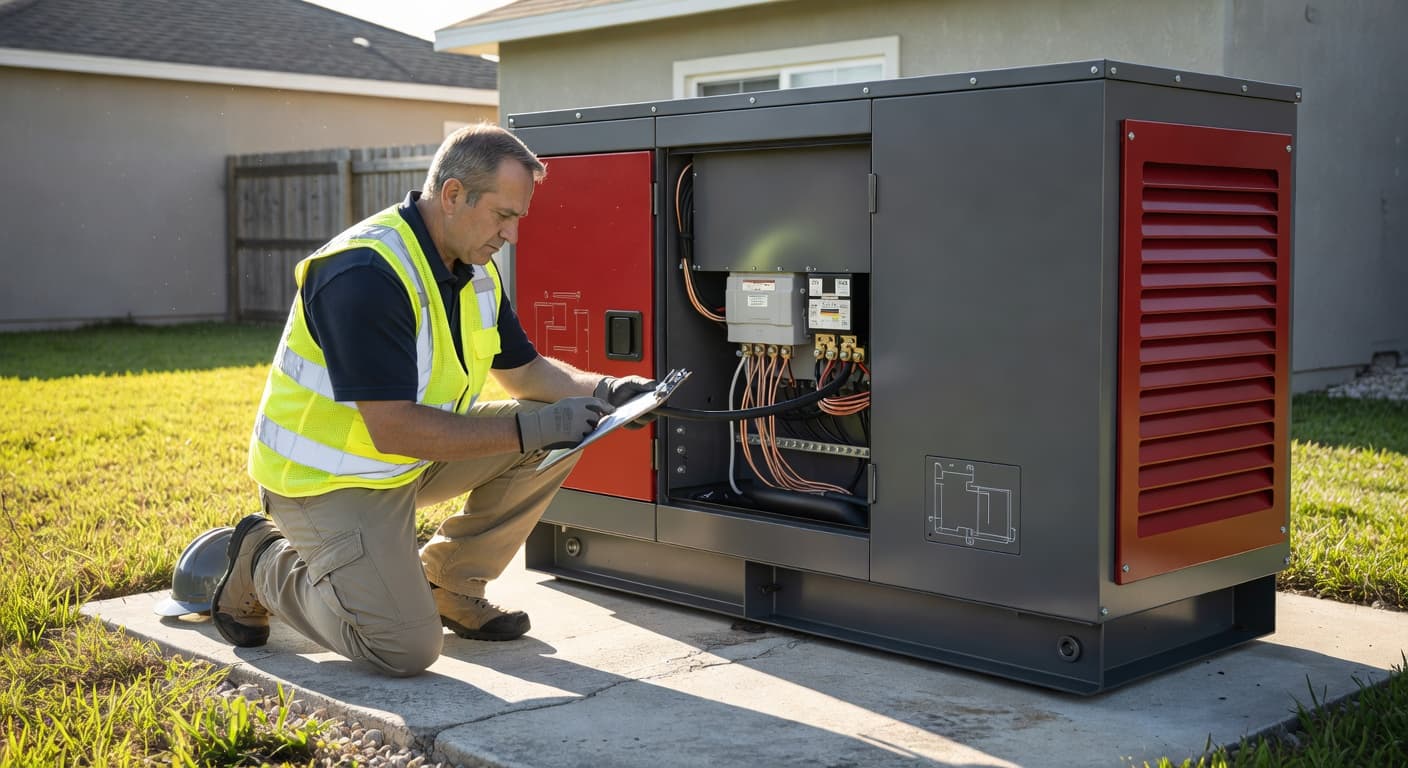
I usually tell homeowners to expect multiple visits rather than one magic appointment. The electrical work often requires its own sign-off, and if the project includes gas piping, propane equipment, or a separate tank installation, that portion of the work frequently follows a separate inspection path.
On inspection day, the process is straightforward but rigorous. The inspector will examine the concrete pad, anchoring, clearances, electrical connections, grounding, disconnects, transfer equipment, and fuel piping. If your property is in a flood-prone area, the pad height or generator elevation relative to the base flood elevation will be a critical part of the review. Inspectors also verify that your installation complies with NFPA 110 standards to ensure the reliable operation of your emergency power system.
Clearances often trip people up. The unit must maintain a safe distance from windows and doors to ensure proper exhaust clearance, which prevents dangerous carbon monoxide buildup near building openings. If the submitted plan showed the generator in one spot and the crew moved it a few feet during installation, that can cause issues. The same applies to a model swap, a different gas route, or a changed disconnect location. Small field changes can lead to a correction notice if the permit file was not updated to reflect those adjustments.
The Rockledge residential generator guide lays out this permit, review, and inspection pattern in plain terms. I see this same pattern across Florida. In Lee County, permits that sit too long without the required inspection activity can expire, often after 180 days, so slow-moving projects can end up costing you more than just time.
The mistakes that slow approval or fail an inspection
Most permit trouble is not dramatic. It is the routine stuff, and routine oversights are exactly what burn through your project schedule.
Bad placement is the first repeat offender. A spot looks fine until the plan reviewer notices a nearby window, a door, an air conditioning unit, or a setback issue. Poor exhaust clearance is another common fail point, as manufacturers and local codes have strict distance requirements that must be met to ensure safety. The second problem is thin paperwork. Missing equipment sheets, vague electrical notes, or incomplete fuel details can bounce the application back before the pad is even poured.
Fuel planning is another common miss. A backup generator can look perfect on the outside and still have a gas line or propane setup that was not sized for the actual load. Furthermore, if your fuel storage exceeds specific gallon thresholds, you may be subject to additional FDEP requirements that complicate the approval process. If the installation reaches inspection and the system on paper does not match the system in place, the project stalls. Flood zone misses create the same kind of delay. A solid concrete pad does not help if the elevation is wrong for the site.
Coordination problems also show up late. I have seen jobs get messy when the electrician, gas company, propane provider, and installer are not working from the same schedule. One delay stacks onto another, and the homeowner is left wondering why a unit sitting on a pad still is not ready for use.
If someone offers to skip permits and save time, I treat that as a warning, not a favor.
Before I sign with any installer, I want these four answers from a licensed contractor:
- Who is pulling the permit?
- Who is handling electrical and fuel coordination?
- Has the placement been checked for setbacks, flood rules, exhaust clearance, and manufacturer requirements?
- Who fixes it if the inspector calls for corrections?
These are simple questions. I like simple questions because they expose sloppy planning and ensure your licensed contractor is prepared to handle every aspect of the project.
Why the right installer matters after the county signs off
A passed inspection is a milestone, but it is not the finish line.
The smoothest generator projects I have seen come from a licensed contractor in Florida that handles the whole chain of events, including the permit package, installation, electrical work, fuel coordination, and final county closeout. That kind of job feels calmer from the homeowner side. It also tends to produce the same kind of feedback over and over: the office answered the phone, the technician showed up on time, the install was clean, and the crew kept the project moving even when it required coordination with the gas company or outside electricians.
That pattern matters in Southwest Florida because storms do not care if the schedule becomes messy. After Hurricane Ian, many homeowners did not need a lecture on the value of a backup generator. They wanted proof that the system would do exactly what it was built to do. The most reassuring reviews I read all circle the same point: the system came on, carried the load of the house, and provided real comfort during a rough stretch.
I also do not treat system care like a side note. Consistent preventative maintenance is where a standby generator gets inspected, adjusted, and any worn parts are replaced before they cause trouble. Remote monitoring helps, too. A system that runs its weekly exercise cycle and sends status alerts gives the homeowner a better shot at catching a problem early instead of discovering it during an outage.
If you are currently sorting through permits, placement, and installation options, it is worth having the process mapped out before the first form gets filed. If you want help with that step, you can Get a Free Consultation.
Frequently Asked Questions
Can I install a whole-house generator without a permit?
No, permanent standby generators require building, electrical, and often fuel permits in Florida. Skipping the permit process is a significant liability that can lead to safety hazards, insurance denials, and fines from your local building department.
Why does the location of my generator matter to the inspector?
Inspectors check that your generator meets specific setback requirements and exhaust clearance rules. If a unit is placed too close to windows, doors, or property lines, it poses a carbon monoxide risk and violates local building ordinances, resulting in an inspection failure.
What happens if my generator installation fails the final inspection?
The inspector will issue a correction notice detailing the specific code violations that must be addressed. You will need to make the required adjustments to bring the installation up to code and then schedule a follow-up inspection to obtain the final sign-off.
Do I need to provide HOA approval to the city or county?
Many jurisdictions require proof that your homeowner’s association has approved the project before they will issue a permit. Even if your local municipality does not strictly require it for the building permit, failing to get HOA approval can lead to expensive disputes and potential forced relocation of the equipment later.
The permit is part of the protection
A whole-house generator is supposed to remove stress, not create a new kind of it. In Florida, that means the permit, placement, and inspection steps must be handled correctly from the start.
I always come back to one thought: having power during a storm feels good, but having approved power feels better. When the county signs off and your standby generator has been installed and maintained the right way, the system becomes what it was always meant to be. It provides the dependable backup you need when the weather stops cooperating, ensuring you are fully prepared for the next hurricane season.