


A whole-house generator is only as good as the surface under it. If the generator concrete pad Florida requires shifts, cracks, or stays wet, the unit above it can turn into an expensive headache.
Here in Southwest Florida, that matters more than people think. Heat, rain, sandy soil, storm runoff, and local permitting all affect how a generator pad should be built. If I am planning a stationary generator system, I never treat the pad like an afterthought.
Key Takeaways
- Foundation Stability is Critical: A standby generator is a heavy, permanent appliance; a stable, level concrete pad prevents shifting that could damage internal components, fuel lines, and electrical conduits.
- Florida-Specific Considerations: Due to sandy, shifting soil and heavy rainfall, proper base preparation—such as using compacted gravel—is essential to prevent the slab from settling or tilting over time.
- Prioritize Proper Sizing and Placement: Pads must be larger than the generator footprint to allow for maintenance access and must strictly follow NFPA 37 clearance codes and local drainage requirements to ensure safety and compliance.
- Coordinate the Entire Installation: A concrete pad should never be a standalone project; it must be planned in coordination with gas, electrical, and permitting requirements to avoid costly rework or inspection failures.
Why the pad matters so much in Florida
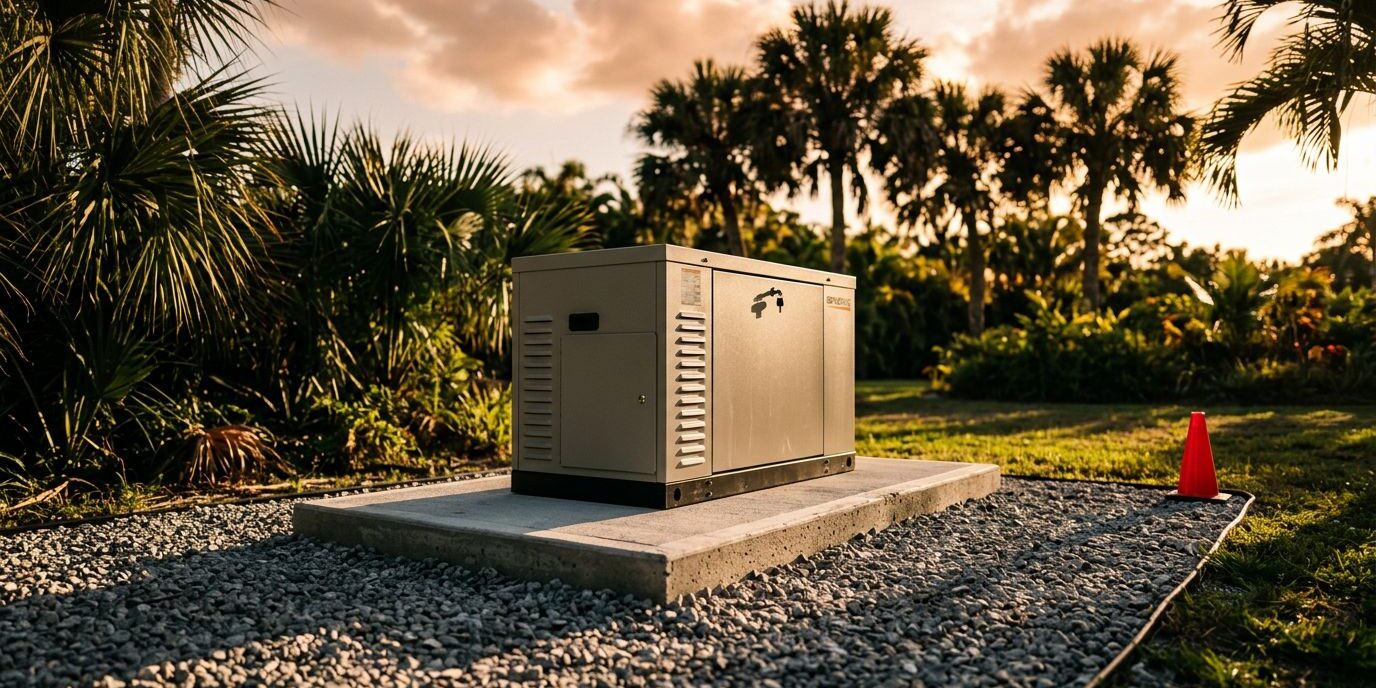
A standby generator is not a portable unit you roll out after a storm. It is a permanent piece of equipment that requires a solid concrete foundation to sit level, stay dry, and hold steady year after year.
That sounds simple, but it is not.
Florida soil can be loose and unpredictable. Some yards drain well, some hold water for hours, and some look fine until the first hard summer rain. If the base under the slab settles, the generator can tilt. That shift can put significant stress on fuel lines, conduit, the enclosure, and even the internal vibration isolators. When a unit is not properly stabilized, these generator set vibrations can lead to premature wear or mechanical issues.
A standby generator often weighs hundreds of pounds, and meeting specific load-bearing requirements is essential for long-term reliability. You need more than a flat patch of dirt to ensure the unit stays secure. While a commercial generator has even stricter needs due to its sheer mass, residential units still require professional-grade stability to function correctly.
The pad also affects airflow, service access, and inspection. If it is too small, too low, or too close to the wrong part of the house, the job can stall before the generator ever starts.
I have seen homeowners focus entirely on the unit itself while skipping over the foundation. That is like buying a boat and forgetting the trailer. The generator gets the attention, but the pad is what keeps the setup stable when the weather gets ugly.
What a Florida generator pad usually requires
When I evaluate a concrete pad for a generator in Florida, I focus on five essential elements: the thickness of concrete, base preparation, concrete strength, overall size, and leveling.
Most residential standby installs fall into a familiar range. While the exact specifications are determined by the manufacturer’s manual, your installer, and the local inspector, the following table outlines the standards I expect to see before any materials are ordered.
| Pad element | Common Florida practice | Why it matters |
|---|---|---|
| Thickness | 4 to 6 inches | Supports heavy unit weight and prevents cracking |
| Base | Compacted gravel base | Reduces settling and improves drainage |
| Concrete strength | 2500 PSI minimum; 5000 PSI for heavy-duty | Ensures long-term durability in outdoor conditions |
| Size | Larger than the unit footprint | Provides space for mounting and service access |
| Surface | Flat and level | Ensures the generator operates as designed |
These are not just random preferences. They are practical job-site standards that ensure a reliable install. While many homeowners choose to pour a slab on-site, precast concrete pads have become a common alternative because they offer a consistent, factory-made foundation that simplifies the installation process.
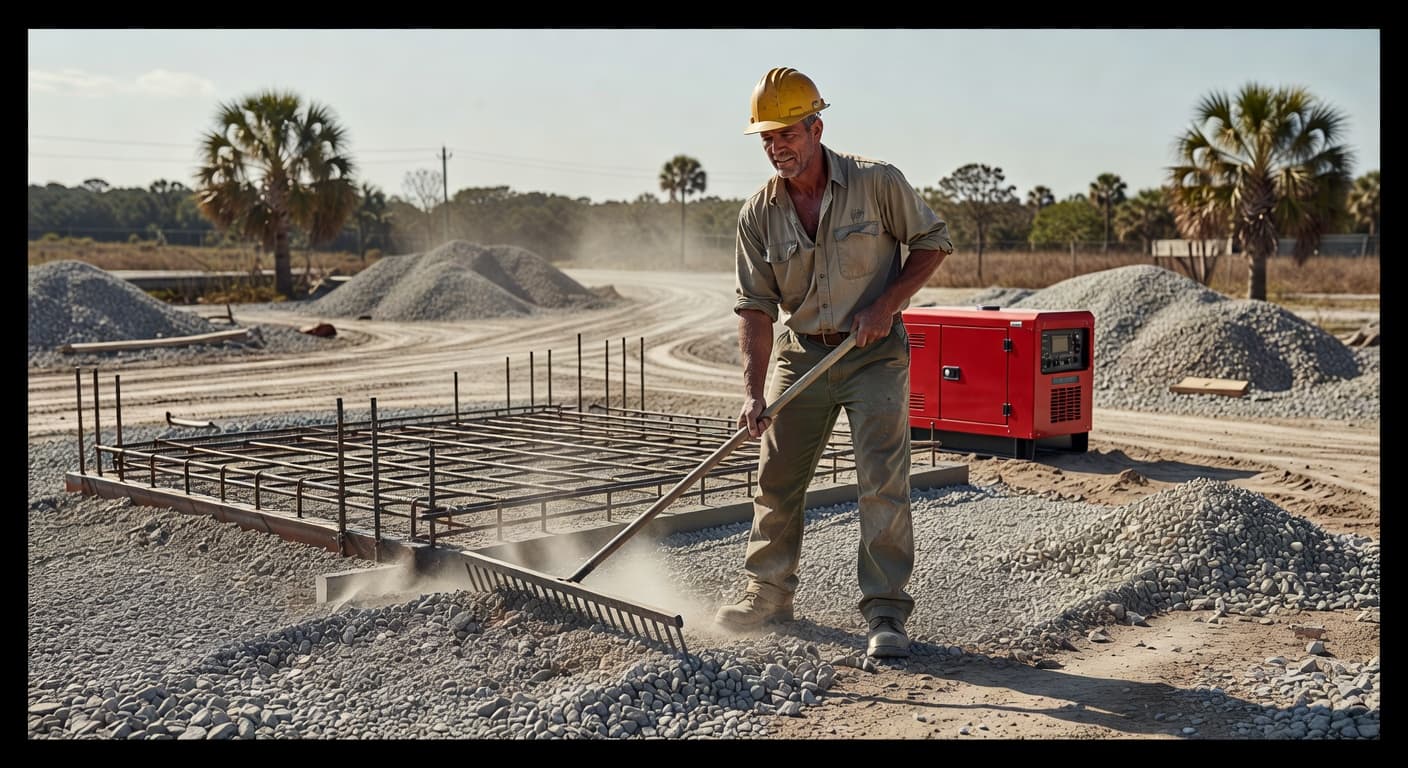
A durable pad starts well before the pour. I ensure the ground is cleared, compacted, and graded so that water moves away from the slab instead of pooling around it. If the site is soft or composed of recent fill, that preparation is even more critical.
For the mixture itself, 2500 PSI is a common standard, but for more demanding environments or larger equipment, I often recommend utilizing a 5000 PSI concrete mixture to provide maximum structural integrity. Once the concrete cures, we use pre-drilled anchors to secure the generator to the pad, which provides the necessary stability for wind resistance and general operation.
I also insist that the pad remains slightly larger than the generator cabinet. A tight fit might look neat on day one, but it makes future maintenance difficult. A technician needs enough room to open panels, inspect electrical connections, and work safely.
The short version is this: the slab should be thick enough, strong enough, dry enough, and level enough to support your generator for the long haul.
Placement matters as much as thickness
A perfect slab in the wrong spot is still the wrong slab.
This is where many homeowners get tripped up. The generator has to meet strict clearance rules set by the manufacturer and local building codes. Specifically, you must adhere to NFPA 37 standards, which dictate how far the unit must be placed from windows, doors, vents, property lines, and fuel sources. I do not guess on these regulations; I check the manual first and cross-reference them with local requirements to ensure full compliance.
Drainage is just as important. If a part of the yard stays soggy after heavy rain, I do not want the pad there. Because we often deal with specific flood zones in our region, we must consider the necessity of elevated generator pads to keep the equipment safe in low-lying Southwest Florida properties. If roof runoff dumps into one corner of the house, I do not want the generator below that drip line either. The goal is simple: keep the unit level and dry during normal weather, not only on sunny days.
Placement also affects noise and service. A whole-home generator is quieter than many portable units, but it still should not be jammed outside a bedroom wall if there is a better option. If a technician cannot reach the side panels without fighting shrubs, fences, or AC equipment, routine maintenance becomes difficult.
This is why the whole house generator installation process matters. The pad is not a stand-alone project. It must be coordinated with gas piping, electrical conduit routing, permits, and the final inspection. When a professional contractor manages these pieces, the job feels smooth. When they are not coordinated, the pad often has to be reworked.
Concrete pad or composite base?
A lot of people assume every standby generator sits directly on a traditional concrete slab. That is not always the case.
Many modern units from major manufacturers like Generac and Kohler come with an approved composite base or pad as part of the installation system. In some cases, that factory pad is mounted over poured concrete rather than being placed directly on the earth. This practice is consistent with Florida installation guidance, which indicates that approved pad systems can be a compliant part of the final setup.
What matters most is manufacturer approval, ground stability, and the installation manual for that exact model. If the manufacturer specifies a composite pad, I follow those instructions. If the site requires a custom poured concrete foundation, I plan for that accordingly. The right answer is never just about choosing concrete or composite exclusively; the right answer is what the specific equipment requirements and the local authority having jurisdiction accept.
Regardless of the material, I still insist on a firm, professionally prepared base under any pad system. Think of the stability required for industrial transformer pads; large standby units need that same level of structural integrity to prevent settling or shifting over time. Fancy materials or lightweight bases simply cannot fix the issues caused by soft or poorly compacted Florida soil.
The mistakes I see most often in Southwest Florida
Most pad problems come from rushing the installation process.
The first mistake is undersizing the slab. Homeowners often look at the generator cabinet dimensions and pour a pad that is almost identical in size. However, the installer needs extra room for anchors, service access, and manufacturer-required spacing. You must also account for the footprint of nearby fuel tanks during this initial planning phase.
The second mistake is skipping proper base preparation. A slab poured straight over loose soil may look fine initially, but a year later, one side often settles and leaves the unit uneven. Furthermore, do not overlook concrete curing time. Rushing the schedule before the concrete has fully cured can lead to cracking or structural instability under the weight of the generator.
Another common issue is setting the pad too low. In Southwest Florida, even a normal rainy season can turn a low corner of the yard into a shallow pond. I want the generator placed high enough to remain a weather resistant setup that stays above routine runoff rather than sitting in it.
I also see projects where the slab gets poured before anyone has finalized the gas line route, electric entry point, or permit details. When this happens, the pad might be solid, but it is in the wrong place. Homeowners notice the difference when a contractor handles the entire installation process as a coordinated sequence rather than one piece at a time. The best jobs are clean, well-coordinated, and easy to inspect.
That is one reason many people look for professional backup generator installation instead of trying to piece the job together on their own. The pad, fuel, wiring, and clearances all have to align perfectly.
If you are still in the planning stage, this is a good time to Get a Free Consultation. It is a lot easier to choose the right pad location before the concrete is poured.
What I ask before any pad gets poured
Before I approve a site, I run through a short checklist in my head to ensure the installation is reliable and code compliant.
- Is the location allowed by the generator manual and local code?
- Will the pad stay above normal runoff and standing water?
- Is the soil stable, or does it need extra prep?
- Do I have enough room for service access around the unit?
- Does the pad location work with the gas and electrical plan?
- Have we considered spring isolators to manage noise and vibration?
- Do we need to utilize aluminum generator stands to meet elevation requirements in high velocity hurricane zones?
Those questions save time and money. They also provide the peace of mind that comes with knowing your equipment is protected.
I have heard plenty of homeowners talk about how secure they felt after a storm because their backup power system performed exactly as expected. That is the outcome I care about. A solid foundation does not get the glory, but it is a critical part of ensuring your generator remains operational when you need it most.
Frequently Asked Questions
Can I use a precast pad instead of pouring concrete on-site?
Yes, precast concrete pads are a common and accepted alternative in Florida, provided they meet the manufacturer’s weight and structural specifications. They offer a factory-controlled, consistent foundation that can simplify the installation process compared to on-site pouring.
Why does my generator pad need to be larger than the unit itself?
A generator pad needs extra surface area to provide sufficient space for professional mounting, secure anchoring, and safe service access. Technicians require enough room to open side panels and perform maintenance without being obstructed by landscaping or exterior walls.
How thick should my generator concrete pad be?
For most residential whole-house generator installations in Florida, a thickness of 4 to 6 inches is the standard recommendation. This depth provides the necessary load-bearing capacity to support the weight of the unit while preventing the concrete from cracking due to soil settling or environmental stressors.
What should I do if my yard is prone to flooding?
If your property is in a low-lying area or a designated flood zone, you should consider elevating the generator. This can involve using a thicker base, an engineered riser, or specialized aluminum stands to ensure the unit stays dry and operational during heavy rainfall and potential runoff.
Final thoughts
For a whole-house generator in Florida, the pad is not a side detail. It is a critical component of the entire system.
If I want the generator to start reliably, stay stable during operation, and pass local inspections, I need a level, well-placed foundation built according to both the manufacturer requirements and local codes. When the next major storm or power outage hits, investing in a high-quality generator concrete pad Florida residents can rely on is what matters most for your peace of mind.