


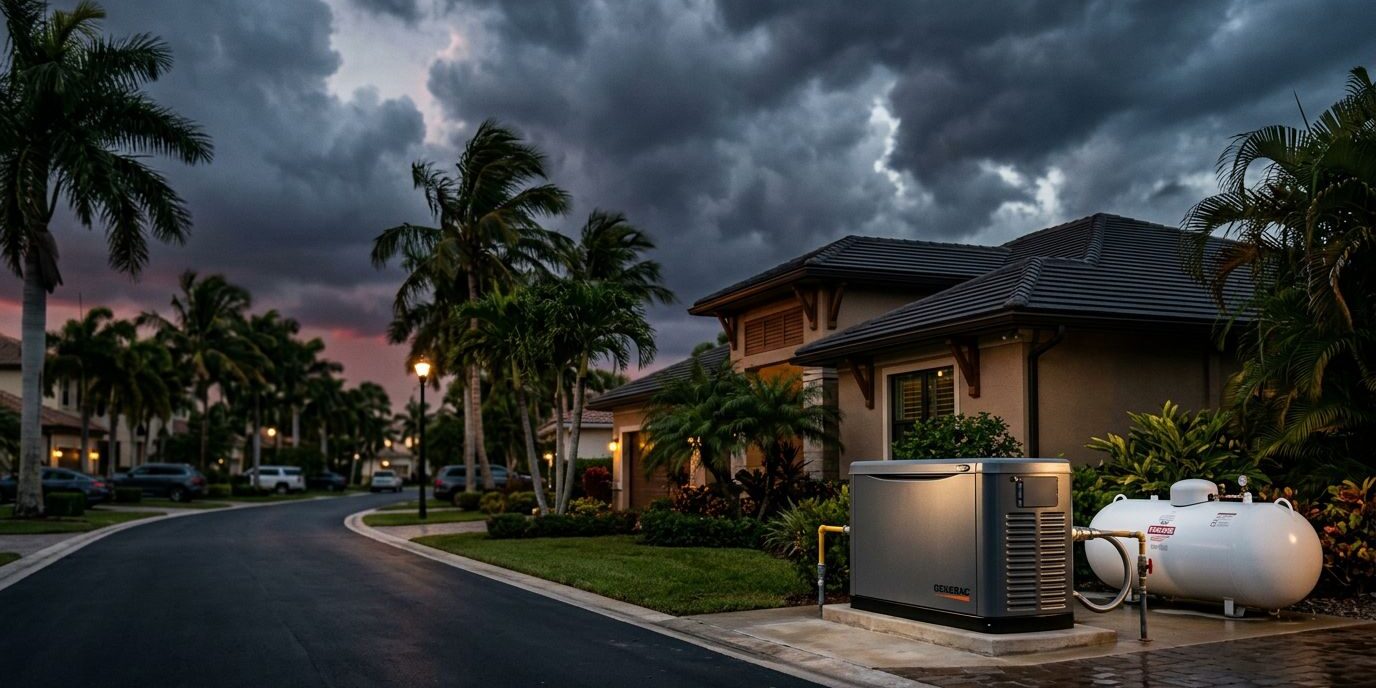
What good is a whole-house generator if fuel becomes the weak link on day three of a Florida outage? In Southwest Florida, that question matters more than brochure specs, because heat, storms, and long recovery times put every emergency backup plan under stress.
If you are choosing between natural gas or propane for a home standby generator, the best option depends on your street, your lot, and how your area behaves after a hurricane. The fuel that feels easiest before storm season is not always the one that feels easiest after landfall.
That choice gets clearer once you look at how each fuel works in real Florida conditions.
Key Takeaways
- Fuel Source Depends on Geography: Natural gas is the most convenient choice for suburban areas already serviced by utility lines, while propane offers the necessary independence for rural or edge-of-town properties lacking gas access.
- Planning for the “Day Three” Reality: Hurricane recovery in Florida often results in blocked roads and delayed fuel deliveries; prioritize a fuel source that remains consistent throughout long-duration outages.
- Site Constraints Influence Selection: Propane requires space for a storage tank that must adhere to strict setback and zoning regulations, whereas natural gas eliminates the need for on-site tanks, making it ideal for smaller lots or HOA-governed communities.
- Load Requirements Matter: When sizing your generator, ensure the fuel supply (whether gas line capacity or propane tank volume) can handle the peak startup wattage required for multiple high-load appliances like central air conditioning.
Why fuel choice matters more in Florida
A standby generator can start within seconds to provide reliable backup power and keep your house livable when the grid fails. Still, the engine is only half the system. Your fuel supply decides how long that comfort lasts.
Florida power outages often drag on for days. After a major storm, roads may flood, tree crews may block access, and delivery routes may shift. Meanwhile, your home still needs air conditioning, refrigeration, lighting, internet, and maybe a well pump or medical equipment.
That is why natural gas and propane generators require a local view. A suburban home in Naples with utility gas has a different fuel reality than a rural property outside town with no gas line at all. By considering fuel flexibility, you can determine whether a utility connection or an on-site tank better suits your specific property needs. Add HOA rules, tight side yards, or a flood-prone lot, and the project changes again.
Hurricane prep also looks different for full-time residents and seasonal owners. If you live here year-round, you may focus on comfort during a week-long outage. If you leave for part of the year, you may care more about automatic testing, remote alerts, and not having to monitor a fuel tank from another state.
For whole-house standby systems, the smart question is simple: which fuel can you count on when stores are crowded, roads are messy, and the outage lasts longer than expected?
Natural gas standby generators work best where service already exists
For many neighborhoods with utility gas, natural gas is the easiest fuel to live with. You do not need an on-site tank, and you do not have to schedule refills during an outage. As long as gas service stays active, the natural gas generator has a steady fuel source.
That convenience matters in Florida. During storm recovery, the fewer moving parts you depend on, the better. You also save yard space, which helps on smaller lots or homes with pools, lanais, and tight setback lines. In HOA communities, no tank is often a plus.
Natural gas often has a cost edge, too. Where service is already in place, fuel cost per unit of energy is usually lower than propane. For homeowners who expect frequent short outages, or occasional multi-day outages, that can make the long-term math easier.
Still, natural gas has limits. First, it only works where utility service exists. Many Southwest Florida streets do not have gas lines. Second, large home standby generator units require careful planning regarding BTU requirements to ensure the fuel supply meets demand. If your home has multiple AC systems or other heavy loads, you must account for both the starting watts and the running watts of your appliances to ensure the system performs reliably.
Install work can also take more coordination than people expect. Because the system requires a transfer switch to manage power safely, as well as complex gas utility and electrical connections, professional installation is vital for code compliance and performance. Because of that, good professional installation and maintenance matters as much as the generator brand.
Natural gas is usually the simplest option for suburban homes that already have service. It is less flexible where gas lines stop at the next neighborhood over.
Propane standby generators give you more location freedom
Liquid propane makes sense where natural gas isn’t available, and that covers a lot of Florida properties. If your road has no gas utility, this fuel source is often the practical path to whole-home backup power.
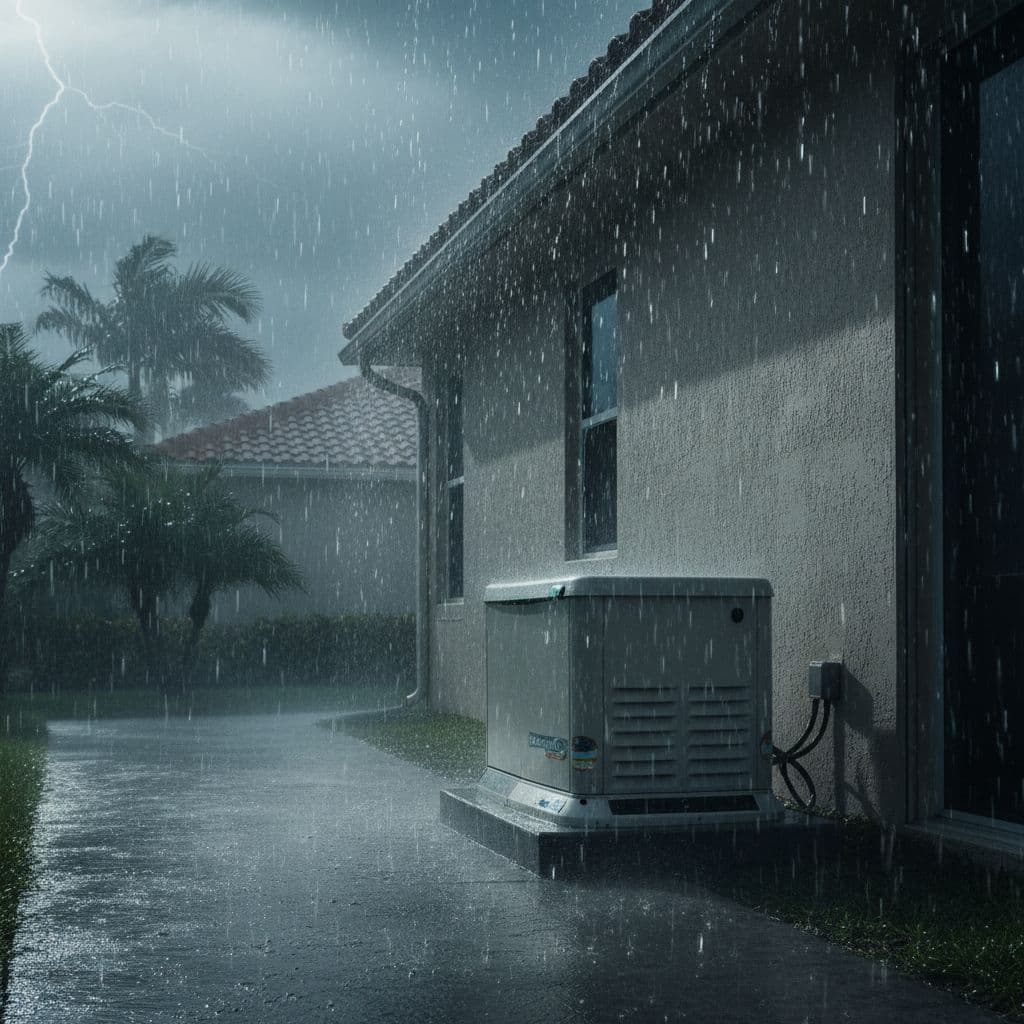
Its biggest strength is independence from the gas utility. Your fuel sits on site, so you aren’t tied to a pipeline network. This is beneficial when your home needs high peak wattage to run central air or multiple appliances simultaneously. Because these engines require significant starting watts to kick on heavy-duty equipment, having a reliable on-site supply ensures your generator can handle the load. This is especially reassuring in outlying areas, on larger lots, and in homes that already use propane for cooking, water heating, or pool equipment. While these are stationary backup units, some homeowners interested in extra fuel flexibility look for dual fuel generators or models with tri fuel capability to broaden their options.
Propane also stores well over long periods. For standby use, that is helpful. The fuel doesn’t go stale the way gasoline can, and the system can sit ready through much of the year with proper maintenance. Tanks can be above ground or buried, depending on the site and local rules.
However, propane asks more from the property. You need room for a tank, and that tank has to meet setback and placement rules. On a small coastal lot, or in a community with strict visual standards, that can be harder than picking the generator itself.
Refill logistics are the real Florida issue. After a big storm, delivery schedules may slip. Some roads are blocked, and some neighborhoods get restored later. If you choose propane, tank size matters because it gives you more breathing room when fuel trucks are delayed.
For seasonal residents, propane can work well, but only if tank level tracking is part of the plan. A standby unit won’t help much if the fuel supply was allowed to run too low before storm season.
Comparing natural gas and propane generators at a glance
When homeowners compare natural gas propane generators, they often start with the initial purchase price. However, in Florida, the logistics of a power outage often matter more than the sticker price. Whether you are looking for a permanent stationary backup solution or considering a portable dual fuel model, understanding your specific needs is vital. While an inverter generator might be sufficient for camping, it cannot match the heavy-duty output required to keep your entire home running during a hurricane.
| Factor | Natural gas | Propane |
|---|---|---|
| Long-outage reliability | Strong if utility gas stays on | Strong if the tank has enough fuel |
| Convenience | No tank to monitor or refill | Tank level and delivery timing need attention |
| Fuel efficiency | High when piped directly to home | Variable based on tank size and usage |
| Upfront installation | Easier when gas service exists | Tank and site work add steps |
| Space and HOA fit | No on-site tank, smaller footprint | Tank needs room and proper setbacks |
| Operating cost | Often lower via utility grid | Often higher per unit of energy |
| Emissions standards | EPA certified for clean air | EPA certified for clean air |
| Emergency readiness | Best in gas-served suburbs | Best where no gas lines exist |
The short version is this: natural gas usually wins on day-to-day ease, while propane wins on location flexibility. Neither fuel is better in every setting.
Both are cleaner-burning choices for residential standby use, and both can power a home well when the system is sized correctly. The better pick is the one that matches your local gas access, lot layout, and storm recovery reality.
The hard part is not the first hour without power. It is day three, when roads are blocked and fuel delivery becomes significantly more difficult.
Best fit by home type and outage pattern
Some Florida homes have an obvious fuel choice. Others sit in the gray area, where the best answer depends on how you use the property.
Suburban home with gas service
If your neighborhood already has utility gas, natural gas is usually the lowest-stress choice. You avoid tank placement, refills, and extra yard clutter. For many year-round homeowners, installing a home standby generator that utilizes existing gas lines is a convenience that is hard to beat.
Rural or edge-of-town home without gas lines
If gas service does not reach your road, propane is often the better fit. It works well for larger lots, homes on wells, and places where an above-ground or buried tank can fit without crowding the site.
Seasonal residents
If you leave Florida for months at a time, natural gas removes one more thing to monitor. Still, propane can work well if you have a large enough tank and good remote oversight. Many standby systems can run weekly self-tests and send app alerts, which helps when you are away.
Larger homes with heavy cooling loads
Big homes change the fuel math. If you want to support multiple AC systems, you must consider the total load. Natural gas can work well, but the gas line and meter must be sized to provide enough fuel to meet the peak wattage requirements of your system. When dealing with high demand, the engine displacement of your generator becomes a critical factor in its ability to manage the surge needed for starting watts, while maintaining consistent power for the running watts required by your home. Propane can also handle large units, yet you will want enough tank capacity to sustain that power for a long outage, rather than just a weekend event.
In other words, the best fuel is tied to the property, not the marketing claim. A good fuel match feels boring in the best way. It simply works when the weather is not boring at all.
Placement and maintenance matter as much as fuel
Fuel choice is only the beginning of your generator project. Proper placement is critical in Florida, as your site plan must account for side-yard setbacks, pool cages, coastal corrosion, drainage issues, and flood zones. To ensure safety and performance, your unit should be installed in a location with easy service access, away from potential standing water, and equipped with a CO alert sensor to monitor air quality.
Project planning is equally important. Many homeowners find that a smooth installation process—where electricians, gas technicians, and municipal inspections are perfectly coordinated—makes the entire experience far less stressful. Furthermore, choosing a high-quality generator ensures you have clean sine wave power with low total harmonic distortion, which protects your sensitive modern electronics during a utility outage.
Reliable maintenance determines whether your generator will perform when it matters most. A durable standby unit should feature an electric start, a reliable low oil shutoff, and heavy-duty copper windings to handle the demands of Florida weather. Because copper windings provide better heat dissipation and electrical conductivity, they are essential for long-term durability. A professional technician should service your unit at least once a year, checking oil levels, battery condition, spark plugs, air filters, and fuel pressure. Many homeowners also appreciate app-based monitoring, which allows them to track test cycles and identify potential maintenance needs before storm season begins.
That level of attention pays off when the weather turns. After Hurricane Ian, many local homeowners relied on units that started exactly as expected and ran continuously through severe conditions. If you are weighing gas availability, tank space, and local lot setbacks, Get a Free Consultation before you make your final decision.
Frequently Asked Questions
Is it possible to switch from one fuel type to another later?
Many standby generator models are designed to be converted between natural gas and propane with a professional fuel-system adjustment. However, this often requires specific conversion kits and expert calibration to ensure the engine operates efficiently and safely, so it should always be performed by a licensed technician.
Which fuel is more cost-effective for a standby generator?
In areas where utility natural gas is readily available, it is typically the most economical choice due to lower fuel costs per unit of energy. Propane can be more expensive per unit, though it provides essential energy independence in areas where you cannot access a municipal gas pipeline.
Does a standby generator need a specific tank size for propane?
Yes, the size of your propane tank is crucial for long-duration outages, as it determines how long you can run your home without a refill. Larger tanks are highly recommended for whole-house systems to ensure you have enough fuel to weather extended recovery periods when delivery trucks may not be able to reach your property.
How does a power outage impact my fuel delivery if I use propane?
Following a major storm, delivery routes may be compromised by debris, flooding, or damaged infrastructure, which can delay fuel trucks significantly. Having a correctly sized, high-capacity tank installed allows you to store more fuel on-site, providing a necessary buffer until the supply chain and local roads are restored.
Conclusion
Florida does not provide every homeowner with the same answer. For many suburban homes with existing utility connections, natural gas is the simpler choice for long-term emergency backup. For homes without gas lines, or properties that require more fuel-source independence, propane often makes more sense for reliable backup power.
The best decision comes down to fuel availability, site constraints, and how your neighborhood holds up after a major storm. As you prepare for potential power outages in the Florida climate, choose the system you can still count on by day four, rather than simply the one that looks easiest on installation day. Ultimately, comparing the long-term benefits of natural gas and propane will ensure your home remains protected no matter the weather.