


The first number most homeowners want is simple: what is the total whole house generator cost around here? In Southwest Florida, I usually tell people to expect an installed price of about $10,000 to $16,000 for a typical home, with smaller setups starting closer to $8,000 and larger, high-demand homes running past $16,000.
That range feels wide because it is. A quote for a standby generator is not only about the machine itself. It is also about the fuel source, the complex electrical work, the concrete pad, local permits, and how much of your home you want to keep running with reliable backup power when the grid goes out. Let us look closer at the specific factors that move the final price.
Key Takeaways
- Total Installed Cost: In Southwest Florida, expect an installed price between $10,000 and $16,000 for a standard home, with costs varying based on capacity and specific site requirements.
- Look Beyond Equipment Price: The cost of the generator unit itself is only one part of the equation; professional installation includes essential expenses like permits, concrete pads, electrical work, and fuel hookups.
- Size Matters: The required power output (measured in kW) is the primary factor driving costs, as larger systems are necessary to power heavy loads like central air conditioning, pool equipment, and full-home appliances.
- Plan for Maintenance: A standby generator is a long-term investment that requires regular professional service, oil changes, and testing to ensure it functions reliably during an emergency.
What most homeowners pay in Southwest Florida
When I talk with homeowners in Fort Myers, Naples, Cape Coral, and Bonita Springs, I start with the final total, not the sticker price on the generator alone. The online unit price can be misleading. By the time you add labor, fuel hookup, the transfer switch, and site prep, the installation costs rise quickly.
Current Florida pricing backs that up. A good benchmark from Florida whole-home generator pricing puts professional installation in a range that lines up with what I see locally. Even broad national estimates in Home Depot’s generator installation guide land in the same neighborhood once you factor in real project requirements.
Here is the quick view I use most often:
| Home and system type | Typical installed range | What that usually means |
|---|---|---|
| Smaller standby setup (14-18 kW) | $8,000 to $10,000 | Essential circuits, modest electrical demand |
| Most common whole-home setup (22-26 kW) | $10,000 to $16,000 | Enough capacity for normal daily living in many SWFL homes |
| Larger or high-demand homes (30+ kW) | $16,000+ | Multiple AC systems, pool equipment, or full-house coverage |
The big takeaway is simple. Most homeowners land in the middle range, not the low end.
A cheap equipment price looks good online. The installed quote is what tells the truth.
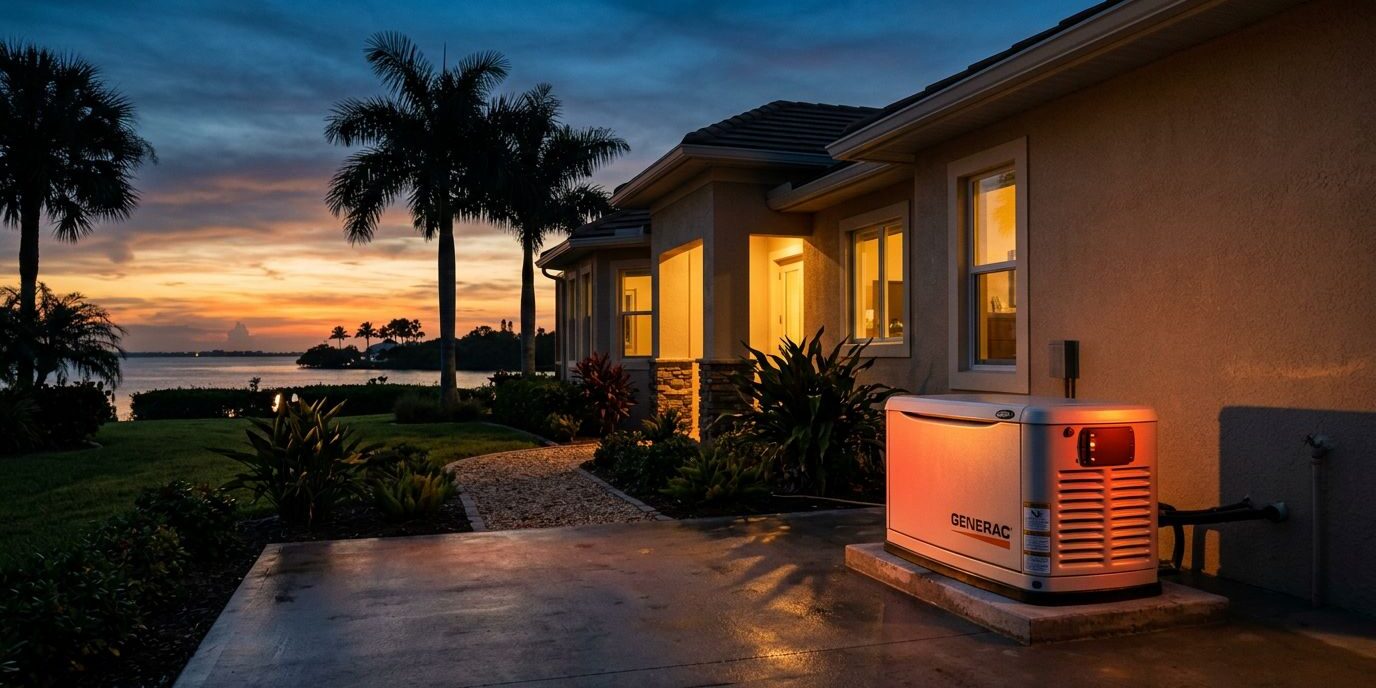
A whole-house system costs more than a portable generator for a reason. It is permanently installed and provides automatic operation, turning on the moment the grid fails. These systems usually run on natural gas or liquid propane and can power much more of the home than smaller solutions. They are also quieter than most portable units because they are built inside sound-reducing enclosures. You are not paying for convenience alone; you are paying for reliable backup power when the weather gets ugly.
Why one quote is $9,000 and another is $18,000
The fastest way to understand a whole house generator cost is to ask one question: what do you want life to feel like during an outage?
If your answer is to keep the fridge cold, run some lights, and power a few outlets, the price remains lower. If your answer is that you want the house to work like normal, the number climbs.
Size changes everything
Generator size, measured in kilowatts (kW), drives the quote more than anything else. A smaller unit may cover essentials, while a larger system (often 22 kW or higher) may handle central air, kitchen appliances, laundry, water heaters, and pool equipment. Southwest Florida homes often have heavy electrical loads, and your air conditioning requirements will dictate the necessary kilowatts (kW) for your backup system.
That is why a proper load calculation matters. I do not like guessing on system size. Oversizing can waste money, but undersizing is worse because it leaves you paying for backup power that does not meet your expectations.
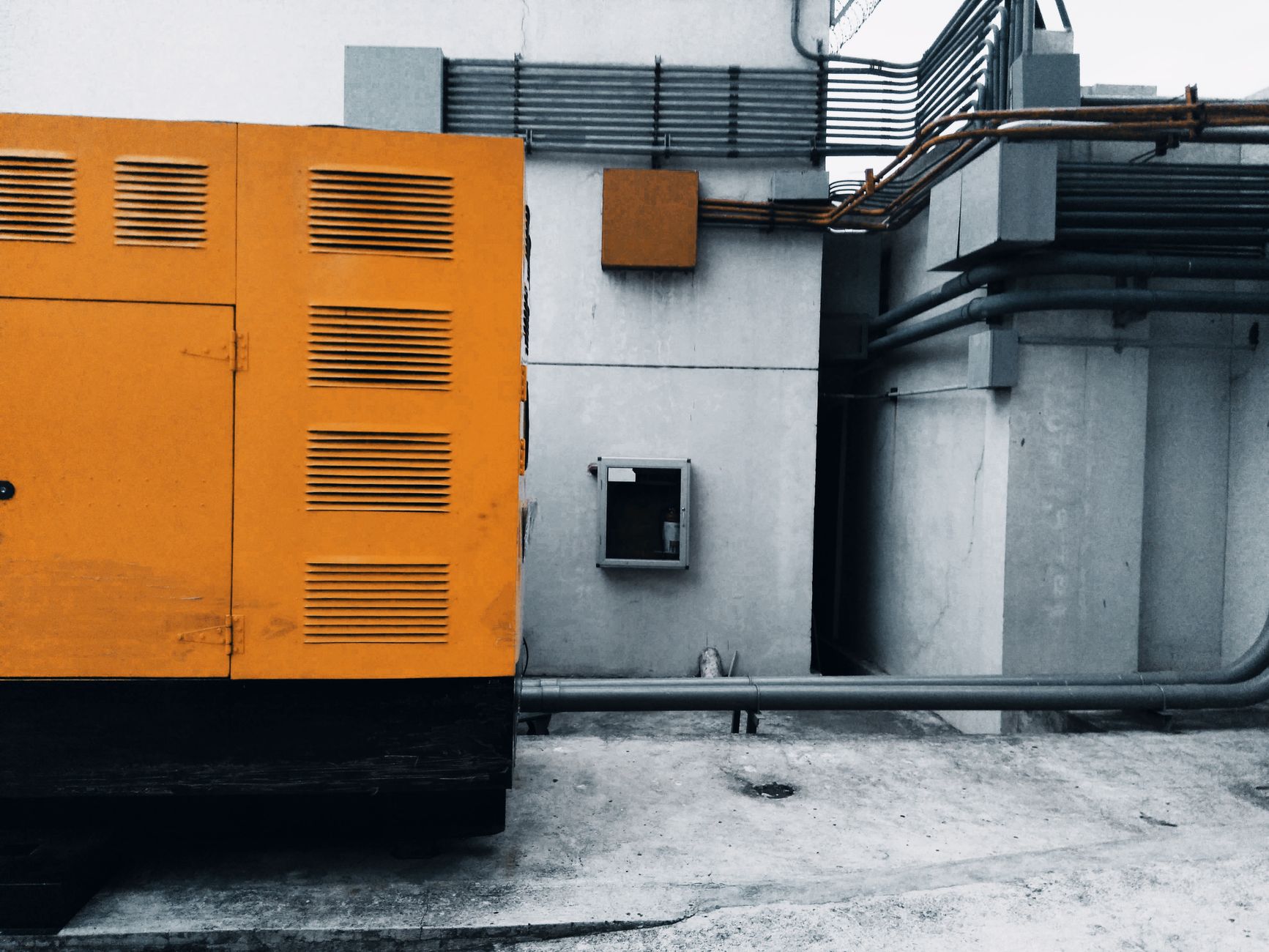
Photo by ezrah lane
Site work and permits add up
Two homes with the same generator can receive two different quotes because of site conditions. One home might have easy placement near the meter and gas source, while another requires extensive trenching, a longer fuel line, or landscaping changes.
Navigating permits and inspections is also a major factor. Installation typically involves pouring a concrete pad, setting up a transfer switch, and finalizing the electrical tie-in. If your electrical panel requires an upgrade to handle the new system, that adds to the final price. Furthermore, you must rely on a licensed electrician to ensure all work meets local code compliance.
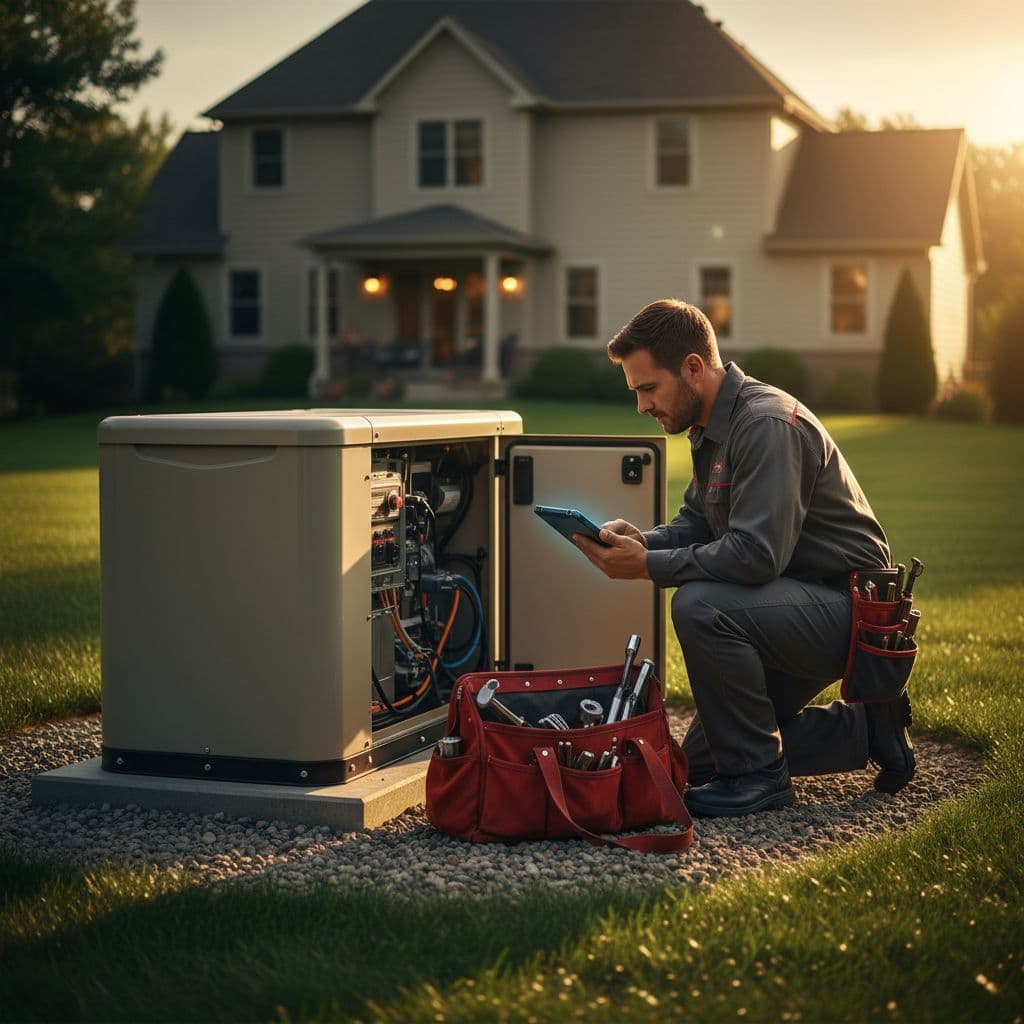
This is also where a local installer earns their keep. A quote tied to real site conditions is worth more than a vague number thrown out over the phone.
If you want to see what the process usually involves, this page on whole home generator installation gives a good overview of the moving parts.
The costs that show up after installation
A lot of homeowners focus on the purchase price and forget the long-term cost of ownership. I get it. The upfront number gets all the attention. But backup power is not a set-it-and-forget-it system.
Maintenance, monitoring, and fuel
Whole-home generators need regular care if you want them ready when the grid drops. When calculating your total budget, remember to factor in maintenance costs, which cover scheduled service, professional inspections, battery checks, oil and filter changes, and regular test runs. Leading brands like Generac use advanced technology for these systems, and many standby units perform automatic self-checks each week, which is one reason they are so much easier to live with than other options.
Some homeowners also add remote monitoring to their setup. That is useful because you can receive real-time alerts, track system status, and know your unit is exercising on schedule via an app. For people who split time between Florida and another state, that peace of mind is worth every penny.
Operating costs also depend heavily on your chosen fuel type. Natural gas is convenient when it is available, while propane works well if you have the space for a tank and a plan for refills. Regardless of your preference, your runtime has an ongoing expense that should be part of your financial planning.
Portable units are cheaper, but the comparison is not clean
I hear this all the time: “A portable generator costs a lot less, so why spend more?” It is a fair question.
Portable generators are cheaper upfront, but they ask much more from you during a power outage. You have to bring them out, fuel them, connect them, and start them by hand. They are usually louder, and because most run on gasoline, you will face frequent refueling during a long event. A portable generator can cover the basics, but it rarely powers a larger home the way a permanent standby system can.
A standby system costs more because it does more. It turns on automatically, supports a much bigger electrical load, and runs on a steadier fuel supply. It is designed so that it feels like the house never skipped a beat.
If you are comparing system types, this page on automatic backup power for homes explains the differences well.
How I budget for the right system, not the cheapest one
When I help someone think through whole house generator costs, I start with lifestyle, not equipment. Do you want to save the freezer and a few essential appliances? Or do you want the AC, internet, security system, and kitchen all working when the neighborhood is dark? That is the real fork in the road.
For a smaller home with lighter loads, a lower-end installed price may be realistic. For a larger home, especially one with multiple AC systems, a pool, or medical equipment, the smarter budget is often higher. That is not upselling; it is matching the system to real use. When you consider that a reliable standby system can also boost your home value, it becomes a property investment rather than just a utility expense.
I also tell people to leave room in the budget for the pieces they do not see at first glance:
- Permit and inspection costs
- Electrical panel or service upgrades
- Gas or propane work
- Annual maintenance
- Remote monitoring or app-based alerts
- The installation of an automatic transfer switch to manage the transition to backup power
Financing options can help spread out the cost, and for many homeowners, that changes the math. If your household depends on refrigeration for medication, works from home full-time, or stays in Florida through storm season, backup power stops feeling optional.
I have also seen what happens after major storms. Homeowners who had a properly sized standby generator often talk less about the machine and more about the peace of mind it provided; they enjoyed air conditioning, cold food, phone charging, lights, and a house that still felt livable. After Hurricane Ian, that kind of reliability was not theoretical.
The best next step is a professional assessment that includes a real site visit and an accurate load calculation. If you want numbers tied to your home, not a generic estimate, Get a Free Consultation.
Frequently Asked Questions
Can I use a portable generator instead of a standby system to save money?
While portable generators have a lower upfront cost, they require manual setup, constant refueling, and provide significantly less power. A permanent standby system is designed for automatic, hands-off operation, offering a more reliable solution for keeping your entire home running during a storm.
Why does the same generator model cost different amounts to install at two different homes?
Installation costs are heavily influenced by site-specific conditions such as the distance between the generator and your fuel source, the complexity of the electrical tie-in, and local permit requirements. Extensive trenching or necessary electrical panel upgrades can cause the total project price to vary significantly between properties.
How do I know what size generator I need for my home?
A professional load calculation is the only way to accurately determine the right size for your needs. A qualified installer will assess your specific electrical demands—including heavy loads like air conditioning and kitchen appliances—to ensure the unit provides enough power without being unnecessarily oversized.
Does a standby generator require ongoing maintenance costs?
Yes, consistent maintenance is vital to ensure your system is ready for the next power outage. You should budget for annual professional inspections, oil and filter changes, battery checks, and potential remote monitoring subscription fees to keep your unit in top working condition.
Conclusion
The total whole house generator cost in Southwest Florida typically falls between $10,000 and $16,000 installed, though the final price depends on your specific power needs, the layout of your property, and the complexity of the installation process.
If I had to provide one piece of advice, it is to avoid judging the project based solely on the generator unit itself. A comprehensive quote accounts for the system size, fuel source, local permits, professional electrical work, and necessary long-term maintenance. When you evaluate a standby generator, you must look at these integrated factors to understand the true investment. This detailed approach is the best way to determine what reliable backup power will cost for your home and how effectively it will perform the next time the lights go out.