


Power goes out fast in Southwest Florida. Getting a generator approved can move a lot slower.
If you live in a Homeowners Association, you already know the pattern. The board is not only looking at your need for backup power. It is evaluating your request against strict HOA generator rules regarding sight lines, noise, screening, fuel, and whether the unit changes the visual consistency of the neighborhood. I see homeowners get stuck in this process all the time, so I prefer to make the requirements clear before the paperwork starts.
Key Takeaways
- Visibility is the determining factor: Florida law and HOA guidelines focus heavily on the sight lines of your generator; keeping the unit screened from the street and neighboring properties significantly increases your chances of approval.
- Pre-planning beats reaction: Do not purchase a unit before reviewing your specific HOA bylaws and surveying your lot space, as zero-lot-line communities have limited areas for equipment and required setbacks.
- Professionalism drives approvals: Submitting a comprehensive application package—including site surveys, noise levels, and screening plans—prevents unnecessary delays and signals to the board that you are committed to maintaining community standards.
- Statutory protections exist: Under Florida law, HOAs have limited authority to block hurricane-hardening upgrades, provided the installation complies with local safety codes and is not negatively impacting the visual aesthetics of the neighborhood.
Why generator approval gets tricky in HOA neighborhoods
Most HOA generator rules are not written in one neat paragraph. They usually appear scattered across your governing documents, including your declaration, architectural review standards, HOA bylaws, and local permit requirements.
That is why two neighborhoods a mile apart can treat the same installation in two different ways.
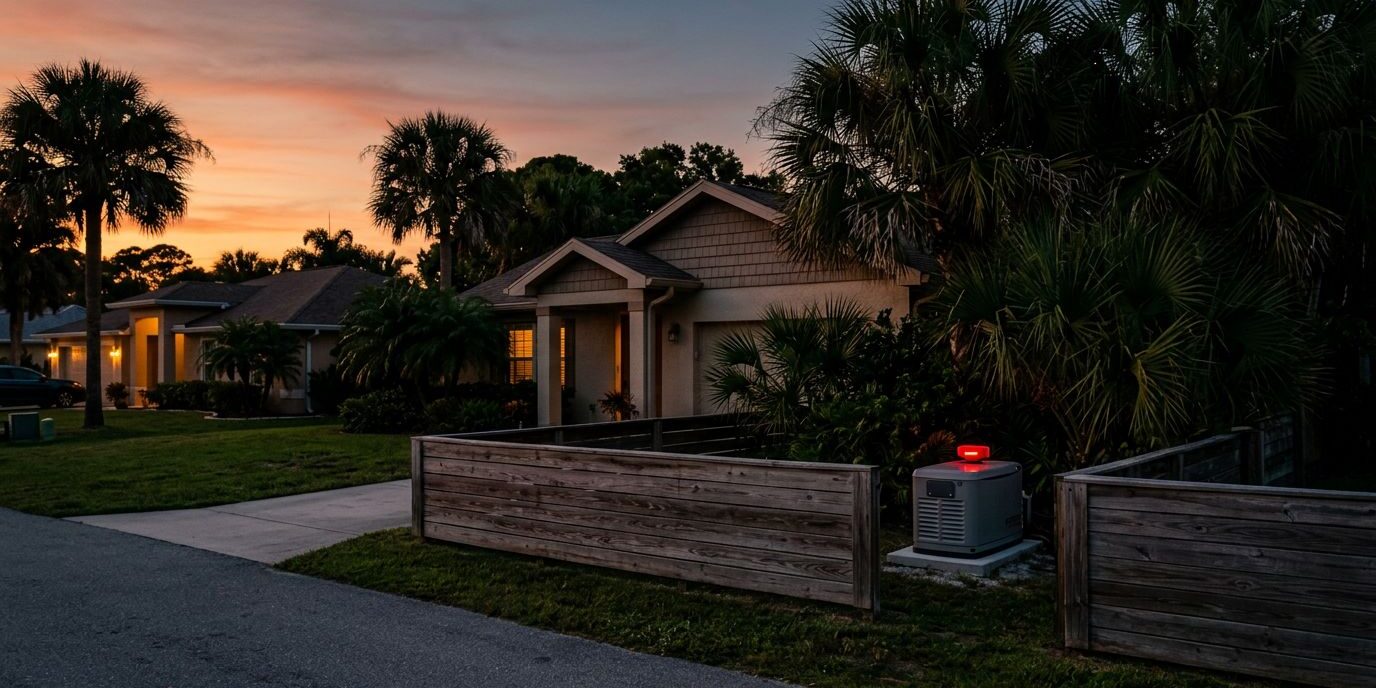
In Southwest Florida, the problem becomes more complex because homes often feature a zero lot line design, meaning space is extremely tight. Pool equipment already consumes limited side yard space, and landscaping often plays a larger role in community aesthetics than homeowners expect. A board may care less about the equipment itself and more about what your neighbor sees from the street or from the adjacent lot.
I also think many homeowners make the first decision backward. They buy a unit and then ask where it can go. I suggest flipping that process. Start by evaluating your lot, reviewing your HOA rules, and assessing your actual power needs. Then, match the equipment to the available space.
That strategy matters because a permanent standby generator and a portable unit do not create the same HOA issues. Portable gas-powered generators are cheaper and flexible, but they usually require manual setup during a power outage, involve messy refueling, and create a louder nuisance factor. In an HOA setting, that often means unsightly cords and excessive noise. A standby generator is permanent, cleaner, and usually quieter because it sits inside a sound-reducing enclosure.
That does not mean approval is automatic. It simply means the conversation with your board is much easier when the plan looks professional and controlled.
If you are still weighing output, layout, and placement, start with choosing the right home generator capacity before you send any formal requests to the board.
What Florida law says about HOA generator rules
As of May 2026, the specific regulation I keep monitoring is Section 720.3045 of the Florida Statutes. In plain terms, an HOA generally cannot ban or limit certain items on your lot when they are not visible from the street frontage, a nearby lot, an adjacent common area, or a community golf course, unless another law or local rule states otherwise.
For a permanent generator, visibility is the primary hinge.
If the unit is tucked into the backyard or side yard and screened from those viewpoints, the HOA’s room to object decreases significantly. If the unit is visible, the board usually maintains more authority. Local codes still matter in either scenario, as do setbacks, permits, and installation requirements for your emergency generator.
That reading aligns with insights from legal experts regarding the authority associations hold over property modifications. It is also important to note that Florida law provides specific protections for homeowners, though it does not override the Fair Housing Act if a generator is required as a reasonable accommodation for a documented medical condition.
Hidden is not the same as unregulated. It means the HOA has less room to say no for appearance alone.
I would not treat these statutes as a free pass. Boards can still review visible installations, and counties or cities can still apply their own building codes. Fuel placement, clearances, and pad location must still meet safety standards, as must access for routine service.
Florida has also moved in a more homeowner-friendly direction regarding storm-hardening upgrades. Specifically, HB 293 highlights how recent legislative updates have strengthened hurricane protection rights, narrowing the ability of associations to block code-compliant improvements. You can find detailed resources on these shifts in Florida HOA hurricane protection policies to better understand your rights.
The smart read is simple. State law can support your case, but it does not replace the need for a clean, professional application.
The approval issues boards care about most
When an HOA pushes back, it usually comes down to how the installation impacts architectural approvals and maintains overall community standards. Boards generally focus on four specific areas: where the generator sits, how it sounds, what hides it, and whether the installation meets local building codes.
This is where most delays happen:
| Issue | Why the HOA cares | What usually helps |
|---|---|---|
| Visibility | Boards want to protect neighborhood appearance | Place the unit behind the front plane of the house and add screening |
| Noise | Neighbors worry about noise limits and decibel levels | Submit the manufacturer decibel levels and proposed exercise time |
| Setbacks and exhaust | Safety and compliance come before cosmetics | Show the site plan, clearances, and permit details |
| Fuel and pad placement | Fuel storage tanks and concrete pads affect the lot | Include contractor drawings, utility coordination, or an underground propane tank |
Notice what is missing. Nobody asks if backup power is a good idea in hurricane country. They ask whether the installation looks controlled, code-compliant, and respectful of nearby homes.
This is another reason I lean toward permanent standby units for most single-family homes here. They switch on automatically, can power far more of the house, and usually run more quietly than portable machines. Portable models have their place, but in a dense HOA community they can become the backyard version of a rattling shopping cart, which is useful in a pinch but awkward long term.
I also would not ignore exercise cycles. A generator that runs weekly at a predictable time tends to create fewer complaints than one that sounds louder than expected or starts irregularly because it has not been maintained well.
How I would package an HOA application for a faster yes
If I wanted a faster approval, I would submit one clean packet to the architectural committee and answer the board’s likely questions before they ask them. When you are planning exterior modifications, presenting a professional, complete file helps streamline the entire process.
I would include:
- A survey or site sketch showing the exact location
- A manufacturer cut sheet with dimensions and sound rating
- A simple note on screening, shrubs, or fencing
- A statement regarding carbon monoxide safety to address placement concerns
- Permit and installer information
- The planned weekly exercise schedule
That packet does two jobs. First, it shows the board that the unit is not being dropped into the yard on a guess. Second, it keeps the conversation focused on facts instead of opinions.
I also like including maintenance details. Annual service matters. A standby generator that never gets checked is like hurricane shutters that will not close when the storm hits. These systems provide critical peace of mind, especially for residents who rely on them due to a chronic medical condition. Modern units make this easier because many run self-tests and support remote monitoring, so you can catch a fault before outage season turns ugly.
If your home needs automatic backup power, cleaner installation, and long-term service, it helps to talk with a team that handles permitting, placement, and upkeep, not only the box itself. That is where Get a Free Consultation fits naturally.
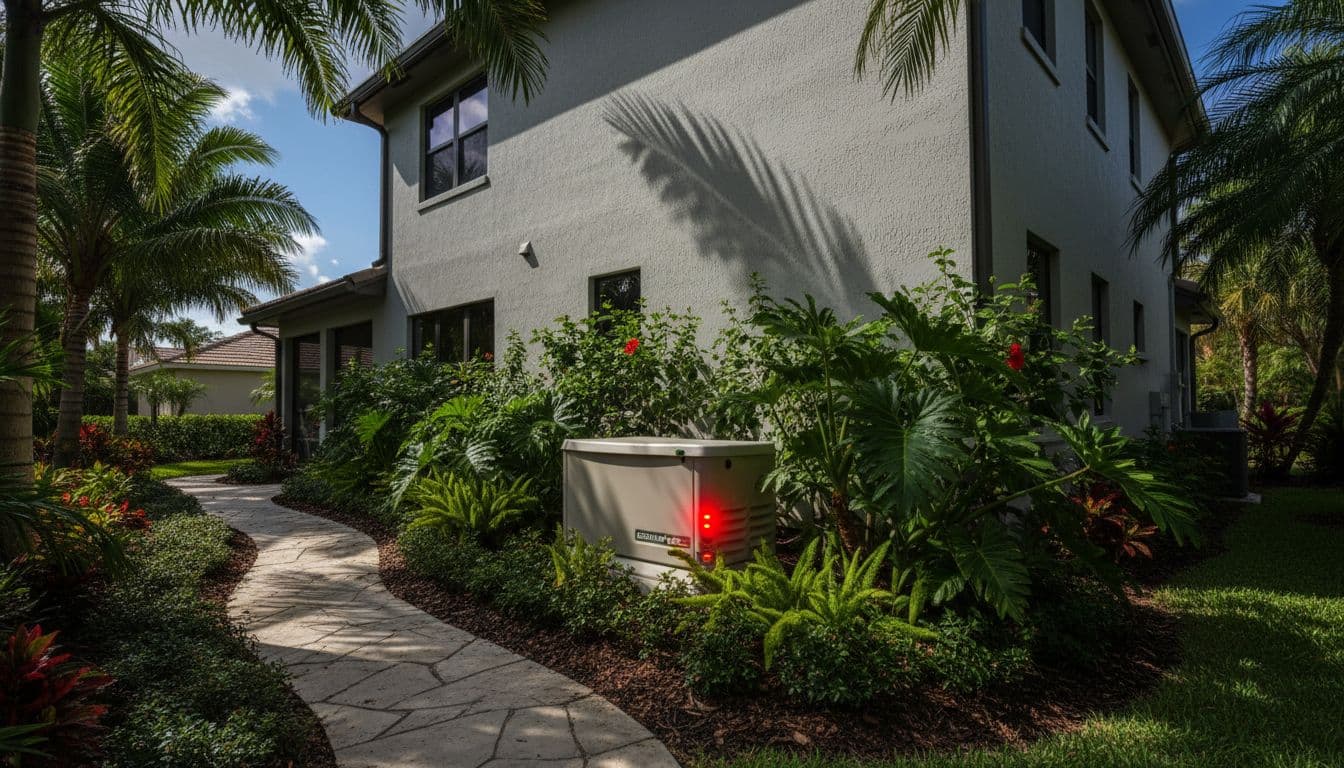
One more thing, do not undersell landscaping. In many HOA fights, shrubs are the peace treaty. A well-placed hedge or side-yard screen can turn a hard no into a routine approval.
Portable or whole house, which works better under HOA rules?
If I owned a small home and only needed the fridge, a few lights, and maybe the internet, I would at least look at a portable generator or even a modern solar battery generator. These battery-based options, often featuring advanced LiFePO4 chemistry, provide a silent and clean way to maintain power without the maintenance hassles of combustion engines. They are excellent for achieving a basic level of energy independence while easily complying with strict community noise limits.
But for most Southwest Florida homeowners, a small setup gets old fast.
Portable units need manual setup during bad weather. They burn through gasoline faster than many people expect. They usually make more noise. They also do not love long outages, because someone has to keep refueling them. After a hurricane, that is a miserable errand.
A permanent generator is a bigger upfront investment, but it fits the local risk better. It starts automatically. It can run on natural gas, propane, or diesel, which is easier to plan around for longer outages. It also tends to work better with HOA expectations because it is fixed, screened, and easier to document in an application.
If your current generator is aging out, the decision gets clearer. Unstable power output, outdated tech, rising repair costs, or a load that no longer fits your home are all signs that replacement may make more sense than patchwork fixes. Newer standby systems are quieter, more fuel-efficient, and easier to monitor.
For a lot of homeowners here, the best answer is not necessarily the smallest or cheapest unit. It is the unit that fits the lot, the rules, and the way you want to live when the grid goes dark.
Frequently Asked Questions
Can my HOA completely ban me from installing a generator?
Generally, no. While an HOA can enforce rules regarding the placement, noise, and screening of a generator to protect community aesthetics, they cannot outright prohibit a homeowner from installing a necessary backup power system that complies with local building codes and state regulations.
Why does the HOA care about my generator’s exercise cycle?
Many generators perform a weekly self-test to ensure they are ready for an emergency, which creates a short period of noise. If this cycle happens at an inconvenient hour or the unit is improperly maintained, it can create a noise nuisance that triggers complaints from neighbors, which is why boards often want to see your proposed schedule.
Is it easier to get a portable generator approved than a standby unit?
While a portable generator may seem easier to manage, it often faces more resistance because of the loud noise, unsightly cords, and the potential for improper storage. A permanent standby unit is usually viewed as more professional, quiet, and reliable, making it a better candidate for formal architectural approval in a managed community.
Do I need to include landscaping in my generator application?
Yes, incorporating professional landscaping for screening is one of the most effective ways to secure approval. A well-placed hedge or privacy screen hides the equipment from sight, which effectively removes the board’s primary objection regarding the visual impact on the neighborhood.
Final thoughts
The smartest move regarding HOA generator rules is not picking the largest unit immediately. Instead, prioritize matching the equipment to your specific lot, your board standards, and the requirements set forth by Florida law.
In Southwest Florida, storms do not wait for committee meetings. When you prioritize professional installation, ensure the unit is properly screened, and follow every Homeowners Association protocol, a whole house generator stops looking like a neighborhood dispute and starts looking like common sense. By taking the time to prepare a professional application, you demonstrate that your need for hurricane protection is a legitimate safety concern that benefits the entire community.