


If you are trying to get a home standby generator in place before the next storm, here is the short answer. Most residential generator installation projects in Florida take about 6 to 8 weeks from the first site visit to the final inspection approval. During the busy stretch leading up to the Florida hurricane season, that timeline can stretch to 10 to 12 weeks as demand for services peaks.
That does not mean crews are working at your house for two months. The physical labor on site is usually much shorter, often lasting 1 to 2 days once the necessary permits, equipment delivery, and site prep are fully lined up.
Key Takeaways
- Installation Timeline: Most residential standby generator projects in Florida take 6 to 8 weeks, with peak hurricane season demand potentially extending that to 10 to 12 weeks.
- Planning vs. Labor: While the full project spans several weeks, actual on-site labor and physical installation typically only take 1 to 2 days.
- The Role of Paperwork: The majority of the lead time is consumed by necessary tasks such as site assessments, design planning, local permitting, and fuel logistics.
- Seasonal Impact: Planning ahead is crucial, as late-season demand significantly increases competition for installers, inspectors, and equipment availability.
- Efficiency Tips: To expedite the process, homeowners should finalize their fuel source, clarify HOA requirements, and consult with a certified professional well before storm season begins.
The real timeline for a whole home generator in Florida
When I explain the standby generator installation process in Florida, I break it into two clocks. One is the calendar timeline, and the other is the installation timeline at your home. Most of the waiting happens on the calendar.
A whole home generator is not like rolling a portable unit out of the garage. It is a permanent system tied into your electrical panel, automatic transfer switch, and fuel source. That means paperwork, planning, and coordination come before the first wrench turns.
Here is the usual rhythm:
| Stage | Typical timing | What happens |
|---|---|---|
| Site visit and design | Week 1 to 2 | We review energy requirements, select the unit placement, and file initial paperwork |
| Permit and fuel planning | Week 3 to 4 | Finalizing permitting and inspections for electrical and fuel logistics |
| Delivery and site prep | Week 5 to 6 | Equipment arrives, and the pad and utility access are prepared |
| Install and startup | Week 7 to 8 | Generator is set, connected, tested, and commissioned |
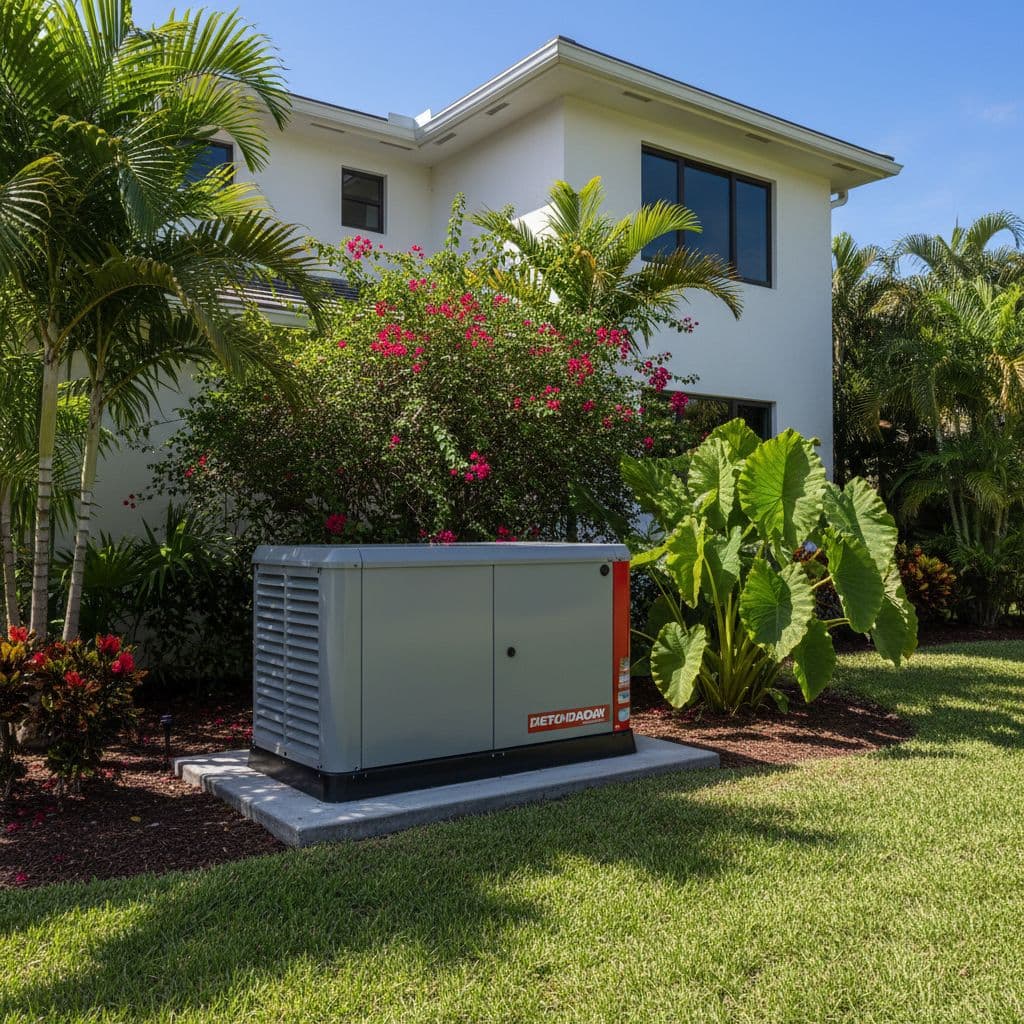
If you call in late spring or early summer, add some breathing room. That is when a lot of Southwest Florida homeowners start thinking about backup power, and schedules tighten fast.
The part that takes time is usually the waiting, not the install day itself.
I have found that this is the biggest surprise for homeowners. They expect a long construction project, but what they get is a short install window wrapped inside a longer approval and scheduling process. Ultimately, this patience pays off when your home is secured with reliable backup power for the next storm season.
Why the prep work takes longer than most people expect
Why does a job that may take a day or two on site still take weeks overall? Because a standby generator is part appliance, part electrical project, and part fuel project.
The first step is the site assessment. A professional must evaluate your electrical panel, major loads, air conditioning, fuel options, setback rules, and the optimal location for the unit. Calculating your specific energy requirements is essential. Too small, and you will be forced to choose which appliances stay on during an outage. Too large, and you are paying for capacity you simply do not need.
Then comes the system design, which is a vital part of a professional turnkey installation. This phase includes the transfer switch, wiring path, and fuel plan. If you choose a natural gas generator, meter capacity may need a closer look. If your home uses a propane fuel source, tank location and line routing can significantly affect the schedule.
I tell people to think of it like adding a small utility system beside the house, not like buying a refrigerator. That is why whole house generator installation takes planning before it takes labor.
Florida homes add a few more details. Flood prone lots, tight side yards, screened enclosures, and landscaping can all affect placement. Some neighborhoods also have HOA rules about visibility or equipment location. None of that kills a project, but each item can add another step to your path toward reliable backup power.
This is also where whole house systems separate themselves from a portable generator. A portable generator is cheaper and more flexible, but it requires manual setup, constant refueling, and usually powers only selected appliances. A standby unit is automatic, quieter, permanently connected, and built to carry much more of the house. That convenience is why the prep work is worth it.
What slows down generator installation in Florida
If a project slips past the eight-week mark, the cause is usually not the generator itself. It is one of the pieces around it.
Permits are the biggest factor. Florida counties and cities do not all move at the same speed, and navigating local building codes can be complex. Electrical permits, fuel permits, and final inspections all run on local schedules. If you are trying to understand where time can disappear, the permitting and inspections process is often where it happens.
Fuel work can also stretch a timeline. A propane line may need trenching, or a natural gas setup may need coordination with the utility. If your electrical system needs upgrades to handle the load, that adds another layer of complexity.
Then there is seasonal demand. In the interest of hurricane preparedness, many homeowners wait until the last minute to call. After a named storm or a major outage, everyone wants a generator at once. Lead times grow, inspections back up, and the clean six-week schedule starts to drift. While our team has extensive experience with commercial generator installation, we find that residential projects require the same level of precision and planning. Relying on central florida electricians who understand the region ensures that your installation avoids these common bottlenecks.
Southwest Florida has its own quirks, too. Summer rain can slow site work, and tight lots in Cape Coral or Naples can make access harder. Older homes in Fort Myers or Lehigh Acres may need panel work before the generator can be tied in safely.
I have also seen smaller issues create bigger delays than people expect. A gate that will not allow equipment through, a pad location that has to be moved, or a homeowner still deciding between natural gas and propane after permits are ready to file. Small choices matter when the schedule is tight.
The good news is that most delays are predictable. A good installer will talk about them early, not after the calendar slips.
What installation day usually looks like
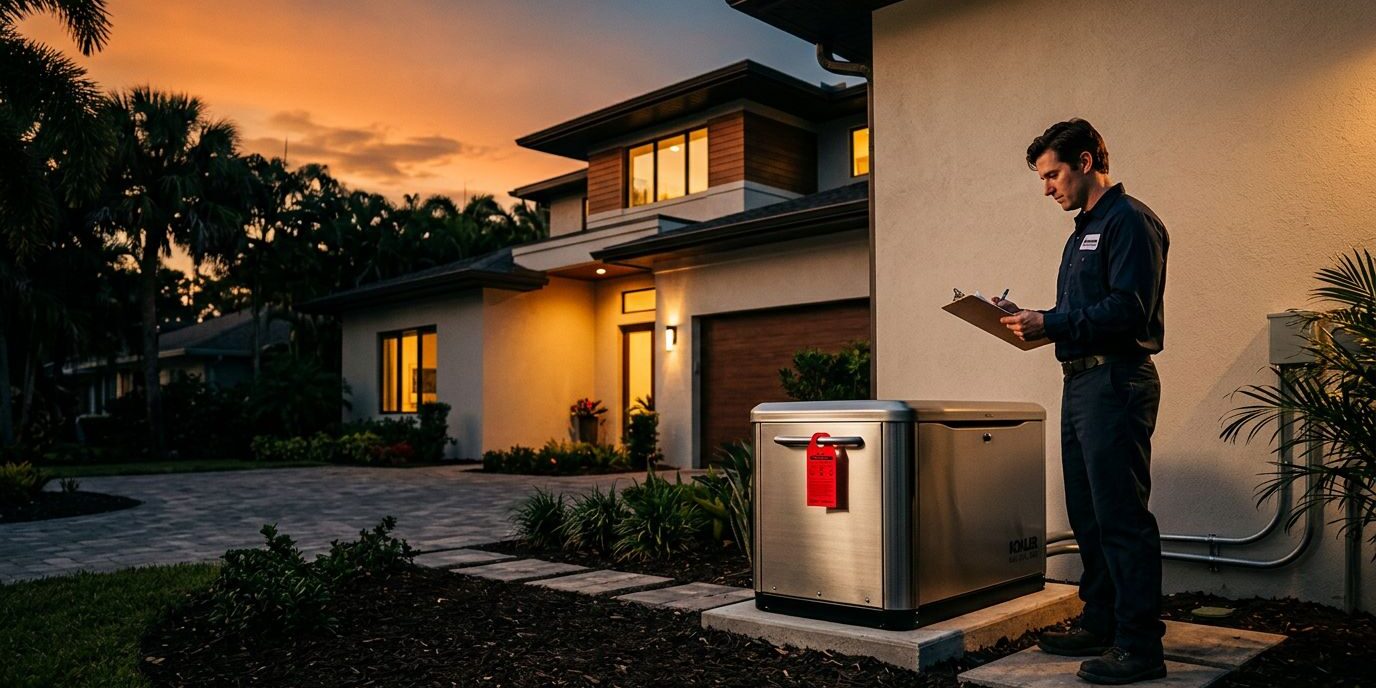
Once the paperwork and scheduling are finished, the physical standby generator installation moves quickly. For most Florida homeowners, the crew can complete the primary residential generator installation in 1 to 2 days.
The generator is set on its pre-cast pad, and the transfer switch installation is performed to ensure a seamless connection to your home circuitry. Electricians then tie the system into the electrical panel, while technicians complete the necessary gas or propane piping. Finally, the unit is started, tested, and checked under load to ensure everything is ready for a power outage emergency.
If the site conditions are simple and the prep work is already finished, the entire process can occur in a single day. If the job requires extensive trenching, electrical panel upgrades, or a complex fuel run, the work may spill into a second day. The final municipal inspection usually follows shortly after, depending on the local building department schedule.
This is also the ideal time to discuss the life of your unit. A standby generator should not sit untouched for years, which is why consistent backup generator maintenance is essential. You should also verify if your provider is an authorized Generac dealer, as they often have the specialized training required for high-quality maintenance and repair. Many modern systems now connect to an app and send alerts by text or email, so you know the unit is running its automated self-tests without having to check it manually.
Do not forget to ask about extended warranty coverage, which can provide additional peace of mind for your investment. That reliability becomes vital when the next storm approaches. When a system starts on its own and carries the house through a storm, that is not just a luxury; it is a massive relief.
The best feedback I see from local homeowners always focuses on the same points: the team showed up, answered questions, priced the job honestly, and responded quickly when the system required attention.
How I’d keep the project moving if I were starting today
If I wanted the shortest timeline possible, I wouldn’t wait for the first storm track to show up in the Gulf. I would start well before the rush to ensure my home has reliable backup power.
A few moves help more than people think:
- Pick your fuel source early.
- Be ready to choose a generator size after the home assessment.
- Clear up HOA questions before permits are filed.
- Ask whether your panel or fuel setup needs extra work.
I would also ask one blunt question up front: “What part of this timeline is most likely to slow down my job?” A straight answer there can save a lot of frustration later. When choosing a provider, look for a certified Generac dealer that handles the entire process. Opting for a turnkey installation means you are getting a licensed electrician and factory trained technicians who know exactly how to integrate your system safely and efficiently.
If you are trying to get ahead of storm season, the smartest next step is to request free generator estimates and schedule a consultation while schedules still have room. A real site visit gives you a real timeline. Anything else is just guesswork.
Frequently Asked Questions
Why does it take so long to get a generator installed if the physical work only takes two days?
The actual installation is a small fraction of the project because a whole-home generator is a complex utility system. Before a wrench even turns, your contractor must handle energy load calculations, site design, utility coordination, and the permitting process with local building departments.
Can I install a generator during hurricane season?
You can, but it is highly recommended to start the process well before the season begins. As demand spikes due to approaching storms, supply chains tighten and local inspection offices become busier, which can lead to significant delays in your project timeline.
Do I need to be home for the entire installation process?
For the majority of the weeks spent on planning and permitting, you do not need to be home. However, you should plan to be available or have someone present on the 1 to 2 days the crew is physically installing the equipment to provide access to your electrical panel and property.
What are the most common factors that delay an installation?
Permitting and local government inspection schedules are the most frequent causes of project delays. Additionally, unforeseen site issues like needing an electrical panel upgrade or complex fuel line trenching can add time to the job.
Final thoughts
The biggest thing to remember is simple: installation day is short, but the full project timeline is not. In Florida, the calendar is driven by permits, fuel planning, inspections, and seasonal demand. If you start early, most whole home generator jobs move on a normal 6 to 8 week track. If you wait until everyone else is thinking about outages, you are not buying the same timeline anymore.
Planning ahead ensures you have reliable backup power long before the next storm hits. Securing your backup power is just the first step, however. Once your system is operational, staying on top of backup generator maintenance is essential for longevity. By prioritizing consistent maintenance and repair, you ensure your investment remains ready to perform whenever you need it most.