


When the power drops in August, you don’t care about brochure language. You care about cold air, a working fridge, and whether your generator can keep going through a long, ugly outage.
That is why choosing between air cooled vs liquid cooled generators is not just a small technical decision. For Southwest Florida homeowners, it is the difference between backup power that fits your house and one that leaves you wishing you had sized up.
Key Takeaways
- Cooling Mechanics: The primary difference lies in heat management; air-cooled units use fans, while liquid-cooled systems use a radiator and coolant to regulate temperature for heavy-duty performance.
- Sizing Matters: Air-cooled generators are typically more compact and cost-effective for average homes, whereas liquid-cooled units are designed for larger properties with higher electrical demands.
- Operational Demands: Liquid-cooled models are superior for extended runtimes and larger loads, such as multiple AC units or pool equipment, which are common in Florida’s climate.
- Professional Installation: Regardless of the cooling type, proper sizing through a professional load calculation and expert installation is essential for reliability during long hurricane outages.
What changes between air-cooled and liquid-cooled units
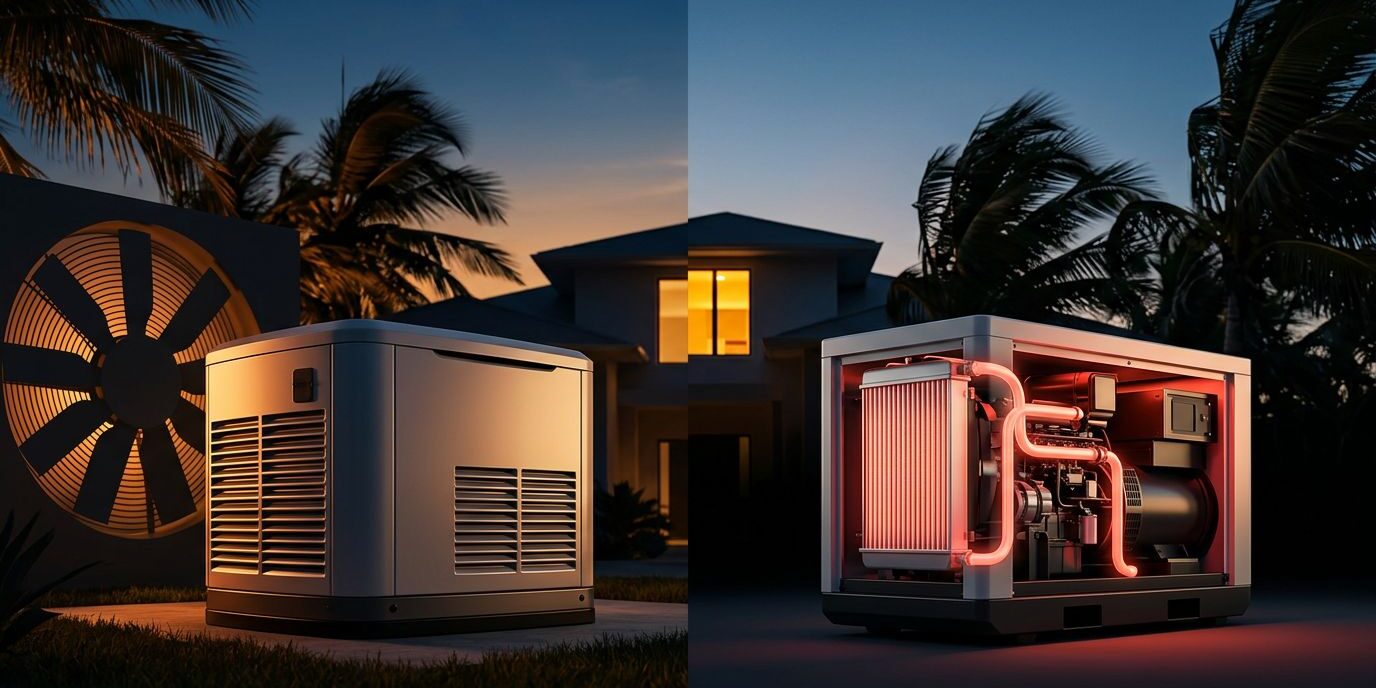
The biggest difference is right in the name. An air-cooled generator relies on a cooling fan to move air across the engine block, effectively dissipating heat to keep the system running. In contrast, a liquid-cooled generator uses a sophisticated radiator and coolant mixture to regulate heat, similar to the cooling system found in a modern vehicle. This choice of cooling system is critical for maintaining a safe operating temperature, which directly influences the longevity and efficiency of the equipment.
That one design choice affects a lot. It changes how much power the unit can deliver, how well it handles long run times, how large the enclosure is, and what you can expect to pay upfront. In simple terms, air-cooled models are often the smaller, simpler, and less expensive option. Liquid-cooled models are usually built for heavier electrical loads and longer stretches of operation.
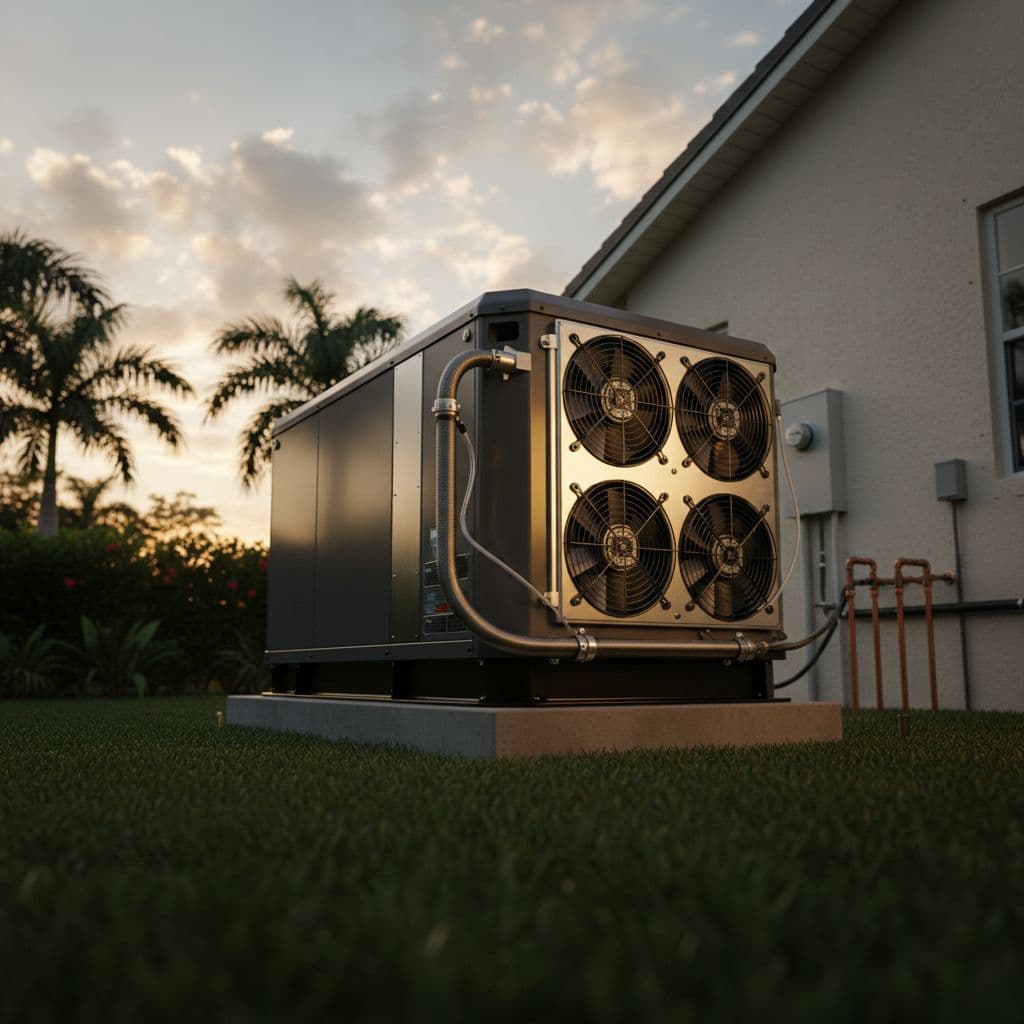
Here is a quick side-by-side view.
| Feature | Air-cooled | Liquid-cooled |
|---|---|---|
| Best fit | Average-size homes | Large homes with high demand |
| Typical footprint | Compact and smaller | Larger and more robust |
| Noise levels | Noticeable under load | Generally quieter and smoother |
| Initial purchase price | More affordable | Significant investment |
| Maintenance costs | Lower and straightforward | Higher due to coolant checks |
| Long outages | Reliable for standard use | Better for extended run time |
The table provides a clear comparison, but the real answer depends on your specific household needs. While both types are designed to restore power, the engine temperature is managed quite differently in each model. Air-cooled units are perfect for moderate electrical demands, while liquid-cooled systems excel when managing a high engine temperature over many consecutive days of operation.
A generator is not “better” because it is bigger. It is better when it matches your actual electrical load and your typical outage pattern.
Why air-cooled generators make sense for many homes
For a lot of homeowners, choosing an air cooled generator is the smart move. An air cooled generator handles the daily essentials, does not take over the yard, and usually keeps the total project cost in a more comfortable range. These units are common in residential applications, where standby generators are often the most popular choice for standard homes. For many, an air cooled generator like a reliable 22kW model provides sufficient power capacity to keep a household running during an outage.
These units are ideal for whole-home backup systems because they cover what many families need most, including the starting watts required to cycle refrigerators, lighting, internet, and a few key circuits. Depending on load calculations and the specific unit size, they can often support one central air conditioner. Many whole-house standby systems also run on natural gas or propane, which is a major advantage over portable generators that need manual setup and frequent refueling.
Air-cooled models also tend to be easier to place around the property. That is useful in tighter Southwest Florida lots where clearances and local code matter. Their smaller size can make installation less complicated, though this is never a DIY job. Standby systems need proper electrical work, fuel connections, permits, and transfer equipment.
There is another reason people like them. They do the job without requiring a commercial-grade budget. If your goal is solid backup power for a normal single-family home, an air-cooled unit often lands right in the sweet spot.
That said, whole house can be a slippery phrase. Some homes truly mean the entire property, while others mean the items that matter most during an outage. If you are running one AC, kitchen appliances, lighting, and a few bedroom circuits, an air-cooled unit might be plenty. If you expect every circuit, every room, and every extra comfort item to stay on, the math changes fast.
When liquid-cooled is worth the extra cost
A liquid cooled generator requires a higher initial investment, so it is not always the necessary solution for every property. However, when a home has significant electrical demand, these units become the premium choice for our demanding hot climates.
Think about houses with multiple air conditioning systems, pool equipment, elevators, well pumps, or essential medical devices that cannot afford downtime. When you add a long outage following a hurricane, you are placing immense stress on your backup power system. A liquid cooled generator is built to carry these larger loads for longer stretches.
The primary advantage lies in the cooling system. Because the radiator effectively manages the engine temperature during long, intense runs, these units maintain better consistency than their air cooled counterparts. Furthermore, a high-quality liquid cooled generator often runs at a steady 1800 rpm. This lower engine speed contributes to lower noise levels and decibels, making them a quieter option if the machine must be placed near bedrooms, patios, or property lines.
Combined with a larger engine size, these features result in the superior reliability and performance often expected from high-end standby generators. This is where the air cooled vs liquid cooled generators debate becomes practical rather than theoretical. You are not just picking a category, but selecting the specific machine capable of powering your entire home when the utility grid fails.
If you are still choosing the right whole home generator, start with a professional load calculation rather than an estimate based on square footage.
What Southwest Florida adds to the decision
Southwest Florida changes the conversation. A generator in this region is not merely sitting by for occasional winter blips. It must stand ready through hurricane season, relentless humidity, high heat, and outages that can drag on for days. Florida’s high heat affects standby generator performance, making effective heat dissipation critical to ensure your system continues running without shutting down when you need it most.
That does not mean every home requires a liquid cooled generator. It means runtime and reliability matter more here than in other parts of the country. If your home loses power for a few hours at a time, an air-cooled system may be perfect. However, if your neighborhood is prone to extended outages and your home has larger electrical demands, liquid cooling becomes a practical necessity. While many residential standby generators rely on natural gas or propane, some larger industrial-grade units may utilize a diesel engine for increased power output.
Fuel planning remains a key component of your backup power strategy. Permanently installed standby generators provide superior fuel efficiency and convenience compared to portable units, which require manual setup and frequent refueling. Natural gas offers a continuous supply where available, while propane works well provided your tank size matches your expected runtime.
Remote monitoring is another feature that provides essential peace of mind. Many modern systems can self-test weekly and send updates through a smartphone app. This ensures you know the unit exercised properly, allowing you to address maintenance before a storm arrives. While portable generators still have their place, they only power selected items. For most homeowners focused on long-term hurricane preparedness, a permanently installed system offers a superior level of protection.
Don’t ignore installation, maintenance, and support
Cooling style matters, but it is not the whole story. A well-installed air-cooled generator will outperform a poorly planned liquid-cooled unit every time.
Sizing, placement, and the transfer switch are critical, but you must also factor in long-term installation costs and recurring maintenance costs. Liquid-cooled units feature a sophisticated closed-loop cooling system similar to heavy-duty industrial units, which requires more specialized service and frequent monitoring compared to simpler air-cooled models. Your cooling system is a vital component that demands consistent attention to ensure longevity, especially in our humid climate.
This is where a local partner earns its keep. SWFL Generator does not just sell boxes with engines in them. The company handles installation, service, maintenance, and repairs across Southwest Florida. That matters because standby generators are not one-day purchases. They are ongoing systems that require professional oversight.
Customer feedback tells the same story. Homeowners have praised quick response times, honest recommendations, and technicians who solved problems after others could not. Some reviews mention standby generators that performed exactly as expected during Hurricane Ian, which is the kind of test no brochure can fake. Others point to weekly self-tests through a mobile app, which gave them confidence the unit was ready before the next storm arrived.
If long-term support matters to you, it makes sense to work with Southwest Florida generator maintenance experts who already understand local conditions and complex standby systems.
And if you are weighing your options now, Get a Free Consultation before picking a size or a cooling type based on guesswork.
Frequently Asked Questions
Can an air-cooled generator handle a multi-day power outage?
Yes, air-cooled generators are reliable for extended use if they are sized correctly for your home’s electrical load. However, they are generally designed for moderate use, so they may require more careful monitoring during extremely long outages compared to liquid-cooled units.
Why does Florida’s climate affect my generator choice?
Florida’s high heat and humidity put extra stress on a generator’s engine, making heat dissipation critical. If your home has high power demands, a liquid-cooled system helps maintain a consistent engine temperature, which reduces the risk of shutdown during multi-day storm recovery.
Is it always better to buy a liquid-cooled generator for more power?
Not necessarily, as a generator is only as good as its match to your home’s actual electrical needs. Buying a larger liquid-cooled unit than your home requires will lead to higher initial costs and increased maintenance expenses without providing a proportional benefit in performance.
Conclusion
The right choice comes down to one question: how hard will your generator need to work when the outage drags on?
For many residential properties, an air cooled generator is a sufficient and cost effective solution. However, for larger homes that require longer runtimes and support for heavier electrical loads, a liquid cooled generator often earns the extra investment.
When the lights go out, the winner is not simply the unit with the most impressive specifications. The best choice is the one sized correctly for your home, providing the ideal power capacity and the long-term reliability and performance needed to keep your household running when you need it most.