


A reliable backup power system can save your food, keep your air conditioning running, and preserve your peace of mind during a major power outage. However, the specific whole house generator location you choose for your Florida property matters just as much as the quality of the unit itself.
Selecting the ideal spot for your standby generator is critical. If you place the equipment in the wrong area, you invite flood damage, exhaust circulation issues, noise complaints, and routine service headaches. Conversely, when you carefully plan the installation, your generator remains safer, cleaner, and ready to perform whenever the weather turns unpredictable.
Key Takeaways
- Prioritize Safety Clearances: Always position your generator at least 5 feet from windows, doors, and air intakes to prevent dangerous carbon monoxide buildup, while adhering to all local fire codes and NFPA 37 standards.
- Avoid Flood and Debris Zones: Select a site that is naturally elevated above potential flood waters and clear of low-hanging tree limbs or areas prone to heavy storm runoff.
- Ensure Service Accessibility: Choose a location with enough surrounding clearance for technicians to perform routine maintenance, as restricted access can complicate repairs and increase long-term service costs.
- Optimize for Airflow: Avoid enclosed spaces like garages or tightly fenced corners, as these environments trap heat and prevent the engine from cooling properly during operation.
Start with a spot that is outside, level, and easy to reach
The best location for a whole house generator is rarely the first empty patch of yard you notice. In most Florida homes, the ideal generator placement involves a side yard with good airflow, solid drainage, and enough room for technicians to perform routine service.
A standby generator is not like a portable unit you wheel out when the power fails. It is permanently installed, tied into your fuel source, and connected through an automatic transfer switch to start the system whenever the grid goes down. Because this is a permanent addition, the setup requires careful planning.
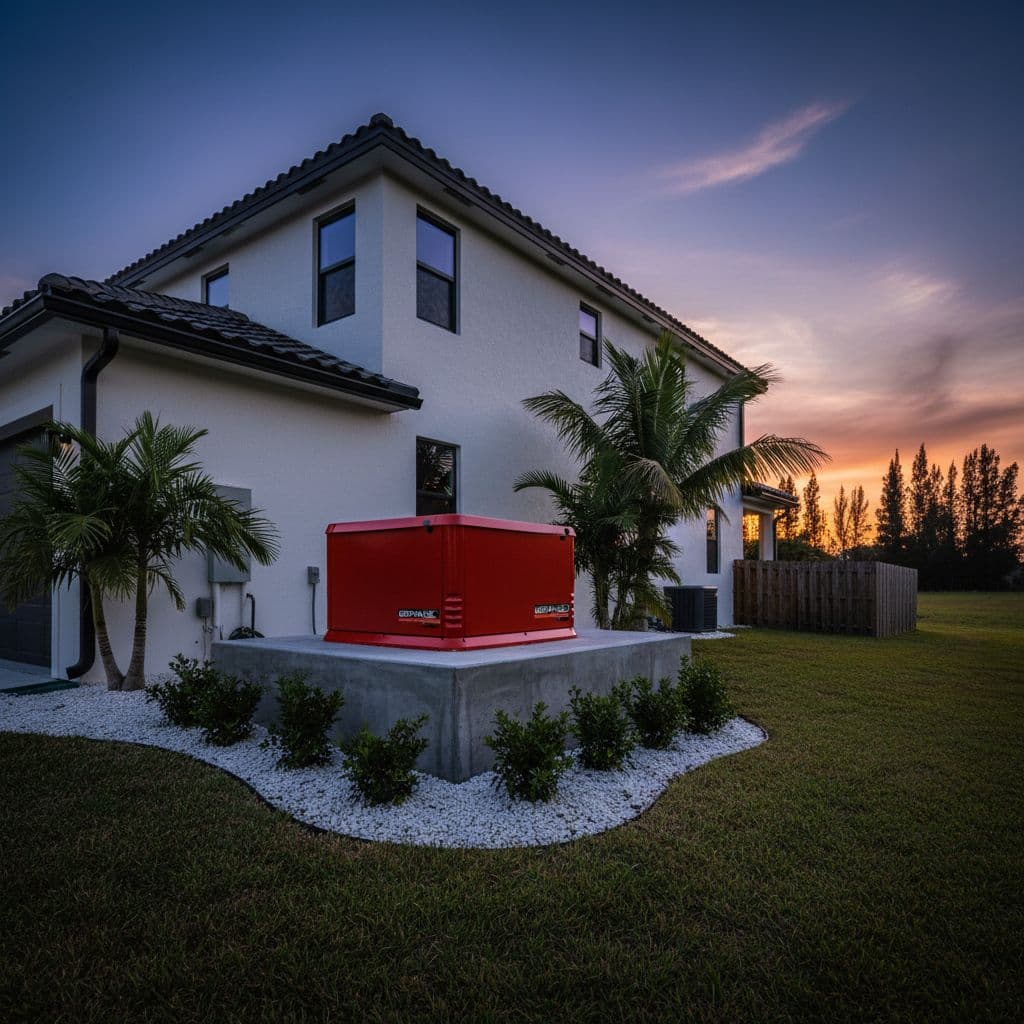
A good whole house generator location usually starts with a level concrete pad, open airflow, and enough room around the unit.
Most homes work best with the generator mounted on a level concrete pad beside the house. Avoid tucking the unit into a garage or a tight, enclosed corner. Garages are strictly off limits for standby generator operation because exhaust gases contain carbon monoxide, and enclosed spaces can lead to dangerous heat buildup. To improve drainage around the base, some homeowners opt to install pea gravel around the perimeter of the pad.
The right spot must also be practical for the installation process. By placing the unit relatively close to your home’s electric meter, you can often keep your total installation costs lower due to shorter cable runs. If the generator sits too far from the home’s service area, the project becomes more expensive, and if it is squeezed too close to other equipment, future repairs become difficult.
A simple comparison helps:
| Common location | Why it may work | What can go wrong |
|---|---|---|
| Side yard near utilities | Shorter runs for gas and electrical, easier service | Must meet clearance rules |
| Rear corner of the lot | Less visible from the street | Often wetter, harder to access |
| Near the garage exterior wall | Convenient for wiring | Watch doors, vents, and walkways |
| Under trees | Shade and concealment | Falling limbs, leaves, storm debris |
The takeaway is simple. The best spot is not the most hidden one; it is the location that stays dry, allows air to circulate, and gives technicians enough room to work.
Before you begin, it is wise to have a professional installer conduct a site survey. This ensures that all generator site requirements are met and helps you avoid costly rework later. That is one reason many homeowners begin with professional whole house generator installation planning instead of trying to choose a location on their own.
Follow safety clearances for exhaust, airflow, and noise
If generator placement were only about convenience, this would be easy. However, Florida homes have specific safety challenges that dictate where you can place your unit. Ensuring your setup meets all clearance requirements is the most critical step in the installation process.
A standby generator must exhaust fumes safely away from the house. To prevent carbon monoxide buildup and ensure proper ventilation, you must stay clear of all doors, operable windows, soffit vents, and air intakes. The Florida residential standby generator code is strict, and you should also align your installation with NFPA 37 standards and local fire codes to ensure full compliance. In many residential settings, a unit must be kept at least 5 feet away from windows and doors. If the unit is fire-rated, it may be placed 18 inches from the home’s exterior wall, but you should always verify these distances against your local building codes and the manufacturer’s specific instructions.
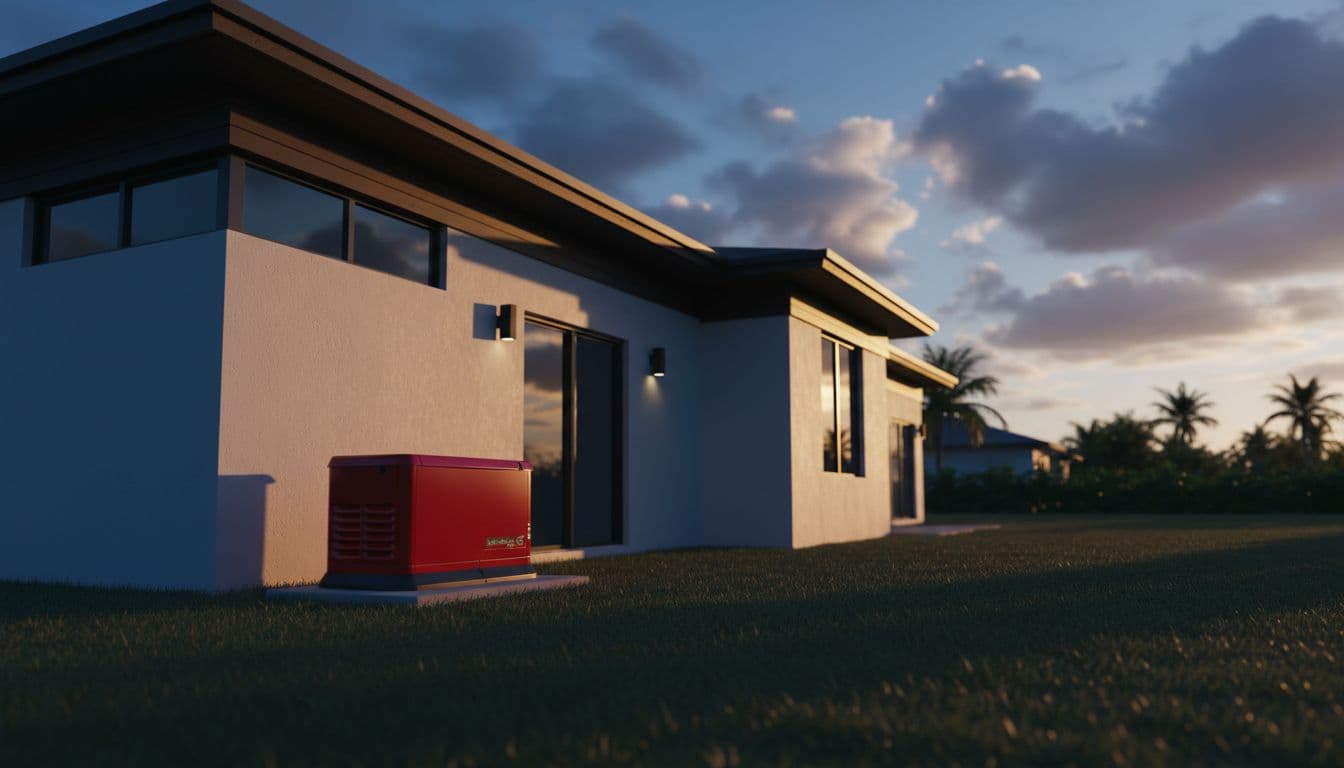
You also want the exhaust pointed away from living areas. A unit placed directly outside a bedroom window or beneath a frequently used patio can turn a valuable backup power source into a constant annoyance.
If the generator cannot breathe freely, it is in the wrong spot.
Airflow is essential for both performance and cooling. A unit jammed behind dense shrubs, fencing, pool equipment, or trash bins may run hotter and collect excessive debris. It may also become difficult to inspect before the start of the storm season. Florida humidity is taxing enough on machinery without trapping additional heat around the generator housing.
Noise is another major factor in your planning. While whole-house generators are generally quieter than portable models due to insulated enclosures, they are not silent. Try to avoid spots directly outside bedroom walls, narrow side alleys that cause sound to echo, or locations positioned close to a neighbor’s outdoor living space.
Finally, do not forget the internal safety net. Install carbon monoxide detectors inside the home, particularly near all sleeping areas. A safe generator location outside is your first layer of protection, but indoor alarms serve as a vital backup.
In Florida, floodwater and storm debris should shape the final choice
A generator can be perfectly placed for wiring and still be wrong for Florida weather. That is why seeking high ground matters when planning your installation.
Southwest Florida lots can look flat and harmless right up until a tropical system dumps water for hours. The best whole house generator location is never a low pocket where rainwater settles. It should sit above standing water risk, away from swales, and clear of roof runoff that pours off one corner of the house.
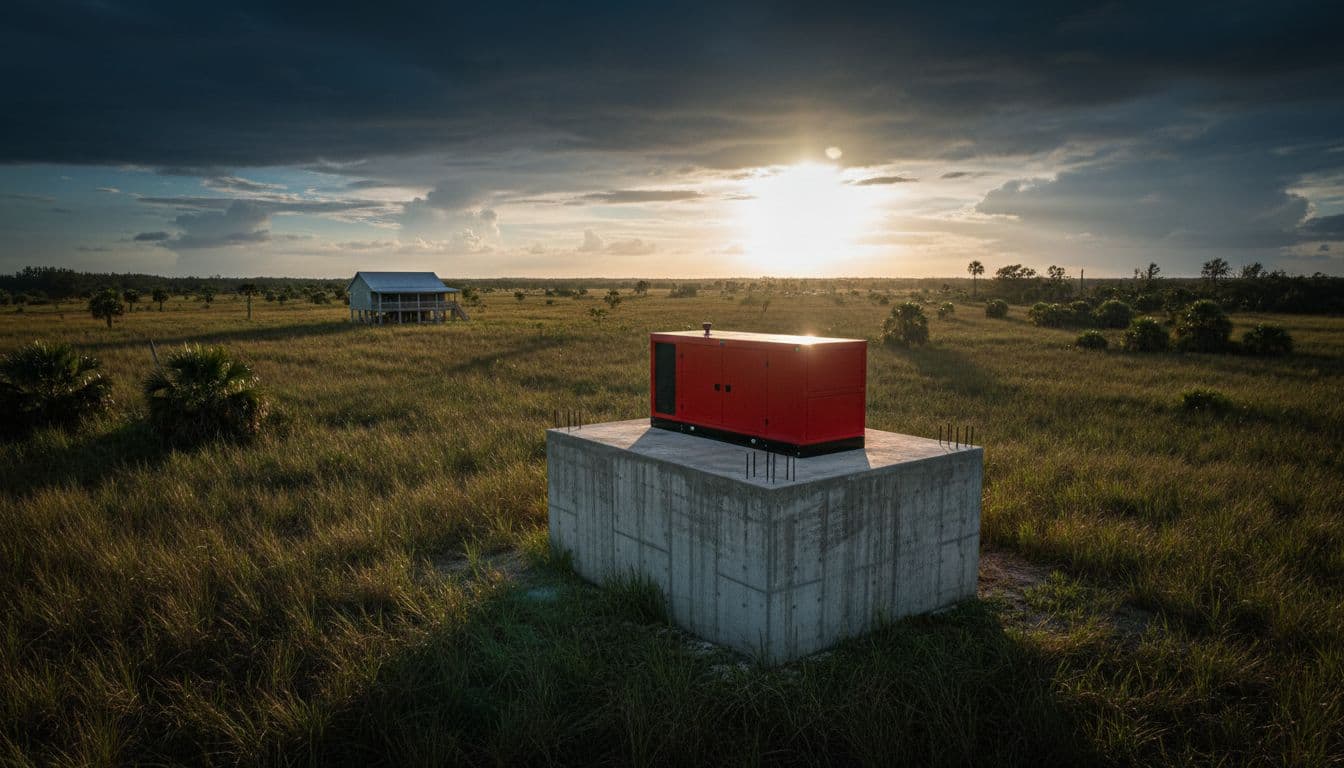
For some homes, that means an elevated pad. In flood-prone areas, the unit and parts of the electrical system may need to sit above expected flood levels to ensure your standby generator remains operational when utility power fails. Navigating the permit process is a critical part of this, as local building departments often require specific drawings and elevation certifications to ensure compliance with flood zones. The Bay County generator submittal checklist provides a clear look at the documentation Florida jurisdictions typically require to keep your system safe.
Storm debris is the other half of the problem. A back corner beneath a large oak may look protected, but it can become a target for branches, leaves, and wind-driven junk. Keep the unit away from areas where heavy limbs can fall or where a fence panel could blow into it during a hurricane.
Salt air and coastal rain also reward smart placement. A generator should be exposed enough for proper airflow, but not sitting where sprinklers soak it or where runoff keeps the pad wet. Think of it like parking a car. You want it sheltered from the worst abuse, but not stuffed into a space where it cannot function when you need it most.
If a location floods after a hard summer storm, it is not the right location for hurricane season.
Think about service access, fuel routing, and real day-to-day use
A generator is not a set-it-and-forget-it box. It requires routine testing and care, which means proper maintenance access should be part of your location decision from day one.
The easiest installations to live with are the ones that leave ample room around the unit for a technician to open panels, test connections, and inspect the internal components without climbing over landscaping. A location may look neat on installation day but prove difficult two years later when batteries, filters, or other parts need professional attention.
That is where local expertise is vital. In Southwest Florida, quality installations require careful coordination with electricians, fuel providers, and inspectors. Homeowners tend to value projects that stayed clean and performed reliably during storms. They also appreciate units that continued running through long outages, including those following Hurricane Ian, because the placement and setup were handled correctly from the start.
Your fuel source affects placement more than most people expect. Whether you are connecting to a natural gas line or setting up a dedicated propane supply, these lines must be installed safely and in accordance with local codes. Furthermore, the transfer switch must be properly integrated into your home electrical system, and the installation of a grounding rod is essential for complete electrical safety. You should never attempt to bypass these requirements with improvised hookups. A permanently installed standby generator is the superior choice because it is engineered for your home actual load and starts automatically when power drops.
Modern systems can run weekly self-tests and send alerts through remote monitoring, which provides peace of mind. However, technology does not replace physical upkeep. Your system still requires regular inspection and generator maintenance and repair services if you want to ensure it is ready for the next major storm.
If you want an expert to evaluate your lot, utility placement, and flood exposure before any concrete is poured, Get a Free Consultation. A short site visit now is far more cost-effective than moving a heavy pad later.
Frequently Asked Questions
Can I install my whole house generator inside my garage for protection?
No, you should never install a standby generator inside a garage or any enclosed structure. These units produce carbon monoxide, a deadly gas that must be vented into an open, outdoor space to prevent accumulation inside your home.
How far away from my home does the generator need to be?
While specific requirements can vary by municipality, most codes mandate a minimum distance of at least 5 feet from any operable windows, doors, or ventilation intakes. Always check with your local building department or a professional installer to ensure your specific site plan complies with current fire safety regulations.
Why is a concrete pad recommended instead of just placing the generator on the ground?
A level concrete pad provides a stable, uniform foundation that prevents the generator from shifting, settling, or sinking into soft soil over time. Raising the unit slightly off the ground also helps protect internal electrical components from minor surface-level flooding and debris.
Does the location of my gas and electric utilities affect where the generator goes?
Yes, the proximity to your utility meters is a major factor in installation costs. Placing the generator relatively close to your existing electrical panel and fuel lines minimizes the length of cable and piping required, which can significantly reduce the total labor and material expenses for your project.
Final Thoughts
The ideal whole house generator location in Florida is outside, elevated above flood risk, clear of windows and vents, and easily accessible for regular maintenance. While this answer seems straightforward, every property presents unique challenges that require careful consideration.
A smart installation protects your home in two ways. It ensures you have a reliable standby generator ready when the grid fails, and it keeps the unit safe when severe weather strikes. By strictly following local generator site requirements, you gain the peace of mind that your equipment is positioned for maximum performance and longevity.
When a major storm appears on the map, you do not want to worry if your system is in the wrong spot. You want the confidence of knowing your home is prepared to weather any power outage safely and effectively.