


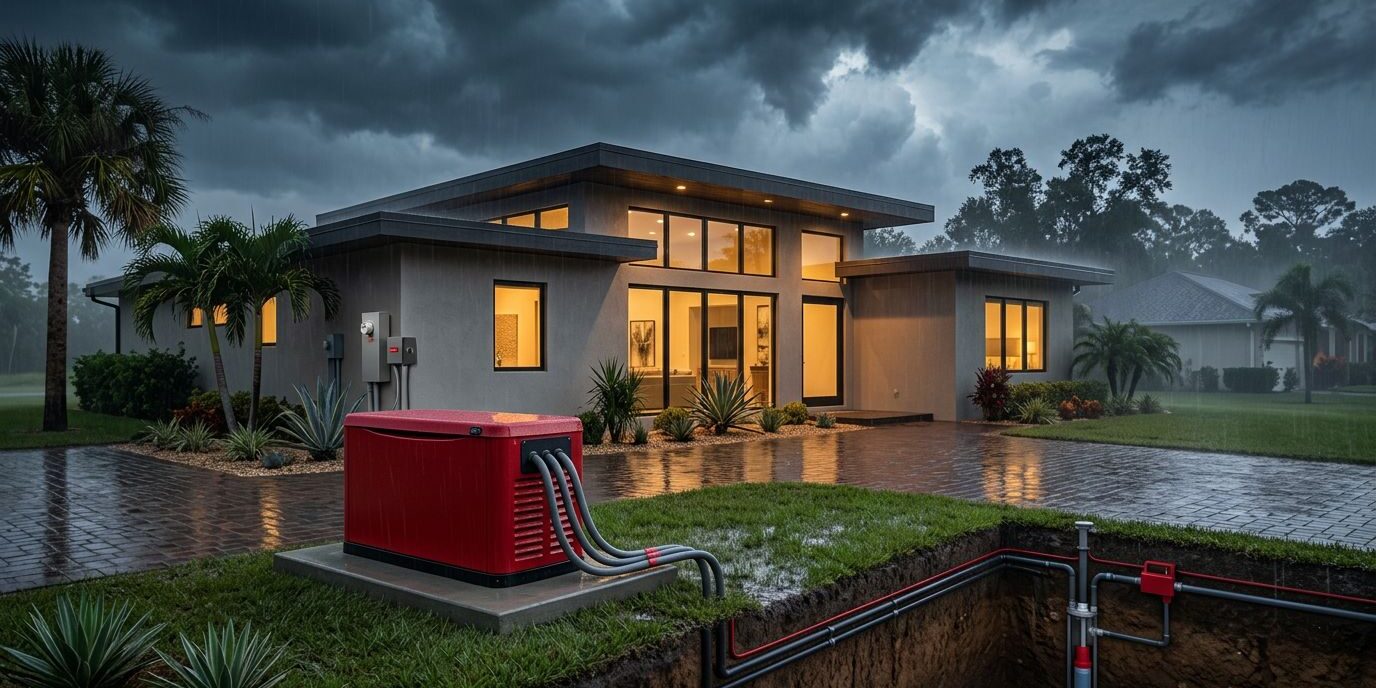
A power outage can leave your home without a reliable water supply even when the lights and refrigerator still have power. Can a whole-house generator run a well pump? Yes, but a proper generator well pump setup must account for voltage, motor startup demand, and the other appliances operating during an outage.
This matters in Southwest Florida, where hurricanes and grid failures can create long interruptions that threaten your submersible well pump. A properly sized standby generator provides the necessary backup power to keep your water pressure, refrigeration, air conditioning, and essential systems running smoothly. The right approach starts with the pump nameplate and a professional electrical load calculation.
Key Takeaways
- A whole-house generator can run most residential systems, including a submersible well pump, when the equipment is properly sized.
- Starting watts matter more than the pump’s normal running watts because of the initial surge required to get the motor going.
- Many well pumps use 240 volts and need the correct generator output and a properly wired transfer switch connection.
- The generator must also handle air conditioning, refrigerators, pool equipment, and every other element of your total electrical load.
- Reliable backup power protects your home, and annual maintenance helps protect the pump and generator before hurricane season.
Generator Well Pump Sizing: What Matters Most
The proper generator sizing isn’t based only on how much electricity the well pump uses while running. Pump motors draw a short but significant starting surge when they start. That starting demand can be two to four times higher than the normal operating load.
A typical residential submersible well pump may use roughly 700 to 2,200 running watts, depending on its horsepower, depth, motor type, and voltage. A 1 HP pump often needs around 1,500 to 2,200 running watts, while its starting watts may reach 4,000 watts or more.
These figures are useful for planning, but they aren’t a substitute for the pump’s actual specifications. Check the motor nameplate for:
- Voltage, often 115 or 230 volts
- Full-load amperage
- Locked rotor amps
- Horsepower rating
- Service factor
- Recommended circuit breaker size
If the nameplate lists volts and amps but not running watts, multiply volts by amps to estimate energy use. Whether you draw from a deep well or a standard setup, the equipment must then have enough surge capacity to handle the motor surge without causing a harmful voltage drop.
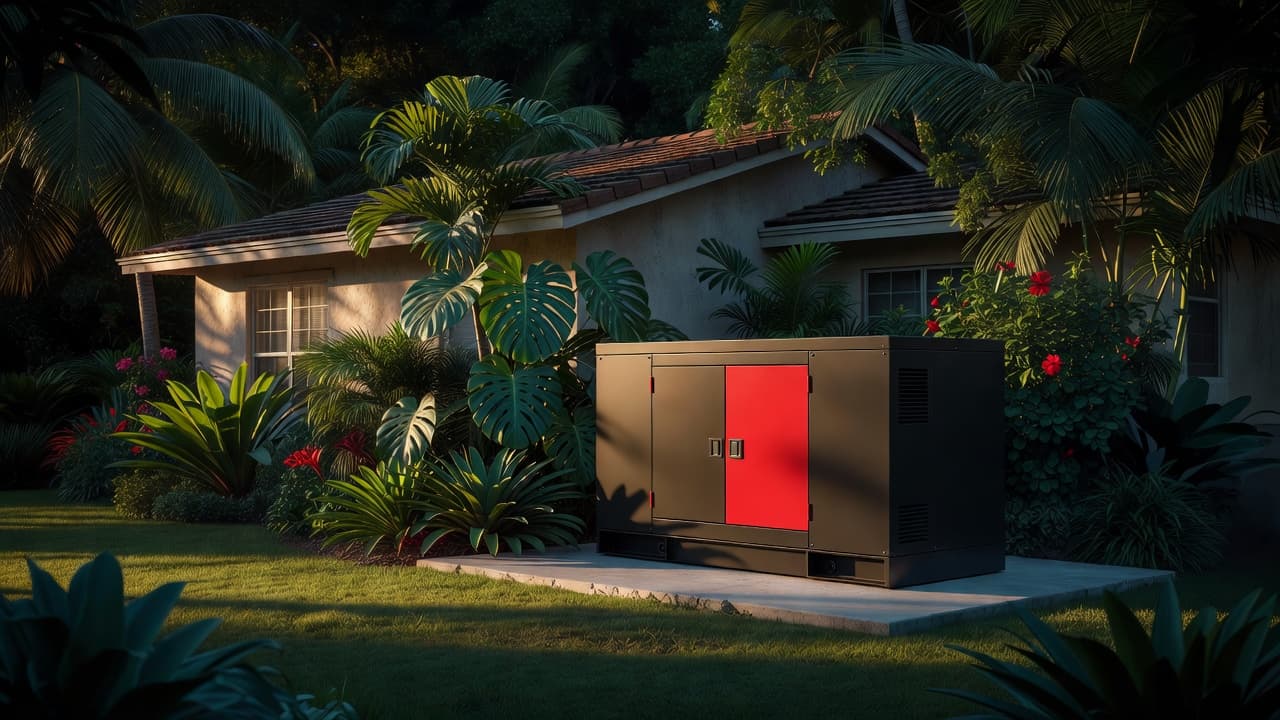
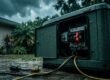
A standby generator beside a Florida home can support well water, cooling, and other essential electrical loads when paired with a properly sized pressure tank and power system.
We recommend reviewing a whole house generator sizing guide before choosing equipment. The calculation should include the well pump, not add it as an afterthought.
A generator that handles the pump by itself may still struggle when the air conditioner starts at the same time. That is why the complete home load matters.
Why Well Pump Starting Watts Matter
Running watts are the power a pump uses after the motor reaches normal speed. Starting watts are the extra power needed for the first moments of operation. This brief starting surge is where many undersized systems fail, especially when trying to maintain steady water pressure during a power outage.
A pump may appear to be a small electrical load because it runs only when water pressure drops. However, it can start several times during an hour when showers, toilets, irrigation, or appliances use water. Each motor surge creates another demand on the generator.
Whether you are running a surface jet pump or a deep submersible well pump, the electrical requirements vary significantly. A 1/2 HP pump may operate near 900 running watts but require approximately 2,000 to 4,000 starting watts. A 3/4 HP pump may run near 1,500 watts and require a higher starting surge. A 1 HP motor can place an even greater demand on the system.
A published well pump generator sizing guide also shows why horsepower alone doesn’t provide a complete answer. Pump voltage, amperage, wiring, and other connected loads affect the final generator recommendation.
A proper load calculation looks at two separate questions:
- Can the generator start the largest motor load?
- Can it continue running that load while supporting the rest of the home?
The answer must be yes to both. If the generator starts but voltage falls when the pump or air conditioner engages, the pump may fail to build pressure. Repeated hard starts can also put unnecessary stress on the pump motor, control box components like a Franklin Electric setup, and the generator engine.
Some systems use load management to delay selected appliances. That can help prevent several high-demand motors from starting together. It doesn’t replace correct sizing, but it can improve performance when the home’s total load is close to the generator’s capacity.
What a Proper Installation Must Include
A whole-house generator doesn’t connect to a well pump through extension cords. Instead, a licensed electrical professional installs a transfer switch or an interlock kit that safely routes generator power to the electrical panel without relying on temporary extension cords.
This setup protects utility workers, prevents dangerous backfeed, and stops the hazards of an accidental backfeed during an outage. It also allows the generator to start automatically when the utility power fails, and once power returns, the transfer switch moves the home back to utility service and places the generator into its standby cycle. When using a portable generator for backup power, a dedicated interlock kit linked to the main electrical panel ensures safe operation.
The installation must confirm that the generator can provide the well pump’s voltage. Many residential well pumps operate at 230 or 240 volts. A generator may have enough total wattage, but a portable generator still requires the right circuit breaker and configuration to handle a heavy generator well pump circuit. Each circuit breaker must match the electrical draw to prevent system trips.
The installation also includes:
- Correct breaker and feeder sizing
- Proper grounding and bonding
- Transfer switch compatibility
- Generator placement and exhaust clearance
- Fuel line capacity and pressure
- Local permits and inspections
- Protection from drainage and standing water
Fuel supply deserves attention in Southwest Florida. A natural gas generator may run for an extended outage, but the gas meter must support the home’s total demand. That includes the generator, water heater, range, pool heater, and other gas appliances.
Propane systems provide stored fuel, but tank capacity limits runtime. A professional installer should review the generator’s fuel requirements before installation, not after the first outage.
Our whole-house generator installation services include load planning for high-demand systems such as air conditioners and well pumps. The goal is dependable operation, not a generator that looks adequate on paper but struggles under real conditions.
Florida Conditions Can Affect Generator Performance
Southwest Florida’s heat, humidity, rain, and coastal air create additional maintenance concerns. A standby, portable generator, or inverter generator may pass a short exercise cycle and still have trouble during a long outage. Proper generator sizing is vital to ensure your equipment handles the total electrical load without failing.
High temperatures can reduce engine performance and increase the strain on electrical components. Salt air can accelerate corrosion around terminals, connectors, battery cables, and transfer equipment. Moisture and debris can also collect near air intakes and control areas, which can especially impact a portable generator running outdoors in wet weather.
The well pump has its own exposure risks. Electrical connections in the pump system, pressure switch, control box, and well head should remain protected from water intrusion. If the pump repeatedly trips a circuit breaker or loses water pressure, do not assume the generator is the cause. The pump circuit may need separate testing, particularly when an inverter generator powers the home to maintain a steady household water supply.
We also inspect the generator enclosure for nesting material, chewed insulation, loose wires, and insect debris. Rodents can damage low-voltage controls, battery cables, and sensor wiring. That damage may not appear during a short weekly test. The unit may crank normally but fail to transfer power or carry a heavy load.
A generator maintenance visit should include battery testing, charger inspection, oil and filter service, electrical connection checks, and a load test. Annual service is a practical minimum for many homeowners, with additional service after extended operation during a major storm.
Our Florida generator performance guide covers how heat, humidity, and high-demand motor loads can affect standby equipment.
How to Confirm the System Is Ready
Start with the well pump’s nameplate and the generator model information. If either is missing, a technician can identify the equipment and measure the circuit under operating conditions.
Next, review what you expect to run during an outage. In many Southwest Florida homes, the priority list includes:
- Submersible well pump and pressure tank
- One or more air conditioning systems
- Refrigerator and freezer
- Internet equipment and security systems
- Medical devices
- Lighting and selected outlets
- Pool or irrigation equipment
A whole-home generator may power every circuit, but that doesn’t mean every large appliance should start at once. Load management or a selected-load design may be appropriate for larger homes with multiple air conditioners, electric water heaters, pool systems, and deep well equipment.
Before hurricane season, confirm that the generator completes its exercise cycle without warning codes, unusual sounds, or repeated start attempts. Look for standing water, blocked ventilation, corrosion, or visible damage around the enclosure. Don’t remove covers or handle damaged wiring yourself. Automatic generators can start without warning, and internal electrical components can remain energized.
If the generator struggles to start, stalls, shows low-voltage warnings, or fails when a submersible well pump runs, schedule a professional inspection. Whether you rely on a deep well jet pump, a Franklin electric motor setup, or an inverter generator paired with an interlock kit on your electrical panel, a thorough evaluation is essential. Avoid hazardous extension cords and makeshift portable generator setups when you need a reliable, permanent backup for your water supply during any power outage.
For help reviewing your home’s generator and well pump requirements, Get a Free Consultation.
Frequently Asked Questions
Can a standard portable generator run a well pump?
Yes, a portable generator can run a well pump if it has enough starting wattage and the correct voltage configuration. However, you must connect it safely using a dedicated transfer switch or interlock kit rather than running multiple extension cords.
Why are starting watts more important than running watts for a well pump?
Pump motors require a massive initial surge of power to transition from a standstill to full operating speed. This starting surge can be two to four times higher than the normal running load, which can easily trip an undersized generator.
How do I figure out the exact generator size my well pump needs?
Check the motor nameplate on your well pump to find the voltage, full-load amperage, and horsepower ratings. A professional electrician can use these exact specifications to perform a complete load calculation that includes your well pump and other household appliances.
Conclusion
A whole-house generator can run a generator well pump when the unit has enough running and starting capacity, the voltage is compatible, and the transfer switch is installed correctly. Every electrical load, including the submersible well pump startup surge, must be factored in alongside every other major appliance in the home.
For Southwest Florida homeowners, reliable backup power during a power outage depends on more than just the generator size. Professional installation, a reliable pressure tank, adequate fuel supply, annual maintenance, and inspections for corrosion or circuit breaker damage all protect the system. When the next storm interrupts utility power, the goal is simple: the backup power starts, the water supply remains steady, and your home stays safe and functional.