


Florida heat does more than make outdoor work uncomfortable. It can reduce available generator output, increase engine temperatures, weaken batteries, and shorten the life of electrical components. For homeowners in Fort Myers, Naples, Cape Coral, and nearby communities, Florida generator performance depends on more than selecting the right kilowatt rating.
A standby generator may start properly during a cool service visit and struggle during a hot summer outage. That difference usually comes down to cooling, airflow, maintenance, and the amount of power the home is demanding from its backup power solutions. We look at each of these factors before the next storm puts the system under pressure.
Key Takeaways
- High temperatures reduce air density, which can affect engine output and fuel combustion.
- A hot enclosure, blocked airflow, or dirty radiator can cause overheating and shutdowns.
- Florida heat accelerates battery wear, oil breakdown, corrosion, and electrical connection problems.
- Proper placement, preventive maintenance, and regular testing help protect standby generator performance.
- A high-temperature alarm, rough operation, or repeated shutdown deserves professional attention.
Why Hot Air Can Reduce Generator Output
A standby generator needs air for combustion and cooling. As outdoor temperatures rise and high humidity levels increase, the air becomes less dense. Because the engine receives less oxygen in the same volume of air, its ability to produce rated power under heavy demand can be significantly reduced.
This does not mean every generator will lose the same amount of output. The effect depends on the generator design, engine type, elevation, fuel, ventilation, and the manufacturer’s published operating conditions. However, a unit working near its maximum capacity has less room to handle extreme heat than a properly sized system carrying a moderate load.
The problem often appears when several large appliances start together during a power outage. An air conditioner, pool pump, refrigerator, well pump, and electric water heater can place a heavy demand on the system. Starting motors require more power than they use after reaching normal operating speed. Whether you are using propane or natural gas generators, these systems must be properly sized to handle these motor starting loads, especially when the engine is already working in high ambient temperatures. If the system is pushed too hard, it can lead to voltage drops, rough running, or a total shutdown.
We always recommend reviewing the generator’s temperature derating information before installation. The nameplate rating is important, but it is not the whole story. The installation location, air movement, and expected household load matter too.
A generator that is correctly sized on paper can still struggle if heat, poor airflow, and heavy electrical demand occur at the same time.
Liquid-cooled and air-cooled standby generators also respond differently. Air-cooled models depend on outside air moving through the enclosure and across the engine. Liquid-cooled models use coolant and a radiator, but their cooling system still needs adequate airflow. Neither design should be placed where hot exhaust air can circulate back into the cabinet.
Heat Places More Pressure on Cooling System Efficiency
The cooling system carries much of the burden during a Florida outage. When the engine operates for hours in high temperatures, coolant, oil, radiator surfaces, and internal components all experience additional stress.
An air-cooled generator needs clear intake and exhaust paths. Part of your routine standby generator maintenance involves ensuring that grass clippings, leaves, dust, mulch, and insect nests do not restrict those paths. A decorative fence or hedge can create the same issue when it sits too close to the unit. Screening may improve the appearance of a generator, but it should never block ventilation or trap hot air.
Liquid-cooled systems require their own maintenance. Low coolant, a damaged hose, a dirty radiator, a weak belt, or a faulty temperature sensor can cause trouble. A generator may run normally during a short weekly exercise cycle but overheat during a long outage when the engine has no chance to cool down.
Florida weather creates additional maintenance concerns. Heavy rain can wash debris toward the generator, while strong wind can push leaves and yard material into the enclosure. After a storm during hurricane season, it is vital to inspect the cabinet, air openings, exhaust area, radiator, and base for damage or blockage to prevent an unexpected power outage caused by overheating.
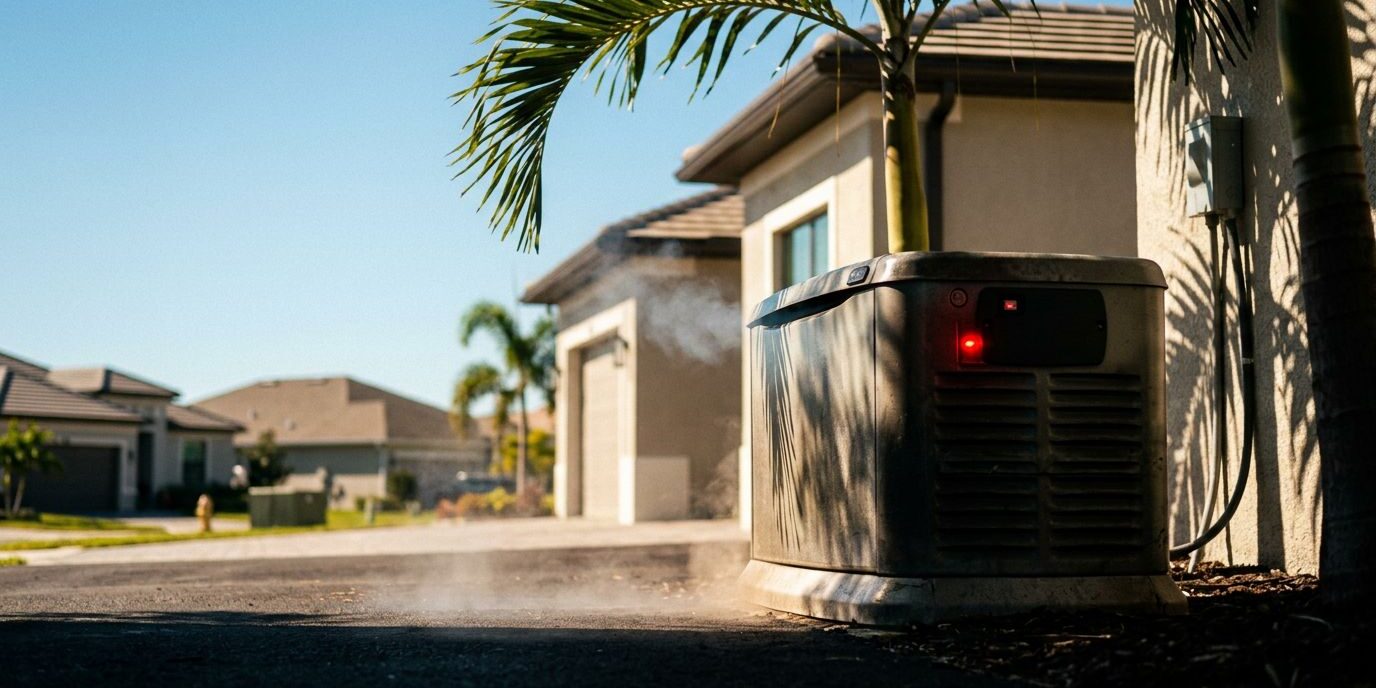
Placement also matters. A unit installed beside a wall or in a narrow side yard may have enough space to meet a basic measurement but still suffer from poor heat release. Nearby surfaces can reflect hot air back toward the generator. We need to consider airflow, exhaust clearance, service access, and the location of windows and doors at the same time.
Florida Heat Affects Batteries, Oil, and Electrical Parts
The battery is one of the first components we check when a standby generator has trouble starting. Heat can shorten battery life, speed up internal wear, and increase the chance of a weak start. Corroded terminals and loose connections add more resistance to the starting circuit.
A battery may appear normal during a quick inspection and still fail under load. That is why Generac sales and service professionals test battery condition, charging voltage, terminal connections, and the battery charger. A generator that cranks slowly or displays a low-battery warning should not be ignored, and our 24-hour emergency service is available if you encounter these starting issues before a storm.
Oil also works harder in high temperatures. Engine oil protects moving parts, carries heat away, and supports proper lubrication. Old or incorrect oil can lose its ability to protect the engine during extended operation. We follow the manufacturer’s required oil type, service interval, and operating instructions instead of using a one-size-fits-all schedule.
Electrical components face heat stress as well. Control boards, voltage regulators, relays, transfer switch connections, and wiring insulation all operate inside an environment that can become hotter than the surrounding air. Loose connections create resistance, and resistance creates additional heat. That cycle can damage parts or cause unstable voltage.
The following areas deserve regular attention during a Florida maintenance visit:
| Generator area | Heat-related concern | What we inspect |
|---|---|---|
| Battery and charger | Weak starting power or reduced battery life | Voltage, terminals, charger operation |
| Engine oil | Increased wear during long runtime | Oil level, condition, leaks, service history |
| Cooling system | High-temperature alarms or shutdowns | Airflow, coolant, radiator, belts, hoses |
| Electrical connections | Voltage problems and heat damage | Wiring, terminals, breakers, transfer switch |
| Enclosure | Trapped heat and restricted airflow | Vents, exhaust path, debris, placement |
Standby generator maintenance is not only about changing oil. It is about finding small problems before heat turns them into an outage failure.
High Humidity and Salt Air Corrosion Stress in Southwest Florida
Heat rarely arrives alone in Southwest Florida. High humidity, rain, salt air corrosion, and storm debris can affect the generator at the same time. Coastal homes near Naples, Fort Myers Beach, Cape Coral, and other Gulf communities face added risk around fasteners, terminals, connectors, and control components, where moisture and salt accelerate the degradation of critical electrical contacts.
Corrosion does not always look serious from outside the cabinet. A small amount around a connection can increase resistance or weaken the contact. Over time, that may lead to starting problems, charging faults, voltage issues, or intermittent shutdowns.
Moisture also matters after a storm. A generator enclosure is designed for outdoor use, but it still needs correct placement and routine inspection. Standing water near the pad, damaged seals, blocked drainage, or flood exposure can create problems that normal maintenance will not correct.
We also check the area around the unit before hurricane season to ensure proper hurricane hardening of your backup power system. Removing pool equipment, loose fence sections, fallen branches, outdoor furniture, and landscaping debris prevents these items from becoming projectiles or blocking essential airflow. A generator should have clear access for both cooling and service work to function reliably when you need it most.
Whole-home standby systems are quieter than many portable generators, but they still produce heat and exhaust. We never recommend covering the unit during operation or adding an enclosure that was not approved for that model. Carbon monoxide safety and manufacturer clearance requirements must remain a priority.
How to Protect Standby Generator Performance in Florida
Consistent preventive maintenance provides the best opportunity to identify heat-related problems early. We recommend following the service schedule in the owner’s manual and arranging professional inspections at least as often as the manufacturer requires. Heavy outage use may call for additional service to keep your unit in top condition.
A proper visit should include more than a quick visual check. We inspect the engine, oil, filters, battery, charger, cooling components, wiring, cabinet, fuel system, transfer switch, and operating controls. When the generator has run for an extended period, service may be needed sooner than the normal calendar interval.
Homeowners can also perform a few safe visual checks between service visits:
- Keep leaves, grass, mulch, and stored items away from the enclosure.
- Look for oil, coolant, or fuel leaks around the base.
- Listen for new rattles, rough starts, or unusual engine sounds.
- Check for warning lights or monitoring alerts.
- Confirm that the weekly exercise cycle is completing normally.
- Look for corrosion, storm damage, or a blocked exhaust area.
- Check fuel stability and diesel fuel quality to ensure your system is ready.
- Periodically inspect fuel storage tanks for signs of moisture or contamination.
Don’t open a hot cabinet, add coolant to a hot engine, or attempt electrical and fuel repairs without proper training. These systems contain moving parts, high voltage, hot surfaces, and fuel connections.
Remote monitoring systems can also help identify a problem before an outage. These tools provide real-time alerts for low battery voltage, exercise failures, or fault conditions. These alerts do not replace professional service, but they provide us with useful information when a generator needs attention. For units that run frequently in high heat, we also recommend load bank testing to ensure your system can still meet its full rated capacity under pressure.
If your unit has repeated high-temperature alarms, stalls under load, shuts down during long runtime, or struggles to start, schedule a professional inspection. Our Get a Free Consultation option gives homeowners a practical way to discuss generator condition, maintenance, or installation needs before the next emergency.
When Heat-Related Problems Require Generator Repair
A one-time high-temperature warning may come from blocked airflow or an unusually heavy load. Repeated warnings usually point to a larger issue. The cause could be a dirty cooling system, low coolant, a damaged sensor, poor placement, restricted exhaust, low oil, or an engine problem.
Voltage changes are another warning sign. Lights that flicker, breakers that trip, or sensitive electronics that shut off may indicate a generator output or automatic transfer switch problem. Because these issues can compromise the stability of your power, the system should be tested before continued operation causes more extensive damage.
We also take battery problems seriously. Slow cranking, a failed exercise cycle, repeated low-voltage alerts, and corroded terminals can leave your emergency power supply systems unable to start. A battery replacement may solve the immediate problem, but the charging system should be checked at the same time to ensure long-term reliability for both residential and commercial applications.
Professional repair is especially important when the unit has operated through a long outage. Extended runtime can expose issues that never appear during short weekly tests. This is particularly vital for industrial generators or any commercial standby generator used in business settings, where heat-related downtime can result in significant financial losses. Once the generator returns to standby mode, we inspect the system and document the service so the next start is not based on guesswork.
Frequently Asked Questions
How does Florida’s high humidity impact my generator’s engine?
High humidity and extreme heat reduce air density, which means the engine has access to less oxygen for combustion. This can decrease the generator’s total power output, potentially causing it to struggle if your home demand is near its maximum capacity.
Why is clear airflow so important for standby generators?
Air-cooled and liquid-cooled generators rely on consistent airflow to dissipate heat generated during operation. If grass, mulch, or decorative fencing blocks these intake and exhaust paths, hot air can recirculate and cause the system to overheat and shut down prematurely.
Does extreme heat affect battery longevity?
Yes, the intense heat found in Florida environments accelerates battery wear and shortens overall service life. This degradation can lead to weak starting power, which is why regular testing of battery voltage and terminal connections is essential before storm season arrives.
Can I perform my own maintenance between professional service visits?
While professional maintenance is required for complex internal components, homeowners can perform simple visual checks. You should keep the enclosure area clear of debris, inspect for visible leaks, and listen for unusual engine sounds during the unit’s weekly exercise cycle.
Conclusion
The intense Florida heat can reduce available output, increase cooling demand, weaken batteries, and accelerate corrosion. These challenges are significantly more pronounced when the system is undersized, overloaded, poorly positioned, or lacking regular maintenance. Ultimately, maintaining optimal Florida generator performance is a top priority for any homeowner seeking reliable backup power solutions that remain dependable throughout the most demanding summer months.
The most effective way to protect your investment is to combine correct unit sizing with unobstructed airflow, consistent professional service, and timely repairs. By ensuring your system adheres to the Florida Building Code, FDEP requirements, and NFPA 110 standards, you guarantee that your generator is not only efficient in extreme heat but also fully compliant with critical safety and environmental regulations. Proper preparation before the peak heat season gives your generator the best chance to start reliably, handle your household load, and run safely whenever a power outage occurs.