


A standby generator is supposed to keep the lights on when the weather gets ugly. In Florida flood zones, that only works if the unit is placed high enough, anchored correctly, and approved under the right code path.
What good is backup power if stormwater reaches the cabinet first? That is the question many homeowners miss until permit time, and by then, the fix for your whole-home generator is usually more expensive than the first plan.
Key Takeaways
- Prioritize Placement Over Power: In Florida flood zones, the physical elevation and location of the generator are more critical than the unit’s size; improper placement risks damage from stormwater and permit rejection.
- Regulatory Compliance is Mandatory: Installations must adhere to strict Florida building codes, including ASCE 24-18 standards and local freeboard requirements, to ensure the unit stays above Base Flood Elevation (BFE).
- Engineering for Stability: Because floodwaters exert significant hydrostatic and buoyancy forces, generators must be anchored to reinforced, elevated concrete pads using flood-resistant materials.
- Documentation Drives Approval: A successful install requires a complete paper trail, including Elevation Certificates and local floodplain permits, before any physical construction or trenching begins.
- Environmental Protection: Beyond flooding, Florida’s heat and humidity require proactive maintenance for components like batteries and transfer switches to ensure the system actually starts when needed.
Flood maps, elevation, and the code that actually matters
In Florida, we do not get very far by asking only what size generator we need. We have to ask where it sits, how high it sits, and which classification controls the install. While many people look at FEMA flood zones to get a general idea of risk, developers and installers must focus on the regulatory standards governing Special Flood Hazard Areas.
The real rulebook is the Florida building code, which ties flood hazard work to ASCE 24-18 and local ordinances. Much of this oversight stems from the National Flood Insurance Program requirements, which mandate specific protective measures for essential electrical equipment. The key number is the Base Flood Elevation, and many local jurisdictions also enforce strict local freeboard requirements to ensure units stay dry during significant weather events.
Here is the quick version.
| Flood zone | What it means | What it changes for generator placement |
|---|---|---|
| Zone AE | High-risk inland flood zone with a mapped BFE | The generator usually needs to sit at or above BFE, often with added freeboard |
| AO | Shallow sheet-flow flooding | Elevation and drainage matter, because water can move across the site in thin, fast layers |
| Zone VE | Coastal zone with wave action | This is the strictest case, and it often needs engineered elevation and no fill below BFE |
FEMA guidance helps with the design. The local inspector decides whether the job passes.
If the map looks wrong, a Letter of Map Amendment can matter before we pour anything. That is one reason we like to start with the site, not the generator model.
For a plain-English walkthrough of the process, this flood zone generator installation guide is a useful reference.
What a compliant standby generator installation looks like on the ground
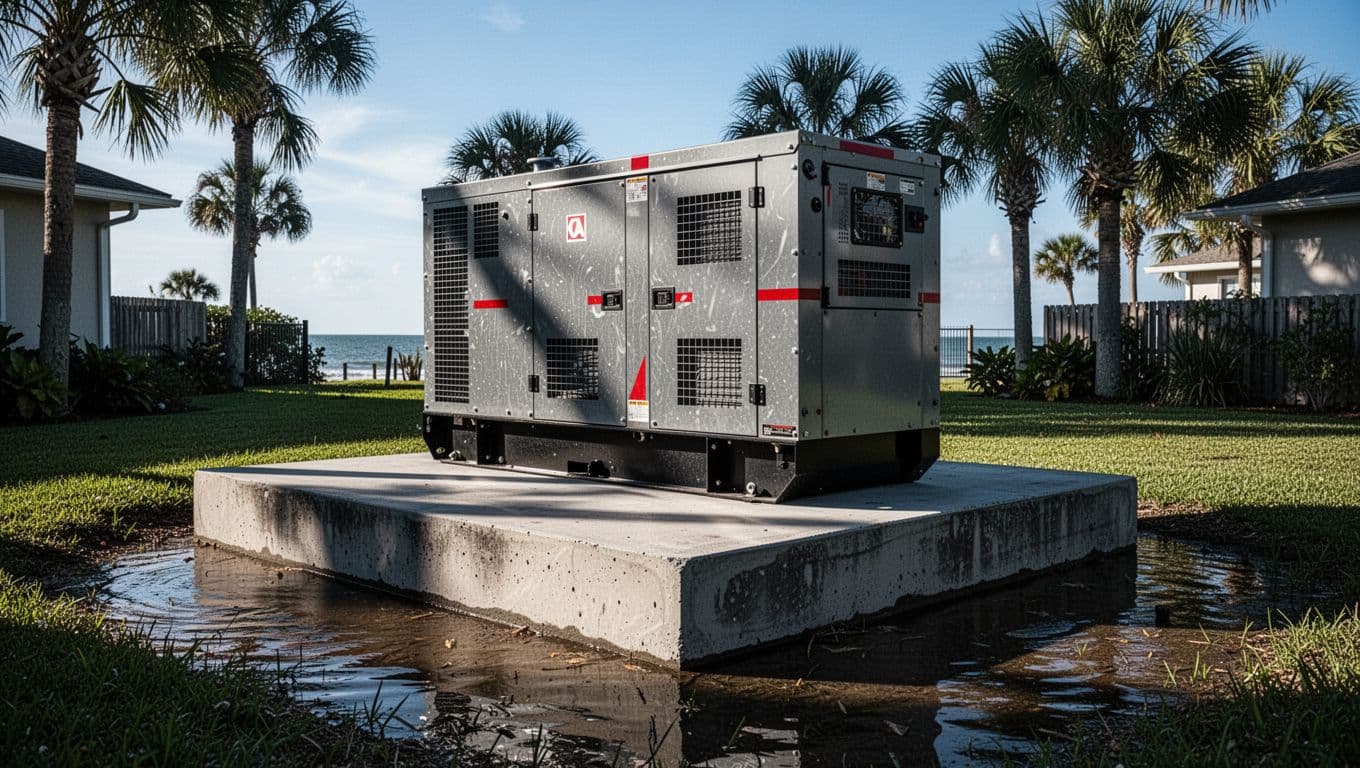
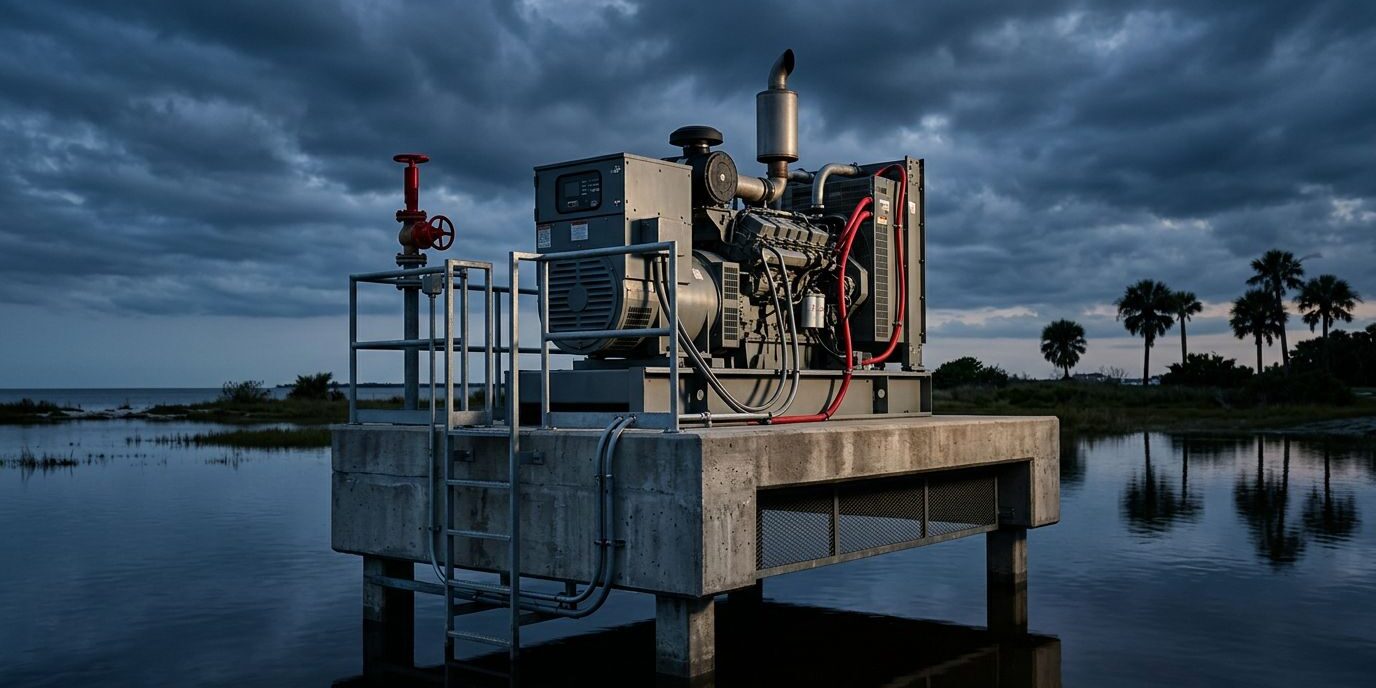
A proper flood-zone install starts with the pad. The unit should not sit on soft fill, loose soil, or anything that settles under water pressure. Achieving the correct generator pad elevation is vital, and the standard calls for a 4-inch concrete slab placed on compacted clean sand or crushed rock. This elevated platform structure must be set high enough above grade to keep the internal components out of standing water.
Clearance matters just as much. The engine should be kept at least 5 feet from wall openings and combustible structures unless a rated wall separates them. Exhaust termination needs even more thought, because we do not want fumes drifting back toward doors, windows, vents, or air intakes.
Anchoring is not optional. A flood can push, lift, and shift equipment in ways most people never see in dry weather. The generator needs to resist hydrostatic, hydrodynamic, and buoyancy forces, which is why all mounting hardware and pads must consist of flood resistant materials. That is a lot of force for a box of metal, and it is exactly why placement in flood country is not a guess and go project.
Zone VE raises the bar again. In coastal areas with wave action, fill below BFE is off the table, and the design usually requires a professional structural engineer to ensure stability. That is the kind of detail that turns a simple equipment pad into a code issue.
When we want the job handled from layout through inspection, our generator installation and maintenance services cover the full path.
Permits and inspections are part of the job, not the paperwork after it
Flood-zone projects do not move on hope. They move on documents. Before installation, we usually need an Elevation Certificate, local floodplain approval, building permits, and in some cases engineer-stamped drawings.
That is where people get stuck. The generator can be sitting in the yard and still be unable to run because one piece of paper is missing. Having this documentation in order is the only way to guarantee your system is ready to provide backup power during a critical power outage. We see this most often when the gas line technician, the electrician, and the installer are not working from the same schedule.
A county checklist is a good reminder that inspections are part of the deal. This residential backup generator checklist shows how separate rough-in and final inspections can come into play.
If we want help sorting out the site, the permit path, and the equipment plan, Get a Free Consultation before we commit to concrete or trenching. That small step can save us from a much bigger correction later.
Why maintenance matters more in flood-prone parts of Florida
Once the generator is installed, the next job is keeping it ready. In Southwest Florida, heat, humidity, and salt air are rough on battery terminals, wiring, and charging systems. While choosing units with corrosion-resistant finishes like aluminum enclosures helps protect the exterior, the internal components still require diligent care. A unit can look fine on the outside and still struggle to start when the battery weakens.
That matters because standby generators, whether they run on natural gas generators or propane generators, still depend on a healthy battery to start. Weak voltage, loose connections, poor charging cycles, or corrosion can show up first as tiny electrical issues. Then one day the unit clicks, cranks slowly, or fails the exercise cycle altogether. This is particularly concerning as we approach the peak of hurricane season, when these systems must be completely reliable.
A good maintenance visit should include battery testing, charger calibration, cable inspection, oil and filter checks, and a look at the transfer switch. A weekly self-test also gives us a useful warning system. If the cycle sounds rough, ends early, or throws an alert, we should not ignore it.
Smart monitoring helps here too. Remote panels and app alerts can show us battery health, test results, and fault codes before the next storm rolls in. That is handy, but it does not replace real service. The battery still has to hold a charge, the terminals still have to stay clean, and the unit still has to start on command.
The choices that save trouble later
A lot of Florida homeowners start by comparing generator sizes. That is fair, but it should not be the first question. The better questions are these: Will the pad stay above flood water? Will the install pass inspection? Will the unit still be ready after months of heat and humidity?
A standby generator in a flood zone is more than a piece of equipment. It is a backup power system, and every part has to work together. Elevation, anchoring, clearances, permits, and maintenance all matter as much as the nameplate size. This includes ensuring your automatic transfer switch is properly positioned and protected, as it acts as the brains of the installation and must coordinate with your overall elevation plan.
If those pieces are lined up before hurricane season, we are in good shape. If they are not, the first flood is a brutal time to find out.
Frequently Asked Questions
How high does my generator need to be installed in a flood zone?
The required height is determined by your property’s specific Base Flood Elevation (BFE) and local freeboard requirements. Your installer must verify these figures against current FEMA maps and local building codes to ensure the pad sits high enough to remain dry during a flood event.
Can I install a generator on standard fill dirt?
Generally, no. Standard fill or loose soil can settle or wash away under flood pressure, which compromises the stability of the unit. Compliance typically requires a 4-inch reinforced concrete slab installed over properly compacted clean sand or crushed rock to prevent shifting.
What happens if my generator is not properly anchored?
Floodwaters create powerful buoyancy and hydrodynamic forces that can lift or displace heavy equipment. If the unit is not anchored using approved flood-resistant hardware, it risks becoming detached, which can damage gas lines, electrical connections, and the structure of your home.
Why do I need an Elevation Certificate for a generator project?
Local authorities use the Elevation Certificate to confirm that your equipment is installed in accordance with floodplain management ordinances. Without this documentation, you may be unable to secure the necessary building permits or pass the final inspection required to activate the system.
Conclusion
In Florida flood zones, the safest standby generator is not the biggest one. It is the one that sits at the right height, clears the right setbacks, and passes the right inspections.
A professional standby generator installation that follows local codes provides more than just peace of mind during a storm. In many cases, having a fully documented, code-compliant system may even support your eligibility for flood mitigation assistance or help you qualify for lower insurance premiums.
Once the install is complete, regular maintenance keeps the battery healthy and the system ready for the next outage. That is the real formula for success, and it is a lot more useful than crossing your fingers when the forecast turns ugly.