


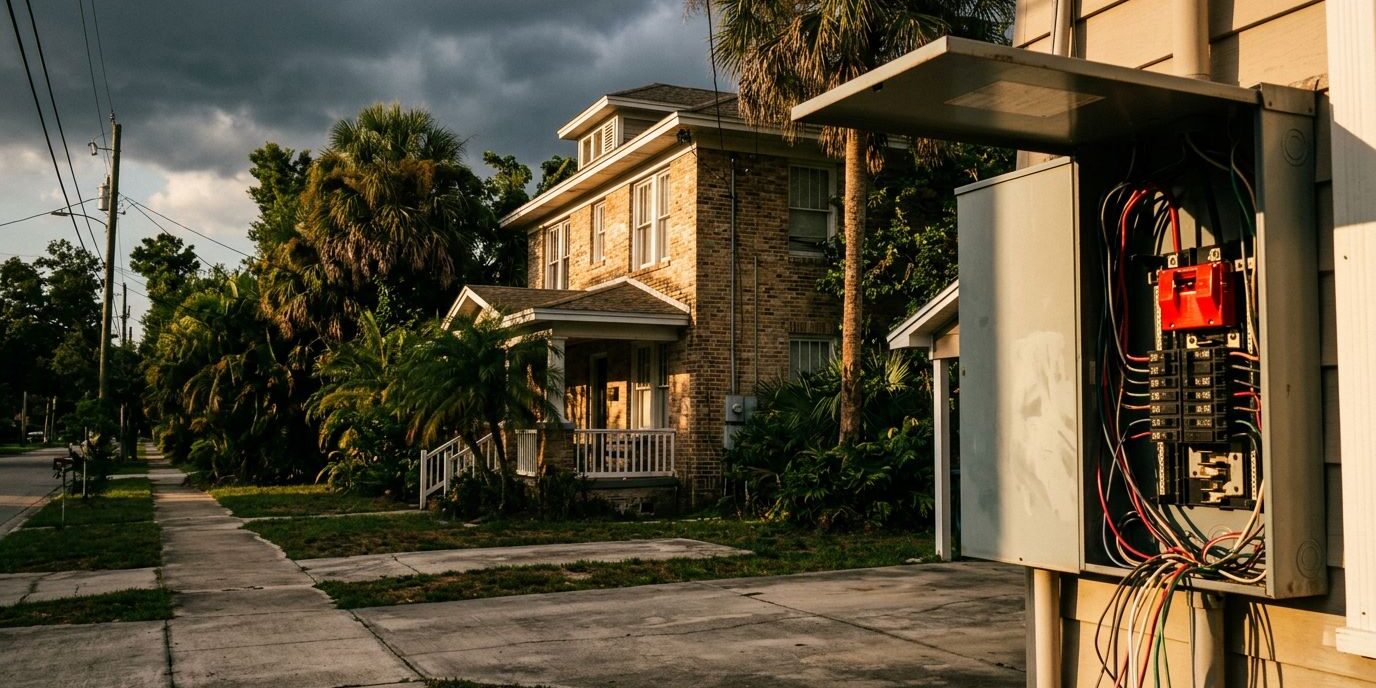
Older Florida homes often share one common vulnerability when it comes to adding reliable standby power, which is the current state of the electrical system. If the capacity is too low, or if the unit is simply outdated, an electrical panel upgrade Florida homeowners rely on may be necessary before a generator project can even begin.
This is a critical consideration in Southwest Florida, where standby power is rarely just a luxury. It serves as a vital component of the emergency storm plan, the comfort plan, and the food storage plan. When your existing breaker box cannot handle the increased load required to keep your appliances running during a power outage, we must modernize the system first to ensure your home remains safe and functional.
Key Takeaways
- Older electrical panels often fail to support modern standby power needs because they are crowded, outdated, or already running near capacity.
- Installing a standby generator changes the requirements for your panel by adding complex transfer switch wiring, necessary load calculations, and circuit control.
- Strict Florida building codes, local flood mitigation rules, and wind anchoring requirements dictate how these systems must be installed, making it essential to hire a licensed electrician to ensure every upgrade passes inspection.
- A proper electrical panel upgrade in Florida prioritizes household safety above all else, followed by reliable generator performance.
- Creating the right strategy for your panel, transfer switch, and load management plan is the best way to keep your home prepared for hurricane season.
Why Older Florida Panels Run Out of Room
A lot of older homes in our area still have panels that were built for much lighter electrical use. Some were perfectly adequate when the biggest loads were a refrigerator, a few lights, and a window unit. That changes fast once we add central air, pool equipment, modern kitchen appliances, and standby power systems.
The warning signs are usually easy to spot. Frequent circuit breaker trips occur more often, and flickering lights become a common nuisance when large appliances start. If the panel feels warm to the touch or if you see visible rust around the cabinet, it is time for concern. These signs suggest that your panel is a fire hazard that needs professional attention. That is where an electrical panel upgrade Florida homeowners can depend on starts to make sense. We are not talking about a cosmetic change; we are talking about a robust panel that can carry the heavy electrical load without strain.
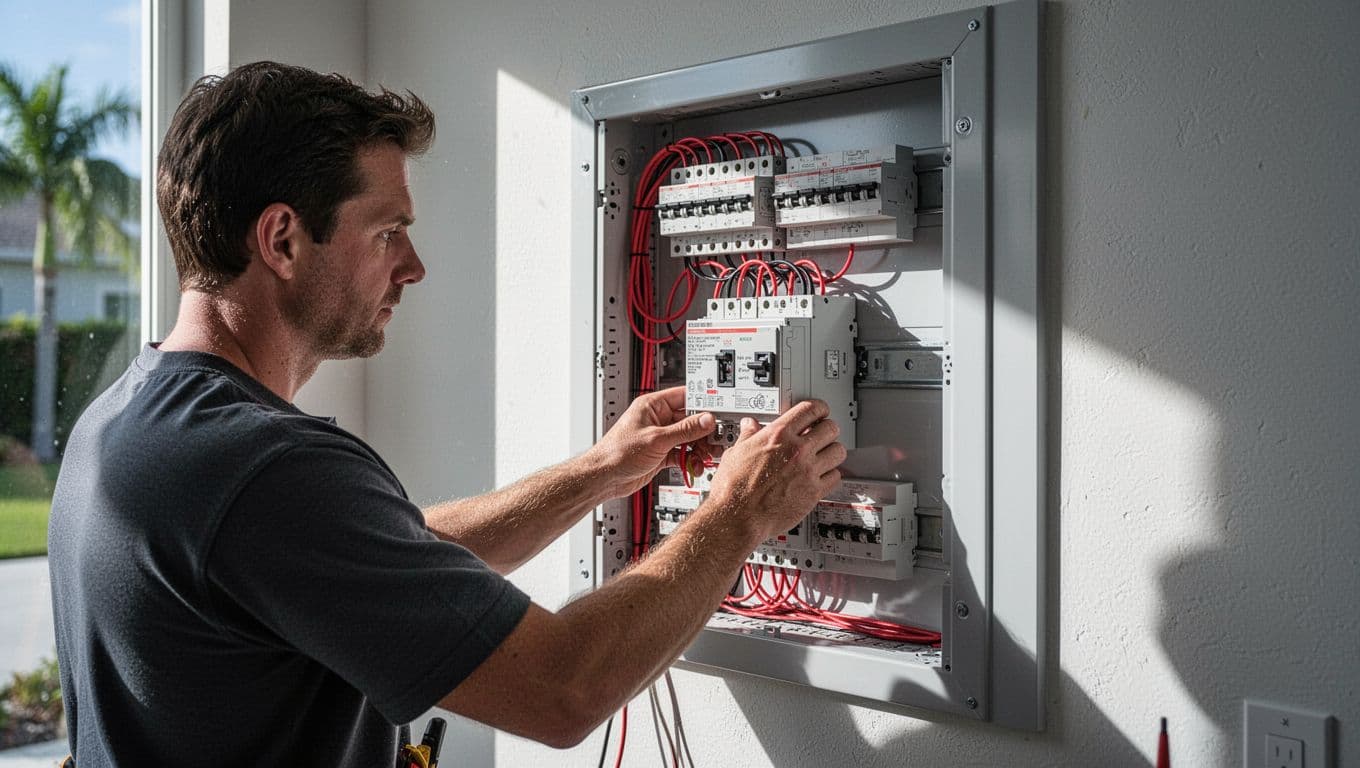
If a panel is 25 to 40 years old, we usually take a closer look right away. That age range often brings worn components, limited breaker space, and obsolete parts. Federal Pacific and Zinsco panels, for example, are widely treated as primary replacement candidates due to well-documented safety concerns, while modern Square D, Siemens, and Cutler-Hammer load centers are far better suited to support high-demand standby systems.
Here is the short version of what we see most often:
| Warning sign | What it usually means | Why it matters for standby power |
|---|---|---|
| Frequent breaker trips | The panel is near its limit | The generator may not transfer cleanly |
| Flickering lights | Weak or unstable circuits | Sensitive electronics can suffer |
| Rust or corrosion | Moisture has reached the panel | Florida humidity can speed up failure |
| Limited breaker space | No room for new equipment | Transfer switch work gets harder |
| Old panel age | Components may be obsolete | Replacement is often the safer path |
A helpful outside reference is why Florida homeowners are told to upgrade their electrical panel, which lines up with what we see every storm season. When the panel is already struggling, standby power only makes the underlying weakness more obvious. While some issues might be addressed with a standard electrical panel repair, an aging system often makes the panel replacement cost a more practical and safer long-term investment.
What Standby Power Demands From the Panel
Standby power changes the electrical panel job in a big way. The panel is no longer just distributing day-to-day power. It also has to work with a transfer switch, manage loads, and keep the generator from being overloaded.
That is why a proper load calculation matters. The generator has to match the connected load, and if the generator output is smaller than the main breaker while an automatic transfer switch is used, load management is required under the National Electrical Code rules used in Florida. In plain terms, the system has to know what to turn off and what to keep on.
A standby generator does not care about good intentions. It cares about panel capacity, clean wiring, and a transfer plan that fits the house.
For whole-home systems, a 200-amp panel upgrade is often the practical baseline. That gives room for the transfer switch, the main disconnect, and the branch circuits that matter during an outage. When we evaluate the amperage capacity of your existing system, we must account for modern high-draw appliances like an HVAC system or an EV charger that can strain an older setup. If the home only needs essentials, a smaller setup may work, but the panel still has to support the generator and the switching gear.
We also have to think about conductor size, breaker layout, and the electrical path between the meter, the panel, and the generator. Florida homes that want a smoother install often do better when the panel and generator are planned together, not in two separate steps. A useful example is backup generators and electrical upgrades, which shows how load shedding and priority circuits fit into the project.
When we size the system correctly, the home runs the way it should. The refrigerator stays on. The AC can stay on if the setup allows it. The lights do not fight the generator for power. That is the difference between a panel that works on paper and one that works in a storm.
Florida Code, Permits, and Inspection Details
Florida does not treat standby power as a simple plug-in project. The installation must align with state code, local permitting, and the specific site conditions around the home. That includes wind exposure, flood zones, exhaust clearance, grounding, and documentation.
A standby generator exposed to Florida wind must be anchored for a 120 mph ultimate design wind speed under the Florida Building Code. If the manufacturer does not explicitly detail the anchoring method, a licensed engineer may need to certify it. If the property sits in a flood hazard area, the generator location also has to meet specific elevation rules.
The clearance rules matter just as much as structural stability. Exhaust termination usually needs to sit at least 10 feet from building openings. A 5-foot exception can apply in some cases if a carbon monoxide alarm is placed within 10 feet and the rest of the requirements are met. That is the kind of detail that keeps a professional installation from becoming a liability later.
Leon County’s generator requirements for FBC 8th Edition provides a clear picture of the comprehensive permit and inspection process required for such projects. Electrical permits, gas permits, inspection stages, load calculations, site plans, and equipment labels all come into play.
The process is usually more efficient when we treat the upgrade as a complete package:
- Electrical permit for the panel, transfer switch, conduit work, and proper grounding and bonding
- Gas permit for natural gas or propane connections
- Load calculation performed before equipment is ordered
- Utility coordination for any necessary upgrades to the meter base
- Final inspection after the system is installed and tested
In some counties, the review can also include elevation documents, signed site plans, and a placard at the service entrance showing the generator location and type. That is why skipping permit work usually costs more in the long run. It saves nothing when an inspector stops the job due to non-compliance.
How We Choose the Right Upgrade for the House
The best panel upgrade is not always the biggest one. It is the one that fits the house, the generator, and the way your family actually uses power. A large home with air conditioning, pool equipment, and a kitchen full of electric loads requires a different approach than a smaller house with only the essentials on backup.
Our team approaches this by evaluating the total load first, then matching the panel and the transfer switch accordingly. If the panel brand is outdated or the interior is already crowded, a full replacement often makes more sense than patching around the existing hardware. If the generator is meant to run the whole house, the panel usually needs more room and cleaner circuit planning. If the goal is essentials only, a skilled electrical contractor can build around the critical circuits to keep the system efficient.
Integrating residential and commercial generator solutions is a precise process. The panel work, generator sizing, transfer switch compatibility, and maintenance plan must fit together seamlessly. To increase your home protection, we often recommend adding whole-home surge protection to guard your sensitive electronics during a storm. If one part is off, the entire setup suffers when the power grid fails.
For homeowners weighing the cost of an upgrade, the decision usually comes down to four factors:
- The panel age and condition
- The amount of load the generator must carry
- Insurance compliance requirements
- The level of reliability needed during a home renovation
If the panel is old, cramped, or already tripping, an upgrade is likely no longer optional. If a generator is being added for hurricane protection, your system must be ready for the load. A licensed electrician can help you evaluate these factors to ensure your home remains safe and fully operational.
If you want a transparent look at the breaker box upgrade price or the total panel replacement cost, we are happy to help. For a straight answer on whether your panel is ready for standby power, Get a Free Consultation.
Frequently Asked Questions
Do all older Florida homes require an electrical panel upgrade before installing a standby generator?
While not every home requires a total replacement, many older panels lack the physical space or the current capacity to safely support a transfer switch and generator hookup. An inspection is necessary to determine if your existing equipment can handle the added electrical load or if it poses a fire hazard that must be addressed first.
Why is a 200-amp panel often recommended for modern standby systems?
A 200-amp panel provides the necessary headroom to manage both your daily household electrical needs and the specific circuit requirements of a transfer switch. This capacity allows for better load management and ensures your generator can power essential systems, like your HVAC and refrigeration, without tripping breakers or straining the electrical infrastructure.
Can I install the generator and upgrade the panel in two separate projects?
While possible, it is significantly more efficient and cost-effective to plan both projects together. Coordinating the panel upgrade with your generator installation ensures all wiring, grounding, and load calculations are compliant with current Florida building codes and prevents the need for rework during the permitting or inspection process.
How do I know if my current electrical panel is a safety risk?
Common red flags include frequent circuit breaker trips, lights that flicker when appliances start, a panel that feels warm to the touch, or visible rust and corrosion around the cabinet. If you have an outdated panel brand like Federal Pacific or Zinsco, it is strongly advised to have a licensed electrician evaluate it immediately due to known safety concerns.
Conclusion
A standby generator is only as reliable as the electrical panel behind it. In older Florida homes, that panel is often the component that requires the most immediate attention to ensure your system functions when you need it most.
By investing in a 200-amp panel upgrade, homeowners gain the necessary capacity and peace of mind to weather any storm with a fully supported electrical system. When we size the panel correctly, match it to the transfer switch, and adhere to strict Florida code and local permit regulations, the system is perfectly positioned to perform. Understanding the breaker box upgrade price is the first step toward securing your home, ensuring cleaner power distribution, and making sure your property is ready for the next Florida hurricane season.