


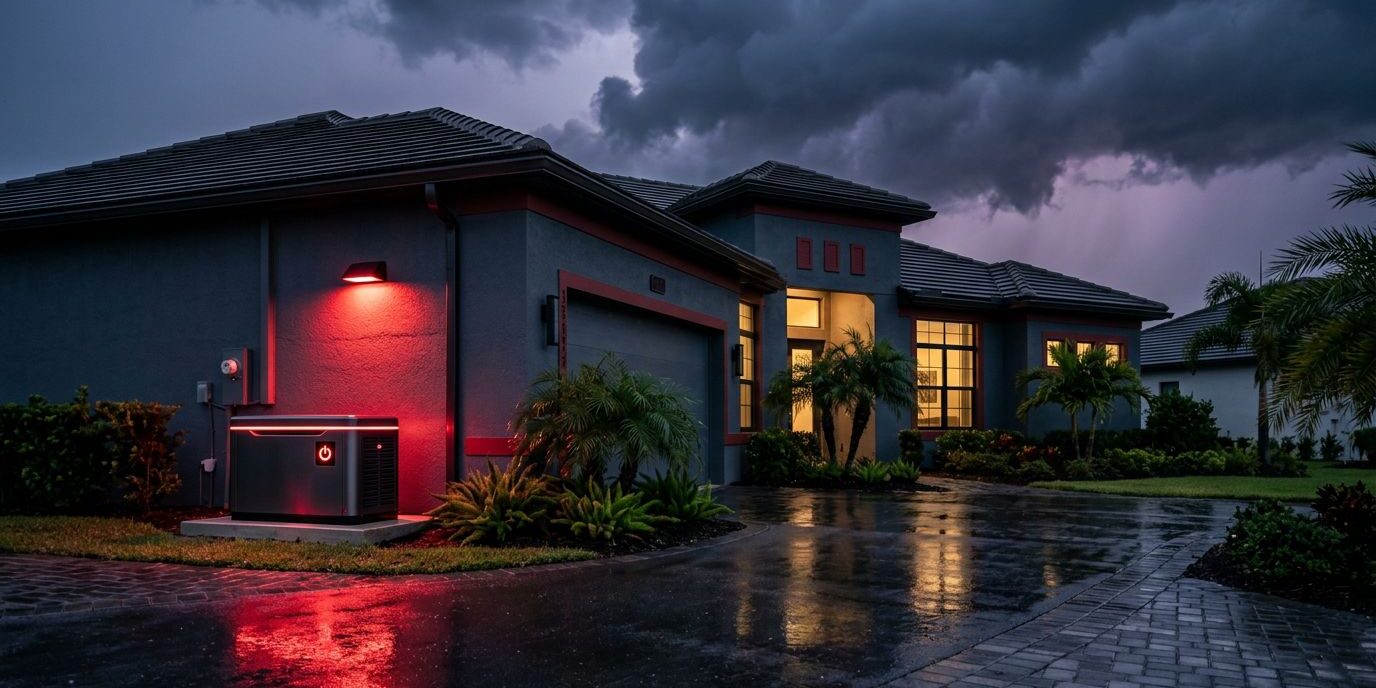
Hurricane season in Southwest Florida does not wait for a free weekend. It arrives exactly when batteries are weak, filters are clogged, and the fuel system has been ignored for far too long.
That is why prioritizing your whole house generator hurricane prep matters well before the first named storm captures our attention. We do not want your standby generator to face its first real test when the power is already out and the rain is falling sideways.
A little work now saves a significant amount of stress later. It also gives us a much better shot at a quiet, steady start the moment the electrical grid goes down.
Key Takeaways
- Proactive Maintenance is Essential: Don’t wait for a storm warning to service your unit; establish a routine schedule for oil changes, battery health, and filter replacements to ensure the generator starts when the grid fails.
- Conduct Full-System Tests: Move beyond checking the startup; verify that the unit handles a real electrical load and that the transfer switch functions smoothly without stumbling.
- Clear Environmental Hazards: Keep the area around your generator free of debris, landscaping, and flood risks to ensure proper airflow and prevent mechanical strain.
- Verify Fuel and Capacity: Ensure your fuel source is secure and sufficient for long-duration outages while managing your home’s total electrical load to prevent system shutdowns.
Get ahead before the first storm watch
The best time to service your standby generator is before the season gets loud. Once the forecast starts filling up with tracking maps, everyone wants the same appointment. Whether your unit was there when you moved in or you recently invested in a professional installation, you need to stay ahead of the rush.
We do not want a one-time visit and a hopeful handshake. We want a routine that actually keeps the unit ready. That is why annual generator maintenance services matter so much before hurricane season heats up. Establishing a consistent maintenance schedule is the only way to ensure reliability when the power grid fails.
The generator does not care whether the reminder lives in an app, on a wall calendar, or in a service contract. It only cares whether the work got done.
A good pre-season service catches the boring problems first. Oil age, battery health, clogged airflow, loose connections, and fuel issues all show up long before a storm does. If we wait until the weather turns ugly, we are already behind. This is why every standby generator requires a proactive approach to remain functional throughout the year.
If we want help setting up the right schedule, Get a Free Consultation and put the maintenance date on the calendar before the first warning cone appears.
Check the parts that wear out first
Most common issues with a whole home backup generator start in the same few places. The engine rarely fails without warning; if you pay close attention, it usually provides clear signals before a breakdown occurs.
Here is a simple pre-season checklist to ensure your system is ready to carry the load of your refrigerator and other essentials.
| Part | What we check | Why it matters |
|---|---|---|
| Oil | Level, age, color, leaks | Protects the engine and keeps it running smoothly |
| Air filter | Dirt, clogging, damage | Keeps airflow strong and reduces strain |
| Spark plugs | Wear, fouling, gap | Helps the engine start cleanly |
| Battery | Charge, terminals, corrosion | Powers startup when the grid is out |
| Fuel lines | Cracks, leaks, loose fittings | Prevents shutdowns and safety issues |
Always use oil that matches the manufacturer recommendations for your specific unit, whether you own a model from Generac or Cummins, rather than using whatever happens to be sitting on a garage shelf. In many cases, the oil requires a change every 100 to 200 hours, or at least once a year if the unit sits unused. Air filters generally need attention around every 100 to 150 hours to ensure optimal performance. Spark plugs often hold up for 200 to 300 hours before they start losing their edge.
Regarding your battery, keep in mind that a healthy charge is vital for a reliable startup during a power outage. A short inspection of these components now beats the frustration of a long outage later.
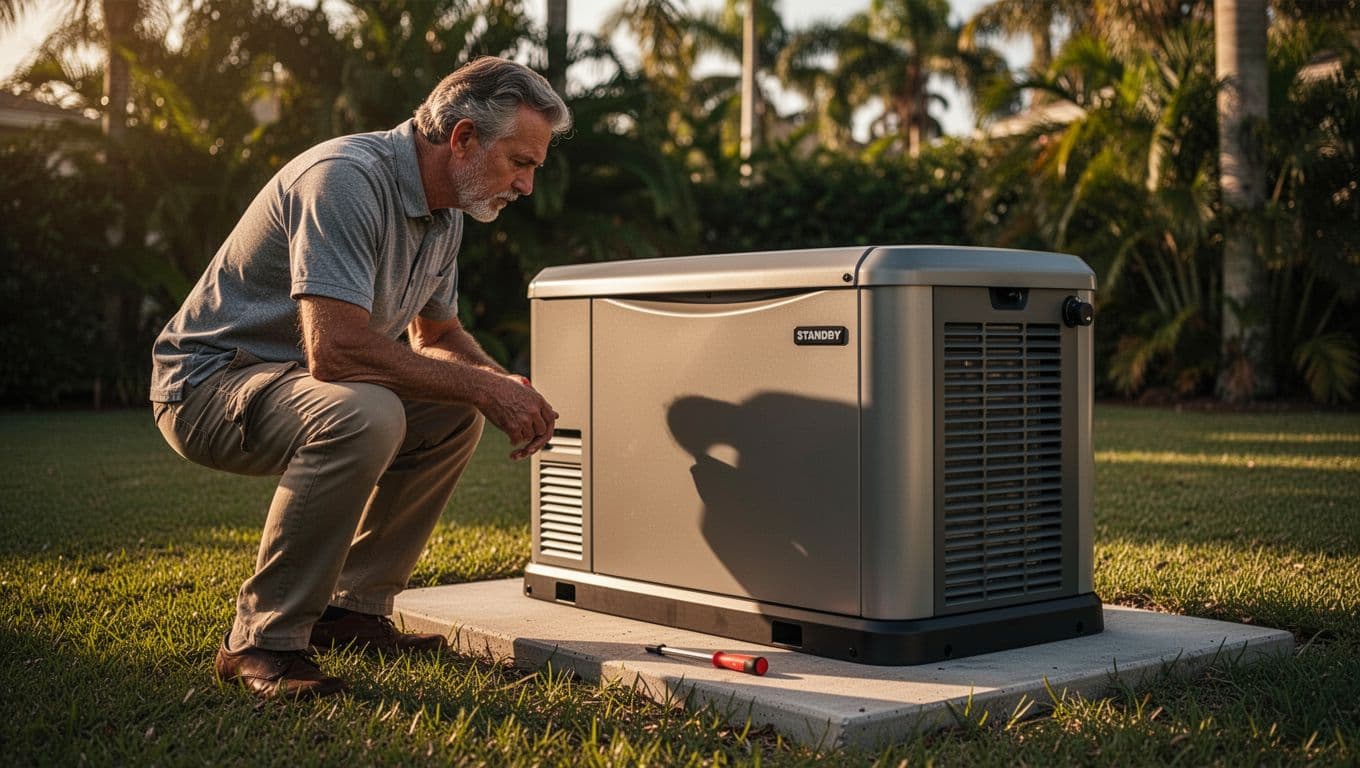
The point is simple. These replacement parts are inexpensive compared to the cost of a failed start in the middle of a storm.
Test the generator the way the storm will use it
A generator that only gets stared at is not ready. It needs to run, switch, and carry a real load before the wind does it for us.
That means we should test more than the startup. We should listen for rough cranking, odd noises, warning lights, and hesitation when the load comes on. If the unit has a weekly exercise cycle, we should make sure it is actually happening. Some systems also send alerts through an app, which is handy, but it does not replace a physical check.
We also want the automatic transfer switch to behave exactly the way it should. Whether you rely on an automatic transfer switch or a manual transfer switch, the system needs to transition during a power outage without drama. There should be no stumbling, no guessing, and no dead silence while we wait and hope.
For a broader hurricane preparedness plan that covers the rest of the house, we can compare our approach with this hurricane preparedness checklist. That keeps the generator in the right place as part of a comprehensive storm plan, rather than the only thing we think about.
If the test shows startup trouble, a weak battery, or a fuel problem, that is the time to call certified generator repair services. We do not want to discover a repair issue during a blackout.
Clear the space around the unit
A standby generator needs room to breathe. If we bury it in leaves, trim it too tightly with shrubs, or crowd it with bins and patio junk, we make this essential backup power solution work harder than it should.
We should clear away debris, check that the pad is stable, and look for anything that could blow into the housing during a storm. Pool equipment, loose fence pieces, mulch, and low branches all deserve a second look. So does drainage. A puddle around the base is not something we want to ignore in Southwest Florida.
Noise matters too. While a whole house unit is significantly quieter than a portable generator, it is still not silent. If the enclosure sits too close to a bedroom window or a neighbor outdoor space, we may hear every weekly exercise cycle. When planning your installation, remember that a portable generator often requires even more clearance for safe ventilation than a permanently installed unit.
Airflow, access, and noise all matter at the same time. If the location works only on paper, it is probably not the right location.
Protect fuel, power, and safety
The fuel system deserves the same attention we give the engine itself. Whether your unit relies on a natural gas line, a propane tank, or a dual fuel setup, you should verify that your chosen fuel source is clean, stable, and ready for extended runtime.
Propane tanks must contain enough fuel for the full duration of a potential outage, not just for a quick test run. Natural gas systems require a thorough inspection of valves, regulators, and supply lines to ensure integrity. If you are using diesel, prioritize clean storage and fresh fuel, as old or contaminated fuel can turn a solid emergency plan into a costly repair project.
Managing the electrical system load is equally vital. You need to understand the maximum wattage your generator can carry without putting undue strain on the motor. Powering essential appliances like your refrigerator and air conditioning system requires different energy demands than simply running lights, internet equipment, and a few small outlets. If you overload your house capacity, you risk shortening the runtime and increasing the odds of an unexpected system shutdown.
Safety remains the most important priority. Always keep the unit outdoors to prevent the buildup of carbon monoxide, and ensure all nearby vents, windows, and doors are clear. Never attempt to backfeed the house through a wall outlet, which is a dangerous practice often associated with the misuse of a portable generator. Finally, if the unit has been sitting in standing water, do not rush to restart it, as this poses a serious electrical risk.
Frequently Asked Questions
How often should I have my whole house generator serviced?
We recommend annual professional maintenance to address oil aging, battery health, and general wear before hurricane season begins. Regular service catches minor issues before they become expensive failures during a power outage.
Can I test the generator myself, or do I need a professional?
While you should perform visual checks and ensure the unit is running its weekly exercise cycle, a professional technician should perform a thorough load test. This ensures the transfer switch and engine perform correctly when tasked with powering your home’s essential appliances.
Why does the area around my generator need to be clear?
Your generator requires consistent airflow to run efficiently and stay cool under load. Clearing away mulch, overgrown shrubs, and debris prevents overheating and ensures the unit is accessible for emergency repairs if needed.
What should I do if my generator was exposed to floodwater?
If your generator has been submerged or is sitting in standing water, do not attempt to start it. Contact a certified technician immediately, as internal electrical components may be damaged, posing a significant safety and fire risk.
After the storm passes, check it again
The first look after a storm should be careful, not casual. We check for floodwater, bent conduit, loose wires, debris in the housing, and obvious leaks before we trust the whole home backup generator again.
A unit can look fine from the driveway and still have damage up close. Salt air, wind-driven rain, and flying branches do not leave a neat calling card. If anything was submerged, we stop there and bring in a technician. Protecting your initial installation cost depends on catching these issues before they turn into permanent damage.
This is also where a maintenance habit pays off. A battery that was fine in spring may not be fine after months of heat. A unit that tested clean in June can still need service in September. That is normal. Keep your maintenance records and service dates inside your emergency supply kit so you always know when your next inspection is due. The goal is to catch problems early rather than pretending they will fix themselves.
We want the generator ready before the forecast gets serious, not after the lights go out. A clean inspection, a real test run, and a clear space around the unit will do more for your peace of mind throughout hurricane season than a last-minute fuel run ever will.