


A standby generator can sit there looking ready for the next storm and still fail because of one tired battery. This critical component provides the essential backup power needed to start the engine the moment a power outage strikes. In Southwest Florida, heat, humidity, and long stretches of sitting can wear it down faster than we expect.
If the unit clicks, cranks slowly, or throws a warning light, we should pay attention fast. Here is how to spot a weak whole house generator battery before the next outage finds it for us.
Key Takeaways
- Recognize early warning signs: Listen for sluggish cranking, repeated clicking, or dim control panel lights, as these symptoms often precede total battery failure.
- Climate impacts performance: Southwest Florida’s heat, humidity, and salt air accelerate battery degradation, making proactive monitoring more critical than in cooler regions.
- Look beyond the battery: Startup issues may be caused by loose cables, corroded terminals, or failing charging circuits rather than just a weak battery.
- Routine maintenance is essential: Scheduled professional service ensures the charging system is properly calibrated and that hidden electrical weaknesses are addressed before an emergency occurs.
- Prioritize timely replacement: If a battery shows physical damage like swelling or leakage, or fails to hold a charge after troubleshooting, replacing it immediately prevents critical failures during a storm.
The first warning signs show up early
Battery problems rarely arrive with drama. They usually start small, then get louder. Because a residential standby generator requires reliable starting power to ensure seamless automatic operation, catching these issues early is vital.
Here is a quick way to read the signs:
| Sign | What it usually means | What we should do |
|---|---|---|
| Slow cranking | The battery is struggling to power the engine to run your household appliances | Test the battery and charger |
| Clicking but no start | The battery may not have enough charge to turn the engine over | Check connections, then test output |
| Dim control panel lights | Voltage is dropping under load | Inspect the battery and terminals |
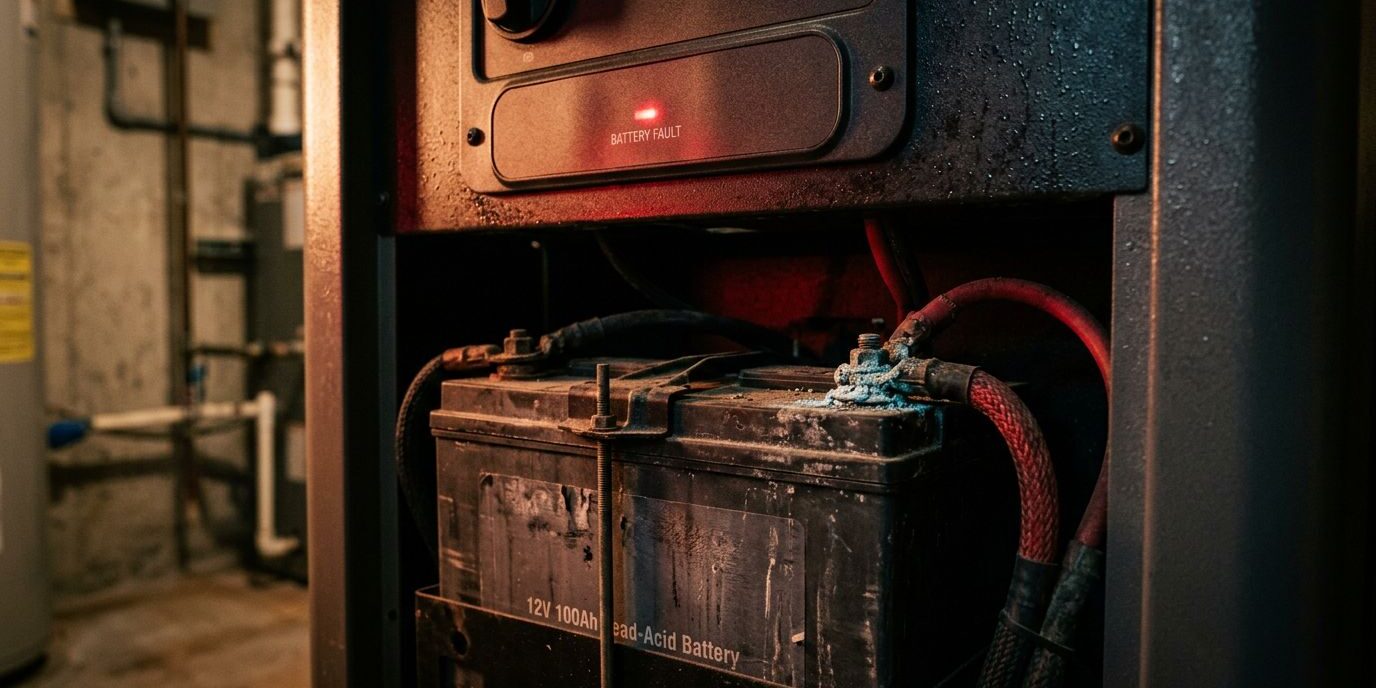
| Corrosion around the posts | Moisture and chemical buildup are hurting the connection | Clean it and watch for repeat buildup |
| Swelling or leaking case | The battery is failing and should be replaced | Replace it right away |
| Frequent start failures after sitting | The battery may not be holding a charge | Test the battery and charging system |
The most obvious clue is a generator that acts tired. It may start after a delay, stumble on startup, or need a second try. That is not the kind of behavior we want when the weather map turns ugly.
If the generator clicks but does not crank, the battery is already asking for help.
A battery that still works on Monday can still be weak enough to fail on Friday. That is why the early signs matter more than a full breakdown. Ignoring these warning signs often leads to an increase in the upfront cost of emergency repairs when compared to the simple, proactive process of battery replacement. Once the battery drops below a healthy charge, the rest of the system has to work harder, putting additional strain on your backup power investment.
Southwest Florida is hard on generator batteries
Our climate does not give batteries an easy life. Heat cooks them, humidity helps corrosion spread, and salt air makes the terminals miserable. Even a premium battery backup system can degrade rapidly under these conditions, as even a unit that appears pristine on the outside may lose vital strength under the hood.
That matters even more when your whole home backup system spends most of the year waiting for action. A battery that sits idle for long stretches can lose its charge, especially if the charging circuit is not functioning perfectly. When hurricane season rolls in and you need to power your household appliances, the last thing you want to discover is that your system is unresponsive. It is also important to remember that battery storage capacity is not the only metric that matters; your generator relies on consistent cold cranking amps to start reliably.

A battery inspection also tells us something about the rest of the system. If the terminals are crusted with buildup or the cables look worn, the problem may not stop with the battery itself. That is why routine generator service and care matters so much in our part of Florida. Proactive checks help keep your long-term maintenance costs down while ensuring your unit is ready when you need it most.
We see the same pattern over and over. The generator was fine last season. It still looked clean and exercised on schedule. Then one weak battery turned into a call for help at the worst possible time.
Battery trouble can hide behind other symptoms
Not every startup problem points straight at the battery. Sometimes the battery is the victim, not the only culprit.
A weak charger, loose cable, corroded terminal, or starter issue can all mimic battery failure. That is why we should not stop at the first symptom. If the battery has been replaced and the residential standby generator still hesitates, the real issue may be elsewhere. The transfer switch communicates directly with the control board to initiate startup, and a failure in this signaling can lead to false conclusions about battery health. Furthermore, a prolonged power outage places extreme demand on the charging system, which can expose weaknesses in the electrical connections.
Common signs that deserve a closer look include:
- A generator that starts fine after manual charging, then fails again shortly after.
- A system that passes an exercise cycle once, then struggles the next time.
- A battery that tests weak even after the terminals are cleaned.
- A generator that powers up, then shuts down before reaching normal operation.
When the battery is new but the unit still will not cooperate, the charging system or starter may need attention. Maintaining the charging circuit is essential, as it significantly improves the energy efficiency of the standby system. Ensuring the battery has enough power capacity to handle the electrical load required to engage the starter is a critical step in troubleshooting. That is the point where certified generator repair technicians save us time and guesswork. It is better to fix the root cause than to keep swapping parts and hoping for the best.
A failing battery also tends to show up during the weekly exercise cycle. The generator may sound different, crank slower than usual, or take longer to settle into a steady rhythm. If the exercise run feels off, we should not brush it aside. That small change can be the first real warning that your system requires professional attention.
What regular maintenance should catch before the battery dies
A comprehensive maintenance visit involves more than a quick inspection. We perform a detailed evaluation that includes testing battery output, checking for corrosion, verifying charger calibration, and inspecting cable integrity. Professional installation is essential here, as it ensures the charger is properly calibrated to maintain the health of your battery backup system.
This is where routine service pays off. Battery failures often manifest as minor electrical issues early on. A technician who knows what to look for can identify weak voltage, poor charging cycles, or loose connections before the system quits. Whether your unit runs on natural gas, liquid propane, or diesel fuel, the starting mechanism relies on a healthy battery. To improve energy efficiency, your charging system must operate within exact parameters to avoid overcharging or premature wear.
Modern technology also plays a role in reliability. Advanced home energy management systems and smart home integration allow you to monitor battery health via a smart home panel, providing alerts before a total failure occurs. While these tools offer peace of mind, a full maintenance plan should still cover the core mechanical requirements. Because the battery serves as the heartbeat of your whole home backup security, its performance dictates the success of every other component. Oil levels, air filters, and spark plugs are vital, but if the startup system fails, those parts never get the chance to function.
For a broader look at what should happen during service, this whole house generator maintenance guide is a useful place to start. It outlines the standards necessary for storm country, where a generator must start without a fight.
Finally, we must keep the area around the unit clear. Standing water, packed mulch, poor drainage, and debris accelerate electrical degradation. A clean pad does not fix a dead battery, but it protects the electrical infrastructure that supports your entire backup power system.
When replacement is the smarter move
Sometimes the battery is too far gone to nurse back to life. If it is swollen, leaking, heavily corroded, or repeatedly failing after charge attempts, replacement is the practical move. While you might worry about the upfront cost of a new battery, it is a small price to pay compared to the risk of a prolonged power outage when you need it most. Ensuring your generator has the necessary power capacity to start reliably is essential for maintaining your energy independence during a storm.
It is helpful to keep in mind that standby generators rely on lead-acid or AGM styles, which differ from the modular battery units found in solar energy or other renewable energy setups. Because your generator lacks the advanced monitoring of a modern battery backup system, you must be proactive. A battery that keeps passing and failing in cycles is a liability; that kind of inconsistency is annoying on a normal day and dangerous during an outage. We want a battery that starts the generator with confidence, not one that needs encouragement.
If you are unsure whether the battery should be replaced or if the issue lies elsewhere, a professional inspection is the cleanest answer. It is faster than guessing, and it keeps us from replacing the wrong part. If you want help sorting it out, we can Get a Free Consultation.
The bigger point is simple. A generator battery does not always fail all at once. It usually talks to us first, through slow cranking, weak starts, corrosion, or warning lights. If we listen early, we get to choose the timing for a replacement instead of the storm choosing it for us.
Frequently Asked Questions
How often should a whole house generator battery be replaced?
While lifespans vary based on climate and usage, most generator batteries should be inspected annually and replaced every three to five years. In hot environments like Southwest Florida, you may need to replace them more frequently due to the added strain of heat and humidity.
Can I just jump-start my generator if the battery dies?
While a jump-start might get the engine running in an emergency, it is not a permanent solution and can potentially damage the unit’s sensitive electronics. If your battery requires a jump-start, it indicates that the system is failing and likely requires professional testing and a new battery to ensure future reliability.
Why does my battery fail even when the generator is not in use?
Batteries naturally self-discharge over time, and if the generator’s internal charging system is not functioning correctly, it will lose its capacity while sitting idle. Additionally, environmental factors like extreme heat can lead to faster chemical degradation even when the unit is simply standing by.
What should I look for during a visual inspection of the battery?
Check for signs of corrosion—typically a white or bluish crust—around the terminals, which can impede power flow. Additionally, inspect the casing for any visible swelling, cracks, or liquid leaks, all of which are clear indicators that the battery has reached the end of its life and needs immediate replacement.
Conclusion
A whole house generator battery should function reliably in the background. It should stay charged, sit ready, and start the unit without any hesitation. When the system begins to click, slow down, or struggle to hold a charge, you should treat these as warning signs that your backup power reliability is at risk.
In Southwest Florida, the intense heat and humidity cause these batteries to degrade much faster than in cooler climates. By staying proactive with routine inspections and timely replacements, you ensure your standby generator remains ready for automatic operation. Investing in the health of your battery is the most effective way to guarantee consistent whole home backup when the local grid fails. A weak battery may seem like a small detail, but it ultimately determines whether your generator performs when you need it most.