



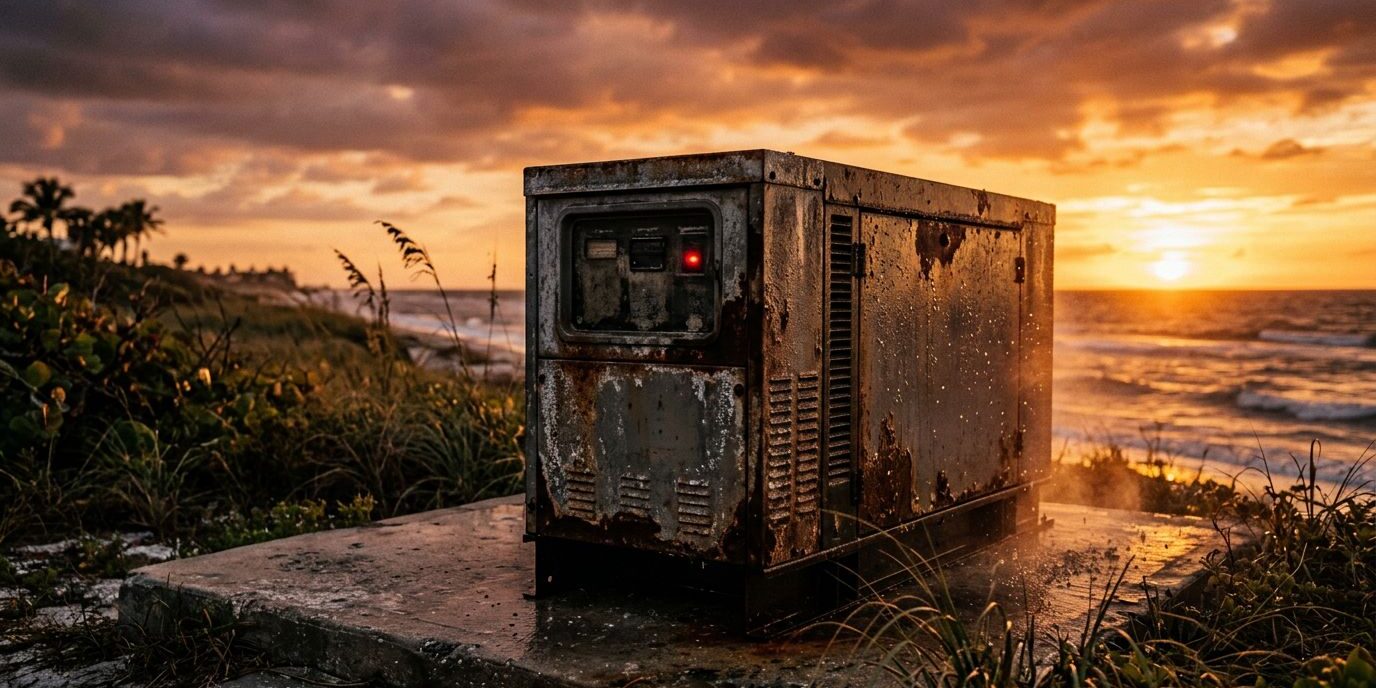
While many people seek out the therapeutic benefits of halotherapy in a salt room to improve respiratory health, the salt air found along the Florida coastline acts much differently when it meets heavy machinery. Salt air can wear down a whole house generator long before a storm ever asks it to work. In coastal Florida, the problem usually starts small with a bit of rust, minor dulling, or grime that looks harmless until it begins to spread.
That is what makes salt air generators, or rather the protection of these units, such a real concern for homeowners near the water. The equipment may still pass its weekly exercise and look fine from a distance, but the combination of salt, heat, and humidity continues to work in the background. If left unchecked, this environment can compromise the internal electronics and structural integrity of your backup power system.
Key Takeaways
- Coastal salt air acts as a catalyst for corrosion, trapping moisture against metal surfaces and sensitive electronic components.
- While a generator may look functional from the outside, hidden salt accumulation can compromise internal terminals, hinges, and electrical connections.
- Consistent routine maintenance and cleaning are essential to prevent minor rust from evolving into major mechanical or electrical failure.
- Environmental exposure in Florida requires a specialized care plan that accounts for the continuous interaction between salt, heat, and humidity.
Why salt air is rough on whole house generators
Salt does not need a dramatic failure to cause trouble. It settles on metal, holds moisture, and speeds up corrosion. Think of it like a therapeutic salt application, where sodium chloride reacts with moisture to create a chemical environment that accelerates the degradation of your equipment. Once that process begins, it often moves faster than most homeowners expect.
A generator enclosure is built to withstand outdoor conditions, but coastal Florida air acts like a continuous, natural halogenerator, constantly bombarding your equipment with fine, abrasive spray. These microscopic particles can travel on even the lightest breeze, easily penetrating seams and ventilation gaps. Because of their tiny micron size, these salt crystals slip into hinges, fasteners, and internal electrical terminals where they remain trapped, inviting rust to form in hidden areas. If the unit sits close to the Gulf, even a gentle wind keeps the cabinet saturated in corrosive moisture.
That matters because a standby generator is not one solid block. It is a complex mix of metal, wiring, electronics, rubber parts, and moving pieces. Salt air does not attack all of them the same way, but it usually finds the weak point first.
Salt air does not need a storm to start damage. It only needs time, humidity, and bare metal.
The corrosion problem is well documented in coastal electrical equipment. For a broader look at how salt exposure speeds up rust and oxidation, electrical corrosion from salt air is a useful reference. The same basic idea applies to standby generators, except the stakes are higher when the power goes out.
The parts that usually show damage first
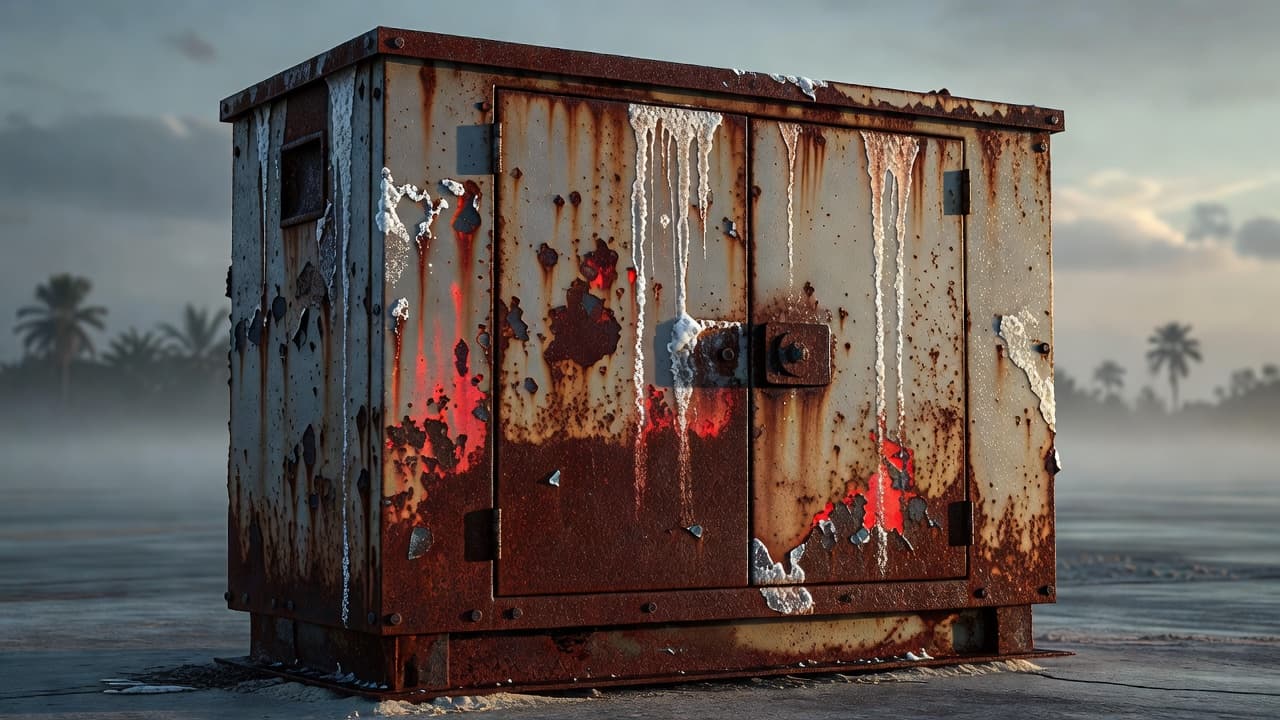
Salt air rarely ruins everything at once. It starts with the places that collect moisture, trap grime, or sit exposed to the weather. While a salt cave provides a controlled, therapeutic environment for relaxation, your generator is exposed to an uncontrolled coastal atmosphere that acts quite differently.
Here is a quick look at the spots we watch first:
| Part of the generator | What salt air does | What we usually notice |
|---|---|---|
| Cabinet and seams | Promotes surface rust and paint breakdown | Orange spots, bubbling paint, rough edges |
| Fasteners and hinges | Eats away at small exposed metal parts | Stiff latches, rusted screws, stuck covers |
| Electrical connections | Helps oxidation form on terminals and contacts | Fault lights, poor starts, inconsistent operation |
| Wiring and control areas | Lets moisture linger where it should not | Warning codes, intermittent issues, corrosion near connectors |
The cabinet is often the first place we notice the damage, but the real concern is what happens inside. A little corrosion on a fastener is annoying, but corrosion around electrical connections, where high salt concentrations can gather, often leads to performance issues when the home needs power most.
Coastal air is far from the clean, pharmaceutical grade salt used in wellness settings. Instead, it is a mixture of sea salt, environmental grime, and heavy moisture. Unlike the deliberate dry salt therapy found in spas, the salt attacking your generator is constantly wet. Because these units lack professional humidity control, they cannot keep these surfaces dry, which allows the salt residue to remain chemically active and destructive.
The air does not just leave residue, it helps that residue stay active by trapping moisture against sensitive components. A healthy generator should sound smooth and predictable during its exercise cycle. It starts, runs, and shuts down without drama. If that routine starts looking rough, the salt may already be doing work behind the scenes.
What helps slow the damage
We cannot stop the coastal air, but we can make life easier for your generator. The first step is placement. A unit that gets constant direct exposure to salt spray will age faster than one with better shelter, provided the placement does not obstruct the ventilation system or violate manufacturer clearances. While the human respiratory system often benefits from the anti-inflammatory properties of coastal air, the micronized salt in that same breeze is aggressively corrosive to the delicate internal components of your backup power system.
Routine service matters just as much. Annual inspection, cleaning, and part replacement catch early corrosion before it spreads. That is especially important in Florida, where heat and humidity do not give metal much time to recover. If the generator is used often during hurricane season, the wear adds up even faster.
A few habits help more than people think:
- Keep the area around the generator clear so the ventilation system stays open and standing moisture does not linger.
- Look for early signs of rust on the enclosure, hinges, and exposed hardware.
- Watch for warning lights, error codes, or a start sequence that feels weaker than usual.
- Check that doors, latches, and fasteners still move cleanly.
- Review the exercise cycle and make sure it is happening on schedule.
The exercise cycle is not there for show. It keeps the engine, battery, and controls active. It also gives us a chance to spot problems before an outage does. A weekly test that starts cleanly and shuts off cleanly is a good sign. One that stalls, skips, or throws an alert is asking for attention.
If the system runs on propane or natural gas, fuel components still need care. The fuel source may be reliable, but the fittings, lines, and related parts can still be affected by the same humid air that attacks the cabinet. Although the enclosure is designed to provide a controlled microclimate to protect sensitive electronics, the fine mist of micronized salt eventually finds its way inside. Salt does not care about your equipment’s label or brand.
A little prevention goes a long way here. Coastal generators are not fragile, but they do need a maintenance plan that fits the harsh environment they live in. A clean cabinet, sound connections, and regular inspection will usually do more to extend the life of your unit than a major repair after something has already failed.
When it is time to bring in a pro
Some signs are small enough to watch, while others mean it is time to stop guessing. You should call for service if the generator shows any of these:
- repeated starting trouble
- rust around electrical panels or exposed hardware
- new warning lights or fault codes
- fuel, oil, or exhaust smells
- smoke, soot, or unusual noise
- rising fuel use without a clear reason
- exercise cycles that end early or fail to start
It is important to remember that a whole house generator is a significant piece of equipment. Unlike a portable salt machine used for personal wellness at home, these units are designed for heavy duty power delivery. If you neglect maintenance, the interior of your generator cabinet can effectively become a salt chamber, trapping corrosive moisture against sensitive components that struggle to survive in coastal Florida.
A generator can look fine on the outside and still be struggling under the cover. That is where salt air gets sneaky. It turns little issues into bigger ones, and it does it without much warning.
If the unit is already showing signs of corrosion or weak performance, Get a Free Consultation before the next storm puts it to the test. In coastal Florida, that kind of check is a lot cheaper than learning about a bad connection during an outage.
Frequently Asked Questions
How quickly does salt air damage a generator?
Salt air damage is a gradual, cumulative process rather than an overnight event. While it can take months or years for significant structural degradation, the corrosive cycle begins the moment salt settles on metal and interacts with ambient humidity.
Can I just wash the salt off my generator to stop the corrosion?
Regularly cleaning the exterior and accessible areas of your generator can certainly help remove surface salt and reduce moisture retention. However, because salt crystals are microscopic and can penetrate internal seals, professional inspection is still required to address components trapped deep within the cabinet.
Is the salt in the air the same as what is used in a halogenerator?
While both involve sodium chloride, the application differs drastically. A halogenerator provides a controlled, therapeutic environment for respiratory health, whereas the coastal air creates an uncontrolled, highly humid atmosphere that constantly bombards your equipment with abrasive, moisture-holding particles.
What are the first signs that my generator is suffering from salt corrosion?
Look for visible indicators such as bubbling paint, orange rust spots on the cabinet or hinges, and stiff operation of latches. Internally, you may notice warning lights, intermittent error codes, or an exercise cycle that sounds inconsistent or weaker than usual.
Conclusion
Salt air does not destroy a whole house generator overnight. It wears it down piece by piece, starting with the cabinet, then the hardware, and finally the internal components hidden from view. While a halogenerator is designed to disperse salt to help alleviate asthma symptoms in controlled settings, your generator is constantly battling the destructive power of pure sodium chloride in the atmosphere.
This is why coastal Florida homeowners must approach generator care differently. Your machine is forced to combat extreme heat, humidity, and salt exposure simultaneously, making regular inspections essential to its longevity. Just as clinical salt therapy requires precision, keeping your generator operational requires expert attention to address the technical symptoms of corrosion. By staying ahead of this damage, you ensure that your generator remains ready to perform exactly when the weather turns ugly.