


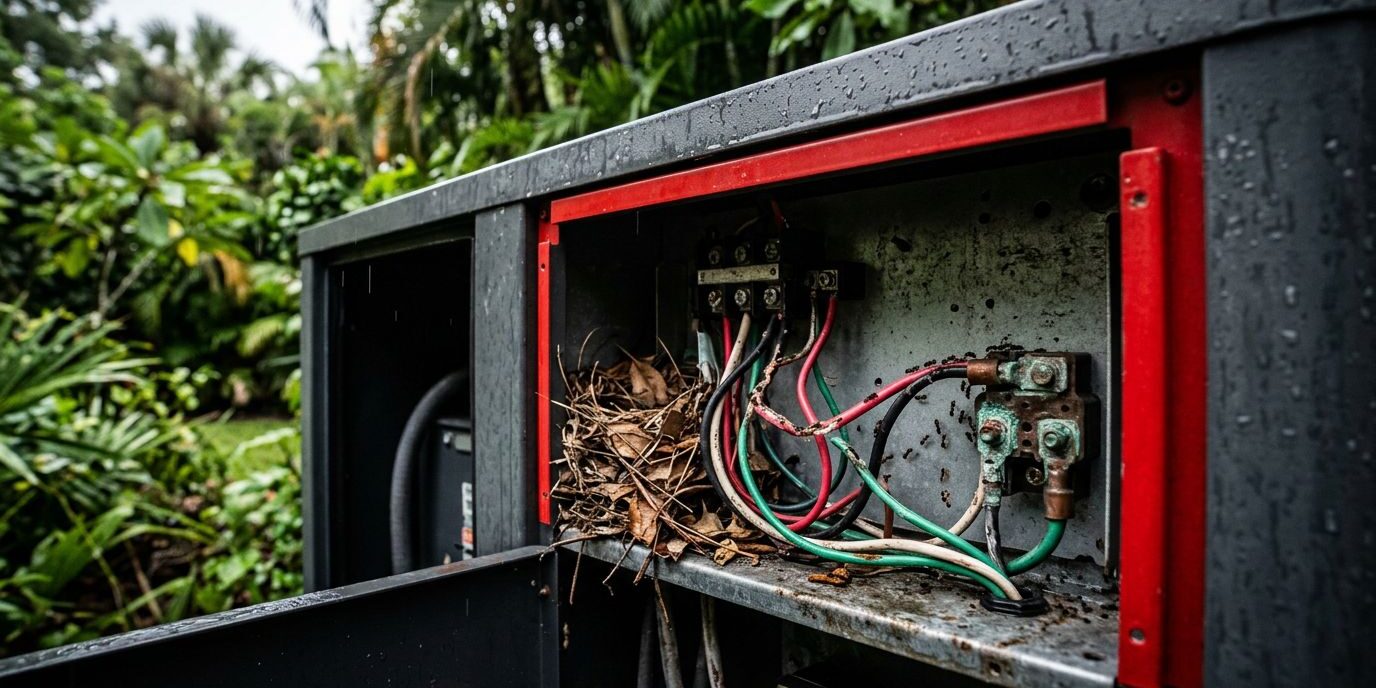
A backup generator may appear ready for the next power outage, yet rodents and insects can secretly damage the sensitive wiring hidden inside the enclosure. In Southwest Florida, consistent warm weather, high humidity, frequent rain, and dense landscaping create the perfect conditions that attract pests to outdoor equipment.
Generator pest damage can lead to frustrating no-start problems, recurring warning codes, electrical shorts, fuel system issues, and expensive repair bills. We recommend performing regular inspections because small signs of intrusion are much easier to correct before the start of hurricane season or an unexpected power outage. First, it helps to understand exactly what pests damage and why your standby generator becomes such an attractive shelter.
Key Takeaways
- Rodent damage often involves chewed electrical wiring, nests, and ruined insulation inside a standby generator.
- Ants, cockroaches, and other insects can cause moisture buildup, corrosion, and critical failures to electrical components.
- Persistent warning codes, unusual sounds, failed starts, and other warning signs can point to pest activity.
- Safe prevention includes proper placement, clean surroundings, regular maintenance, and a professional inspection.
- Do not spray chemicals or reach inside an energized generator enclosure, as this could lead to serious injury or damage.
Why Pests Enter Standby Generators
A standby generator sits outside, but the enclosure still offers protection from rain, wind, and direct sunlight. During cooler periods, the engine and metal cabinet can provide warmth. The cabinet creates warm sheltered spaces where mice and squirrels can hide.
Florida conditions make the problem harder to control. Humidity supports insect activity, while storms can move rats and mice toward dry, protected structures. Landscaping around the generator housing can add cover, nesting material, and easy access.
Food sources near the unit can make the situation worse. Pet food, birdseed, trash containers, fallen fruit, and standing water may attract pests to the yard. Once pests are nearby, they may explore the generator cabinet.
The enclosure is weather-resistant, but it is not automatically pest-proof. Air openings, wiring paths, service panels, and gaps around conduits must remain part of the generator’s approved design. Closing those areas with household foam, tape, or metal mesh can block airflow or interfere with service access.
Rodents are the main concern when wiring is involved. They may cause rodent damage by chewing insulation because of normal nesting behavior, scent, or the texture of the material. Insects create different problems. Ants and cockroaches can collect around electrical connections, while moisture left behind by nests or insect activity can accelerate corrosion.
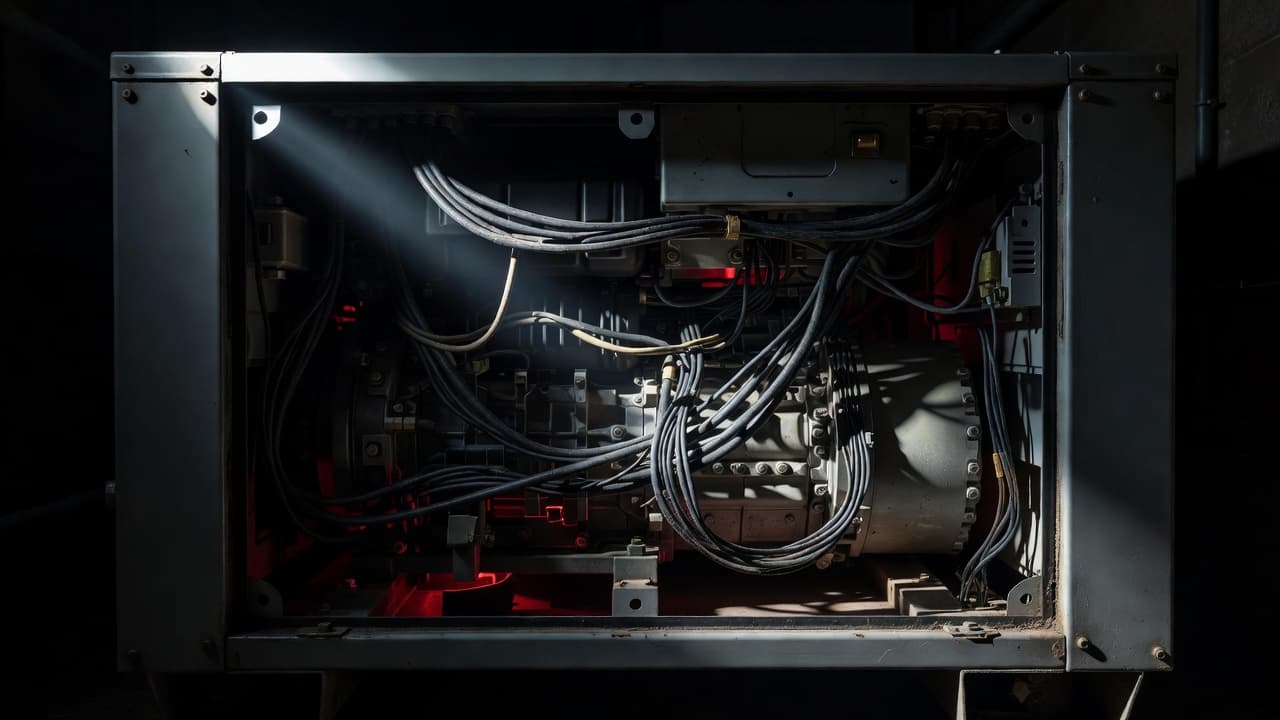
We also see pests enter equipment that appears clean from the outside. A quick look at the cabinet does not show what is happening around the battery, control board, wiring harness, fuel connections, or air intake. That is why an internal inspection of the electrical components belongs in a regular service visit.
What Rodents Can Damage Inside a Generator
Rodent damage inside a whole-house generator often begins with the accumulation of nesting materials. Mice and squirrels frequently bring in leaves, grass, paper, insulation, and other debris that collect around the engine or control components. A nest can restrict airflow, trap moisture, and make it significantly harder for a technician to inspect the unit properly.
Rodent damage to electrical wiring is a more serious concern for homeowners. Pests can damage low-voltage control wires, battery cables, sensor wiring, and the insulation around other electrical conductors. The result may be intermittent operation, a failed automatic start, or a generator that runs but does not transfer power correctly.
Some problems are easy to notice. A generator may crank without starting, start and stall, or display a warning code. Other problems appear only when the unit carries a heavy load during an outage. A damaged wire may maintain contact during a weekly exercise cycle but fail when vibration or heat increases.
We often look for these warning signs during an inspection:
- Shredded insulation, bite marks, or exposed copper
- Droppings, nesting material, fur, or an unusual odor
- Loose wires, damaged wire covers, or chewed battery cables
- Leaves and debris around the air intake or exhaust area
- Generator stalls, repeated startup attempts, or unexplained alarms
- Corrosion near terminals, connectors, or the battery compartment
A damaged wire can cause more than a starting problem. It can create a short circuit, damage a control component, or leave the generator unable to recognize an outage. If the unit shows an electrical warning after a pest issue, we should not assume the battery is the only problem.
For a useful comparison, Consumer Reports’ rodent protection guidance discusses why exposed wiring and sheltered outdoor equipment attract similar problems. The generator has different electrical and fuel systems, but the basic concern is the same: damaged insulation can lead to failures that are not always visible at first, which can be particularly frustrating during power outages.
Insect Damage, Corrosion, and Electrical Failures
Rodents usually cause physical damage through chewing and nesting. Insects can create trouble through moisture, debris, and contact with electrical parts.
Ants may enter small spaces around the control panel, terminal connections, or wiring. Cockroaches and other insects can gather in dark, protected areas when the cabinet has moisture or organic debris inside. Insects do not need to damage a large component to cause a problem. Their presence can leave residue and debris around sensitive electrical components, restrict movement, or contribute to corrosion.
Florida’s humidity adds another concern. Moisture can remain inside a poorly ventilated or contaminated enclosure, especially after heavy rain. Corrosion may develop on battery terminals, connectors, grounding points, and other metal components. Salt air near coastal areas can increase the need for inspection, although corrosion is not always caused by pests alone. Furthermore, the combination of moisture and pest-related shorts can lead to electrical fires if these issues are left unaddressed.
Termites are a separate concern. They generally target wood and cellulose materials, not the generator engine itself. However, termite activity around a nearby structure, wood fence, mulch bed, or storage area can indicate conditions that also attract other pests. We should address the surrounding property when pest activity is found near the generator.
Insect contamination can also make troubleshooting more difficult. A technician may find a failed sensor, loose connection, or corroded terminal, but the original cause may be hidden inside debris. Cleaning alone does not repair damaged wiring or confirm that the control system is safe.
Never place insecticide, rodent poison, or household pest spray inside the generator cabinet. These products can damage electrical components, create fumes, or introduce combustible material near hot engine parts. While installing insect screening can help keep pests out, you must ensure the material does not block necessary airflow. Professional pest control around the property should be handled carefully, and rodent repellents should only be used outside the unit. Ultimately, generator inspection and repair should be completed by a qualified technician.
How to Prevent Generator Pest Damage
Prevention starts with the area around the generator. Keep grass, shrubs, mulch, stored materials, and fallen branches away from the enclosure. Plants should not block the intake, exhaust, access panels, or service side of the unit. Dense landscaping may look attractive, but it can provide pests with a protected path into the cabinet.
We also recommend checking the area after storms. Pool equipment, loose fence pieces, palm debris, low branches, and standing water can all create new pest conditions. A damaged enclosure or shifted conduit deserves attention before the next exercise cycle.
The location matters as much as cleanliness. The generator needs proper clearance for airflow, heat, exhaust, and service access. Do not move it closer to a wall or add screening without confirming that the change meets the manufacturer’s instructions and local requirements.
Homeowners can take several safe preventive measures:
- Keep outdoor food, birdseed, and trash away from the generator.
- Remove nesting material and debris from the surrounding area.
- Inspect the generator enclosure exterior for damaged panels, loose doors, or gaps.
- Maintain clean drainage so water does not collect around the pad.
- Use professional techniques to seal entry points with approved materials, such as wire mesh or steel mesh, to block access while maintaining airflow.
- Use pest control methods outside the cabinet, not inside it.
- Schedule professional service before storm season and after major pest activity.
We do not recommend sealing vents or openings with unapproved materials. A generator must breathe correctly, release exhaust safely, and remain accessible for repairs. Any barrier, screen, or exclusion product should be compatible with the equipment and installed without changing required clearances.
Routine service is also one of the best opportunities to catch early damage. During professional generator maintenance services, technicians can inspect wiring, battery connections, air openings, fuel components, and the interior of the unit. They can also identify conditions that make pest entry more likely during a standard generator maintenance service.
What to Do When You Find Damage
If you see droppings, chewed wires, a nest, or a strong unusual odor, do not start the generator to test it. Opening the cabinet while the system is energized can expose you to electrical hazards, hot surfaces, moving parts, and unexpected automatic starts.
Put the generator in the proper off position according to the owner’s manual, if it is safe to do so. Do not disconnect wires or remove covers unless the equipment instructions specifically allow it and you understand the electrical risks. When there is visible wiring damage, a professional inspection is vital to ensure your safety and the integrity of the system.
A service technician will typically examine the affected area, identify the source of the damage, and test the generator’s starting and transfer functions. Repairs may include replacing wiring, cleaning terminals, removing nesting material, correcting corrosion, servicing the battery, or repairing a mechanical failure.
Pest damage can also affect warranty discussions. Factory warranties commonly cover defects in parts and labor, but they generally do not cover damage caused by rodents, insects, flooding, corrosion from neglect, or unapproved work. The exact terms depend on the manufacturer and model.
Keep service invoices, inspection notes, installation records, and repair documentation in one location. Clear records help show that the generator received proper care. They also give the technician a useful history when a problem appears during power outages.
A one-time repair may restore operation, but it does not replace the benefits of routine care. We recommend whole home generator maintenance when you want scheduled inspections, fluid service, battery checks, and regular maintenance throughout the year.
Frequently Asked Questions
Can I use DIY pest repellents or sprays inside my generator cabinet?
You should never spray chemicals, insecticides, or place rodent poison directly inside the generator enclosure. These substances can damage sensitive electrical components, create hazardous fumes, or introduce flammable materials near hot engine parts. Always use pest control methods strictly on the exterior of the unit.
Why does my generator show a warning code if it still runs during the weekly test?
Rodents often cause damage that creates intermittent electrical issues, such as a wire that maintains contact during a vibration-free exercise cycle but fails under a real-world electrical load. A warning code often indicates that the control system has detected an irregularity in voltage or startup performance that may be hidden from a simple visual check. You should contact a technician to inspect the internal wiring before a real power outage occurs.
How often should I have a professional check for pest damage?
We recommend scheduling a professional inspection at least once a year, preferably before the start of hurricane season, as part of your routine maintenance plan. Regular service allows technicians to identify early signs of nesting, corrosion, or chewed insulation before these small issues turn into major system failures or expensive repairs.
Is it safe to clear out a nest I found inside the generator myself?
It is generally not recommended to clear out nests yourself due to the risk of electrical shock, contact with live wires, or sharp debris, especially if the unit is still connected to power. Furthermore, disturbing a nest may hide signs of underlying wire damage that only a trained technician can properly identify and repair. Always shut down the unit according to your manual and call a professional for a safe, thorough inspection.
Conclusion
Rodents and insects can turn a reliable backup generator into a starting, wiring, or corrosion problem before you know anything is wrong. Because rodent damage often occurs in hidden areas, the most effective protection combines clean surroundings, correct placement, safe pest control, and regular professional inspection.
If your generator has chewed wires, nesting material, unexplained alarms, or failed starts, stop testing it and arrange an inspection. Prioritizing regular maintenance is the best way to prevent unexpected power outages caused by these undetected pests. For help protecting your backup power system, Get a Free Consultation. A generator that is clean, serviced, and documented is far more prepared when the next storm arrives.