


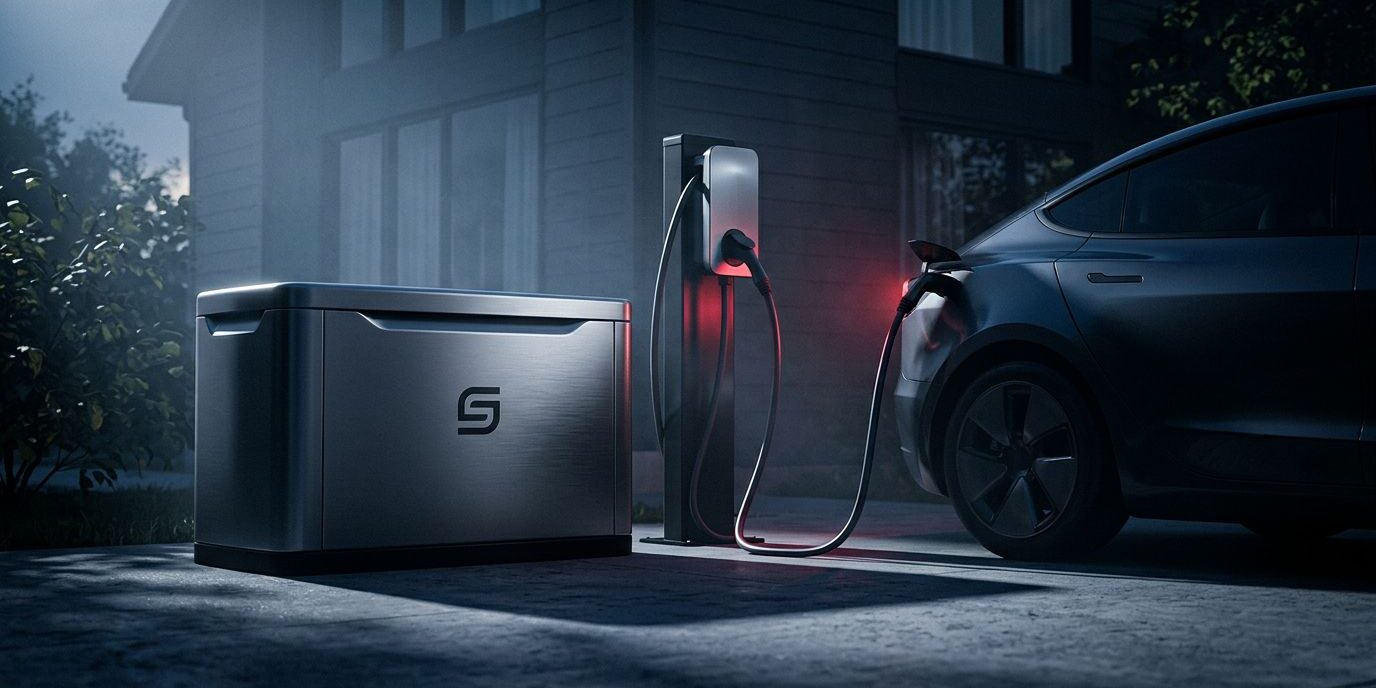
A standby generator can charge an electric vehicle, but the unit must have enough capacity to support both the charger and the rest of the home. Effectively charging EV with generator power is not as simple as plugging the vehicle into a backup source.
During a power outage in Southwest Florida, an EV charger can quickly become one of the largest electrical loads in the house. That is why we carefully evaluate your standby generator size, charging speed, fuel supply, transfer equipment, and local permit requirements before approving any charging setup.
Key Takeaways
- A standby generator can successfully power an EV charger when the system is properly sized and installed.
- While Level 1 charging uses significantly less energy, Level 2 charging typically requires 7.7 kilowatts to 11.5 kilowatts or more, which can consume a large portion of a residential generator output.
- The system must be capable of supporting both your home appliances and the vehicle charging load without overloading the generator or causing dangerous voltage drops.
- Implementing smart load management can help optimize energy use by reducing charging speeds or pausing the charger when other household appliances demand power.
- A licensed electrician should always handle the installation of the transfer switch, wiring, permits, and final inspection to ensure the entire setup meets safety standards.
Yes, a Standby Generator Can Charge an EV
A standby generator does not charge an electric vehicle directly. Instead, it supplies electricity to the home electrical panel, and the electric vehicle charger, also known as electric vehicle supply equipment, then delivers power to the battery.
This process functions similarly to charging from utility power. The difference is that a generator has a limited supply of electricity. Your home may already be using power for the air conditioner, refrigerator, pool equipment, water heater, electric dryer, lights, and security systems. Adding an EV charger can push the total load beyond what the generator can provide, which is why a standby generator serves as a reliable residential power source only when it is properly sized for your specific needs.
That is where generator sizing becomes important. A 22-kilowatt standby generator may sound large, but Level 2 charging can use nearly half of that output by itself. If the air conditioner starts at the same time, the generator may need to shed loads, reduce charging power, or stop the vehicle from charging.
A properly designed system can manage these demands. The charger may operate at a lower amperage during an outage, or an automatic load management system may pause EV charging until the home’s larger appliances turn off. Without that planning, the generator can overload, trip a breaker, or shut down.
The generator must be sized for the home, the EV charger, and the starting demands of major equipment at the same time.
The charging system also needs compatible voltage and frequency. Most residential Level 2 chargers use 240-volt power, and the generator must provide stable output at the voltage and frequency required by the charger. The vehicle manufacturer and charger manufacturer may also have installation requirements for generator-supplied power.
The U.S. Department of Energy’s EV charging infrastructure information provides helpful background on charging equipment and the necessary charging infrastructure. For a home installation, we still need to review the specific generator, charger, vehicle, and electrical service together.
How Much Power Does EV Charging Use?
The charging rate has a direct effect on the necessary standby generator size. A slower charger places less demand on the system, while a faster charger can consume several kilowatts for many hours at a time.
Here is a general comparison of common charging levels:
| Charging option | Typical voltage | Approximate power use | Generator impact |
|---|---|---|---|
| Level 1 charging | 120 volts | 1.2 to 1.5 kilowatts | Lower demand, slower charging |
| Level 2 charging at 24 amps | 240 volts | About 5.8 kilowatts | Moderate demand |
| Level 2 charging at 32 amps | 240 volts | About 7.7 kilowatts | Significant demand |
| Level 2 charging at 48 amps | 240 volts | About 11.5 kilowatts | High demand |
The actual power draw depends on the charger settings and the vehicle requirements. Some home chargers allow you to adjust the output to 16, 24, 32, 40, or 48 amps. A charger advertised as 11.5 kilowatts may not always pull that full amount, but your electrical system must be designed to support the total rated load.
Level 1 charging uses a standard 120-volt receptacle and adds minimal demand to the generator. However, it can take many hours to add a useful amount of range to your battery. Level 2 charging is much faster, but it requires a dedicated 240-volt circuit and places a significantly heavier load on your backup power source.
For example, a 32-amp Level 2 charger may pull about 7.7 kilowatts. If your home is simultaneously using 8 kilowatts for air conditioning, refrigeration, and lighting, the combined demand can quickly exceed 15 kilowatts. A smaller standby generator may not have enough reserve capacity to handle this total load.
You must also account for motor-starting loads. An air conditioner often draws a surge of power for a short period when the compressor starts. Pool pumps, well pumps, and other motors can create similar electrical spikes. While the charger may provide a steady draw, the overall home load fluctuates throughout the day.
Reducing the charging rate often works better during a power outage. The vehicle still receives power without monopolizing the entire generator capacity. Although you may lose some speed, this approach keeps your home power usage more stable and prevents the generator from becoming overloaded.
Generator and EV Charger Installation Requirements
Charging an EV with a generator requires more than simply plugging into an existing circuit. To successfully use your generator as a residential power source for emergency charging during extended outages, the generator, transfer switch, service panel, charger, and grounding system must work in perfect harmony.
The automatic transfer switch is one of the most vital components. It disconnects the home from utility power before the generator supplies electricity, which prevents dangerous backfeeding onto utility lines and allows the generator to supply your selected circuits safely. For compatibility with many modern EV chargers, a professional must also ensure proper neutral to ground bonding within the system.
The EV charger must be connected on the correct side of the transfer equipment. Some homes use a whole-home transfer switch, while others rely on a managed load panel or a specific circuit setup. Level 2 setups often require a high-capacity 240 volt plug or direct hard-wiring to the electrical system. The ideal arrangement depends entirely on the generator size and your home electrical design.
We also evaluate the following items during installation:
- The main electrical service and panel capacity
- The generator’s running and starting output
- The EV charger’s voltage and amperage
- The required breaker and wire size (measured in amps)
- Neutral to ground bonding and overall grounding arrangements
- Available space for load management equipment
- The physical location of the charger and vehicle
- The generator manufacturer’s installation requirements
Electrical codes treat EV charging as a continuous load. This means the circuit and service must have enough capacity for the charger to run for long periods rather than just for a brief test. Your final design should account for the charger operating while the air conditioner and other household equipment are active.
Load management is often the most practical answer for these systems. A smart energy management system can monitor your home electrical demand. If the generator approaches its maximum output, the system can automatically reduce the charging current or pause the EV charger. Once enough capacity is available, charging can resume.
This approach is highly effective for homes with 14-kilowatt or 18-kilowatt generators. It also helps larger systems avoid unnecessary fuel consumption. The charger remains available, but it does not receive priority over refrigeration, medical equipment, air conditioning, or other essential household circuits.
A direct connection through an extension cord or an improvised adapter is never a safe substitute. EV charging equipment draws substantial power for extended periods. The connection requires correct wiring, proper overcurrent protection, weather protection, and reliable disconnecting equipment to ensure a safe and successful emergency charging experience.
Southwest Florida Considerations
Southwest Florida homeowners must account for unique environmental factors that affect both generator installations and EV charging equipment. Intense heat, high humidity, salt air, and the recurring risk of storms, flooding, and extended power outage periods all play a role in system planning.
Generator placement must meet strict safety clearances from windows, doors, vents, air conditioning equipment, and property lines. Exhaust clearance is especially critical during a power outage because carbon monoxide can easily enter a home through nearby openings. Similarly, the EV charger and its associated wiring require robust protection from water exposure and severe storm conditions.
Permitting involves navigating various electrical, building, fuel, and zoning requirements. These standards vary by county and municipality, meaning projects in Fort Myers, Naples, Cape Coral, Bonita Springs, and Lehigh Acres are often subject to different local oversight.
Fuel capacity is a major component of the planning process. A standby generator tasked with running an EV charger for several hours will consume significantly more fuel than one serving only basic household loads. Whether your preferred fuel type is natural gas or propane, the combined demand of the charger and other home appliances must be carefully calculated.
In some cases, a larger generator may require a gas meter exchange if the existing infrastructure cannot provide sufficient flow. Coordination with the utility company can add time to the project, and an adult must be present during the exchange to verify that the service is restored and all appliance pilot lights are functioning correctly.
Furthermore, permit files can create complications if a project sits for too long without the necessary inspection activity. In Lee County, permits may expire after extended inactivity, typically around 180 days, which leads to additional paperwork and project delays if the installation schedule is not strictly managed.
We recommend finalizing the generator location, EV charger location, total electrical load, fuel supply, and permit path before installation begins. To ensure a smooth process, your utility provider, installer, electrician, and building inspector should all be aligned with the same master plan.
Is Charging an EV With a Generator Practical?
The practicality of using a backup power source to charge your electric vehicle depends on your specific needs during a power outage. If your goal is to add a small amount of range overnight, Level 1 charging is often manageable with a properly sized standby generator. However, for faster Level 2 charging, the system must have enough spare capacity after powering your essential home appliances.
It is important to understand the quality of the power your equipment provides. Unlike a portable generator or a standard inverter generator, a stationary standby unit is designed to provide the stable, clean output necessary for sensitive modern electronics. Charging a vehicle requires a True Sine Wave to prevent potential damage to the charger’s sophisticated onboard systems. While you might use a Tesla adapter or other proprietary hardware to connect, the electrical stability remains the most important factor. Keep in mind that this is entirely different from a home backup battery, which stores energy in cells rather than generating it through combustion.
Generator charging also costs more than standard utility charging because the unit consumes fuel to produce electricity. During a long outage, fuel management becomes critical. A natural gas connection may provide a continuous supply, though your gas meter must support the combined demand of your home and charger. Alternatively, propane storage has a finite capacity and requires careful planning before a major storm.
Frequent use also impacts maintenance schedules. Increased runtime leads to more frequent oil changes, filter replacements, and engine wear. While an electric vehicle charger will not cause a maintenance crisis on its own, it significantly increases the workload on your system.
Some homeowners are also curious about using their car battery to power their home. This process, known as bidirectional charging or vehicle-to-home power, is a completely different technology. A standard standby generator installation is not designed to function as a bidirectional system and cannot be treated as one.
If you are interested in backup charging, we can review your generator capacity and actual electrical demand before you commit to an installation. A Get a Free Consultation gives us the information needed to discuss generator sizing, charger placement, load management, and local installation requirements.
Frequently Asked Questions
Can I charge my EV using a portable generator instead of a standby generator?
While portable generators can physically connect to some chargers, they are generally not recommended for this purpose. They often lack the stable power output and required capacity to safely handle the continuous high-load demand of an EV charger, which can lead to equipment damage or system failure.
Will charging my vehicle with a generator void my car’s warranty?
Most vehicle manufacturers specify that charging must be performed using equipment that meets established electrical standards. As long as your generator setup is professionally installed, provides clean power, and utilizes a certified EV charging station, it should not affect your warranty coverage.
Do I need to upgrade my natural gas meter for EV charging?
If you intend to add a high-capacity Level 2 charger to your home load, your existing gas meter may not have the flow capacity required to run both the generator and your other gas appliances simultaneously. A professional assessment will determine if a meter upgrade is necessary to prevent fuel starvation during an outage.
Can I use the same transfer switch for my home and my EV charger?
Yes, but the charger must be integrated into your transfer switch system to ensure it only draws power when the generator is running and sufficient capacity is available. A licensed electrician must configure these circuits to prioritize essential home loads, such as your air conditioning and refrigerator, over the vehicle charger.
Conclusion
In summary, a standby generator can effectively power your vehicle, but the charger must always remain within the generator’s available capacity. While Level 1 charging places a lighter load on your home system, Level 2 charging requires careful sizing and automatic load management to maintain power stability.
A safe and reliable setup relies on a correctly installed transfer switch, compatible generator output, proper wiring, sufficient fuel capacity, and all necessary permits and inspections. When these technical details are managed before installation, you can successfully maintain household power while charging an EV with a generator. By balancing your energy needs, you can ensure that electronic car charging remains a seamless part of your daily routine without exceeding what your electric vehicle and generator system can safely support.